
One of my regular twitter correspondents (@IJSbignose) tweeted this message last night “oh dear … traffic a bit of a mess in SOmpting thanks to problems on A27 ( again)”. Chris Servante is a proud resident of Sompting and on twitter at least its greatest advocate. He is also someone who makes lots of cups of tea and is a big fan of lego. He is well worth following if you are interested in any of those subjects.
Last nights tweet came as a result of two traffic incidents on the A27 between Portslade and Worthing. This piece of road is one of the many bottle knecks on the 222 mile long 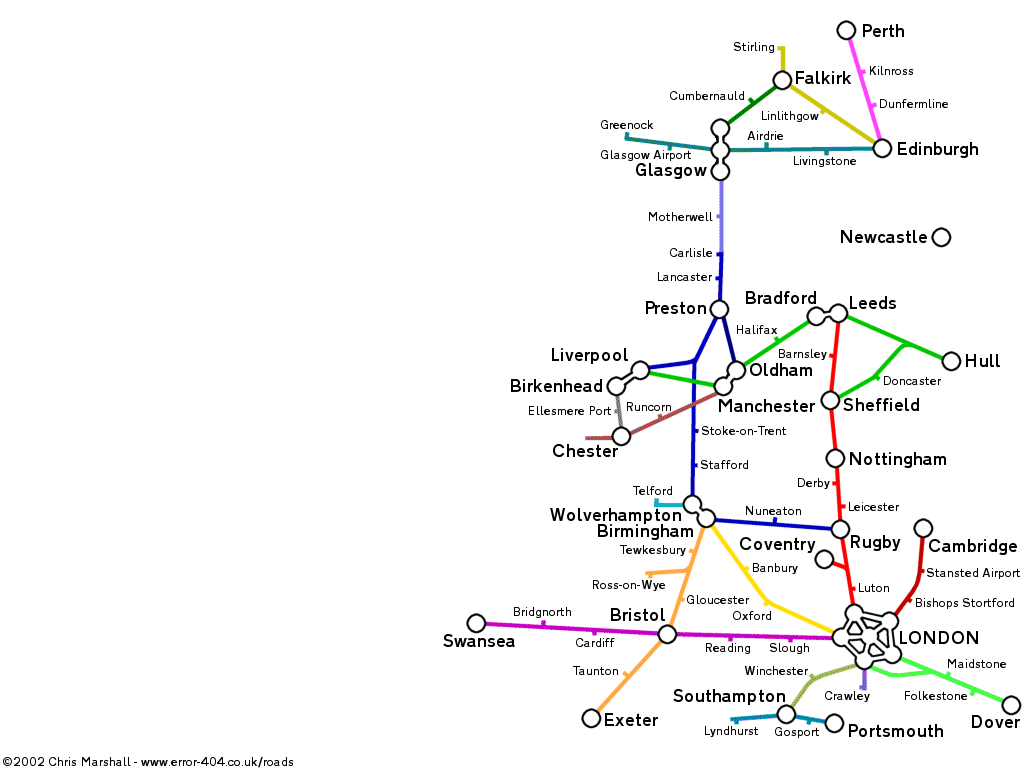 ‘South Coast Trunk Road‘ which many governments ago (during either the Callaghan or Thatcher period) was known as the Folkstone to Honiton trunk road. This name was posted up on big signs along the route until it became clear that the Government had lost the will to invest in this journey. It is clear from the map that between Exeter and Lyndhurst and Portsmouth and Dover that there are no motorway standard roads as part of this trunk route. The East West route (or should that be West East) is so poor in places like Sompting (although the road does not pass through the village itself) that along with a large number of accidents (compared to similar roads elsewhere) that many travellers avoid the South Coast route altogether and instead travel North to circle the capital and travel South again adding to financial and environmental costs for all of us.
The work of prioritising improvements on this route, along with other major transport projects in our area was delegated from the Government (albeit with a strong ministerial veto) to the Regional Transport Board established at the end of the 20th Century. Several attempts were made to improve the coastal route, but each time the Government chose to ignore the evidence that money here would be well spent. When the coalition Government arrived they dismantled the various regional coordinating structures such as the Regional Assembly (I was a Vice Chair of SEERA for 5 years) and the Regional Development Agency (SEEDA) who between them enabled the Regional Transport Board to operate. The Government has since recognised that they really did throw the baby out with the bathwater and having created Local Economic Partnerships across the country to perform some of the functions that the RDAs used to carry out. They now want these LEPs to take on the work of regional planning for transport, hence this announcement of the establishment of the Local Transport Board for parts of Sussex and Surrey. This new Local Transport Board has been formed to manage a programme of local major transport schemes (capital projects over £2m) in the Coast to Capital area from 2015 onwards.
The previous Regional Transport Boards did at least together cover the whole country and even with the cooperation between the then South East and South West RTBs arguing together for a South Coast trunk route to live up to the expectations of the old Folkstone to Honiton vision, the Government was not persuaded. Whatever the rights and wrongs of the A27 route, if the Government is to hand responsibility for transport planning to the LEPs they need to follow this up with the support for whatever proposals these partnerships identify as the solution for the social, environmental and economic needs for this area. The real challenge for the LEP however will be that it was established to focus on economic development only, clearly transport does need to address the social and environmental needs of the area. Only time will tell how effective the LTB’s will be in joining up gaps across the country as a whole and how willing the Government will be to support their proposals.


 ianchisnall