
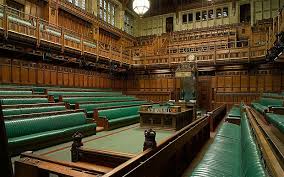
 Mark Twain is reputed to have said that everyone talks about the weather, but no one does anything about it. When the rain has stopped and the surface water has left the Somerset Levels, one of the issues that MPs will talk about again is the turnout in elections and reasons why many of us, despite universal suffrage in place since 1928 lack the interest to cast our votes. The risk is that we diagnose the cause as being something that we can change or at least moan about, and then we can set about looking in the wrong direction for ever more. There is a very useful website that provides a graph of voter turnout in General Elections since 1945. The turnout between 1955 and 1997 remained reasonably constant between 70% and 80% throughout. A couple of times it peaked at 79% and on several occasions it fell to below 72%. The low point during that period was 1997 when it dropped to 71.4% and from that point it dropped like a stone to 59% in 2001 and has recovered slightly since, reaching 65% in 2010.
We know that there is no lower limit acceptable to Government, as evidenced during the Police and Crime Commissioner elections when turnout levels of 15% did not deter the Government from allowing any of the 41 PCCs from taking up their posts. As one of the candidates in Sussex, I believe that there were several reasons why turnout was so low, and none of those were the fault of the candidates in my opinion. However the only way in which we can currently choose our Government is through elections, and so turnout does matter. At least for the 65% of the electorate, it is clear who they wanted their MP to be, even if they voted for a candidate who was not elected. In some cases people are invited to vote for a range of candidates, knowing in advance that their vote will almost certainly make no difference to the final outcome. It is estimated that there are between 80 and 100 seats which could change colour, leaving over 500 that almost never change. That would act as a disincentive for many people, and the solution is almost certainly some form of voter reform, and in some cases perhaps a change to the constituency boundaries. There are also many people who suggest that they would vote if there was a None Of The Above option. Others think that the process of voting itself acts as a disincentive, and if there was e-voting, or polling stations at Supermarkets that things would improve. Speaking personally I would like to see changes in many of these areas. During a recent series of discussions on this topic on Radio4 PM programme, one suggestion was that constituencies should be increased in size, but each constituency to return two candidates as MPs, one male and one female. This could also increase the prospect of candidates of different parties being returned from each constituency, which might increase the sense of votes counting more fairly. It might also help if our MPs paid more attention to our views, once they are elected!
Any changes that could impact on turnout depend on the government of the day proposing these and obtaining support from a majority of MPs. In time they may also offer us a referendum. However as we saw from the AV referendum on 5th May 2011, the Government sets the terms for referenda, and in May 2011 we were faced with a choice between two flawed voting systems. Such options are not real choices, and we need to be engaged with in a much more effective manner by our Government. However this will not happen without a major shift of attitude amongst MPs. An example of the gulf across which any meaningful change must pass, is a debate that took place in Parliament on Monday as part of the European Union (approvals) Bill when Stuart Jackson, Conservative MP of Peterborough explained “Not for the first time, the hon. Lady puts her finger on the nub of this debate. She is supporting exactly the point made by my hon. Friend Sir Richard Shepherd. There is a direct causal link between the reduction in election turnout and the transfer of sovereignty from our UK Parliament to the supranational body and the growth in power of the pseudo-nation of the European Union. That is why so many people, including young people, are bitterly cynical about the power they have with which to influence politics. Decisions that affect their lives every day are taken by that supranational body and not by our sovereign national Parliament.”
Stuart Jackson and Richard Shepherd are Euro Sceptics and any port in a storm must seem attractive to them. However our democratic malaise cannot be laid at the door of the EU, as much as Stuart might wish. We joined the EU in 1973 and whilst there have been many changes to the nature of the organisation since then, there have also been three clear peaks in voter turnout and three troughs since that time. It is impossible to prove there is a causal link without an empirical analysis of the decisions of electors. If that was being considered I think MPs would discover a number of home truths. Sadly they would rather live in fantasy land, and are unlikely to make any changes until turnout drops to a level below last Winters PCC elections. In the meantime there will be many more discussions blaming our failure to engage on a whole range of issues. We have a long way to go!


 ianchisnall