
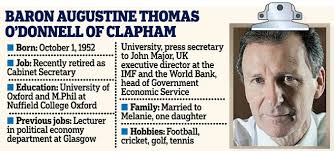
 Yesterday in Parliament the Political and Constitutional Reform Committee listened to Lord Gus O’Donnell, the former Cabinet Secretary, on the impact of the Fixed-term Parliaments Act 2011 on Government, particularly in the final year of a Parliament. He pointed out that it was a bit early to assess the impact of something that is less than 80% through, but he went on to suggest that perhaps this years Queens Speech when the Government sets out its plans for the year ahead would be a short one. His view was that the two coalition partners would be focused on the election a year away and their need to distinguish themselves from one another and this would make it difficult to agree many substantive laws. He then suggested what impact this might have.
He wondered if the MPs, with little legislation to debate might turn their attention to some of the long term issues that we as a nation are facing. One of the examples was the impact of climate change, but there were other suggestions and indeed it is possible to imagine a significant number of issues that our short term Governments rarely have time to consider in a considered way. His optimism (and I am with him there) was shot down by Tracey Crouch MP who explained that MPs are first and foremost legislators and without any legislation to debate, and an election on its way, that all but the most focused MPs would return to their constituencies to prepare (at our expense) for the election a year away.
I am sure that the MP for Chatham and Aylesford is right in her analysis. However those of us who are looking for a Government that can address issues that are not going to be solved in the next 52 weeks, surely have some merit in our thinking. I know that Sir Gus is recognised as being a very intelligent man, who does understand the working of Governments, so surely his views should be considered a bit more seriously than seems to have been the case. He also raised concerns about the issue of safe seats, pointing out that many people have a vote that is much less valuable in terms of the impact of the election than others. I understand that there are now only around 85 constituencies that are likely to determine the outcome of the election. This suggests that 565 or so are simply going through the motions, which by implication suggests that most MPs are not going to have a strenuous year if they don’t have anything to debate. Sadly there was no evidence that the MPs on the Committee have really understood how important these safe seats are to our engagement as electors.
In case Tracey Crouch is wrong about the stay at constituency nature of MPs and Lord O’Donnell is right that next year will be a quiet one for Government legislation, there are at least two options in addition to the idea of debating the big issues in our society. The first is the issue raised by William Bain yesterday in Parliament which is the post legislation scrutiny of the Lobbying Bill and indeed the same could be applied to other pieces of legislation. That would certainly get my support, allowing the short cuts taken in preparation for these Bills to be re-examined with the benefit of hindsight. The second is the need for backbench MPs to have some say in the running of Parliament. If the Government is unable to provide enough legislation for the full 5 years, now would be a good time to find out what the Backbench MPs can do with the levers of state. This has been a pressing concern for Natascha Engel in her role as Chair of the Backbench Business Committee. Why not allow her to take over some of the space usually inhabited by the people who determine the agenda for Parliament such as Andrew Lansley.
The other alternative is for the Government to call a snap election and put all of us out of our pain as we are expected to suffer this 18month election campaign.


 ianchisnall