
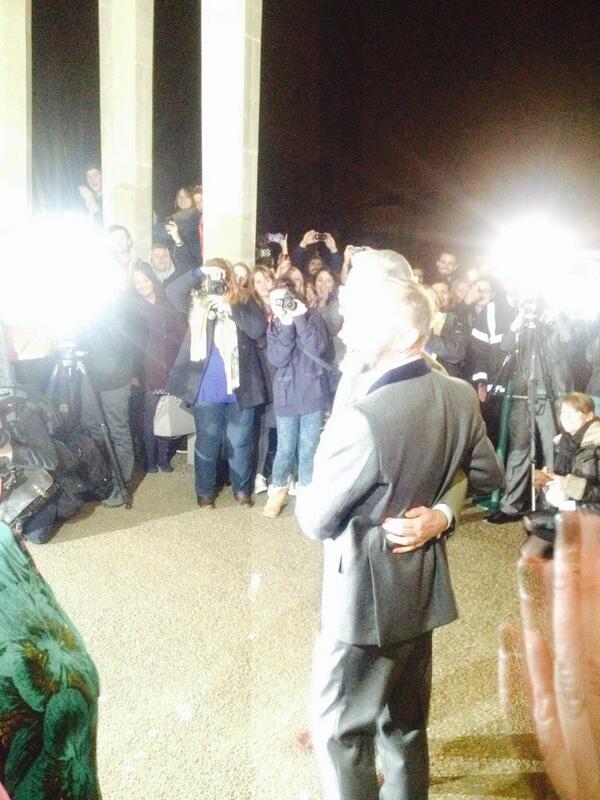
 A few hours ago a number of men and women across the nation including Andrew Wale and Neil Allard in Brighton were able to formalise their relationships through the act of marriage for the first time, bringing to fruition yet another change to the way in which Marriage is dealt with by our legal system. Whilst this was the first time that people of the same gender have been able to participate in this important activity, some of the previous changes probably seemed just as radical and popular/unpopular as this one to those on the different sides of the change. In the context of religious teaching this particular change may not have been the easiest for some to accept, but few of us can appreciate how much impact the previous changes may have had on the religious and secular citizens of their day. It seems inevitable that our reflection on this significant change will take on a different perspective when we are no longer looking at it in the glare of the flashbulbs that illuminated the Midnight ceremony evident in this photograph from the wedding of Andrew and Neil.
In a 100 years the equivalent to our Wikipedia will have an account of the legal change that led this mornings ceremonies, however here are a small number of the other significant changes to marriage in the public sphere, based on Wikipedia entries.
The 1753 Marriage Act, full title “An Act for the Better Preventing of Clandestine Marriage”, was the first statutory legislation in England and Wales to require a formal ceremony of marriage. The Act was precipitated by a dispute about the validity of a Scottish marriage although pressure to address the problem of clandestine marriage had been growing for some time. This was in effect the end of Common Law Marriage and required that, in order to be valid and registered, all marriages were to be performed in an official ceremony in a religious setting recognised by the state.
Nearly a 100 years later the Act for Marriages in England 1836 legalised the concept of civil marriages into England and Wales. Previously the only legally recognised marriages in England and Wales were those performed by the Church of England, Jews and Quakers. This meant that Roman Catholics and members of other Christian congregations, as well as atheists, Muslims, Hindus or members of any other religious body, had to be married according to (the Anglican) rites and ceremonies which they did not support, and by a priest who they believed had no authority. If they did not do so, they had no legal rights as married people or as husband and wife. The Marriage Act of 1836 allowed ministers belonging to other Christian churches to register marriages performed in their churches with the government, thus granting legal status to those marriages. It also enabled civil officials to offer an alternative to religious marriage.
The Age of Marriage Act 1929 increased the age of marriage to sixteen for men and women from 14 for men and 12 for women. This was the first time that the state had attempted to change the age of marriage from that deemed to be the age of puberty. That seems to have been one of the changes that was long overdue by todays standards!
A few days ago a survey was carried out asking people if they would attend a same sex marriage and apparently 22% of people claimed they would not do so. Surely what really counts is what people will do when an invitation arrives from a couple who they love. I suspect had the question been would you attend a marriage in a religious building, at least as many people might have answered in the negative. This sort of question is entirely detached from the very reason why any of us would ever attend a wedding or any other ceremony, religious or not. I am always thrilled to be invited to share in the important stages in the lives of people I know, I am sure I am not alone in that. Let us hope that there was room at the wedding of Neil and Andrew for their real guests as well as all those photographers!


 ianchisnall