
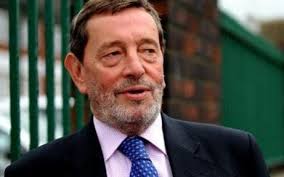
 On Sunday night I was involved in a twitter debate organised by a group whose own twitter account is @PrisonStorm . The debate took place over a 2 hour period and covered a number of issues including the misuse of a sentence known as an Imprisonment for Public Protection (IPP) which then miraculously featured heavily on Monday morning’s Today programme on Radio 4. I have no idea what acted as the catalyst for the two events and if they were connected, but there was certainly a strong common thread. The IPP which is an indeterminate sentence was introduced in 2003 by David Blunkett who was not, to my knowledge involved in the Prison Storm debate but did get interviewed on the Radio yesterday morning. He conceded that there were far too many people locked up with IPP sentences that did not deserve such a sentence and that Judges had misunderstood who such a sentence was intended for. The case study used by Radio 4 was of a man who had been imprisoned for a violent offence and was imprisoned initially for about a year and towards the end of the sentence he set fire to the mattress in his cell. He was subsequently re-sentenced to an IPP based on a minimum tariff of 11 months and over 10 years later he is still in prison because he has been unable to satisfy the parole board of his safety to be released. However this is due in part to the lack of mental health assessments for him which in turn is due to a lack of funding within the prison service so quite a catalogue of errors.
The reality is that David Blunkett was still a Government Minister when this young man was first sentenced using an IPP, and although he was no longer the Home Secretary with responsibility for prisons, his brainchild, the IPP was already being miss-used by the judiciary if his assessment is correct. Whether that is due to the lack of clarity regarding its purpose, or their failure to get things right is immaterial to the man hoping for release in September after suffering over a decade of self harm. However either way the Minister who conceived this plan, a man who is now in the House of Lords and willing to be interviewed on the Radio, must surely carry some responsibility for the way his law has been used. No doubt there are other ‘innovative’ laws that have been dreamed up by creative people like David Blunkett which have gone badly wrong for the people affected. We do need creative law making, but this must be something that is reviewed and monitored closely not just by those who succeed the innovator in the Ministry concerned, but also the architect must be held accountable over a period of time. If the ex-Minister was the designer of a building (or a system of building design) that collapsed or that started to go wrong, they would not be able to walk away and make such objective statements as David Blunkett did yesterday, in essence blaming the judiciary for not understanding the reason he created the IPP, but not in any way accepting he was partly to blame. The fact is with IPP’s that they are no longer available having been ended by the coalition. However there is still an enormous backlog of around about 3300 cases that have not yet had their sentence ended or commuted to a fixed term sentence. The need to see this happen is clearly primarily the responsibility of the current Government and the parole board, which in turn is funded by the Government, but David Blunkett should be demonstrating his own accountability by being someone who is making regular challenges to ensure that this happens sooner rather than later. When things go wrong asserting blame is much easier to do than clearing up the mess. All those who enter public life need to be willing to help clear up the mess they create, or else what does accountability really mean?


 ianchisnall