
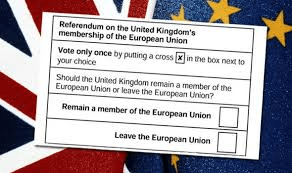
 If as a nation we are to follow through the ‘plan’ set out by Parliament to leave the European Union, there are exactly 6 months or 180 days before the end of the process from today. For some people who want us to leave and who heard Michael Gove speaking on Radio 4 as part of the Today programme on Tuesday 21st June 2016, they will understandably be angry that we have already spent 829 days more than he promised as part of the EU. However one would assume that in 180 days that anger may start to subside, particularly if our departure goes well. For others who feel the part of the Government led by people like Michael, Boris Johnson, David Davies and Liam Fox and endorsed by other parties swung the outcome of the referendum in the Leave direction as a result of telling lies, their anger is also growing on a day by day basis. However assuming we do depart on 29th March and if that change creates the problems that many of us believe will be the case, that level of anger may expand exponentially and so our society could collapse under either scenario. The less clear aspect is how those who voted to leave will feel under such circumstances, once their sense of pleasure begins to evaporate.
It is clear that many people believe a fresh referendum would be one way to verify how we now feel as a nation and others feel angry because they believe their vote of 830 days ago is being overruled. What seems crystal clear is that any new referendum needs to be very different in approach to that of the vote on June 23rd 2016. This can no longer be a simple question that asks if we should remain or leave the EU, although I along with many others believe very clearly there has to be an option for us to remain in the EU. One of the aspects of the future vote needs to acknowledge that when the Government through Lord George Bridges stated on 25th October 2016 “We have taken the conscious decision to build a national consensus to our approach to the negotiations. We are consulting a wide range of stakeholders in order to create a national picture of what people want from a deal on exiting the EU. This will allow us to deliver on what the country asked us to do through the referendum, by identifying the opportunities as well as the challenges.” that no such consultation did take place and therefore this new referendum which needs to act as a mechanism to suspend our departure, must also capture our views, albeit rather late in the day, either for our future departure or for the reforms needed in the EU if we decide to stay. It is clear that remaining in the EU in a status quo situation is not a meaningful option in the light of the 2016 referendum.
Because the new referendum needs to act as guidance to Parliament as a whole, it is clear that one possible question to answer is do we want Parliament to carry on as it is at present in the current process of planning to leave and in essence tell them for once and for all, please don’t trouble us again. This would be a simple way of endorsing the current Government without the need for a General Election. On the other hand it seems that rather than pandering to the views of opposition parties which may want yet another election that we have a chance to call on Parliament to act in a manner that may seem counter intuitive to most MPs and all political parties. I recall how in November 2017 Frank Field spoke about how the Government needed to establish a cross party cabinet that would ensure that our departure would be shaped by people that came from every party. This seems to be another meaningful scenario to propose and vote for. After all even if there is another election before we leave the EU or agree to remain in a reformed EU, that demanding our politicians start cooperating over the way forward seems essential, particularly as the whole of our nation needs to begin to be listened to. This is true whether we continue to plan to leave or begin to plan to demand changes to the EU in order to satisfy some of the 17.4 million people who voted to leave because they were unhappy with the EU and some of the 16.1 million who voted to remain, but did so wanting the EU to change, nevertheless.


 ianchisnall