
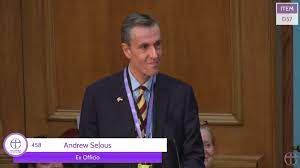
On Thursday Andrew Selous, the Church Estates Commissioner was asked a couple of questions by Tim Loughton, the Conservative MP for East Worthing and Shoreham and then another question from Ben Bradshaw who is the Labour MP for Exeter. The text comes from here. The initial question from Tim was “What steps the Church of England is taking to support family relationships, parenting and marriage following the report of the Archbishops’ commission on families and households.” and Andrew responded with
The commissioners made 36 recommendations to the Church of England and 29 to the Government, and now the focus must turn to implementation. Recommendations include supporting a consistent and universal roll-out of family hubs, requiring registrars to signpost high-quality marriage preparation, and a call to the Church to build relational capability at all life stages, not just for couples preparing for marriage.
And the other two questions and answers were
Tim: I declare an interest as the son of a former Church of England rector. In 2011, there were 51,000 weddings in Church of England churches; by 2019, pre-covid, that figure had dropped to 29,000; and since the current Archbishop of Canterbury came to office in 2013, as he readily admitted last week, the average congregational attendance has dropped by 15%. How can the Church of England influence the population on family relationships and marriage matters, when too many of the congregations are voting with their feet?
Andrew: That is a good challenge from my hon. Friend, who I know cares about these things. The work the commissioners are doing to fund the Church to try new types of ministry is proving successful in different parts of the country. I know he will join me in supporting the objectives of the Church Commissioners to try to strengthen family life, which was the subject of his question. In particular, I think he will agree with me about the role that registrars have to play, but he makes a fair point that we need people in the churches. That is central to what the Church of England is doing.
Ben: There might be more weddings in church were the Church of England to allow same-sex couples to get married in church. In that context, does he welcome the commissioners’ conclusion, as I do, that
“‘family’ does not necessitate a certain type of relationship or a specific family form. What matters is the depth of the connections and the support which can always be relied upon”?
Is that not completely inconsistent with the Church’s continued rejection of families where the couple happens to be of the same sex, and its refusal to solemnise their committed relationships?
Andrew: I know that the right hon. Gentleman follows these issues closely. This was an independent report to the archbishops, which has been welcomed by the Church. It is based on deep evidence collecting over a two-year period, which involved talking to, in particular, young people up and down the country. I agree with the right hon. Gentleman that it contains some sensible suggestions, and the matters to which he refers are on the agenda of the General Synod of the Church of England, which will take place in York early next month.


 ianchisnall