
On Wednesday the 10th January a Parliament session was debated by Ian Byrne the Labour MP for West Derby in Liverpool. He started the session about Free School Meals: Children with SEND. His first few words were “I beg to move, That this House has considered access to free school meals for children with special educational needs and disabilities.”. After more significant comments from several Parliament members which included Mary Foy the Labour MP for Durham who raised the consideration in respect of Brighton and Hove Lloyd Russell-Moyle the labour MP for Brighton Pavilion responded. Here is Mary Foy’s comment.
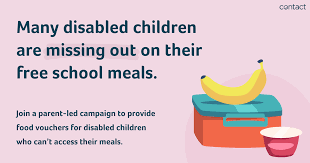
The solutions are obvious, as my hon. Friend the Member for Liverpool, West Derby, outlined: update the free school meals guidance, and make it clear that schools can provide an alternative for disabled children, such as supermarket vouchers. Brighton and Hove City Council has introduced such a scheme, so will the Secretary of State pledge to do so here today? That would be a start in repairing our society’s safety net, which has been so badly damaged by the last 14 years of austerity.
And here is the full text from Lloyd Russell-Moyle
It is an honour to follow all the previous speakers. I will follow on from that mention of Brighton and Hove.
Brighton and Hove is slightly, but not hugely, above the national average for young people and children who have special educational needs, and for young people with EHCPs. We are not an outrider in that sense, but we do notice more and more children not attending school, not because their parents are keeping them at home—that is another issue entirely—but because the schools are unable to provide the special educational needs support that those children need. My view is that this issue is caused by two things. The first is the disastrous austerity policies that have led to our schools suffering and unable to support pupils. Secondly—this is more controversial—I personally believe that we have had a 20-year incorrect educational project, which believes in integration only, and not that separate special schools are sometimes best for many young people.
No matter what additional support is provided, I am afraid that a pupil with sensory needs will not always manage to work in a large secondary school where there are thousands of children running around, and they can sink. However, if they are at a special school that can provide for their needs in an alternative location with sensory adaptations, usually off site, they can flourish. These schools used to be commonly provided by the mainstream—by local authorities, at a reasonable price for the authority. Then, when the children leave the school or move into mainstream school, if that moment comes, they are a big fish in a small pond, rather than a small fish with lots of sharks. I am afraid that we have shut down many of those local authority schools, and local authorities cannot afford to place pupils in special schools, so a lot of children have been put into education otherwise than at school, and are therefore not provided with free school meals.
Only yesterday, the Minister wrote to me to say:
“Regarding students receiving…EOTAS, the department’s position is that pupils must be registered with a state-funded school in order to be eligible”,
and that the Department does not plan to change that. Well, that seems different from today’s briefing from the Department, so of course there is confusion. Brighton and Hove has decided that we will skip past this confusion and mandate free school meals for all those children. They are not there because of parent choice; they have been placed there by the authority, because the authority cannot find suitable accommodation. They must be given vouchers, and the Minister should update the guidance to ensure that that happens.


 ianchisnall