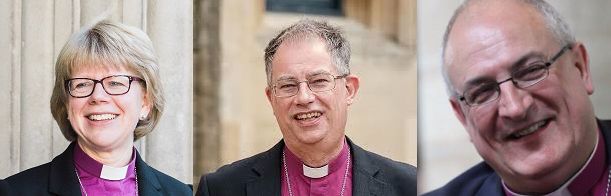
Sarah Mullally the Bishop of London, Steve Croft the Bishop of Oxford and Stephen Conway the Bishop of Lincoln spoke on Friday. Their contribution is below and the words from all the other speakers.
Bishop of London
My Lords, it is an honour to respond to the gracious Speech. I welcome the Minister as she joins us in this House at the Dispatch Box. I also thank the noble Baroness, Lady Jolly, for her contribution to the House, not just on health and social care; those of us who are female priests and bishops thank her for her support.
I welcome many of the Government’s healthcare announcements, especially the two public health legislative measures. I too am glad to see the tobacco and vapes Bill continue. Smoking continues to be one of the leading causes of preventable deaths following the lines of inequality, so bringing forward this Bill will be a significant step forward in our public health agenda. The announcement that the Government will legislate to restrict the advertising of junk food to children and the sale of high-caffeine energy drinks is also welcome. As we have heard, obesity is one of the major health challenges that we face and, again, its impacts are hugely unequal.
The commitment to update the Mental Health Act is long overdue. Mind reminds us that black people are four times more likely to be detained under the Mental Health Act than white people, and more than 11 times more likely to be the subject of a community treatment order. People living in areas of high deprivation are more than 3.5 times more likely to be detained than those living in least deprived areas. I hope that in reforming the Mental Health Act the Government will pay attention to these inequalities.
We now have a much better understanding of what contributes to health and well-being, so I welcome many of the announcements which will provide contributions to healthy lives for individuals, and for communities, such as for housing and education. The commitment to ban conversion practices is long overdue. The measures in the employment rights Bill, especially changes to the statutory sick pay system, are key. Taking time off when you are ill is vital to recovery and ongoing participation in the work in our communities.
I also hope that the Government will use the expanded scope of the national curriculum to promote key life skills, such as making financial education a component of PSHE at key stages 1 and 2, as recommended by many financial literacy charities.
My work inside and outside health has led me to believe with increasing certainty that, if we are to reduce health inequalities and the burden on the NHS, faith groups must be involved. Faith observance is highest in the most deprived areas. This means that faith leaders have the potential to provide vital insight and access to those communities least likely to access preventive healthcare. Faith leaders are trusted in their communities and are valuable partners for improving the health of their community. Ensuring that culturally competent services are available to everyone who requires them is vital if this Government are to halve the gap in healthy life expectancy. I hope that this Government will build on the work already undertaken in this area.
However, it is disappointing there is not a single mention of social care in the gracious Speech. The Government acknowledge that the sector is in need of deep reform. We have an ageing population that has more acute and complex needs. People with care and support needs are often unsupported in navigating the system. There are higher costs for councils at a time of restricted budgets. Unpaid carers provide care for their loved ones, sometimes at the expense of their own health, well-being and work. The Government’s manifesto commitment to create a national care service is laudable, but requires action. We need a long-term funding settlement for local authorities and a workforce plan for the sector. I fear that without these measures we will not achieve the positive vision of social care, because social care is never an end in itself but is a means by which we can live lives of joy, fulfilment and purpose and contribute to the economic recovery of this country.
I regret the absence of palliative care from the gracious Speech. Reliance on charitable donations means that end-of-life care and provision varies depending on how affluent an area is. The cost of care is not being met, and services are being reduced. In the middle of a growing conversation about alternative options at the end of life, it is imperative that we properly fund palliative care.
Finally, every person we talk about in this Chamber is immensely valuable. We all bear the image of God. I look forward to working with noble Lords across the Chamber to ensure that people who are particularly vulnerable to the effects of inequalities and health inequalities are at the forefront of our thinking.
Bishop of Oxford
My Lords, it is a privilege to contribute to this debate. I congratulate the new Ministers and express appreciation to the noble Baroness, Lady Barran, and to the noble Baroness, Lady Jolly, for her valedictory speech. There is much to commend in the gracious Speech.
A few weeks ago, Pope Francis addressed the leaders of the G7 on the risks and opportunities of artificial intelligence. Francis spoke of the way in which AI arises from God-given human potential. He spoke of the excitement at the possibilities that these powerful tools bring, of the risks of greater inequalities and impersonation, and of the need for deep and humane wisdom and ethics and the right political leadership. I encourage noble Lords to read his address but also, if they have a moment, to watch the 10 minutes before his address. Pope Francis demonstrated a deep humanity, not only in his words but in the way he went right around the room, embracing each of the G7 leaders and lightening for a moment the heavy burdens that each carried.
My encouragement to the Government is to hold together these very significant developments in technology with deep insights into our humanity: what it means to live well, to build flourishing societies and to enable the well-being of all. We must equip our young people to be masters of technology, not slaves to algorithms—able to put the science to good use but not allow its creations to distort our humanity or society. The deep ethical questions raised by the sciences will run across every part of this Government’s legislative programme, but I will focus on three themes.
The first is the intersection of work and technology. An increasing number of people now work for and with algorithms. The quantity and quality of work is changing. Work is not just economic productivity; it is fundamental to human flourishing. The new skills and employment Bills must have regard to the question of satisfying and rewarding work in respect of not simply income but agency, autonomy and creativity and the ability to create safe and humane workplaces for the flourishing of all.
The second theme is the opportunity and risks of data: the need to ensure that every citizen derives maximum benefit from the secure use of data—as the noble Lord, Lord Knight, powerfully underlined—and that every citizen is protected from exploitation by individuals or corporations, whether in health or education and skills. What will be the Government’s approach to risk in terms of the deployment of untried technologies that have the capacity to cause harm? Will security extend to the security of data? This seems a vital question given global events today.
The third theme is to urge that the well-being of children and the vulnerable remains at the heart of the Government’s approach to technology. Any society will be judged by its care for the young. We have seen two decades of unregulated exploitation of children for commercial gain by social media companies. I welcome very much the resolve of the Secretary of State to further strengthen and enhance the Online Safety Act. We do not yet fully understand what makes for a good digital childhood. It seems that many children’s lives are being ruined through overexposure to technology, with a consequent effect on mental health. I urge the Government to be bold when it comes to the protection of children online.
Every development in science and technology reveals a little more clearly the wonder of what it is to be human and invites us to mine the deep treasures of wisdom in faith and our common humanity. Will the Government, across their programme, dare to hold in tension both knowledge and deep wisdom for the sake of the flourishing of all?
Bishop of Lincoln
My Lords, I share your Lordships’ appreciation of the noble Baronesses, Lady Barran and Lady Jolly, and I welcome the appointment of our new Ministers. The noble Baroness, Lady Merron, will know as much as I do about Lincolnshire and that, particularly in its coastal towns and rural areas, Lincolnshire suffers from intergenerational poverty, which has a very direct impact on children. I think your Lordships’ House has received two reports in the last 15 years about the poverty in our coastal towns, but nothing much has changed. If I have heard the Government correctly, I am glad to hear them express their intention to pay more attention to rural and coastal poverty, which is often hidden away when it is not in our big cities.
Therefore, I also particularly look forward to the progress of the children’s well-being Bill and the work of the newly announced child poverty unit. In moving forward in this area, how do His Majesty’s Government plan to involve faith communities in addressing these needs, particularly considering the concentration of faith communities in areas of poverty and deprivation, as my right reverend friend the Bishop of London referred to earlier?
I follow other Members of this House, particularly the noble Baroness, Lady Morris, and the noble Lord, Lord Griffiths, in drawing attention to children with special educational needs and the Government’s intention in relation to what has already been said in the gracious Speech, requiring all schools to co-operate with the local authority on school admissions, SEND inclusion and place planning by giving local authorities greater powers to help them deliver their functions on school admissions and ensure that those admissions account for the needs of communities. The challenges facing provision for children and young people with special needs cross all sectors, and the Government can assist by tackling the long delays and ongoing bottleneck in assessments, and by increasing the support offered to schools. The current system has created a shortage of school places in specialist schools, as has been said, and insufficient resources are provided in mainstream schools to offer support for children’s needs.
This all has a real impact on children’s mental health, especially in relation to poverty as an additional burden. I applaud the work and ambition of the Children’s Society, which intends to create a whole series of mental health hubs for children and young people in Newham and the rest of the country.
I hope that we will continue to tackle poverty by joining up all sorts of agencies and bodies within government and beyond, as expressed in the letter recently issued to all Members of this House. On the bus to school when I was a teenager, the conductor regularly told the passengers to hurry up and take our time. I know the Minister will agree that there is a real urgency to the task group’s work, the fruits of which will need to be seen in sustained investment and action to support schools, children and young people in the long term. We need justice for each one of those 700,000 children who need to be lifted out of poverty.


 ianchisnall
Pingback: More Bishops respond to the King’s Speech. | ianchisnall