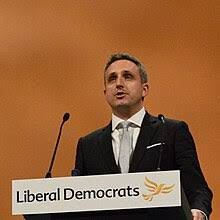
The Autumn Conference for Liberal Democrat took place in Brighton from 14-17 September with a significant number of people taking part. One of them was Alex Cole-Hamilton who has recently become the Liberal Democrat MSP for Edinburgh Western. He was born in Hertfordshire in South England and became a lecturer at the University of Liverpool. Following the Brighton conference, he was working in the Scottish Parliament on a theme called “Creating a Modern, Diverse and Dynamic Scotland”.
Alex commented, “I came back from Brighton yesterday, where a buoyant conference took place with 72 new Lib Dem MPs, who were focused on the people’s priorities. That is what we should be discussing in this place.” He also commented on “It is a bit like saying, “Do you believe in God?” Here are the full event comment and below are his full words.
I remember my early days as an MSP in this chamber when speeches, debates and events such as this would, in effect, be big marquee events. The chamber would be full, the Government benches would certainly be full, the public gallery would be full and, yes, the columnists, scribblers and broadcast journalists would be packing out the press gallery. Not even the hard-bitten columnists from The National are here today, such is the level of deep freeze to which this issue has been plunged. That is evidence of the end to our rhetorical wars of independence, and I am glad of it, because there are better things that we can be doing with our time in this chamber.
Winston Churchill once said that the definition of a fanatic is someone who cannot change their mind and is unwilling to change the subject. In the tenor of the debate from members on the Government and Green benches today, we see the measure of the fanaticism in those parties. I wish that they would change the subject, because there are so many topics that are crying out for this Parliament’s attention and for parliamentary time, which is a rare thing.
I wish that the Government would make time available for things such as the crisis in accessing primary care and general practitioner appointments at the first time of asking; the lack of dentists who provide NHS care in our constituencies; the sewage flowing into our rivers from the Government-owned water company; the mental health crisis, which sees young people with suspected attention deficit and hyperactivity disorder on a waiting list for seven years; the missed climate targets; the drug death emergencies; and the 170,000 Scots currently battling long Covid. Presiding Officer, you will remember that the Government made twice as much money available for a referendum on the topic that we are debating today, which did not happen, than for all the sufferers of long Covid in this country—it is a national outrage.
That is how Liberal Democrats would choose to influence Government time. There is every sign and indication that, if we are going to be part of what is next, we will have more influence. I am glad of that.
The SNP has spent the past 10 years picking at the scab of its defeat. It colours everything that we do in this place. Warning lights are blinking across the dashboard of public policy, crying out for ministerial attention, which is going wanting.
It explains why there are now eight times as many Liberals on the green benches of the House of Commons in Westminster as there are nationalists, and why we, in this party, came within touching distance of the number of Scottish Nationalist Party MPs returned to Westminster. I came back from Brighton yesterday, where a buoyant conference took place with 72 new Lib Dem MPs, who were focused on the people’s priorities. That is what we should be discussing in this place.
I go back to the general election, because that was an important line in the sand. For the first time in a while, the SNP was humbled; it could no longer defy the laws of political gravity. The general election was far from being the de facto referendum that the SNP had initially set out to make it. The people rendered their judgment: they were not interested in having that discussion.
The polls—any given poll that you look at, Presiding Officer, from this week, last week or any week in the past 10 years—show that the public that we represent is, largely, evenly divided, or as divided as it was on the topic of independence as it was in 2014. However, the salience has fallen away to almost nothing. If we ask people what motivates their vote, they will tell us that it is about health, the cost of living, heating their home or the standard of their children’s education, which has fallen under this Government. Those matters take far greater priority. It is a bit like saying, “Do you believe in God?” Everyone has a view about that, but it does not motivate how one votes, nor does the constitution.
Thank goodness that this 10-year anniversary will bookend a topic that has stifled our democracy and under which every election up until the most recent general election has been wrapped in a flag based on a reductive calculation of whether it is the best way to have a referendum or the only means of stopping one. I am glad of that.
We will hear a lot about Brexit. We have already heard a lot about it, but the SNP was a late convert to the cause of European unity. In fact, the SNP spent more on losing the Shetland by-election to the Liberal Democrats in 2019 than it did on the entirety of the remain campaign.


 ianchisnall