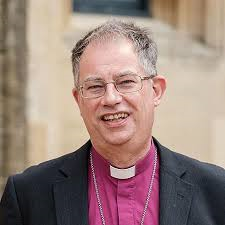
A number of Church of England Bishops are involved in the House of Lords to contribute to Westminster politics. One of them is the Oxford Bishop, Steven Croft who in 2013 was the Bishop of Sheffield becoming Bishop of Oxford in 2017. His commented for the first time in February this year regarding a discussion about Artificial Intelligence: Regulation and then at the end of April Steven raised four items. They are ‘Local Authorities: Temporary Accommodation Costs’, ‘Artificial Intelligence: Emissions’ which he organised for the group and then ‘Tobacco and Vapes Bill’ and ‘The Future of News (Communications and Digital Committee Report)’. Here are his comments which include responses from other members in the House of Lords.
On the 22nd April he spoked for ‘Local Authorities: Temporary Accommodation Costs‘
The Bishop of Oxford My Lords, I declare an interest as patron of Asylum Welcome, which works with asylum seekers and refugees in Oxford and Oxfordshire. What proportion of temporary accommodation provided by local authorities is used to house refugees who are assessed as priority need after having been granted refugee status? What steps are being taken to identify more suitable long-term accommodation for this cohort?
Baroness Taylor of Stevenage I do not have the exact figure for the right reverend Prelate, but I will write to him with it if it is available. I mentioned earlier the huge pressures we inherited in the asylum system. We are working hard to make sure that asylum seekers get a decision quickly and that we help local authorities plan more effectively as we reduce the number of asylum seekers waiting for the decision. Support is available through Migrant Help and its partner organisation, including advice on how to access universal credit and the labour market and signposting to local authorities for assistance with housing.
On the 23rd April he created the item for ‘Artificial Intelligence: Emissions’
The Bishop of Oxford To ask His Majesty’s Government what plans they have to measure the emissions associated with artificial intelligence in relation to the United Kingdom’s net zero target.
Lord Vallance of Balham I thank the right reverend Prelate the Bishop of Oxford for the Question. The Climate Change Act, as noble Lords know, made the UK the first country to introduce legally binding long-term emissions reductions targets. This sets in law our commitment to reach net-zero emissions by 2050 and means that the Government must address emissions across the whole economy to reach our targets. This includes consideration of increased electricity demand from new and growing sectors, including AI, to ensure that we are compliant with our carbon budgets.
The Bishop of Oxford My Lords, I thank the Minister for his Answer. He will be aware—I was not, until I researched this—that, in Ireland, data centres now account for over 20% of electricity use and the largest data centres under construction consume as much energy potentially as 2 million households, according to some estimates. Does the Minister agree that there is a need for more joined-up thinking between the Government’s energy policy and the rising energy demands of AI and data centres? As a first step, are the Government ready to accept the recommendations of the Royal Academy of Engineering for mandatory reporting for data centres on energy consumption, water consumption, carbon emissions and e-waste recycling?
Lord Vallance of Balham Recent estimates from 2022 show that data centres, including those for AI, account for about 4% of UK electricity consumption. The recently formed AI Energy Council, which is co-chaired by the Secretaries of State for DSIT and DESNZ, is set up to do exactly what the right reverend Prelate is suggesting, which is to ensure that we have a joined-up approach between energy and AI.
On the 23rd April he spoked for the ‘Tobacco and Vapes Bill‘
The Bishop of Oxford My Lords, it is a pleasure to follow the noble Lord, Lord Stevens. I rise to support this important Bill and to express the support of the right reverend Prelate the Bishop of London, who sends her apologies that she cannot be here today. I thank the Minister for her very clear introduction, and other noble Lords for their principled and non-partisan support.
This is an extremely important and effective public health measure that prioritises preventive health at a time when demands on acute services are so significant. Stark inequalities in health remain one of the most persistent and negative health outcomes of modern times. Smoking falls clearly along this line of inequality. Action on Smoking and Health goes so far as to say that smoking is the leading cause of
“the gap in healthy life expectancy”.
The Government have already committed to being smoke-free by 2030 and although the most well-off parts of the country may be on track for that, Cancer Research UK reports, as the noble Lord, Lord Stevens, has said, that the most deprived areas are not likely to meet that target until 2050 at current rates.
We know from the evidence given by Professors Javed Khan and Chris Whitty to the Health and Social Care Select Committee that the tobacco industry continues to target the young and vulnerable and relies, as we have heard, on them becoming addicted. This leads to a highly profitable outcome for the industry and a highly harmful outcome for the individual and the family. In England, 352,000 years of life are lost in this exchange every year. Though unintentional, the inhalation of second-hand smoke is also harmful. The “smoke-free generation” element of the Bill, which raises the age of sale by one year every year, is controversial for some because it is about choice. However, it recognises that our choices are made not in a vacuum but with consequences for others.
We all submit to the law and exercise limited rights for the good and protection of our neighbours. We are called to love our neighbours and seek their good; indeed, what is profoundly Christian is that this may be at the expense of ourselves and our own choices and preferences.
We agree on the need to reduce health inequalities and to reduce the overall smoking rate in line with the Government’s smoke-free commitments. Much of the onus for these tasks is on integrated care boards, so I ask the Minister: what will the impact of the announced 50% cuts to operational costs be on stop-smoking services and, more widely, on the reduction of health inequalities? In the midst of such pressure on the health service, and in such a time of transition for the NHS, a change like this is required to reduce this enduring inequality in health outcomes. It also seems clear that a “polluter pays” levy should be considered to support these and other stop-smoking services.
I am glad to see the introduction of this Bill and commend the Government and the previous Government for their courageous action on the issue.
On the 25th April he spoked for the ‘The Future of News (Communications and Digital Committee Report)‘
The Bishop of Oxford My Lords, I welcome this timely report and this debate. The themes of the report—ethics, truth, access and trust—are of vital importance to the Lords spiritual, as I know they are to all Members of your Lordships’ House. My right reverend friend the Bishop of Leeds was part of the committee that produced this report, and he sends his apologies that he is unable to be in the Chamber today. I, too, congratulate the noble Lord, Lord Pack, on his fascinating maiden speech on email newsletters and new forms of communication, and I welcome him very warmly from these Benches to this House.
I have had an interesting response to the report, as I have read it today, and it has really been appreciative of the wonder of living in an age in which, at any hour of the day or night, it is possible to learn what is happening anywhere in the world. I think that is amazing. We are able to access unfolding events, combined with thoughtful commentary and analysis. This week, the world has rightly been paying tribute to Pope Francis, following his death on Monday, for his humility, humanity and courage. Within minutes of the Pope’s death on Monday, we had not only the news that he had, sadly, died but appreciations of his life, comments from world leaders, analysis of his many achievements and a sense of one single news story across the world. The same is true day by day, minute by minute. This report has helped me see afresh the living miracle of the 21st century news environment. So I join others in paying tribute to the media reporters and technicians who devote their lives to public service and good journalism.
The report is, of course, right that the news ecology is evolving and needs tending carefully by government and others. I will stress three of the recommendations as particularly vital and important. The first is the importance, as others have said, of nurturing and supporting the local alongside the global—essential for building resilience, participation and cohesion in communities. I particularly draw attention to the importance of local radio. I welcome the Government’s response and the news of the forthcoming local media strategy, and I too ask the Minister when that strategy might be available. Will it help in particular to arrest the decline in BBC local services that we have seen in recent years?
The second is to highlight recommendation 14: the suggested development by the BBC of a public interest generative AI tool, in partnership with others, to access reliable and authoritative information. This would be a really historic and strategic development to ensure a trusted source for the deployment of generative AI as a complement to commercial and multinational services. It has been suggested by other bodies that this recommendation does not feature in the Government’s response, and I wonder whether the Minister can offer a comment.
The third is to underscore the vital importance of building media literacy among every section of the population, not only the young, as the news media changes and evolves—that is recommendation 37(4). It was good to see the Government’s very full response to this recommendation through a number of different strands. Can the Minister offer an update on the progress of the media literacy review and the place of media literacy in the schools curriculum and assessment review?
We are privileged to live in an information age, which will continue to evolve. We need government to remain vigilant in cultivating this news ecology and diligent in equipping all citizens to navigate this world well. I welcome this report.


 ianchisnall
20.10.25 CHISNALL BRIGHTON.We sent huge evidence to UK Bishops and their
assocs.. Theres no reply. We repeat – No replies from any Bishop or
staff in UK.Other people mentioned in this Chisnall mail found to be
corrupt. How much longer is UK going to go on in this way.Within the
indictment is 10.000 deaths covered up over 30 yrs. Thats why the HM
Courts offered to kill us. Got it Ian? Or not? Will you ever wake up.