Bishop of Leicester asks questions about Employment


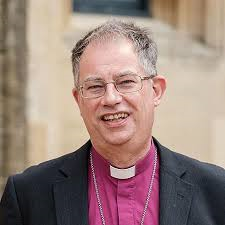
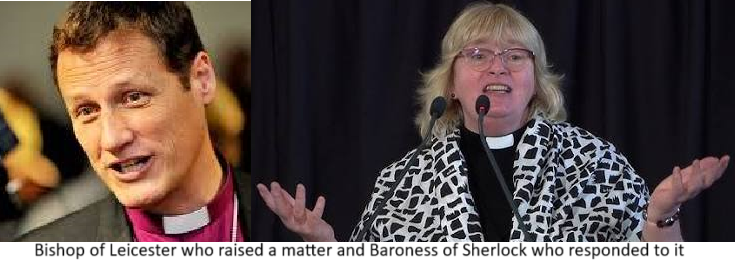
The Bishop of Leicester, Martyn Snow, has been involved in the House of Lords for nearly 18 months and he recently asked two separate questions about ‘Employment: Disability’. The first was here and the second here which are both on 15 April this year shown below. So far there have been people who did not like these second question!. The person who responded was Labour Baroness Sherlock, Maeve Sherlock who was also involved as a Durham Church person in the past.

Interestingly the Bishop of Leicester did have a contribution for two months ago which was included in the Spring Statement which was published on the 27th March. At the beginning of January he contributed to the Benefit: Eligibility. It was interested to see that Maeve was at St Nicholas Church, Durham from 2018-2022 and she was a priest at Durham Cathedral in June 2019.

The Bishop of Leicester: To ask His Majesty’s Government what steps they will take to evaluate the impact of disability benefits reform on the employment rate of people with disabilities.

Baroness Sherlock: The Office of Budget Responsibility has committed to produce an assessment of the labour market impacts of the proposals in the Pathways to Work Green Paper at the time of the autumn budget.

Information on the impacts of the Pathways to Work Green Paper will be published in due course, and some information was published alongside the Spring Statement. These publications can be found in ‘Pathways to Work: Reforming Benefits and Support to Get Britain Working Green Paper’.

A programme of analysis to support development and evaluation of the proposals in the Green Paper will be developed in the coming months.

The Bishop of Leicester: To ask His Majesty’s Government what analyses they carried out to suggest that disability benefit reforms will increase the employment rate of people with disabilities.

Baroness Sherlock: The Pathways to Work Green Paper sets out our plans for reform to stop people from falling into inactivity, restore trust and fairness in the system and protect disabled people.

The disability employment rate is affected by external factors such as the composition of the underlying disabled population and overall labour market performance, as well as DWP activity. The Office of Budget Responsibility has committed to produce an assessment of the labour market impacts of the proposals in the Pathways to Work Green Paper at the time of the autumn budget.

Information on the impacts of the Pathways to Work Green Paper will be published in due course, and some information was published alongside the Spring Statement. These publications can be found in ‘Pathways to Work: Reforming Benefits and Support to Get Britain Working Green Paper’.

A further programme of analysis to support development of the proposals in the Green Paper will be developed and undertaken in the coming months.

Posted in Church Teaching, Parliament and Democracy | Tagged , , , , , , | Leave a comment

A Surrey MP spoke about of the local YMCA’s


On Tuesday 8th of April in the Easter Adjournment events as here. Rebecca Paul, the Conservative MP for Reigate commented about the positive impact of the YMCA “and East Surrey YMCA to cut crime and foster pride in the town”. She mentioned the YMCA Sovereign Centre but also nearby in Guildford is the YMCA Downlink Group, part of the Sussex YMCA, a group that I was part of number of years ago. The YMCA was based in Hove for many years over time it covered many locations for East and West Sussex and later East Surrey area. Here are the comments from Rebecca Paul and the other comments, here.

To address the real issues faced, the Safer Redhill initiative was established. That is a partnership between Surrey police, the office of the police and crime commissioner, Reigate and Banstead borough council and East Surrey YMCA to cut crime and foster pride in the town. The project adopts the College of Policing’s “Clear, hold, build” framework, which is a three-stage approach where offenders are cleared from the area, and then partners work together to put in place interventions to keep it that way.

From drug operations at Redhill train station to plain-clothes officers out at night looking for suspicious behaviour, huge amounts have been achieved as part of the Safer Redhill initiative. There have been 155 arrests, with a combined prison time of 25 years for local offenders, 86 drug seizures—including 10 kg of suspected cocaine—£89,000 of cash recovered and weapons taken off the streets. I take this opportunity to thank Surrey police, especially Jon Vale, the borough commander, and Lisa Townsend, the police and crime commissioner, for ensuring that Redhill got the additional police focus it needed at the right time.

However, making Redhill safer is not all about police action; it is also about prevention, and that is where East Surrey YMCA has come in. With its qualified youth workers, it has been supporting local young people at risk of offending or becoming NEET—not in education, employment or training—by giving them the support they need and helping them to thrive and flourish. With their Y bus, the YMCA has been getting out and about in Redhill to engage with the young people, and I thank it for the important part it has played in making Redhill safer and ensuring a more positive future for the next generation.

A few weeks later Rebecca spoked about YMCA’s on 19th May and that can be seen here which she referred to the ‘Pubs and Community Funding’. So here are her comments:

I thank the hon. Lady for that contribution. I would welcome any clarity from the Minister about that. In Redhill, we have an amazing pub called the Garibaldi, which is a community pub—a not-for-profit pub—that gives back to the community in so many ways. On walking in, you feel the warmth straightaway from Shiv, Juliette and the other volunteers, who are always there to give a welcome with a smile. There is always something going on: quizzes, karaoke, Bhunnys street food—even a book club. My personal favourites are the forces fry-ups for veterans on a Saturday morning—sometimes I go along to help serve the tea, coffee and toast; I normally do it quite badly—and the music bingo. Out back, there is the community garden, which has been transformed with the help of the Garibaldi gardening group volunteers. It is now accessible to everyone, including young adults with special needs who visit with YMCA East Surrey. Every bit of profit the Garibaldi makes gets ploughed back into things that benefit the community. It is there for the benefit of Redhill residents, not for any other reason, and it is extremely good at what it does. That is incredibly clear whenever I visit. People from all walks of life are sitting side by side with friends and neighbours enjoying a chat and a drink, all part of making the Garibaldi the special place that it is.

Posted in Parliament and Democracy, Police & Crime Commissioner, Youth Issues | Tagged , , , , , , , | Leave a comment

Bishop of Oxford has raised several questions in April


A number of Church of England Bishops are involved in the House of Lords to contribute to Westminster politics. One of them is the Oxford Bishop, Steven Croft who in 2013 was the Bishop of Sheffield becoming Bishop of Oxford in 2017. His commented for the first time in February this year regarding a discussion about Artificial Intelligence: Regulation and then at the end of April  Steven  raised four items. They are ‘Local Authorities: Temporary Accommodation Costs’, ‘Artificial Intelligence: Emissions’ which he organised for the group and then ‘Tobacco and Vapes Bill’ and ‘The Future of News (Communications and Digital Committee Report)’. Here are his comments which include responses from other members in the House of Lords.

On the 22nd April he spoked for ‘Local Authorities: Temporary Accommodation Costs

The Bishop of Oxford My Lords, I declare an interest as patron of Asylum Welcome, which works with asylum seekers and refugees in Oxford and Oxfordshire. What proportion of temporary accommodation provided by local authorities is used to house refugees who are assessed as priority need after having been granted refugee status? What steps are being taken to identify more suitable long-term accommodation for this cohort?

Baroness Taylor of Stevenage I do not have the exact figure for the right reverend Prelate, but I will write to him with it if it is available. I mentioned earlier the huge pressures we inherited in the asylum system. We are working hard to make sure that asylum seekers get a decision quickly and that we help local authorities plan more effectively as we reduce the number of asylum seekers waiting for the decision. Support is available through Migrant Help and its partner organisation, including advice on how to access universal credit and the labour market and signposting to local authorities for assistance with housing.

On the 23rd April he created the item for ‘Artificial Intelligence: Emissions’

The Bishop of Oxford To ask His Majesty’s Government what plans they have to measure the emissions associated with artificial intelligence in relation to the United Kingdom’s net zero target.

Lord Vallance of Balham I thank the right reverend Prelate the Bishop of Oxford for the Question. The Climate Change Act, as noble Lords know, made the UK the first country to introduce legally binding long-term emissions reductions targets. This sets in law our commitment to reach net-zero emissions by 2050 and means that the Government must address emissions across the whole economy to reach our targets. This includes consideration of increased electricity demand from new and growing sectors, including AI, to ensure that we are compliant with our carbon budgets.

The Bishop of Oxford My Lords, I thank the Minister for his Answer. He will be aware—I was not, until I researched this—that, in Ireland, data centres now account for over 20% of electricity use and the largest data centres under construction consume as much energy potentially as 2 million households, according to some estimates. Does the Minister agree that there is a need for more joined-up thinking between the Government’s energy policy and the rising energy demands of AI and data centres? As a first step, are the Government ready to accept the recommendations of the Royal Academy of Engineering for mandatory reporting for data centres on energy consumption, water consumption, carbon emissions and e-waste recycling?

Lord Vallance of Balham Recent estimates from 2022 show that data centres, including those for AI, account for about 4% of UK electricity consumption. The recently formed AI Energy Council, which is co-chaired by the Secretaries of State for DSIT and DESNZ, is set up to do exactly what the right reverend Prelate is suggesting, which is to ensure that we have a joined-up approach between energy and AI.

On the 23rd April he spoked for the ‘Tobacco and Vapes Bill

The Bishop of Oxford My Lords, it is a pleasure to follow the noble Lord, Lord Stevens. I rise to support this important Bill and to express the support of the right reverend Prelate the Bishop of London, who sends her apologies that she cannot be here today. I thank the Minister for her very clear introduction, and other noble Lords for their principled and non-partisan support.

This is an extremely important and effective public health measure that prioritises preventive health at a time when demands on acute services are so significant. Stark inequalities in health remain one of the most persistent and negative health outcomes of modern times. Smoking falls clearly along this line of inequality. Action on Smoking and Health goes so far as to say that smoking is the leading cause of

“the gap in healthy life expectancy”.

The Government have already committed to being smoke-free by 2030 and although the most well-off parts of the country may be on track for that, Cancer Research UK reports, as the noble Lord, Lord Stevens, has said, that the most deprived areas are not likely to meet that target until 2050 at current rates.

We know from the evidence given by Professors Javed Khan and Chris Whitty to the Health and Social Care Select Committee that the tobacco industry continues to target the young and vulnerable and relies, as we have heard, on them becoming addicted. This leads to a highly profitable outcome for the industry and a highly harmful outcome for the individual and the family. In England, 352,000 years of life are lost in this exchange every year. Though unintentional, the inhalation of second-hand smoke is also harmful. The “smoke-free generation” element of the Bill, which raises the age of sale by one year every year, is controversial for some because it is about choice. However, it recognises that our choices are made not in a vacuum but with consequences for others.

We all submit to the law and exercise limited rights for the good and protection of our neighbours. We are called to love our neighbours and seek their good; indeed, what is profoundly Christian is that this may be at the expense of ourselves and our own choices and preferences.

We agree on the need to reduce health inequalities and to reduce the overall smoking rate in line with the Government’s smoke-free commitments. Much of the onus for these tasks is on integrated care boards, so I ask the Minister: what will the impact of the announced 50% cuts to operational costs be on stop-smoking services and, more widely, on the reduction of health inequalities? In the midst of such pressure on the health service, and in such a time of transition for the NHS, a change like this is required to reduce this enduring inequality in health outcomes. It also seems clear that a “polluter pays” levy should be considered to support these and other stop-smoking services.

I am glad to see the introduction of this Bill and commend the Government and the previous Government for their courageous action on the issue.

On the 25th April he spoked for the ‘The Future of News (Communications and Digital Committee Report)

The Bishop of Oxford My Lords, I welcome this timely report and this debate. The themes of the report—ethics, truth, access and trust—are of vital importance to the Lords spiritual, as I know they are to all Members of your Lordships’ House. My right reverend friend the Bishop of Leeds was part of the committee that produced this report, and he sends his apologies that he is unable to be in the Chamber today. I, too, congratulate the noble Lord, Lord Pack, on his fascinating maiden speech on email newsletters and new forms of communication, and I welcome him very warmly from these Benches to this House.

I have had an interesting response to the report, as I have read it today, and it has really been appreciative of the wonder of living in an age in which, at any hour of the day or night, it is possible to learn what is happening anywhere in the world. I think that is amazing. We are able to access unfolding events, combined with thoughtful commentary and analysis. This week, the world has rightly been paying tribute to Pope Francis, following his death on Monday, for his humility, humanity and courage. Within minutes of the Pope’s death on Monday, we had not only the news that he had, sadly, died but appreciations of his life, comments from world leaders, analysis of his many achievements and a sense of one single news story across the world. The same is true day by day, minute by minute. This report has helped me see afresh the living miracle of the 21st century news environment. So I join others in paying tribute to the media reporters and technicians who devote their lives to public service and good journalism.

The report is, of course, right that the news ecology is evolving and needs tending carefully by government and others. I will stress three of the recommendations as particularly vital and important. The first is the importance, as others have said, of nurturing and supporting the local alongside the global—essential for building resilience, participation and cohesion in communities. I particularly draw attention to the importance of local radio. I welcome the Government’s response and the news of the forthcoming local media strategy, and I too ask the Minister when that strategy might be available. Will it help in particular to arrest the decline in BBC local services that we have seen in recent years?

The second is to highlight recommendation 14: the suggested development by the BBC of a public interest generative AI tool, in partnership with others, to access reliable and authoritative information. This would be a really historic and strategic development to ensure a trusted source for the deployment of generative AI as a complement to commercial and multinational services. It has been suggested by other bodies that this recommendation does not feature in the Government’s response, and I wonder whether the Minister can offer a comment.

The third is to underscore the vital importance of building media literacy among every section of the population, not only the young, as the news media changes and evolves—that is recommendation 37(4). It was good to see the Government’s very full response to this recommendation through a number of different strands. Can the Minister offer an update on the progress of the media literacy review and the place of media literacy in the schools curriculum and assessment review?

We are privileged to live in an information age, which will continue to evolve. We need government to remain vigilant in cultivating this news ecology and diligent in equipping all citizens to navigate this world well. I welcome this report.

Posted in Church Teaching, Parliament and Democracy | Tagged , , , , , , , , | 1 Comment

The Archbishop of York asked Azerbaijan for Red Cross


Stephen Cottrell was the Archbishop of York from 2020 and before that he was the Bishop of Chelmsford for many years. The previous Archbishop of York was John Sentamu from 2005 to 2020 and he is still at the House of Lords after he retired. The comments from Stephen Cottrell came on the 4th of April this year and he spoke last year in December, July, March and February. Here is the question which lady Jane Chapman, the Labour Minister, Baroness Chapman of Darlington, the Minister of State (Development).

The Archbishop of York: To ask His Majesty’s Government what representations they have made to the government of Azerbaijan advocating for the continued operation of the International Committee of the Red Cross in the country.

Baroness Chapman of Darlington: The UK is concerned at reports about the potential closure of the International Committee of the Red Cross (ICRC) in Azerbaijan. The ICRC must remain unimpeded in its work to provide humanitarian assistance, protect lives, and uphold rights worldwide, including in Azerbaijan. The Minister of State, Stephen Doughty MP raised this issue in a meeting with Azerbaijan’s Principal Presidential Advisor, Hikmet Hajiyev, on 10 March.

Posted in Church Teaching, Parliament and Democracy | Tagged , , | Leave a comment

Lewes MP presses for UK-EU customs union


Today MPs consider ‘e-petition 707189 relating to the rules for political donations’ arranged by Irene Campbell, the Labour MP for North Ayrshire and Arran. The e-petition was created by Jeremy Stone described as ‘Tighten the rules on political donations’. He provided the initial comments

We want the government to: Remove loopholes that allow wealthy foreign individuals to make donations into UK political parties (e.g. by funnelling through UK registered companies). Cap all donations to a reasonable amount. Review limits on the fines that can be levied for breaking the rules”

So far, about 142,000 people across the UK have signed. The largest location for signatures in the UK is Brighton Pavilion with 872 people. The Brighton and Hove groups are the largest for all of the Sussex with 1,845 signatures but all of the Sussex has achieved 4,770 currently endorsements.

Last Monday on 24th March, e-Petition 700005 ‘European Union: UK Membership’ from the ‘Apply for the UK to join the European Union as a full member as soon as possible’ that Paul Davies, the Labour MP for Colne Valley that published. The Sussex person James MacCleary, Liberal Democrat for Lewes, took part. Danny Chambers, the Liberal Democrat for Winchester responded to the comment after James MacCleary had responded initially. James had referred “Best for Britain” a group of researchers, data scientists, strategists and activists how to fix the problems Britain faces after “Brexit”.

James “Government claim to be serious about growth yet they continue to ignore the most impactful step we could take: a UK-EU customs union…. It would provide immediate relief for countless small and medium-sized enterprises suffocating under bureaucracy, and significantly boost our exports to our largest and nearest market. Studies consistently show that aligning closely with European markets is overwhelmingly beneficial to British trade, employment and economic stability. A recent report from Best for Britain estimate that simply deeply aligning with the EU on goods and services could increase GDP by 1.7% to 2.2%. Why would we not want to do that?”                                            

Danny Chambers then responded “Some of the greatest challenges facing civilisation right now include climate change, how we feed 8 billion people and give them energy sustainably, the risk of pandemics, and antimicrobial resistance. Does my hon. Friend agree that barriers to research are not only damaging our universities and industries, but hindering the tackling of these huge problems?”

James then expressed his response that “Our real strength comes from unity and partnership…. Let us ensure that future generations inherit opportunities and co-operation, not barriers and isolation. Our young people, our small businesses and our farmers deserve better.”

On the similar time on last Monday afternoon, there was the ‘Planning and Infrastructure Bill’ which was proposed by Labours and the Greens. However, the Liberal Democrats, Plaid Cymru and the DUP rejected. Josh Babarinde for Eastbourne didn’t vote and no Conservatives including Sussex voted.

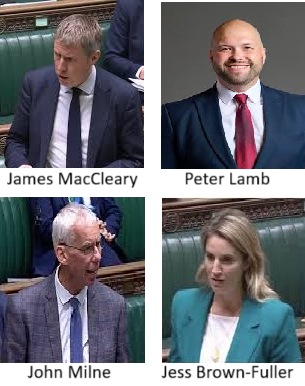
Four Sussex people spoked with Nusrat Ghani, Conservative who introduced a few people and three are shown who are mentioned with Peter Lamb, Labour, John Milne and Jessica Brown-Fuller for Liberal Democrats.

Peter Lamb, for Crawley described that theme of “Planning” might be a “dreary subject”. He said it took him a long time a long time to realise:

“that planning is central…. to just about every aspect of Government policy.” He said that “rates of pay at local authorities are massively out of kilter with the private sector. The consequence is that an increasingly small number of extremely hard-working people are left trying to keep the system afloat principally out of their public spiritedness. Yet, instead of receiving the thanks they deserve, all too often they have to deal with public rhetoric that regularly denigrates them and the work they do. I hope that I am not the first or the last in this Chamber to thank those public servants for their efforts on behalf of our communities and country”.

John Milne, Liberal Democrat MP for Horsham said, “First, I wholly respect the intention behind the Bill…. I judge this new Planning and Infrastructure Bill through the lens of my own constituency—will it work for Horsham? Will it deliver affordable homes in the right places and with the right environmental standards? I think the answer is no”. He described “I am desperate to build more affordable homes in Horsham, but clogging up the system with unbuildable permissions is not the way to do it”.

Jessica Brown-Fuller Liberal Democrat MP for Chichester commented, “We need to see growth so that our young people can stay in their local communities… the district council’s footprint covering 70% of national park and 5% of national landscape, the ambitious total for housing allocation in our area is confined to just 25% of the available land in a ribbon that is causing coastal squeeze. This has led to high-density developments built without adequate infrastructure, leaving my residents facing daily challenges navigating the horrendous congestion on the A27, finding local school places for their children, or simply obtaining an appointment with a GP…. Finally, there is no target for social homes in the Bill. Registered providers in Chichester are currently refusing to take on the social homes on smaller mixed-use sites, favouring the larger developments and prioritising upgrading their existing housing stock, which is putting the viability of social homes in my area at serious risk—and they are homes that we are desperately crying out for.”

Posted in Parliament and Democracy | Tagged , , , , , , , , , , , , , , | Leave a comment

MPs call for action for the WASPI women


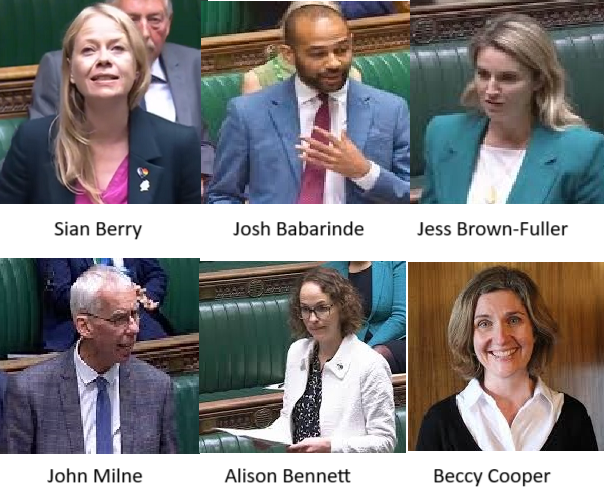
Today the ‘e-petition 700005 relating to the UK joining the European Union’ has been arranged by Paul Davies the Labour MP for Colne Valley, London. It was created by Robert McMaster in October 2024 which achieves 133,000 signatures in the UK. In Sussex the largest areas of support are Brighton and Hove and followed by Lewes, Hastings and Rye. Brighton Pavilion ward is the largest in the whole of UK with 550 signatures and Sussex has 5,100 signatures. It will be interested to see if its responses for today. Last week a session was discussed for e-petition 700765Introduce a compensation scheme for WASPI women that was arranged by Roz Savage, the Liberal Democrat South Cotswolds who said Women’s Changed State Pension Age: Compensation. Four Sussex MPs took part on that, Sian Berry, Green for Brighton Pavilion, Josh Babarinde, Liberal Democrat for Eastbourne, Jessica Brown-Fuller, Liberal Democrat for Chichester and John Milne, Liberal Democrat for Horsham. This e-petition was the first one this year for Josh and Jessica.

Sian Berry said: Does the hon. Memberagree that the WASPI women are right to use the word “gaslighting” to describe the Government’s suggestion that there is no problem here and that everybody knew? They are not standing by the pledge they made in opposition; it is as if that pledge was never made.”

A bit later Josh Babarinde said “We are here to address a grave injustice that has affected millions of women across our country, including in Eastbourne— home to many a great pensioner. The WASPI women were let down by successive Governments after an increase to the state pension age was implemented without proper communication or notice…. This scandal has left many women in financial hardship, forced to continue working or unable to retire with dignity”.

Jess Brown-Fuller commented: “They planned their retirement and future based on the wrong information. Does my hon. Friend agree that the continued betrayal of these women by successive Governments is disgraceful, and that ignoring the ombudsman’s recommendation sets a dangerous precedent?” Josh then added “The Liberal Democrats stand with the WASPI women continued fight for compensation”.

Later John Milne stated, “To further justify their decision, the Government have argued that earlier warning letters would not have worked anyway, but writing letters is exactly how much of the Government communicate to this day. It is sheer nonsense to argue that the standard method of communication across all Departments would have been useless in this one circumstance of WASPI women”

On the same day Jessica contributed to the debate of ‘NEET Young People’ that was arranged by Liz Kendall, Secretary of State for Work and Pensions about supporting people into work.

Jess Brown-Fuller described “Young people in Chichester are struggling to find work and that is no more apparent than for those with learning difficulties, so will the secretary of state join me in congratulating Together Our Community, or TOC, which provides work experience for young people with learning disabilities aged 18 to 35 to show that they do have something to offer the workforce?…. Will the Secretary of State outline what support is available for such charities and join me at its opening next month?”

On Thursday 13th of March, Alison Bennett, the Liberal Democrat for Mid Sussex contributed to the ‘NHS England Update’ debate with Wes Streeting, the Labour Secretary of State for Health and Social Care and for Ilford. Alison said colleagues ‘welcomed’ the NHS reform and asked about legislation and Social Care

Alison Bennett:“Where is that urgency? Long promised cross party talks have now been postponed indefinitely with no new date in sight. Care providers are hanging by a thread due to the rising costs of national insurance contributions…. We will all clear our diaries for cross party talks so will the Secretary of State give us a date today?”

Wes Streeting answered “Much of the change can be delivered without the need for primary legislation, which is a relief.” Wes said that the Chancellor had released £26 billon for the Department for Health and Social Care in the Budget.

On the 18th March a session of ‘Welfare Reform’ which involved for four Sussex MPs.

John Milne added “how can the Secretary of State assume £5 billion of success in advance of actually rolling out the programme?”

Sian Berry asked “Any changes to PIP should have been co-produced, but this week, 25 disabled people’s groups and charities wrote to Ministers begging for their opinions to be included, and not as an afterthought. Will the Secretary for State explain why disabled people are feeling so disregarded and scapegoated, and why impoverishing them to the tune of £5 billion is a higher priority than a simple wealth tax?”           

Alison Bennett said “Last week, I spoke to my constituent Geoff, who lives in Haywards Heath and is partially sighted. He told me that he and the partially sighted community have been sick with worry about what is being brought forward today. Does the Secretary of State think that the pitch rolling that has gone on over the past 10 days is the right way to make these kinds of announcements?”

Beccy Cooper, Labour Worthing West “Does she agree that we need to address the health inequity issues that are delaying treatment of mental illness, and our underlying public health and inequality issues? Welfare reform and NHS transformation must complement each other, to make sure that no one is left behind.”

Posted in Brighton & Hove, Parliament and Democracy | Tagged , , , , , , , , , , | 2 Comments

MP organises a debate on domestic abuse


This week in Parliament there is a planned event to debate ‘Domestic abuse offences – Josh Babarinde’ scheduled for today. Recently on 9th January 2025 Mr Babarinde stated “If we do not have the data that we want on domestic abuse offences, how can we measure whether we are halving violence against women and girls over this decade, and whether our interventions designed to reduce reoffending among domestic abusers are working?” He also mentioned it on 10th December 2024 “There are no specific domestic abuse offences in law, so abusers hiding behind convictions such as actual bodily harm are being let out early under the SDS40 early release scheme.” In connection to this important subject there was an earlier question from Mims Davies the Conservative MP for East Grinsted and Uckfield on 22nd January 2025 “To ask the Secretary of State for Justice, whether her department’s sentencing review will include domestic abuse offences.”

Another item for today is a debate for the ‘e-petition 700765 relating to compensation for women affected by state pension changes’ published by Roz Savage the Liberal Democrat MP for South Cotswolds. This e-petition is named ‘Introduce a compensation scheme for WASPI women’ created by Jane Cowley last Novemberand is currently supported by 160,000 signatures. The initial text is “We call on the Government to fairly compensate WASPI women affected by the increases to their State Pension age and the associated failings in DWP communications.” All locations of Sussex have endorsed it but the two that are the largest are both in East Sussex, Lewes, Bexhill and Battle. It will be interesting to see if any Sussex MPs might take part. So far, there have been four Sussex MPs who have responded to a few other e-petition items since the Government lifted the restrictions last November.  First Andrew Griffith, Conservative for Arundel and South Downs in January.  Alison Bennett the Liberal Democrat for Mid Sussex twice, John Milne the Liberal Democrat for Horsham and Sian Berry the Green for Brighton Pavilion both once.

On Friday 7th March, Peter Lamb, Labour for Crawley was scheduled to speak ‘Free School Meals (Automatic Registration of Eligible Children) Bill: Second Reading’ and Josh Babarinde the Liberal Democrat for Eastbourne, ‘Domestic Abuse (Aggravated Offences) Bill: Second Reading’, but sadly neither of them took place. However, a procedure of ‘Prayers’ called by John Grady, the Labour MP for Glasgow East, “I beg to move, That the House sit in private.”. Only John agreed it but 75 MPs rejected the call which included 47 Labour, 24 Conservatives, 3 Liberal Democrats and one Independent. Andrew Griffith and Mims Davies voted to reject the call.

The next listed bill item is very important and Mims Davies has spoken about it, ‘Protection of Children (Digital Safety and Data Protection) Bill’ that has been proposed by Josh MacAlister, the Labour MP for Whitehaven and Workington. Initial comments from Mr MacAlister began:

“I beg to move, That the Bill be now read a Second time. I began my career as a teacher. I first entered the classroom in 2009. At the time, we were just beginning to see the use of smartphones among teenagers—there was the odd phone in the classroom and the odd instance of a child being bullied through their device—but neither I nor any other teacher at the time could have imagined the impact these devices would come to play in childhood. From speaking to children and parents today, it is clear that children’s excessive screen time and unhealthy social media use are fuelling family disputes, childhood unhappiness and parental concern the length and breadth of our country. The problem is growing and voices of concern are getting louder. It is now time to act.”

A little later Mims Davies, commented: “This week, in the education centre at Michael Hall school, I met A-level students who were very concerned about the addictive nature of what they are seeing. They absolutely want to see action. I applaud him for listening to UK Youth, Girlguiding and others who feel exactly the same. They want action now. All power to him—we need to push the Government for change, because a year or three months in childhood is a long time for that addiction to grow and not be challenged.”

Mr MacAlister responded: “I completely agree that there is an urgency to this issue, and the strength of feeling out in the country among not just parents but children themselves shows that we should take action.”

Helen Hayes, MP for Dulwich and West Norwood and Chair of the House of Commons Education Select Committee had previously spoken and Mims responded to her

“The hon. Lady’s speech is fascinating. What she is saying is reflected by correspondence in my inbox from parents saying, “We need help,” and from youngsters saying, “We know our concentration levels at school are affected. We know it’s an addiction.” This issue is uniting families in that way, and I hope that the hon. Lady, who chairs the Education Committee, can push the Government, on behalf of both parents and children, for a change in outcome.”

Helen Hayes then said “The Education Committee will certainly continue to take this issue extremely seriously and to monitor what happens. We know that screen time is quite literally rewiring young brains, resulting in lower cognitive abilities and affecting language acquisition, critical thinking, social skills and attention span.”

Posted in Parliament and Democracy | Tagged , , , , , , , , , | Leave a comment

A Bishop spoke on Prenuptial Agreements


At the end of February there was a discussion in the House of Lords, ‘That this House takes note of the law relating to prenuptial agreements, ‘set out by Ruth Deech, an Independent Crossbench Peer. Several of colleagues spoke about it including the Bishop of Southwell and Nottingham, Paul Williams.

One of his comments was ‘I believe it would be detrimental for all parties if prenuptial agreements were to become a normal part of preparing for marriage, whether religious or not—although I entirely acknowledge the arguments in favour of these agreements, particularly the clarity they provide in financial matters, especially where there are pre-existing children, and their role in reducing litigation upon divorce.’

All of his comments are shown below and all of the comments from all members of the House of Lords took from 27th February, here.

The Bishop of Southwell and Nottingham: My Lords, I am grateful to the noble Baroness, Lady Deech, for bringing the debate on this Motion and for raising such fundamentally important issues, which she set out so clearly. I also acknowledge with respect the considerable wisdom and insight of the noble Baroness, Lady Shackleton, on these matters.

It has been my personal privilege to prepare many couples for marriage over the years. It is a hopeful time, where couples seek to express unconditional love and trust, and commit to share all aspects of their life, both at the time and looking to the future, whatever it may hold. I believe it would be detrimental for all parties if prenuptial agreements were to become a normal part of preparing for marriage, whether religious or not—although I entirely acknowledge the arguments in favour of these agreements, particularly the clarity they provide in financial matters, especially where there are pre-existing children, and their role in reducing litigation upon divorce.

However, I urge the House to reflect on prenuptial agreements’ broader implications for the institution of marriage, its gift to wider society and the potential consequences for the financially weaker parties. Historically, marriage has been regarded as more than just a contractual arrangement between two individuals. If we are to put matrimonial nuptial agreements into statute, it may appear as if we are saying to couples who come to marry that, to save themselves legal costs and uncertainty, they should include in their preparations a plan also for their divorce.

Furthermore, although advocates argue that prenuptial agreements encourage fairness and discourage litigation, we must be mindful of the power imbalances that may arise, which can be emotional, psychological and, of course, financial. The reality is that such agreements often favour the wealthier party, leaving the financially weaker spouse—often women—at a disadvantage.

When there is some sort of pressure to marry, individuals may agree to terms that are significantly unfair or that fail to consider future circumstances, such as career sacrifices, child-rearing responsibilities, unexpected financial hardships or even unexpected windfalls. Therefore, I believe the courts should retain a measure of discretion to ensure that any final financial agreement is equitable, rather than being bound by contracts that may no longer reflect the realities of the marriage or divorce. For this reason, of the models set out by the Law Commission in December 2024, I would favour that which codifies the current case law while retaining wider judicial discretion.

Although it is true that courts currently have the authority to assess and override prenuptial agreements in cases of significant inequality, there remains a risk that their increasing normalisation may lead to undue pressure on prospective spouses to sign away their rights without fully comprehending the longer-term, more serious consequences. For example, many prenuptial agreements incorporate acknowledgements that each party is content with the financial information that has been provided and does not wish to ask further questions before signing. Yet I am sure it is likely, at times, that one partner may be anxious about asking further questions in a way that may imply a lack of trust and so risk undermining the relationship at a time when the focus, in preparing for marriage, is very much orientated towards joyful expectation.

Marriage is not merely an economic transaction. It is, above all a covenant: something good and beautiful. We must ensure that our legal framework continues to foster the values of partnership and protection for the vulnerable. Whatever our views across this House, I hope we can acknowledge the value of good preparation for marriage, drawing on the very large range of excellent resources and support that is available. That includes support offered by organisations such as Care for the Family, one of a number of charities that have dedicated themselves in recent years to supporting churches in particular across the country as they offer support to those preparing for marriage, whether they are part of the church or not. In addition, they go on offering resources to support relationships at later stages of family life and in parenting—especially when challenges inevitably arise and the strain on the relationship increases. Let us, as a House, in the midst of this debate, value the work that is done by many individuals, organisations and faith-based communities to support preparing for marriage.

Therefore, in conclusion, I urge the House to approach the matter of nuptial agreements with some caution, ensuring that any legal recognition that they receive does not come at the cost of transparent fairness and justice and the true spirit of marriage, as a most ancient and sacred institution given by God that, at its best, benefits the whole of society.

Posted in Church Teaching, Parliament and Democracy | Tagged , , , , , , | 1 Comment

MP organises debate on Owens entertainment


Today, Helena Dollimore, the Labour MP for Hastings and Rye is organising an Adjournment debate ‘Closure of Owens in Hastings and Town Deal funding’ as part of Upcoming business in the main Chamber. In 2024 she had expressed her concerns about the Owens amusements entertainment being boarded up even when a £400,000 grant was awarded from Hastings Borough Council.

This Friday, MPs will publish their Bills with two Sussex MPs listing very important subjects. Peter Lamb, the Labour MP for Crawley will publish ‘Free School Meals (Automatic Registration of Eligible Children) Bill: Second Reading’ and Josh Babarinde the Liberal Democrat Eastbourne will publish ‘Domestic Abuse (Aggravated Offences) Bill: Second Reading’.

Last Thursday, there was a session published from Kieran Mullen the Conservative for Bexhill and Battle ‘Geothermal energy’. Kieran Mullen said geothermal energy would be a way of creating jobs across the UK. It will be interesting to observe this soon. On the same day there was an Fraud, Error and Recovery Bill to discuss the new reforms that were arranged by Andrew Western, The Parliamentary Under – Secretary and Sian Berry also corresponded with

“I hope he is able to understand the stigma that people feel about applying for benefits is partly to do with the attitudes people have towards those who receive benefits”

On Tuesday last week in Parliament a ‘Draft Food and Feed (Regulated Products) (Amendment, Revocation, Consequential and Transitional Provision) Regulations 2025’, was created by Ashley Dalton, the Labour MP for West Lancashire and the ‘The Parliamentary Under-Secretary for Health and Social Care’. Alison Bennett, the Mid Sussex Liberal Democrat contributed to the discussion and described the amendments in mostly positive terms. Alison asked questions about improvements to the safety of food including the work of the Food Standards Agency (FSA) and the Food Security Standard (FSS).

“What assurances can the Government provide that ongoing monitoring will be as effective as possible so that, if a long-term negative effect is present years after a product’s introduction, it can be identified and addressed? And do the Government believe that any measures need to be taken to strengthen the ongoing work of the FSA and the FSS?”

The Ashley Dalton described that: “scrutiny” would be “robust” and “Public consultations will remain open to all for scrutiny, and recommendations to Ministers for all authorisations of products will take those responses into account.”  

She further described “The FSA and FSS will focus on horizon scanning and risk assessment so that they can respond to new safety evidence as it emerges. We are not going to ask businesses to bring their products routinely for review. However, if there are any changes in a product’s make-up, or it comes to light that the product has any new impacts, that will trigger the FSA and the FSS to look into those”

Just over a week on Thursday a vote about ‘Public Authorities (Fraud, Error and Recovery) Bill — Clause 4 – Reviews’ took place with opportunity for MPs to vote. Not a large number of votes, 16 people voted, 6 ‘Aye’s’ and 10 ‘No’s. Two Sussex MPs, Siân Berry the Green for Brighton Pavilion and John Milne the Liberal Democrat for Horsham both voted ‘Aye’

Also, on the same Thursday there was a significant session called ‘Women’s Health’ that was published by Helena Dollimore in the Westminster Hall. Fourteen women’s and only four male’s took part and the only Sussex person that was involved was Jessica Brown-Fuller, the Liberal Democrat for Chichester who added.

Helena said partly “it is worth putting on the record our concern for the awful situation that many women around the world find themselves in. I will never forget seeing the maternity theatre run by Save the Children in Yemen where women gave birth between airstrikes…. As this Labour Government take welcome action to tackle long gynaecological waiting lists, we are committed to improving inequalities in many areas of women’s health. It is worth pointing out that if we lined up the number of women currently stuck on the hugely long gynaecological waiting lists in this country, that line would stretch from London all the way to Exeter”.

Jessica added to these comments, “Gynaecological waiting lists have more than doubled since 2020, which is the biggest increase of any medical speciality. At the end of last year, 755,000 women were waiting for treatment. Behind every number is a woman experiencing chronic pain, worsening mental health and a disrupted daily life. One in four women with a gynaecological condition will end up in A&E because they could not access the care that they needed in time, yet the NHS is failing to prioritise these urgent needs. The Royal College of Obstetricians and Gynaecologists has been clear: the system needs a complete overhaul so that gynaecological care is given the attention it deserves”

Jessica also said “The Liberal Democrats would ensure that medical scandals that have disproportionately harmed women in the past can never be repeated, including through the introduction of a statutory duty of candour for public officials. We believe that every woman deserves high-quality, safe and accessible healthcare. We would try to tackle the maternity care crisis by addressing chronic understaffing, improving retention and modernising outdated facilities. We will continue to press the Government to expand access to screening for conditions such as breast cancer and cervical cancer. We would also make a serious commitment to investing in women’s health research”.

Posted in Parliament and Democracy | Tagged , , , , , | Leave a comment

Call for more support for maternity services


Today in Parliament the ‘e-petition 701268’ described as ‘Don’t apply VAT to independent school fees, or remove business rates relief.‘ is set to be discussed. John Lamont, the Conservative MP for Berwickshire, Roxburgh and Selkirk is leading the debate. So far, there are 115,000 signatures across the UK. The largest location for Sussex signatures is Arundel and South Downs although every area of Sussex has signed the petition.

Last Monday the e-Petition 700086 was discussed ‘Introduce 16 as the minimum age for children to have social media’ signed by currently 128,750 across UK and 5,375 people in Sussex. Alison Bennett from Mid Sussex and Sian Berry from Brighton Pavilion and several MPs across the UK participated.

Luke Murphy, the Labour for Basingstoke commented that “students from Brighton Hill community school in my constituency recently raised the issue of the significant impact that social media was having on their mental health and wellbeing”

Alison commented “while legislation can go so far, we have a broader responsibility as adults in society and as parents—myself included—to make sure that we monitor not only what our children are using and how they use it, but our own habits? A headteacher in my constituency was alarmed that she had to write to parents to tell them that when they collect their infants from the playground, they should put their phones away and have eye contact and engage with their children.”

Tony Vaughan, the Labour for Folkestone and Hythe who organised the session responded to Alison with “The hon. Lady makes a common-sense point: if we are going to advocate for change, we have to lead by example. But where we have social media companies that are pushing content that is objectively dangerous, we need to have the conversation that we are having today about how the system and social media companies should be forced to ensure that that space is a safe one.”

Sian commented “I have met parents from Smartphone Free Childhood, but also young people. This is a big issue in Brighton Pavilion. Has the right hon. Member thought about pushing for the Minister and Members to talk more with young people about where the age limit should lie, rather than trying to come up with a number in the middle of a debate? It is clear from talking to young people that they feel that parts of social media are very toxic, but I also think they are best placed to judge where the limit should lie.”

At the end of the session Victoria Collins, the Liberal Democrat for Harpenden and Berkhamsted commented further, “As research from the University of Sussex shows, teen social media binges mirror behaviour seen in drug addiction. Liberal Democrats are calling for an explicit public health approach.”

On Tuesday last week Jessica Brown-Fuller, Chichester Liberal Democrat, chaired a debate about ‘Maternity Services’. Also Beccy Cooper for Worthing West and Tom Rutland for East Worthing and Shoreham took part.

Jess started with “On average, a baby is born in England every 56 seconds, over 1,500 babies each day, most of them delivered in an NHS setting with the help and support of a maternity department or at home with an NHS community midwife by their side. That is over 500,000 babies every year.” She also described the Care Quality Commission which “highlighted the flaws in maternity care across England” and commented the Ockenden report which investigated the investigations “reflected that sometimes that spotlight can feel harsh to staff on the front line, who are doing their very best in what are often extremely challenging circumstances”. She described her own conversations with midwives and staff in maternity services “I recognise that each one I spoke to entered the profession as the result of a calling, vocation, or passion for supporting mothers to bring their babies into the world…. Midwives in particular spend significant time with expectant mothers, supporting them through all stages of pregnancy and birth. They see women at their most vulnerable. They act as therapists, teachers, friends and maternal figures. Yet across the country, staffing levels are inadequate. In 2023, midwives and support workers worked over 100,000 hours of unpaid overtime every week.”                                           

Beccy made significant comments “As a public health professional, it saddens me to say this, but the NHS Confederation reports that the UK stands out as the country with the largest female health gap in the G20 and the 12th largest globally, with women spending three more years in ill health and disability compared with men…. As a public health doctor, I have worked in and led health teams, and as the proud MP for Worthing West, I have heard from dedicated staff across our local services. I understand that systemic issues fail staff as well as patients. In our hospital in Worthing, the maternity services are staffed by hard-working, capable healthcare professionals who want to get on with the job they have trained for…. Our government have pledged to recruit and train thousands more midwives, which is to be warmly welcomed”

Tom contributed many significant comments from his conversations with bereaved families “Maternity services are a vital part of our national health service We need action. With a new baby born every minute, we cannot delay or defer making our maternity services safe for all, including by tackling racial inequalities in care. The need is now and the urgency is clear.”

Posted in Brighton & Hove, Parliament and Democracy | Tagged , , , , , , , , , , , , | Leave a comment