Roger Roberts has asked Asylum Rwanda questions


Roger Roberts is a Welsh Liberal Democrat from Llandudno and member of the House of Lords since 2004. He frequently asks questions in this role and recently on the 31st July and 1st August he published several questions on the theme of Asylum: Rwanda.

David Hanson, the Minister of State, Home Department, an MP in Wales from 1992-2019 responded. Here are the four questions and the four answers.

First on 31st July

Roger: To ask His Majesty’s Government how they plan to use civil servants currently engaged in the Rwanda deportation process.

David: The Government is committed to a new policy agenda, which is why we are moving away from the Migration and Economic Development Partnership (MEDP) with Rwanda and refocusing our efforts on a new returns and asylum system and Border Security Command.

Funding and efforts will be focused on expanding our enforcement and returns capability, so those with no right to be here are swiftly removed.

Second

Roger: To ask His Majesty’s Government how many immigrants have been prepared for deportation to Rwanda; and what will happen to them when the Rwanda deportation plan is repealed.

David: The Government is committed to a new policy agenda, which is why we are moving away from the Migration and Economic Development Partnership (MEDP) with Rwanda.

Third

Roger: To ask His Majesty’s Government what contractual obligations the UK entered into before the general election, and with whom, to meet the requirements of the deportations to Rwanda.

David: Contractual obligations are subject to commercial sensitivities and cannot be disclosed.

Fourth on 1st August

Roger: To ask His Majesty’s Government what has been the total cost of preparing the Rwanda deportation plan.

David: In her statement to the House on 22 July, the Home Secretary said the Rwanda-UK partnership had cost £700 million, which encompasses the direct costs of the partnership as detailed in the National Audit Office report released March 1, 2024, as well as expenses related to preparing for relocation flights to Rwanda and implementing the Illegal Migration Act (IMA).

Posted in Parliament and Democracy | Tagged , , | Leave a comment

Janet Whitaker raises questions about School Attendance


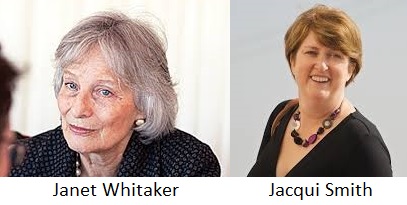
Janet is a significant member of the House of Lords as she frequently publishes questions for the Government to respond. She is eighty-eight years of age, is based in East Sussex and was a Labour MP in London from 1966-1970. Since 1999 she has been a member of the House of Lords. On the 5th of August she published four questions about Schools Attendance directed to the Department for Education. Baroness Smith of Malvern, Jacqui Smith, the Minister of State (Education), responded. Here are Janet’s four questions and the response from Jacqui:

Janet: To ask His Majesty’s Government:

what consultation with Gypsy and Traveller families they undertook with regard to the use and implications of the term “mobile child” in the statutory guidance Working together to improve school attendance, published on 29 February.

how they will ensure that the use of the term “mobile child” in the statutory guidance Working together to improve school attendance, published on 29 February, does not adversely and unfairly affect Traveller children.

how they plan to ensure that Traveller families understand what the term “mobile child” means, as used in the statutory guidance Working together to improve school attendance, published on 29 February.

what steps they plan to take to provide clarity and support to local authorities with regard to the implementation of obligations associated with the concept of “mobile child” as used in the statutory guidance Working together to improve school attendance, published on 29 February.

Jacqui: The School Attendance (Pupil Registration) (England) Regulations 2024 and accompanying statutory guidance ‘Working together to improve school attendance’ use the term ‘mobile child’ to describe a child of compulsory school age who has no fixed abode and whose parent is engaged in a trade or business that requires them to move from place to place. This is a new term, but covers the same children as section 444(6) of the Education Act 1996.

Parents of mobile children have longstanding protection in attendance law and guidance, including how absence is recorded in the register, but feedback from parents, schools and local authorities suggested inconsistency in how these are applied. The term ‘mobile child’ is intended to clarify that the provisions are for all pupils who meet the definition as set out in regulation 3 of the 2024 Pupil Registration Regulations (and the statutory guidance) and that they concern the child’s mobility rather than ethnicity.

A draft of the new Regulations and guidance was subject to full public consultation in 2022 and training has been provided both to schools and local authorities to improve consistency and support implementation. The department will continue to monitor feedback on implementation during the 2024/25 academic year

Posted in Education, Parliament and Democracy, Youth Issues | Tagged , | Leave a comment

Bishop of Chelmsford’s question on “Drugs: Packaging”


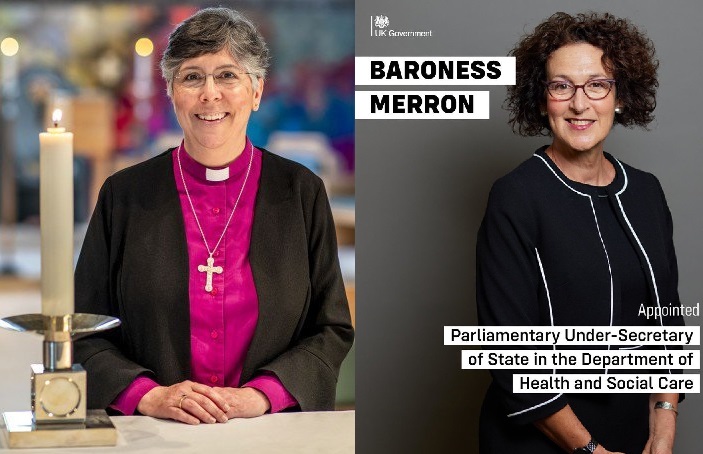
Guli Francis-Dehqani became the Bishop of Chelmsford in March 2021. She was included in the House of Lords a few months later in November 2021 and was the first Bishop to respond to the King Charles Speech on the 18th July, seen here. Since then, Guli has submitted a written question about “Drugs: Packaging”, published on 6th August which Gillian Merron the Parliamentary Under-Secretary of State for Patient Safety, Women’s Health and Mental Health responded. The question and response are below:

Bishop of Chelmsford: To ask His Majesty’s Government what plans they have to encourage sustainable packaging for all medication distributed by the NHS, including sustainable alternatives to plastic blister packs for pills.

Gillian Merron: NHS England is working collaboratively with a range of partners including the Department, the pharmaceutical industry, the Medicines and Healthcare products Regulatory Agency (MHRA), and others to support achievement of net zero ambitions for the National Health Service, as summarised in the Delivering a net zero NHS report published in October 2020. Action on packaging, alongside a wide range of other activities, will support achievement of these ambitions, often also improving efficiency and reducing cost.

NHS England is supporting specific initiatives such as Circularity in Primary Pharmaceutical Packaging, a not-for-profit collaborative which aims, amongst other ambitions, to improve the circularity of blister packs. The MHRA provides regulatory and scientific advice to companies improving the environmental sustainability of their products, and can assist with changes to packaging materials.

Patient safety will always be our primary objective, with increased environmental sustainability in pharmaceutical packaging playing an important part in mitigating the long-term impacts of climate change on our patients.

Posted in Church Teaching, Parliament and Democracy | Tagged , | Leave a comment

Bishop of Manchester asks Question for Universal Credit


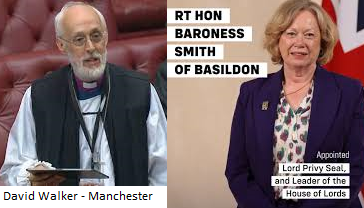
David Walker has been the Bishop of Manchester since 2013 and involved in the House of Lords since September 2020. He spoke recently in response to the speech by King Charles III on the 24th July. That can be seen here. He also spoke on the same day in the House of Lords regarding “Household Support Fund” which can be seen below. Response to his comment came from the Labour member of the House of Lords Maeve Sherlock. More recently David submitted his “Universal Credit: Care Leavers” question on the 6th August and again Maeve Sherlock responded. That question and response is shown below.

Household Support Fund

Bishop of Manchester: Something like seven out of every eight local authorities now use this money to alleviate holiday hunger among our children. Can we have any hope that the Government will look at a more strategic way of helping children cope with hunger during the school holidays? Many of the churches in my diocese, and those of my right reverend friends here, are having to put on voluntary projects to support children during those periods. What can we hope for?

Maeve Sherlock: I pay tribute to the Church and other faith organisations, which do such important work with children, families and their communities. I commend them for that. The question of holiday hunger, and indeed of children and food, will clearly be considered by the child poverty strategy and the task force when it gets together. We will set up a child poverty unit in the Cabinet Office that will work with the task force. We have already begun talking to stakeholders of different kinds, asking for experiences and getting expertise from inside and outside government to look at the best ways we can make this better. But we are also making some specific starts. For example, we are committed to making sure we have breakfast clubs in every single primary school. That is a simple measure that helps with the cost of living for families and helps children to start the school day able to concentrate because they have had something to eat. So I fully accept the importance of ensuring children have food and of being consistent; that will be part of what we look at.

Universal Credit: Care Leavers

Bishop of Manchester: To ask His Majesty’s Government whether they plan to publish the data, routinely collected since February 2022, on care leavers claiming Universal Credit.

Maeve Sherlock: We have no plans to publish data on care leavers claiming Universal Credit.

DWP started routinely collecting data on care leavers claiming UC in February 2022. All new claimants are now given the option of reporting their care leaver status, and work coaches can record existing claimants’ care leaver status if they are they are told about this.

This data is being monitored for data quality and does not meet the quality assurance standards for official statistics: the data coverage is still very limited and the claimants we have data on are not representative of the UC caseload. Therefore, no figures are available for publication.

The Department will continue to carefully review the data in the usual way.

Posted in Church Teaching, Parliament and Democracy | Tagged , | Leave a comment

New MPs grill minister on plan for the railways


The new Sussex MPs were active during the last ten days before Parliament closed. On Monday the 29th July, the Passenger Railway Services (Public Ownership) Bill was proposed with a vote supported by Labour and the Green MPs although Chris Ward from Brighton Kemptown and Peacehaven did not vote. The Conservatives rejected the Bill and four Sussex MPs but Nusrat Ghani who spoke briefly did not vote.

Siân Berry Green, Brighton Pavilion, spoke early:

“As far as this Bill’s key principle is concerned, the Secretary of State will have noticed that public ownership is popular with me and is popular with the people. In 2024, that principle is supported for the railways by 76% of the public. That support has risen steadily for the past decade; it was even backed before the election by 60% of those intending to vote Conservative. Bringing the railways back into public hands has been in my party’s programme for as long as I can remember. It is also close to the hearts of my constituents in Brighton Pavilion, for whom the legacy of the failed policy of privatisation is one of poor services, inefficiencies and very high costs for passengers. An annual season ticket between Brighton and London currently costs my constituents the best part of £6,000. That cost has risen by approximately 40% in the past 10 years—far more than wages in Brighton have risen. In the face of service cuts and failure to invest, passengers have had to form local pressure groups such as the Preston Park Train Campaign to save services. In so many stations, understaffing and disabled access remain dreadful, creating appalling discrimination against passengers…… I do have some questions and comments—all to be constructively taken, I hope. The Bill is very short and very simple, and I wonder whether it could benefit from some additional detail and a wider scope. I would welcome more detail from the Secretary of State on her thinking. I also request a meeting with her to discuss the issues before Committee of the whole House….. For passengers, hearing the Government promise to bring private operators into public hands, but then hearing that a service they use will be excluded, will be a disappointment. I hope we will hear more soon about how those gaps will be filled. Also out of scope, as the Bill’s title indicates, are rail freight services. The public might have expected those private operators to be among the first for action, especially as getting freight off the roads and on to rail has so many benefits in addressing road danger, congestion and climate emissions. Another exception from this Bill to bring passenger railways back into public hands is the rolling stock companies. Quite honestly, most members of the public do not have much awareness of it, but the rolling stock in which we travel is another public asset that is worthy of public investment and should not be held merely for private rent and profit by companies that add no real value to the service. At the very least, the Bill could have included a prohibition on new arrangements of that kind.”

Kieran Mullan Conservative for Bexhill & Battle and Shadow Parliamentary Under Secretary (Transport) spoke:

“On the Opposition Benches it was helpful to hear from the former Rail Minister, my right hon. Friend Wendy Morton. She has first-hand experience of the recent changes to our railways, and she explained clearly how this ideological approach is ignoring the reality on the ground, where the franchises should be the focus of the Minister’s attention. She asked where this is leading, and I noted that the Secretary of State referred to the work that the Government will do on the supply chain. Other Members have related their concerns about rolling stock. This is the beginning of the end when it comes to a flourishing rail sector with all sorts of people playing their part. It is clear that we all want to secure better services for passengers alongside value for money for taxpayers. Whatever our differences, we agree on that. The question is how we do it.”

On Tuesday 30th July, the Building Homes was organised by Angela Rayner. Helena Dollimore, Labour for Hastings and Rye spoke:

“In my constituency, we are at the sharp end of the housing crisis, and we desperately need more affordable homes and more council homes, so I really welcome today’s statement. The Conservative party may behave like this is a zero-sum game between building more desperately needed homes and protecting the environment, but Labour Members know that that is not the case. What approach will the new Government take to ensure that we have sustainable development, so that we protect our environment, ensure that we have the necessary infrastructure, including sewage pipes, and prevent flooding, while building the homes that my constituents so desperately need?”

The Budget Responsibility Bill included comment from Jessica Brown-Fuller Liberal Democrat for Chichester spoke:

“The average house price in Chichester is an eye-watering £455,000, and residents regularly express dismay at their increasing rents and mortgages after the disastrous mini-Budget. They are trying to make progress in their lives, but are being pulled back under the immense strain of increasing cost pressures. I welcome the Budget Responsibility Bill, which commits to responsible economic governance to go towards ensuring that what we saw in the last Parliament never happens again”


Posted in Brighton & Hove, Parliament and Democracy | Tagged , , , | Leave a comment

Three statements about STEM in Parliament


During the first ten days of the new Government three references were made about STEM.  The first was in the House of Lords and was part of the Kings Speech organised by Jean Coussins. Here is some of her text, the rest of the information is available here:

A plan of action was submitted by the All-Party Group on Modern Languages to the then Schools Minister in February, so I hope the new Government will support this and start notching up some early changes and successes, knowing that the benefit of trips and exchanges not only applies to the take-up of languages but enhances many other areas of the curriculum, including geography, history, STEM subjects, art and sports. There is also an important positive impact of reciprocal mobility schemes on the supply chain for MFL teachers, and we know from DfE figures that we are looking at a chronic shortage there, second only to maths.

The second comment was made in Parliament on the 22nd of July relating to “Aerospace Industry: Northern Ireland”, organised by Liberal Democrats MP, Sarah Dyke the MP for Glastonbury and Somerton and here is her text:

In a segue from Northern Ireland to Somerset, Leonardo is an aerospace manufacturer located just outside my constituency. Last month it held its AeroWomen event to highlight the diversity of careers for women in the sector. Does the hon. Member agree that the Government can play a role in encouraging more girls and women to study science, technology, engineering and maths—STEM subjects—and to work in this field, which would help to close up the skills shortages that the industry faces?

The final item was in the House of Lords on 26th July in the context of “Education for 11- to 16-Year-olds (Committee Report)” by Jim Knight, a Labour member from Weymouth and this is his comment:

My Lords, it is a pleasure to follow that excellent speech from the noble Baroness. I should, however, start by reminding your Lordships of my education interests in the register, particularly as chair of the boards of the E-ACT multi-academy trust, STEM Learning and CENTURY Tech. I also sit on Pearson’s qualifications committee.

Posted in Parliament and Democracy, STEM | Tagged , , | Leave a comment

A Special Envoy on Freedom of Religion or Belief


In the last few weeks whilst Parliament has been closed there have been questions in the House of Lords. One question was provided by Philip Mounstephen, the Bishop of Winchester.

He referred to the “Special Envoy on Freedom of Religion or Belief”. His question with the response provided by the new “Parliamentary Under-Secretary (Foreign, Commonwealth and Development Office)” Ray Collins is below. So here is the question and response.

Bishop of Winchester: To ask His Majesty’s Government what plans they have to appoint a Special Envoy for Freedom of Religion or Belief, in line with recommendation 6 of the ‘Truro’ Review of 2019.

Ray Collins: The Government will champion freedom of religion or belief (FoRB) for all abroad. No one should live in fear because of what they do or do not believe in. Envoy roles will be decided upon in due course. In the meantime, we will use the strength of our global diplomatic network, including dedicated staff within the FCDO, to promote and protect FoRB around the world.

Posted in Church Teaching, Parliament and Democracy | Tagged , | Leave a comment

Two questions for Culture, Media and Sport for Football


On the 12th of August Steve Bassam, a Brighton member of the House of Lords, asked two questions in the House of Lords. He received a response from Fiona Twycross a member of the new Labour Government and of the House of Lords

The questions are connected to Culture, Media and Sport for Football and the responses are listed below:

Steve Bassam: To ask His Majesty’s Government what:

is their policy on ensuring financial redistribution between the leagues and clubs in English football.

assessment they have made of the adequacy of current structures to protect the long-term financial sustainability of football clubs in England.

Fiona Twycross: Despite the global success of English football, the game has fundamental governance problems that have led to excessive and reckless risk-taking at too many clubs. Ineffective regulation poses very real dangers to our national game, threatening the stability of the football pyramid, impacting fans across the country. The King’s Speech set out our plans to address this with legislation to establish an independent football regulator.

We will introduce this legislation as soon as parliamentary time allows.

Posted in Brighton & Hove, Parliament and Democracy, Uncategorized | Tagged , | 1 Comment

Pilot in education children authority Brighton and Hove?


On the 8th of August, Natalie Bennett, Baroness Bennett of Manor Castle asked a question to the House of Lords under the headline of “Children in Care: Minority Groups” part of which referred to areas in Brighton and Hove. The response came from Jacqueline Smith, the Baroness Smith of Malvern, a Labour Party politician who has been serving as a Minister of State for Skills, Apprenticeships and Higher Education in the Department for Education since July 2024. Here is the question and response including “The pilot launched in four local authority areas, Brighton and Hove. The pilot will end in March 2025.”:

Baroness Bennett: To ask His Majesty’s Government what assessment they have made of the relative number of children being taken into care from families from different minoritised communities; and what plans they have to provide support to families and social services to enable children to remain with their families, particularly among communities where levels are high.

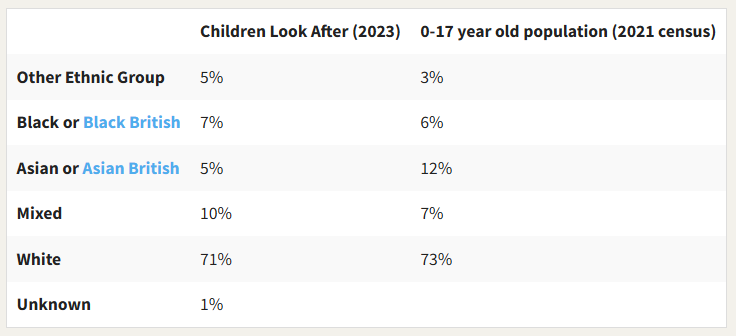
Baroness Smith: The department’s intention is to deliver better life chances for all, including by improving services for the most vulnerable children and families. The 2023 data on children looked after showed that children from black and mixed ethnic groups are more likely to become looked after compared to the general 0-17 population (making up 7% and 10% of the looked after population respectively, compared to 6% and 7% of the general child population).

The department knows that there is a strong evidence base for early intervention to support families before they reach crisis point. The department is currently testing the impact of multi-disciplinary targeted support provided at the earliest opportunity to help families overcome challenges sooner, so that they can stay together and thrive.

The department is also committed to supporting more children from all backgrounds to remain with family through kinship care and are considering how best to support both kinship carers and the children in their care.

The Family Network Pilot is currently testing the impact of providing flexible funding for extended family networks through Family Network Support Packages (FNSP). The pilot will look at how FNSPs can unlock barriers and enable family networks to play a more active role in providing loving, stable homes for children through financial and other practical means. The pilot aims to help keep families together and children out of care, where this is in the best interests of the child. The pilot launched in four local authority areas, Brighton and Hove, Gateshead, Sunderland and Telford and Wrekin, and recently launched in a further three areas, Hammersmith and Fulham, Hartlepool and Staffordshire. The pilot will end in March 2025.

Posted in Brighton & Hove, Education, Parliament and Democracy, Youth Issues | Tagged , | Leave a comment

A focus for Education and Opportunity refers to Sussex


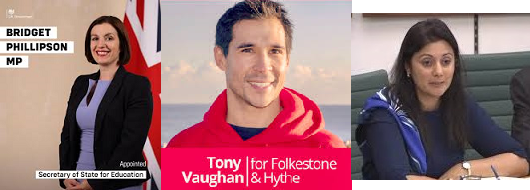
A few days at the end of the Parliament in July there was a discussion for “Education and Opportunity” set out by Bridget Phillipson, the Secretary of State for Education, Minister for Women and Equalities and a Labour MP near Newcastle upon Tyne. A number of MPs corresponded including Nusrat Ghani the Conservative MP for Sussex Weald and Tony Vaughan the Labour MP for Folkestone and Hythe in Kent. Here are the first few comments from Bridget:

I beg to move, That this House has considered education and opportunity. It is a pleasure to see you in the Chair, Madam Deputy Speaker, and I congratulate you on your election. I am grateful for the opportunity to speak about the Labour Government’s mission to break down the barriers to opportunity. We are bringing change to this nation. However, I know that any change we deliver will be brought about in partnership with our wonderful workforces, so let me take this opportunity, at the end of the academic year, to thank them for all that they do for our children, our young people and our country.

Here are Nusrat’s comments:

I call the shadow Secretary of State.

As we have many maiden speeches to enjoy and Back-Bench contributions, may I ask those on the Front Bench to keep their speeches short? I call the Liberal Democrat spokesperson.

Order.

We come to our first maiden speech this afternoon—I call Darren Paffey.

As a former maritime Minister, I visited tropical Southampton Itchen very often. I call Sarah Dyke.

I call Aphra Brandreth to make her maiden speech.

Tony Vaughan’s statement:

Folkestone and Hythe today is a cultural hub. We have arts festivals, comedy, theatre, open studios, open gardens, the Folkestone Music Town initiative and live music to suit every taste. The Royal Gurkha regiment is based in the constituency, and we have one of the largest Nepalese communities in the UK. It is hard to beat a Nepalese curry from Folkstone. The constituency has around 20 miles of beautiful coastline, from the border with Dover down to the Kent-Sussex border near Camber. It is little wonder that Folkstone and Hythe is a tourist hotspot, a creative and digital magnet, and a place to find solitude and peace. We also have a large windfarm in Romney Marsh, which was opened by the Secretary of State for Energy Security and Net Zero, my right hon. Friend Ed Miliband in 2009. It was a privilege to visit it with him earlier this month, following his announcement about dropping the ban on onshore wind.

Posted in Education, Parliament and Democracy, Youth Issues | Tagged , , | Leave a comment