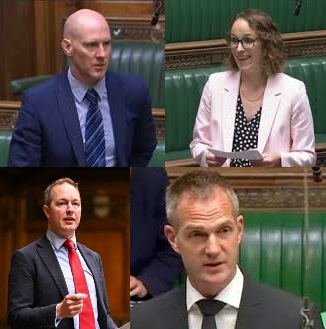
‘Climate crisis groups are taking action now’


Parliament will open again in September and whilst there have been no items from MPs this Summer there is an event for the House of Lords today named as “Upcoming business” with Lords: Grand Committee – Supporting exports and raising awareness among UK businesses of commercial opportunities in African markets. Protecting Atlantic salmon populations. Impact of international conflict on children, and proposed recommendations in Save the Children’s report: “Stop the War on Children: Let Children Live in Peace”. Publishing a new strategy for public libraries.

During the last few days before the Holiday term began on July 25th Parliament explored themes which included a vote under the title of “The draft Criminal Justice Act 2003 (Requisite and Minimum Custodial Periods) Order 2024”, approved by the Labour and Green MPs. 322 votes voted Aye and only 80 people from Labour and DUP that voted No. However, there were no other groups involved which meant that Liberal Democrats did not vote at all. Also, in Sussex both Peter Kyle for Labour and Sian Berry for Green did not vote neither did Alison Griffiths and Nusrat Ghani from the Conservative although all other Conservatives MPs did vote. The other Sussex contribution came from Kieran Mullan, Bexhill and Battle, the “Shadow Parliamentary Under Secretary (Transport)” He voted No in the session

“If the hon. Member thinks that the Labour Government are now going to have to release 5,000 prisoners they would not want to release, how would he describe the fact that the previous Labour Government had to release 80,000 prisoners they did not want to release?”

The following day, Friday 26th July, there were no votes but a few Sussex MPs made contributions connected to “Making Britain a Clean Energy Superpower” involving both Alison Bennett and James MacCleary, Liberal Democrats. Alison Bennet highlighted:

“There are also incredible groups working to tackle the climate crisis, which brings me to the subject of today’s debate. Fairer World Lindfield, Hurst Rethink, and Greener Hassocks and Ditchling are tireless advocates and campaigners for the idea of starting something to tackle the climate crisis rather than waiting for the Government to get on board. Greener Hassocks and Ditchling has put solar panels on the roof of Downlands community school in Hassocks. The Bolney wine estate has, in conjunction with the Brighton Energy Cooperative, put a solar array on the roofs of its winery, which now generates over 50% of the energy required to produce half a million bottles of wine. However, local groups can only do so much; they need the Government to create an environment in which it is easy to make the energy transition. Speeding up grid connections, for example, can currently take up to three years. We need to make better use of space that has no other purpose—industrial rooftops or the sides of railway lines—including for solar arrays. The will is there in Mid Sussex and, I am sure, right across the country. We need to do more and we must make it easy. Our communities, our constituents, our children and as yet unborn generations demand nothing less”

James MacCleary expressed the following;

“It is a huge privilege for me to represent the Lewes constituency. It is my home…. We have two beautiful rivers, the Cuckmere and the Ouse, which flow into Seaford Bay. Sadly, they have been used by Southern Water as a dumping ground for sewage, and have had sewage discharges in recent weeks. I look forward to seeing the proposals brought forward by this Government to take on sewage dumping”

James and Alison contributed to the follow-on debate about “Pharmacy Provision: Hampton” set out by Andrew Gwynne, the Parliamentary Under-Secretary for Health and Social Care and the Labour MP for Gorton and Denton, Manchester.

James referred to:

“the issue of overwhelmed surgeries referring increasing numbers of patients to local pharmacists? I have seen it in my Lewes constituency.”

Alison said:

“I welcome the Government’s support for strengthening the pharmacy sector. The Minister talks about the workforce. Residents in my constituency have raised concerns about the pressure on pharmacists to take on more and more services that might traditionally have been provided by primary care. What assurances can he give me that he will make sure that the workforce plan for pharmacists is robust enough to cope with the extra demand?”

On the same day Peter Kyle from Hove and Portslade who is the Secretary of State for Science, Innovation and Technology who published the “AI Opportunities Action Plan – Department for Science, Innovation and Technology written statement” which he included

 “(AI) has enormous potential to drive economic growth, through productivity improvements and technological innovation, and to stimulate more effective public service design and delivery. These are opportunities the United Kingdom cannot afford to miss and that is why AI, alongside other technologies, will support the delivery of our five national missions. Through targeted action this Government will support the growth of the AI sector, enable the safe adoption of AI across the economy and lead the way in deploying it responsibly in our public services to make them better. Today, I am setting out our plans to create an ambitious AI Opportunities Action Plan, and our next steps on the regulation of frontier AI systems. We will shortly launch a consultation on these legislative proposals, to harness the insights and expertise of the AI industry, academia and civil society”

Posted in Brighton & Hove, Parliament and Democracy | Tagged , , , , | Leave a comment

Ed Miliband refers to COP recently in Parliament


A day after the Government first opened Parliament in July one of the themes was a session entitled ‘Clean Energy Superpower Mission’, organised by Ed Miliband.

His comments refer to COP28 and other COP issues and are available from here.

Ed Miliband: One of my early decisions was to re-establish the role of the Secretary of State as the lead climate negotiator in my Department, because we can only protect future generations with strong action at home and leadership abroad. Next week in London I will host the President of this year’s COP29 in Azerbaijan. He will be joined by the Presidents of COP28 and COP30. I have invited the President of COP 26, Lord Sharma, who presided with such distinction, to join our discussions. This is a sign of how I intend to go on—working with people of all parties and none in this national endeavour. That is what the British people have a right to expect of us. As the Prime Minister rightly says, “Country first, party second.” That is more true on this issue than any other. This Government will act at pace and work with anyone who shares our mission. I commend this statement to the House.

Posted in Parliament and Democracy | Tagged , , , , | Leave a comment

NHS Blood and Transplant Service opened in Brighton


On the last day in Parliament in the House of Lords on the 30th July an issue was presented about “NHS Blood and Transplant Service: Blood Stocks – Question“.

Gillian Merron the Parliamentary Under-Secretary for Health and Social Care addressed those that spoke and one of the comments included:

I thank my noble friend. That is a very important point and I will consider it in our deliberations. It is worth saying on resilience that work was already in place—for example, new centres are planned to be opened in Brixton and Brighton. I make that point not just because of expanding capacity but because the location of them will widen the range of donors. We absolutely need to continue. That is why I have asked the chief executive and the chair to come back to me with their plans to make us even more resilient.

Posted in Brighton & Hove, Health Reform, Parliament and Democracy | Tagged | Leave a comment

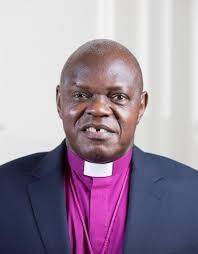
John Sentamu statement for Public Spending: Inheritance


On Tuesday 30th July the final day of Parliament before the Summer holiday period there was a session in the House of Lords published as “Public Spending: Inheritance”. One of the people who contributed to it was the previous Archbishop of York who is John Sentamu who I have met a few years ago. Spencer Elliot Livermore, the Financial Secretary to the Treasury, gave answers to all those who contributed. Here is the response from John Sentamu:

John Sentamu: My Lords, I declare an interest. My title is Lord Sentamu, of Lindisfarne, which is in Northumberland. In Berwick, where I live, a hospital is being built. Will the building continue, or is there a question mark because of the finances? Secondly, I want to return to the question of the noble Baroness, Lady Kramer, and the Minister’s colleague, regarding the health service. The Secretary of State for the Department of Health and Social Care said that social care is not fit for purpose. How long are we to wait for the implementation of Dilnot? If social care really is not fit for purpose, I did not hear in the Chancellor’s statement what is going to be done about that challenge to a lot of our citizens. Over the past six months, I have attended a lot of hospitals. The challenge for those who are sick is so big that somebody has got to do something about it.

Spencer Livermore: I am grateful to the noble and right reverend Lord for his question. As was set out yesterday, we will conduct a complete review of the new hospital building programme, with a thorough, realistic and costed timetable for delivery. I cannot give him any specific information on the project he mentioned. As I said to other noble Lords, we are absolutely committed to reforming adult social care to create a sustainable system that delivers for the people who draw on that care, their families and the social care workforce. We will work to build consensus for the reforms needed to build a national care service.

Posted in Church Teaching, Parliament and Democracy | Tagged , | Leave a comment

Community Sentences – Justice and Home Affairs


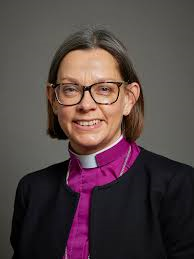
It was very significant that Helen-Ann Hartley, Bishop of Newcastle spoke in the House of Lords on the 26th July about “Community Sentences (Justice and Home Affairs Committee Report) – Motion to Take Notefrom here. Helen-Ann spoke after a couple of other people contributed. The initial speaker was Sally Hamwee a Liberal Democrat and she started with:

That this House takes note of the Report from the Justice and Home Affairs Committee Cutting crime: better community sentences (1st Report, Session 2023–24, HL Paper 27).

The contribution from Helen-Ann was:

My Lords, I am glad to take part in this debate and I thank the noble Baroness, Lady Hamwee, for enabling the report on community sentencing to be discussed in this House. It is an honour to follow the noble Baroness, Lady Prashar, and I commend her point about changing the public narrative.

I also welcome the Minister to his new role and commend his excellent maiden speech, delivered on Wednesday, for which I was pleased to be present, and the wisdom and expertise that he brings to his new role. I wish him very well indeed. I also commend him on the way he dealt with repeating a Statement from the other place and taking questions before he had delivered that maiden speech. If I may use a word borrowed from my primary field of expertise, this was a baptism-by-fire experience.

Throughout my ministry in episcopal orders, I have gained insights into the value of community-based initiatives supporting the criminal justice system. First-hand insights from supporting indigenous family and kinship initiatives among Māori and Pacific island communities in New Zealand, where those communities are disproportionately represented in the criminal justice system, and from listening to the distress of young men brought into the youth custody estate in Wetherby young offender institution—often from far-away locations—give support to many of the conclusions of the report before us.

I welcome the Government’s commitment to a sentencing review, creating a framework that is consistent and clear to the public. This was a point that the Minister made in his remarks on Wednesday. At the heart of the report before us, as other noble Lords have mentioned, there is a clear message: the need for more community sentencing. As the report outlines, growing evidence points towards community sentences being far more effective in reducing reoffending than short custodial sentences. Many of those in the criminal justice system suffer from addiction and mental health issues. These are health issues that require treatment—treatment that does not come in the form of a locked cell. The tailored sentences that community sentencing provides enable offenders to attend necessary treatment and rehabilitative programmes while remaining in their existing support networks, which can be a vital part of their rehabilitation.

I believe that those who commit an offence must take responsibility and face just consequences for their actions. The theme of justice is central to a number of faith traditions, particularly the Judaeo-Christian tradition. With this perspective in mind, justice is not simply about punishment; it also transforms and restores. This view of justice is reflected in community sentencing. It ensures that justice is served while providing offenders with restoration through rehabilitative services.

I want to focus on the vital support that local organisations provide. The report emphasises the value in partnering with the third sector and how community sentences are

“more effective when the Probation Service is a fully engaged member of local partnerships”.

My experience of witnessing the work of charities in Newcastle only confirms this. The Oswin Project offers people with criminal records in the north-east of England second chances through mentoring, training and employment. Its initiatives include Café 16, located in Newcastle Cathedral and staffed by a team of prison leavers who are led, trained and mentored by the project. The café sells excellent baked goods supplied by the charity’s bakery in HMP Northumberland, further providing prisoners with new skills that they can use following their release. Across the country, hundreds of incredible organisations such as these understand local needs and opportunities and are working to break the cycle of reoffending. I therefore encourage greater devolution in probation services and more local commissioning of rehabilitative services.

The faith-based sector also does invaluable work in supporting offenders to transform their lives. Junction 42 works across the north-east of England to empower individuals to take control of their lives and become active contributors to their communities. When I spoke with the director of Junction 42 ahead of this debate, she shared the need for charities working in this sphere to receive longer-term and consistent funding from the Government. This echoes the evidence shared in the report, as longer-term funding allows charities to plan ahead and results in a lower staff turnover, providing offenders with greater stability and consistent relationships. What plans do the Government have to increase the length of contracts with third sector partners, particularly smaller charities? I note that the noble Baroness, Lady Hamwee, referred to this area of concern in her opening remarks.

“It is cheaper and safer to reduce crime or to reform criminals than to build gaols”.

Those were the words spoken by a Minister of Justice in New Zealand in the 1880s when introducing legislation establishing probation—nearly 30 years before probation services were introduced in this country. More than 130 years later, his words still ring true. I understand the immediate issue of overcrowding in the system that needs urgent action, but I am concerned that there should not be too great a focus on building more prisons rather than making long-term reforms to the system.

My friend, the right reverend Prelate the Bishop of Gloucester, expresses her regret that she could not be here today to participate in this debate. She recently travelled to the Netherlands to learn about the prison system there. In due course, she hopes to share her reflections from that trip with the House.

There is much opportunity to learn from overseas, but the Minister has rightly said that we need to get our own house in order in a way that will work effectively for our context. Much can be learned from examples of best practice already being implemented in our own system. I highlight the specialised women’s services providing tailored, wraparound support that have proven to be effective in reducing reoffending. What assessment has been made of the success of this holistic approach? Do the Government plan to extend this model to all probation services?

If we do not think long term about the rehabilitation of those in the criminal justice system, and increasing the use of community sentencing, we will continue to have this same debate in the years to come. Our criminal justice system needs bold reform; we need not solely to punish but to provide offenders with support to turn their lives around. I am sure that the Minister will agree that our system needs such reforms and that he understands the bold action that it requires. I offer him and his colleagues all my support in this mission.

Posted in Church Teaching, Parliament and Democracy | Tagged , , | Leave a comment

The Bishop of Leeds spoke about HS2 High Speed Rail 


One of the debate themes in Parliament in the last ten days of July was a session called “HS2 – Question” on 23rd July. Jennifer Randerson, the Welsh Liberal Democrat and Member of the House of Lords opened the debate and answered by Peter Hendy, Labour MP, transport executive and the Minister of State for Rail. A number of people contributed including the Bishop of Leeds, Nick Baines. Here is the initial speech from Jennifer with a question and the response by Peter:

Jennifer: To ask His Majesty’s Government what plans they have for reviewing the impact of the decision to abandon plans to build further stages of HS2.

Peter: This Government are clear that transport is an essential part of our mission to rebuild Britain, and we are committed to delivering infrastructure that works for the whole country. We need a long-term approach to infrastructure and investment taking account of local transport priorities, which is what we will provide. We will review the position we have inherited thoroughly and at pace, and we will set out more detailed plans in due course.

And later the comment from Nick and a response by Peter Hendy:

Nick: My Lords, one of the mysteries of HS2 was that you could get to places like Leeds 16 minutes quicker, but you could not get anywhere else when you got there because of deficiencies in the northern network. What confidence can we have that any other plans that come forward will be realised and improve the situation in the north?

Peter: Reintroducing the High Speed Rail (Crewe – Manchester) Bill is the first step in doing so, by providing powers to develop, construct and operate railway infrastructure that is key to improving interregional and northern rail connectivity, which, of course, generates economic growth, jobs and housing.

Posted in Church Teaching, Parliament and Democracy | Tagged , , , , | Leave a comment

Maiden speeches touch on a range of subjects


A number of events have taken place in Parliament since 17th July and although there were no previous debate contributions from Sussex MPs, there were voting responses following a reference to the ‘Economy Welfare and Public Services’ part of the Kings speech introduced by the Shadow Chancellor of the Exchequer, Jeremy Hunt and the MP for Godalming and Ash. He started on the 22nd July with “King’s Speech (Motion for an Address)” referred to as to as Amendment (h).

“I beg to move an amendment, at the end of the Question, to add: “but humbly regret that there is no mention in the Gracious Speech of the improved economic conditions the Government is inheriting, with the fastest recorded growth in the G7, inflation at the Bank of England’s target for the second month in a row, and unemployment at half the rate that it was in 2010; further regret that there is no mention of how to make necessary savings on welfare;
urge the Government to meet the commitment set out in the Labour Party’s manifesto not to raise taxes on working people;
regret that the Gracious Speech fails to make a commitment not to use changes to reliefs to raise taxes;
and call on the Government to increase income tax thresholds to prevent income tax from being charged on the State Pension.””

The vote on this Amendment was endorsed by five Conservative Sussex MPs Kieran Mullan, Alison Griffiths, Nusrat Ghani, Andrew Griffith and Mims Davies. It was rejected by Sussex Labour MPs, Peter Kyle, Helena Dollimore, Beccy Cooper, Tom Rutland and Peter Lamb and Siân Berry from Green. It was interesting that there was no response from Chris Ward, the Labour MP for Brighton Kemptown and Peacehaven and no Liberal Democrats.

On Tuesday 23rd of July there were three votes under the “Immigration and Home Affairs” part of the Kings speech, referenced as Amendment 1, the Conservatives approved this but no other part. The Labour and Green MPs rejected it. There were no Liberal Democrat responses. Again, there was no response from Chris Ward and no response from Nusrat Gharni from Sussex Weald.

The debates relating to Immigration and Home Affairs formed part of the so-called “Maiden Speeches” of all of the new MPs These speeches are lengthy and include honouring of previous MPs as well as commenting directly into the debate themes. Beccy Cooper from Worthing West said:

“Politics is often the frontline where we grapple with the issues that arise from inequality and inequity… For people like me in public health and politics, there is a wealth of data and evidence—as well as, I would contend, basic common sense—showing that when resources are not allocated fairly to allow everyone’s basic human needs to be met, we all suffer for it. People do not thrive without clean water, clean air, access to green space and good food. Our physical bodies become far less resilient to illness when those are not available to us, and the same is true of poor housing, poor education and poor jobs…. Inequalities in life expectancy are increasing, especially for women. In Worthing West, a woman living in one of our poorest areas will live an average of 8.3 years less than a woman living in one of our wealthiest areas, and for the population as a whole, the time spent in poor health is increasing. As Sir Michael Marmot so saliently put it, “If health has stopped improving it is a sign that society has stopped improving.””

Josh Babarinde the Liberal Democrat from Eastbourne included comments about food banks:

“While our town benefits from more sunshine hours than any other in the country, that blaring sun sometimes casts shadows, too. I am gutted to say that Eastbourne is also home to the busiest food bank in the country. Last year, it distributed more food parcels per head than any other food bank in the UK, according to the Trussell Trust. That is why, working with Eastbourne food bank’s inspirational CEO, Howard Wardle, I led Eastbourne to become the first council in the country to declare a cost of living emergency and to unlock emergency funding for those struggling most.”  

Kieran Mullan the Conservative MP for Bexhill and Battle said:

“I welcome the opportunity to speak in today’s debate on immigration and home affairs, which are two areas that are important to me. I believe that how we tackle illegal migration will be a totemic political issue in the coming decades, not just because of its probable global scale but because it will test whether Governments in the UK and elsewhere are willing to face down often well-meaning but misplaced ideas about how best to protect the rights and welfare of individuals while preserving community cohesion and overall fairness in society.”  

Helena Dollimore from Hastings and Rye said:

“We are at a time in history when more children are growing up in conflict than ever before. Rightly, much focus has been devoted recently to the appalling events in Israel and Palestine—there, too, it is children bearing the brunt of war. We must redouble our efforts to bring about peaceful solutions to all these conflicts, and must remember that all the global issues we face, from climate change to migration, can only be solved by working across borders with our international allies and through strong, multilateral institutions such as the United Nations.”

Posted in Parliament and Democracy | Tagged , , , , | Leave a comment

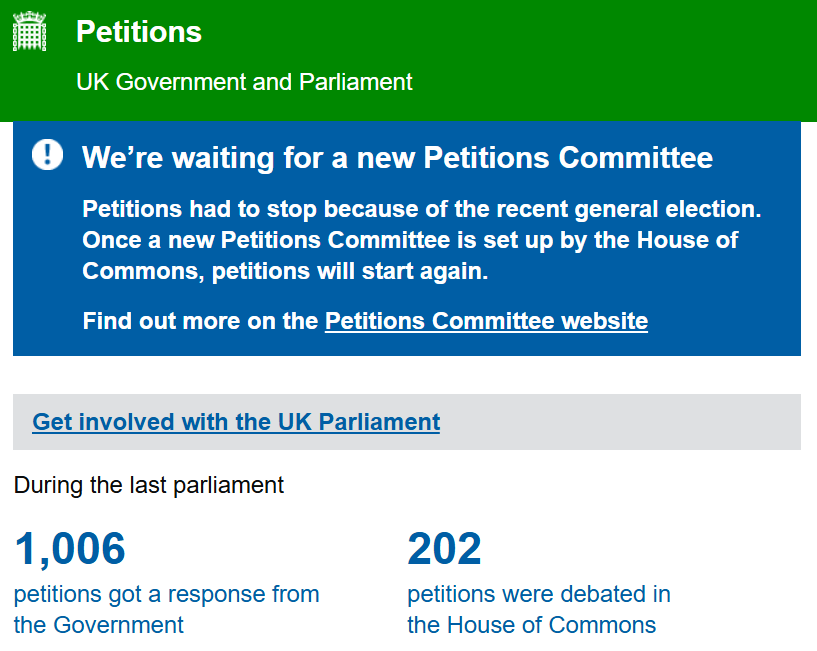
When will the new Government open e-Petitions?


The public e-Petition system was closed down at the end of May by the former Conservative Government. Along with the image shown here there was also a link on Find out more on the Petitions Committee website which is:

Your petitions and the 2024 General Election: The General Election means that the petitions website and all petitions closed on Thursday 30 May. Those petitions will not reopen after the election.

Why is the petitions site closed? When there is a general election, Parliament closes for a few weeks before the vote, for the election campaign. The petitions website is part of the official work of Parliament, so it had to stop too.

When can I start a new petition?The petitions site will open again once the House of Commons sets up a new Petitions Committee. We don’t know yet exactly when that will happen. You can follow us on X (formerly Twitter) at @HoCPetitions for updates, or check back on the petitions site for updates.

So far, since the new Parliament, there has only been one reference on the 18th July to a ‘petitions committee’. This comment came from the MP Caroline Nokes, Conservative from Romsey and Southampton North, and the Government response was from the Labour MP, Lucy Powell, the Lord President of the Council and Leader of the House of Commons. Sadly, there was no comment on the information for e-Petitions. The words are:

Caroline Nokes: Immediately prior to Dissolution, the excellent Backbench Business Committee had granted a debate in the Chamber to discuss the performance of Southern Water. I know that the right hon. Lady will want to respond about sewage, but in fact the debate was to be about its failure to deliver clean water to significant parts of my constituency in addition to its failures on sewage. Will she please reassure me that in the absence of the Backbench Business Committee and the Petitions Committee, the Government will find time for Back Benchers to bring forward important issues that we wish to debate in the Chamber?

Lucy Powell: The right hon. Lady is a fantastic, strong voice in the Chamber. I welcome her and the naughty corner back to their place, albeit on the other side of the House. She makes an important point about an important debate, which I shall certainly pass on. In the absence of Backbench Business debates, we have and will continue to table general debates, and there will be availability for Westminster Hall debates in the usual way as well.

This website has further explanations:

Find out more about e-petitions

E-petitions are an easy way for you to make sure your concerns are heard by Government and Parliament. E-petitions enable members of the public to petition the House of Commons and press for action from the government.

What can e-petitions be about?

E-petitions have to ask for a specific action from the government or the House of Commons and should be about something which the government or the House of Commons is responsible for.

How many signatures will I need to start an e-petition?

A petition will need to be supported by at least six people before it is published on the petitions site for other people to sign. When you start a petition, the petitions site will tell you what you need to do to get five supporters for your petition.

What happens after I submit an e-petition? 

An e-petition will stay open on the e-petitions website for six months. The Petitions Committee will be able to decide to do any of the following with a petition:

  • ask for more information in writing—from petitioners, the government, or other relevant people or organisations
  • ask for more information in person—from petitioners, the government, or other relevant people or organisations. This might be in Parliament or somewhere else in the UK
  • write to the government or another public body to press for action on a petition
  • ask another parliamentary committee to look into the topic raised by a petition
  • put forward petitions for debate

The Petitions Committee will not be able to take action on every petition. The Committee will use its judgement about which petitions to consider and what action is appropriate for each one.

How will petitions be put forward for debate?

The Petitions Committee can recommend that petitions be debated in Westminster Hall. If the Petitions Committee decides that a petition should be debated in the main House of Commons Chamber, it would take that request to the Backbench Business Committee.

Posted in Parliament and Democracy | Tagged , , | 1 Comment

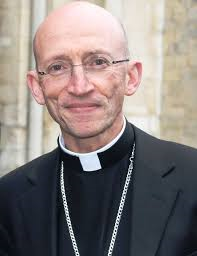
Chichester Bishop asks questions about Education 11-16


On Friday 26th July a discussion in the House of Lords was held in connection to the Kings speech on the 17th July. There was a reference to “Education for 11 to 16 Year olds” and the Bishop of Chichester, Martin Warner, made a contribution as he described “One of our leading independent schools, Brighton College, intentionally uses the arts to break down stereotypes of gender and sexual orientation.”

The session was opened by Lord Johnson of Marylebone who is Jo Johnson and he started with the comment

That this House takes note of the Report from the Education for 11 to16-year olds Committee Requires improvement: urgent change for 11–16 education (Session 2023–24, HL Paper 17).

The comments from the Chichester Bishop are here and he states:

My Lords, it is an honour to follow the noble Lord, Lord Aberdare, and the noble Baroness, Lady Blower, who have participated in the excellent report chaired by the group led by the noble Lord, Lord Johnson.

I welcome the priority that has been given to the review of the curriculum for 11 to 19 year-olds at an early stage of the Government coming into office. In particular, I welcome the report of the review group and how it will “refresh” the curriculum,

“build on the hard work of teachers and staff”, and seek “evolution and not revolution”.

These are important indications that education will not be driven by ideology that leads to it becoming a political football, as sometimes has happened in the past.

In particular, the promise that the review will not

“place undue burdens on education staff” will need to be delivered ostentatiously, particularly if the Government wish to improve the recruitment and retention of top-quality teachers. To that end, I greatly welcome also the acknowledgement of

“the innovation and professionalism of teachers”.

The working principles for the review group speak of consultation with education professionals, other experts and stakeholders. This does not at present include direct reference to the churches, but perhaps that is because this relationship is simply taken for granted. The tone of the statement on the review certainly chimes with the “whole child” approach of the Church of England’s vision set out in its 2016 vision for education, which outlines wisdom, knowledge and skills as the framework for nurturing capacity for decision-making, ethical considerations and social and environmental responsibility. We would certainly welcome the opportunity to be represented as part of the review group.

The diocese of Chichester that I serve is not unusual in running 155 schools, of which eight are secondary, delivering education to 37,000 pupils. This is a serious responsibility and it provides us with a significant window on the concerns and challenges of every community that our schools serve. It also indicates the wider context in which our schools operate. Thousands of volunteers across the country give their time to work with head teachers and teachers to try to distil the best possible balance between curriculum requirements and time spent on other demands that are non-essential academically but essential for the flourishing of certain subjects and activities, such as music, sport, drama and after-school clubs. Sustaining this, together with recruitment for the demanding contribution of volunteers in good governance, is a constant challenge and it will be very good to hear encouragement of this contribution.

I also note that the terms of reference for the review group speak of

“a curriculum that reflects the issues and diversities of our society”.

Here again, I ask the Minister what attention is to be paid to religious literacy as an important strand of education for understanding the complexity of national and global society. The Statutory Inspection of Anglican and Methodist Schools, or SIAMS, framework promotes religious education as a means to develop “courageous advocacy”, asking how a school’s theologically rooted Christian vision creates an active culture of justice and responsibility.

In a recent article on religious literacy, Professor Jim Walters at the LSE observed that

“learning about religion has become fused with agendas to foster inclusion … This makes it uncomfortable to touch on a tradition’s shadow side or the destructive ways religion is used”.

Walters goes on to assess how education might deepen and widen the outreach of students as a way of preparing them for adult decision-making. He contrasts economic, social and eco systems that are at risk of collapse with a religious imagination that is more than a creed or a set of dogmas. We might legitimately see the absence of any such orientation as one reason for the well-documented decline in happiness and positivity among students today. So I urge that the review group take seriously the important contribution of religious education to addressing issues of diversity and encouraging a critical and imaginative exploration that can expand our vision of a flourishing and coherent future.

Alongside this, I welcome the importance that the report gives to music, art, sport and drama. Investment in this area of education as integral to the curriculum is essential and has been lacking. This makes financial sense as we review the importance of the creative industries for our economy and as a significant source of soft power internationally.

On music as an integrative aspect of a curriculum, the Church of England is very aware in its work, particularly in the diocese of Coventry through its Inspire Education Trust, of how music in schools in areas of acute deprivation, incorporated as a necessary part of the curriculum, has lifted self-esteem and led people into exploration of performance and experience of live music, bringing groups to London to expand that. This is entirely positive.

In the diocese of Chichester, we have also benefited from partnership between church state schools and the independent sector, where music and the arts have been so well funded. At their best, these partnerships have ensured learning opportunities for both sides. The considerable investment in music and the arts from the independent sector has resulted in a notable range of successful actors from that background. One of our leading independent schools, Brighton College, intentionally uses the arts to break down stereotypes of gender and sexual orientation. For example, a key rugby player can also be the lead in a dance troupe. As we face an unprecedented surge in male violence against women, these performative processes of education that tackle emotional insecurities and unexamined prejudice should find an important place in any school curriculum.

I welcome the reference to a curriculum that prepares all children and young people for life as well as for work. It is essential that the formative development in the primary school years is also referenced in the curriculum that builds on that foundation. The resourcing of that early stage will legitimately demand attention and adequate resourcing. For example, the effects of digitalisation and the implementation of technology for the rolling out of the curriculum are heavily dependent on local budget availability, and many children miss out. It is also true that keeping people safe online is now a key priority for the governance of schools, and that includes basic searching for knowledge. I hope this will feature in the review ahead.

Finally, the curriculum review must also recognise that a “whole child” approach confronts us with a significant barrier to the effectiveness of any curriculum: namely, child poverty. The schools I serve identify the two-child cap as a significant contributor to this priority. I hope that its damage to education will contribute to its abolition.

I welcome the attention that His Majesty’s Government intend to bring to the review of the existing national curriculum and statutory assessment system. I hope that the churches will be invited to participate fully in the work of the review group.

Posted in Church Teaching, Education, Parliament and Democracy, Youth Issues | Tagged , , | Leave a comment

Minister grilled about dropping ‘levelling up’


The Government website, TheyWorkForYou, indicates that Parliament will be closed at the end of Tuesday opening again in September. On Thursday 18th July two MPs made contributions. Kieran Mullan the Conservative member for Bexhill and Battle previously been the MP for Crewe and Nantwich. He spoke five times on that day with the second item ‘Business of the House’. Lucy Powell the ‘Lord President’ of the Council and Leader of the House of Commons responded.

Kieran said

“In one of her first acts, our new Deputy Prime Minister cut “Levelling Up” from her department’s title. The Leader of the House will know that there are dozens of town boards up and down the country that are populated by community leaders, business leaders and charity leaders. Whether it was intended or otherwise, the change has genuinely caused anxiety among many of them about whether their funding might also be cut in future. Can we have an urgent statement in the House so that the new Deputy Prime Minister can reassure them that the levelling-up funding they are due to receive will still be delivered?”

Lucy spoke

“I thank the hon. Gentleman for his question. As a former MP for a northern constituency—I think he has travelled some way south since then—he will know that while the previous Government had strong rhetoric on levelling up, the reality was very different. There were small pots of money that were not transforming communities, and one of the biggest issues at the election was that large parts of the country, especially in the midlands and the north, felt that the previous Government had failed on levelling up. This Government will get growth in every part of the country, and we are committed to doing that.”

Helena Dollimore for Hasting and Rye contributed

“May I congratulate you on your re-election, Mr Speaker, and welcome the new Leader of the House to the Dispatch Box?  People have been left without water for over five days on not just one but two occasions. Residents and businesses have yet to be properly compensated. The town centre of Hastings has been flooded twice, and we have seen record levels of sewage dumped in our sea and even appearing in people’s homes. Will the Leader of the House look into when I can raise the matter in upcoming debates in the House?”

Lucy responded

“What an excellently put question from the new Member for Hastings and Rye. I am disturbed to learn of the failures of Southern Water in dealing with these issues. As my hon. Friend will know, the Secretary of State for Environment, Food and Rural Affairs has got straight to work, bringing in the water bosses and taking a series of steps to clean up our rivers and seas and hold water companies to account. We will soon be introducing the water special measures Bill; I hope my hon. Friend will take a keen interest in that legislation and will contribute fully as a new Member.”

On Friday Alison Griffiths, the Conservative MP for Bognor Regis and Littlehampton, spoke her maiden speech about Planning and Green Spaces, she wanted to ‘introduce my wonderful constituency Bognor Regis’ which has historic links to the poet William Blake. She referenced Blake’s “England’s green and pleasant land” was surely inspired by his life there. Alison reflected

“On the other side of the River Arun, Littlehampton is renowned for its rich nautical heritage. The harbour is central to the town’s identity, and the presence of the RNLI lifeboat station underscores the importance of maritime safety. Rustington adds further to our rich tapestry. Now home to Blind Veterans UK, Rustington is a model of community cohesion and local enterprise. Its thriving high street, supported by local businesses, is a testament to what can be achieved when we invest in our towns and villages.”

She reflected

“Predecessor, Nick Gibb, served Bognor Regis and Littlehampton for 27 years with great distinction. His dedication to public service and to our constituents has set a particularly high standard, as many have told me, and in this place and in government, his reforms to education have improved the lives of an entire generation, providing our children with the opportunities they need to succeed”

She bought challenge to the Governments about mandatory housing targets. Alison described how

“In Bognor Regis and Littlehampton, the floodplains and green spaces are the very foundations of our local economic ecosystem. Our constituency has already taken more than its fair share of development and has felt the adverse impacts as a consequence. Today I stand before the House to discuss an issue of utmost importance to my constituents: opposition to inappropriate development, and the preservation of our green spaces. These areas are not just stretches of land; they are the lungs of our communities. They play a crucial role in combating climate change by acting as carbon sinks and promoting biodiversity, by contributing to our national food security, and by providing essential green spaces for recreation, wildlife habitats and natural flood defences. One of my goals is to secure the right community infrastructure to support the growing population in the homes that have already been built. It is not enough to build new homes. We must also invest in the necessary infrastructure. I advocate for a more localised approach to planning, where decisions are made with meaningful input from local residents and authorities”

Posted in Parliament and Democracy | Tagged , , , | Leave a comment