Final responses from Bishops following the Kings Speech


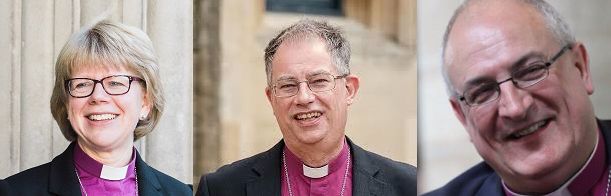
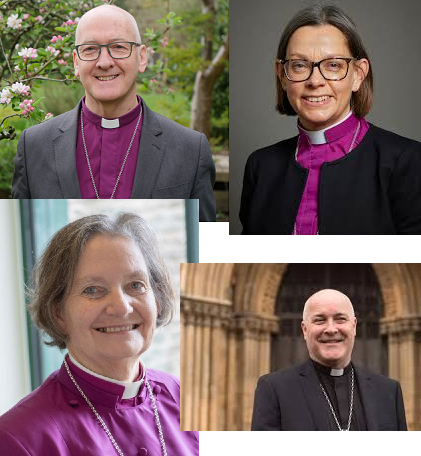
On Wednesday 24th July Rachel Treweek the Bishop of Gloucester, Lord Sentamu previously the Archbishop of York and David Walker the Bishop of Manchester made contributions in respect of the King Speech which is available here. On Thursday 25th July another group of Bishops were Justin Welby the Archbishop of Canterbury, Philip Mounstephen the Bishop of Winchester and finally John Inge the Bishop of Worcester spoke which is the final session here. All of these speeches are also listed here below.

Bishop of Gloucester – Rachel Treweek

My Lords, I congratulate the noble Lord, Lord Timpson, on his superb maiden speech, and I refer to my interest as stated in the register as Anglican bishop for prisons.

The gracious Speech began with the principles of

“security, fairness and opportunity for all”.

What does that mean for our criminal justice system? Much mention has been made of overcrowded prisons, an overflowing remand population and a void of rehabilitation leading to reoffending. In the past year I have convened cross-party, round-table discussions with key people in this and the other place, plus academics, those with lived experience and prison reformers. We are all agreed that we need a legislative definition of the purpose of imprisonment, and we need to improve the public’s understanding of sentencing. The concepts of punishment and vengeance are strong in the public narrative.

Beyond these doors, in the Prince’s Chamber, is the statue of Queen Victoria, positioned between the figures of Justice and Mercy. How would our criminal justice system be different if we allowed those two figures to properly dialogue? I recently visited the Netherlands, where there has been a huge reduction in the incarcerated population, not least through an imaginative rethink of sentencing, including different and appropriate care of those with mental health problems and addiction. Children are also dealt with differently, and I hope that in due course I will be able to share more of what I believe we could learn.

The narrative that our streets will be safer if we lock more people up and for longer is not supported by the evidence, and simply leads to doing more of the same thing. Just criticising the previous Government for not building more prisons is missing the point. A system that results in more imprisonment, continued repeat offending, more victims and no change in what is broken in lives and society is not only failing but is not cost effective. The government commitment to a

“justice system that puts victims first” not only requires tackling reoffending with a fresh look at appropriate education, rehabilitation and purposeful training in prison and beyond the gate. It also requires whole-system change, with a public health approach focusing on what will make for stronger and transformed communities, including tackling root causes. I am sure the Minister is aware of the Better Justice Partnership and its work on whole-system change, and I hope he might commit to meet with it.

Over decades, the inequality of our society has contributed to the warehousing of the vulnerable. We need a whole-community approach, and the issue of relationship is key. We need to look at the big picture, including up stream. We need that long-overdue review of sentencing. We need courage to establish alternatives to the revolving prison door and the repeated pattern of fractured relationship, and this must include community-based alternatives as well as the presumption against short sentences, not least with their disproportionate impact on women.

We need to properly resource, train and value prison and probation staff. More needs to be done with them, and for them—it is the big picture. The ambition of security, fairness and opportunity for all needs a large, articulated vision for the society and world we wish to see. Even our debate on the gracious Speech is siloed across government departments. We need to do join-up. It would be wonderful if we could start from a person-centred way of doing things. How about saying, “For a child born today, how will all that we do enable their flourishing into adulthood?”

But back to reality. I applaud the acknowledgement of children of prisoners. They also often serve a hidden sentence, so identification is long overdue. I am sure the Minister will connect with the charities Children Heard and Seen and the Prison Advice and Care Trust, which bring much expertise. I also applaud the intention to expand the remit of the Victims’ Commissioner and the ambition to halve the violence against women and girls—but that too requires looking up stream.

Time is ticking. Even if people are not driven by mercy in dialogue with justice, perhaps finance will be the driver. Prison costs just over £50,000 per person per year, and the annual social and economic cost of reoffending is estimated at £18 billion. A different and more effective approach means not higher cost but a redistribution of funds. As a Lord spiritual motivated by my faith in Jesus Christ and my belief in every person created in the image of God, I am hopeful about the opportunities that we have to transform the system, holding fast to those principles of security, fairness and opportunity for all.

Lord Sentamu – John Sentamu

My Lords, it is a pleasure to follow the noble Lord, Lord Dholakia. I begin my contribution to this debate on justice by calling Lord Bingham, a noble and learned Lord, as my expert witness. He is in glory. Thankfully, his incisive and illuminating legal mind speaks with authority on justice. He says at page 174 of his excellent book, The Rule of Law:

“The rule of law is … one of the greatest unifying factors, perhaps the greatest, the nearest we are likely to approach to a universal secular religion. It remains an ideal, but an ideal worth striving for, in the interests of good government and peace, at home and in the world at large”.

I humbly suggest to His Majesty’s Government that The Rule of Law should be the golden thread that runs through the legislative programme outlined in the King’s Speech, as well as in the governance of our four nations. It is the perfect glue that binds together governance and the laws passed by Parliament. The Attorney-General’s excellent maiden speech chimes in well with this, as does the maiden speech from the noble Lord, Lord Timpson. Bravo!

Take poverty, for example. President Nelson Mandela said:

“Overcoming poverty is not a gesture of charity. It is an act of justice. It is the protection of a fundamental human right, the right to dignity and a decent life. While poverty persists, there is no true freedom”.

Now then, what are we to understand by the rule of law, a phrase that we regularly use? My expert witness says the existing principle is

“that all persons and authorities within the state, whether public or private, should be bound and entitled to the benefit of laws publicly and prospectively promulgated and publicly administered in the courts”.

Further:

“State observance of the rule of law requires the availability of effective and impartial dispute resolution mechanisms. This means that citizens must be able to access the courts, and be heard by independent judges, under a fair process”.

A manifesto commitment to put victims first, supporting them at every stage of the criminal justice system, is a good innovation, but surely it must treat all alleged perpetrators of crimes as innocent until proven guilty, and therefore supported as well.

Building more prisons will ease overcrowding. However, as a former chaplain in the 1980s of a sizeable remand centre that was full beyond capacity most nights, I know that building new prisons must go hand in hand with increased funding for the courts system; legal aid; the rehabilitation and education of offenders; a fully funded and renewed Probation Service; a regular training review of all prison officers; a rigorous refreshing of the workings of the Crown Prosecution Service; and the renewal of restorative justice—

“To no one will we … deny or delay right or justice”.

The rule of law is not an arid legal doctrine but the foundation of a fair and just society, and a guarantee of responsible government. It makes an important contribution to economic growth, as well as offering the best means yet devised for securing peace and co-operation. My expert witness in The Rule of Law advocates eight conditions which capture its essence. I will give you four:

“The law must be accessible and so far as possible intelligible, clear and predictable … Means must be provided for resolving, without prohibitive cost or inordinate delay, bona fide civil disputes which the parties themselves are unable to resolve … Ministers and public officers at all levels must exercise the powers conferred on them in good faith, fairly, for the purpose for which the powers were conferred, without exceeding the limits of such powers”.

Finally, there must be

“compliance by the state with its obligations in international law”.

When it comes to justice, the rule of law guards, protects, drives and guarantees its delivery. Love without justice is self-indulgence. Justice without love is tyranny. The rule of law holds both justice and love together in a creative tension.

Bishop of Manchester – David Walker

My Lords, it is always a pleasure to follow my former boss.

As a trustee of the Clink Charity, where we help prisoners build skills for employment in the catering industry, I too welcome the noble Lord, Lord Timpson, and congratulate him on a powerful and hopeful speech. He might wish to know that the Clink restaurant at Styal prison won the Cheshire Life restaurant of the year award earlier this week. If his team can draw my remarks to his attention, I hope he will accept an invitation to dine with me there later this year, so he can see for himself. However, as my right reverend friend the Bishop of Gloucester has spoken eloquently about prisons already, I will focus elsewhere.

As co-chair of the national police ethics committee, I am deeply committed to the principles that Sir Robert Peel set out two centuries ago. Our police are civilians in uniform, not paramilitaries; they are servants of the Crown and society, not tools of government policy. Those distinctions have not always been clear in recent years, not least during the Covid pandemic. Hence, if we are to recover the levels of confidence in policing that Peel’s vision requires, visible neighbourhood policing and responding to every crime is vital. I welcome measures in the gracious Speech to those ends. I also welcome efforts to divert young people away from the criminal justice system at an early stage, and a focus on violence against women and girls.

One mark of a mature society is that it is willing to listen and learn when things have gone badly wrong. Hence, I am pleased to see proposals to extend the duty of candour. This, as the Minister has said, was a cornerstone of the report which the former Bishop of Liverpool produced in response to the Hillsborough tragedy. I will never forget meeting bereaved families at the stadium, as a young priest, seeking to offer such comfort as I could. I will also be supporting measures to improve safety at public events, and especially Martyn’s law, named, as we have heard today, after a victim of the Manchester Arena attack. I am grateful to the noble and learned Lord, Lord Stewart of Dirleton, who addressed the point about proportionality for voluntary and faith community venues in that regard.

Meanwhile, there are other past failings that we need to consider. I would be pleased to hear Ministers indicate how they wish to take forward the recommendations of the Independent Inquiry into Child Sexual Abuse. I would further urge His Majesty’s Government to set up the long-needed inquiry into the events that took place at the Orgreave coking plant during the miners’ strike—it was the parish next door to my own—so that we can guard against attempts to politicise policing in future.

I applaud the ending of the Rwanda scheme. Setting aside any moral concerns, I hope we will never again see a Bill before this House that the responsible Minister cannot confirm to be fully compliant with international law. Meanwhile, I and many others will continue to argue for safe and legal routes, so that genuine refugees who have firm reasons why Britain is the best place for them to begin rebuilding their traumatised lives can do so here. Given that refugee numbers remain a small fraction of net migration, I am confident that we can do this within the total migration numbers that Britain can absorb. Mindful of the skills that many refugees bring, I urge His Majesty’s Government to allow those who have spent months—or longer—waiting for a claim to be processed to contribute to our economy by taking paid employment.

On a wider matter, I welcome the commitment to ban conversion practices. I welcomed its appearance in the previous Government’s programme, not long after the Church of England General Synod had called by a huge majority for such a ban. Progress stalled, of course. I have met too many people suffering lifelong damage from such abuse. I and others stand ready to help frame a law that will outlaw these disgraceful practices while not criminalising medical practitioners and registered therapists, or private non-coercive prayer.

Finally, I am delighted to be followed today by the noble Lord, Lord Goodman of Wycombe, who will make his maiden speech. I remember, during my time as Bishop of Dudley, when he was in the other place, he came to visit my diocese. I was so impressed by his work supporting faith communities. I look forward to the significant contributions that he will make to your Lordships’ House, both immediately following my speech and in times to come.

The Archbishop of Canterbury – Justin Welby

My Lords, I join noble Lords in congratulating the noble Lord, Lord Coaker, and the noble Baroness, Lady Anderson, on their appointments and on their party’s first King’s Speech. As a successor to the noble Lord, Lord Ahmad, the noble Baroness has a very hard act to follow indeed, as I am sure the whole House will recognise. I also congratulate the noble Baroness, Lady Goldie, on her remarkable meal, which, as I missed breakfast, may result in me leaving quickly to have lunch—but it will not be as good.

As others have indicated, we are living in unstable times. The Anglican Communion, in 165 countries, finds almost half our members facing conflict. Issues elsewhere in the world, however, do not confine themselves to affecting us in our international policy alone. We are recognised now by the United Nations as the most diverse nation on earth. That means that every single overseas conflict or disaster has a diaspora community here. To build a cohesive society here, domestic and foreign policy must work hand in glove.

That is seen with Israel and Gaza. Conflict overseas has a profound impact on our own society and our own domestic policies because of the multicultural nature of our communities. Interfaith dialogue in this country has almost collapsed since 7 October last year and tensions are high, and that is entirely as a result of overseas matters.

The interplay is also clear in our response to questions of mass migration and climate change. Domestic challenges require cross-border solutions if they are to be effective. I ask the noble Lord, Lord Coaker, what structures there will be in government to ensure that co-ordination.

I welcome the Government’s approach and intentions for foreign policy expressed so far, including their commitment to ongoing support for Ukraine, calling for a ceasefire in Gaza, a two-state solution, and upholding international law and investing in international co-operation and institutions. I welcome the strategic defence review, with its aims of reinvestment in our Armed Forces, in their effectiveness and—as was just mentioned by the noble Baroness, Lady Smith—in their well-being.

Noble Lords will know that the Foreign, Commonwealth and Development Office houses the pithily named negotiations and peace processes team in the Office for Conflict, Stabilisation and Mediation, established by the Conservative Government by the noble Earl, Lord Howe. It has been enormously effective. The cost—financial, human and every other—of trying to prevent conflict is far smaller than the cost of war once it has broken out. It can happen in many places where we would never intervene militarily but where our interests are deeply at stake. Further investment in making peace should be considered alongside the necessary and urgent increase in spending on our military force. Both are insurance premia, and they need paying. Peacebuilding in the DRC, for example, where China and Wagner are active, and which is the worst area for sexual violence in conflict, is also essential for the world’s green ambitions.

Secondly—I am beginning to wind up—it is essential that our foreign policy is religiously literate. Some 85% of the world’s population identifies with a faith. To engage with foreign policy without doing so is madness. I welcome the intention, for example, to develop a strategy for Africa. However, to do so without consideration of religious faith makes absolutely no sense at all.

The Labour manifesto said:

“Government is at its best when working in partnership with business, trade unions, civil society, faith groups, and communities. But without a shared project those partnerships barely get off the ground”.

In Mozambique, Anglicans, in partnership with the UN, have played a significant part in building groups to undermine the hold of ISIS in Cabo Delgado. There are innumerable faith groups and NGOs that will wish to deploy their ability and local knowledge similarly. We look forward to working with this Government as with the last.

The Bishop of Winchester – Philip Mounstephen

My Lords, I am grateful for the noble Baroness’s remarks at the start and am pleased that the Government have expressed a desire to reset the UK’s international relations. If the UK is to exercise the soft power that we undoubtedly might, not least through proper investment in the BBC World Service, it is vital that we are as fully engaged internationally as we can be. In that regard, I stress the vital importance of freedom of religion or belief—or FoRB for short, because it is a mouthful—in today’s world. It is a vital human right, and its increasing abuse is a growing global threat.

At a purely human level, consider some of the grave impacts of FoRB violations. Victims of religious persecution often experience severe psychological trauma. Constant fear and stress undermine both community well-being and personal health. Children who witness or experience such violence are affected throughout their lives, perpetuating cycles of trauma and fear. Women are particularly vulnerable in contexts of religious persecution, often facing sexual violence and multiple forms of exploitation, including people trafficking, forced conversion, and forced marriage—or rape by another name.

FoRB violations are a significant driver of displacement. Millions are forced to flee their homes to escape persecution, leading to immense humanitarian challenges. It would be good to know whether the Government’s latest initiatives in this area of migration recognise and address the violation of freedom of religion or belief as a significant factor driving migration. If not, they should. There is a link, too, with climate change. The past decade has seen a significant rise in both CO2 emissions and persecution in the world’s two most populous countries: India and China. I suggest that that is no coincidence. I am not suggesting there is a causal relationship between the two, but I do suggest there is a moral relationship.

So this is not a side issue. In that regard, I am glad to see the reappearance of the Holocaust Memorial Bill, even as I recognise the sensitivity of the issue of the memorial’s siting. The Holocaust remains an appalling reminder of the grave danger of abandoning the freedom of religion or belief.

Yet this right is under increasing threat today. Its biggest threat comes from overbearing, authoritarian and nationalistic Governments bolstered by their own particular ideology or, indeed, theology. Putin’s regime in Russia is bolstered by “Russkiy mir”—meaning “Russian world” or, ironically, “Russian peace”—a theology shamefully expounded by the Russian Orthodox Church and roundly criticised elsewhere in Orthodoxy. President Xi’s ambitions for Chinese hegemony are bolstered by the ancient concept of tianxia—literally, “all under heaven”—a geopolitical system with China at the centre and Xi at the centre of the centre.

Iran’s leaders are motivated by an apocalyptic belief in the revelation of the 12th imam, a belief that feeds their violent repression at home and their violent activities abroad. In India, those close to President Modi expound and espouse the concept of “Akhand Bharat”—unbroken India, stretching from Afghanistan to Myanmar, encompassing Pakistan, Bangladesh, Sri Lanka and Nepal, and bolstered by Hindu fundamentalist theology. That is very bad news for the vast numbers of non-Hindu minorities within the greater whole. Indeed, all these theologies are bad news for minorities of every sort, and bad news therefore for the wider world. So the time for inaction and indifference is over.

Happily, the UK has a growing international reputation and role in this area. Following the Truro review, which I was honoured to author, and the changes to government policy it brought about, we have established the UK FoRB Forum, which gathers around 90 civil society actors to make common cause on this issue. Two years ago, the UK hosted a successful international ministerial conference on the issue and, last year, the UK co-sponsored for the first time a UN Security Council resolution on it.

Fiona Bruce, until recently MP for Congleton, held the role of the Prime Minister’s special envoy on this subject with great energy and commitment and, as such, chaired the growing intergovernmental International Religious Freedom or Belief Alliance, of which the UK is a founder member.

I therefore encourage the Government to build on this foundation and take a faith-literate approach to foreign affairs. Looking at the world of today through western secular lenses will not do and simply makes us increasingly vulnerable. I encourage the Government to make a fresh and speedy appointment of a special envoy for freedom of religion or belief; it is much needed. I have no doubt that embedding FoRB at the heart of foreign policy and appointing a special envoy will simply mean that we are more effective actors globally. In today’s world, we cannot afford to be anything less.

The Bishop of Worcester – John Inge

My Lords, I join others in welcoming the Ministers to the Front Bench and begin this valedictory speech by saying what a privilege it has been to serve in your Lordships’ House for the last 12 years. I thank all noble Lords and staff on the estate for all they do and their hard work.

After my maiden speech, a fellow Peer asked me how it had gone. “Oh, they were very nice and kind”, I responded. “Yes”, he retorted; “I have never known a place where courtesy is used as such an effective weapon”. I have experienced much unweaponised courtesy and civility here. I have consistently encountered humanity at its best, and I thank your Lordships, whatever their political affiliation, for their impressive devotion to the common good.

In this final intervention, I will concentrate my brief remarks on development issues, which have been a passion of mine throughout my adult life. While I recognise the imperative for defence spending and the need to be ready for war, I hope that the Government will pay equal attention to development, which is an indispensable contributor to peace and human flourishing.

I welcome the Government’s stated commitment to international development. I note that the manifesto spoke of a new mission statement for international development

“to create a world free from poverty on a liveable planet”.

I applaud this and know that all on these Benches will want to work with the new Government in delivering that mission.

The manifesto also stated:

“Government is at its best when working in partnership with business, trade unions, civil society, faith groups, and communities”.

I observe, partly as a result of my first-hand experience in Africa, the Indian subcontinent and South America, that there is scope for much better partnerships with Church and Church-related networks internationally, especially in the field of humanitarian relief and poverty alleviation. Developing the potential of such partnerships, as the most reverend Primate the Archbishop of Canterbury reminded us earlier, is dependent on the Government achieving a religiously literate international development policy and awareness of the role that transnational religious actors play in international affairs.

This is especially true when it comes to the Government’s plans to publish a new strategy for Africa. An Africa strategy that does not recognise the importance of faith and religion would be short-sighted in the extreme. I am delighted by the appointment of the noble Lord, Lord Collins, to his new post as Minister for Africa, which I imagine he will take very seriously indeed.

The international situation with respect to debt is dire. As Christian Aid highlighted recently in its report, Between Life and Debt, 32 African countries spend more in paying external debts than on healthcare, and 25 spend more on external debts than on education. It is clear that, without addressing today’s debt crisis, lower-income countries will not deal with the impacts of the climate crisis or have any hope of meeting the sustainable development goals.

The UK Government are well placed to play a significant part in addressing this crisis, because the majority of external debts owed to private creditors by countries in debt distress are governed by English law. I therefore welcome the manifesto pledge on tackling unsustainable debt. To put this pledge into action, I suggest that the new Government could commit to UK legislation to incentivise private creditors to participate fully in multilateral debt relief initiatives. Coming at no cost to the taxpayer, this would be a practical and realistic step that could be taken quickly to unlock the impasse in global debt relief and release serious resources.

I would love to see the new Government return to spending 0.7% of GNI on development as soon as possible, but in the meantime I implore the Government to ensure that aid is spent in lower-income countries, not in the UK. At present, more than half of UK bilateral aid is spent in the UK, mostly on asylum seekers, which is surely not an appropriate use of the aid budget. I also implore the Government to ensure that aid is refocused squarely on tackling poverty and its causes. That would include investing in the prevention of humanitarian crises and putting resources in the hands of local organisations.

I note that the Foreign Secretary has spoken often of the need for the UK to become a leader in development by adopting a model that emphasises trading with other countries to build long-term win-win partnerships, rather than following an outdated model of patronage. I agree. Such actions are in our own interest, as well as that of other countries. As a Christian, I believe that they are also a moral imperative. Jesus tells us to love our neighbour as ourselves, implying that it is in loving our neighbour, wherever they may be in our global village, that we properly love ourselves. That insight has always been at the heart of all that is best in British values. I pray that it may remain so. As I sit down, I offer the assurance of my prayers for your Lordships’ House.
Posted in Church Teaching, Parliament and Democracy | Tagged , , , , , , | 1 Comment

More Bishops respond to the King’s Speech.


Five Bishops responded to the Kings Speech last week. The contributions on Thursday, the 2nd Day came from Bishop Alan Smith the Bishop of St Albans and Dr Guli Francis-Dehqani the Bishop of Chelmsford which can be seen here. On Friday, the 3rd Day after the Kings speech, Sarah Mullally the Bishop of London, Steve Croft the Bishop of Oxford and Stephen Conway the Bishop of Lincoln spoke on Friday which can be seen here.

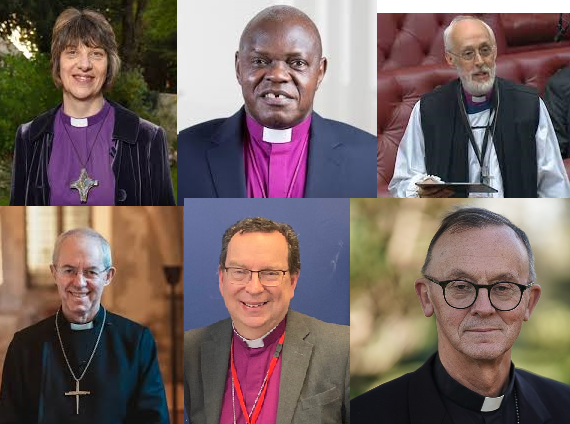
Then this week on Monday there were three more Bishops which are Leeds, Newcastle and Bristol. Their comments are below and the whole of the session is available here. Then on Tuesday the Archbishop of York has contributed which is listed below and the other contributions are seen here. All of their speeches are listed here.

Bishop of Leeds – Nick Baines

My Lords, I am not an economist, but I care deeply about the economy. I shall limit myself to a couple of observations, and I am sure that I can save a few minutes in the length of the debate.

First, I welcome the Minister and thank him for his illuminating and articulate speech. I admire the new Government’s ambitions, but I worry a bit that there is too much. Holding all this together in a coherent development framework will be challenging beyond words, but I wish the Government well in doing it.

I want to plead for honesty from the Government and a good communication strategy to explain to the rest of us in the country who are not economists how all this is going to be rolled out. When it fails—elements will fail for a host of reasons, not usually intentional—the Government must trust the electorate and tell us the truth. When timelines do not work and get delayed, trust us and tell us the truth so that we know what is going on. We need to be treated like adults. I understand the need to adhere to the fiscal rules, but the Government choose what those rules are, so if they have implications for the rest of us, that needs to be explained clearly in language that can be understood by people like me.

What I am glad about in the gracious Speech is that we seem to have a programme that takes long-termism seriously. I hope that can be stayed with during this very ambitious programme, where the immediate will sometimes compromise the longer term. We need long-term thinking. I speak as someone who lives in the north of England and who has to use transport north and south but also east and west. The problems that we have with rail were mentioned earlier. The amount of money that has been invested in London and the south is light years above what has been invested in the north so far. I wonder whether the northern powerhouse is turning into a northern small battery, but that is to be seen.

There are a number of issues in relation to employment that really impact us in the north. Universities—I am familiar with a number in west Yorkshire—are now struggling and making people redundant, because we do not have students coming in from abroad. I know that raises questions about the models for investing in students, but we can talk about creating employment at the same time as we are losing employment in significant areas. One of the factors involved in that is access to good communications, especially rail and road. I came to this House 10 years ago, and I remember saying at the time that only way effectively you can get from east to west and from west to east is along one road, the M62. There is nothing else. What happens to the north-east when the A66 is snowed under, I suspect even in the summer? The rail links are appalling, whatever investment has gone in. I now have to get my PA to book trains north-south to get down here, knowing that if my train is cancelled I can get the one before or the one after and still get here for what I need to be here for. That is terrible in a country like this.

What about the issues we have with water? The failed experiment of the past 40 years, where pockets of individuals have benefited from much of our privatised utilities, needs to be addressed. I read the other day—I cannot remember the numbers—that the CEO and the CFO of Yorkshire Water have received more than £500,000 in bonuses. I work in a business that does not quite understand bonuses, because I do not get a salary, I get a stipend, but I always thought that a bonus was there to reward going beyond what you are employed to do. So why are people getting bonuses for abject failure where the money goes into the pockets of shareholders at the expense of consumers? This is a moral issue as well as an economic issue. I hope that the Government will address this as they go forward.

So I come back to where I began and say that I admire the ambition, but we have to be careful that we do not lose it as we go.

Bishop of Newcastle – Helen-Ann Hartley

My Lords, I welcome the gracious Speech and the importance it places on economic growth. I congratulate the noble Lords, Lord Vallance and Lord Petitgas, on their excellent maiden speeches.

The Government’s bold articulation of fiscal reality, and the resistance to colluding with demands for short-term fixes, present a helpful foundation for next steps. One question is: when striving for growth, who will most feel its impact? The UK has some of the highest levels of geographic inequality in Europe. According to a survey conducted in 2022 by YouGov and the Resolution Foundation, 41% of those surveyed in the north-east felt that their region has generally declined in recent years—the highest out of any region in the UK. This feeling is not unfounded when real wages in half of the north-east’s local authorities are still below 2008 levels. The impact can be felt in take-home pay and on our high streets, and it is borne out in the investment decisions of businesses.

It is essential that the growth we strive for is for the UK in its entirety, with a particular focus on communities whose potential is not yet fully realised. I therefore welcome the emphasis this Government place on local economies, and I look forward to seeing increases in mayoral powers and local growth plans through the English devolution Bill. However, the responsibility of ensuring that everyone feels the benefits of growth should not rest solely with the Government but should be shared by us all. How can each sphere of society—businesses, charities and civic institutions—partner together so that the benefits of growth are felt more widely?

I would like to highlight the businesses and social enterprises that recognise that their success is bound up with the flourishing of the local communities that they serve. The Big River Bakery in the Shieldfield area of Newcastle is a terrific example of this very point; it is a bakery, shop, cafe, training space, and so much more—a sustainable commercial model partnering with external support, rooted in a deprived local community, and nurturing kindness and compassion in its mission to serve.

There is another bakery, founded in Newcastle in the 1950s. Today, that bakery can be found on high streets across the UK and took an 8.2% share of the UK’s food-to-go sales in 2023. I was one of the many who joined Greggs in celebrating National Sausage Roll Day last month by purchasing its limited-edition yard of sausage rolls. That is a lot of sausage rolls; other sausage roll makers are available. Greggs has experienced enormous growth as a business, but it continues to serve its communities, contributing a proportion of its profits towards the Greggs Foundation, which supports local community organisations and addresses issues of poverty and inequality by distributing upwards of £4 million in grants each year and establishing more than 800 breakfast clubs. An example of how profit and growth can be achieved, but through partnership, its impact goes further. How can our Government encourage greater partnership and social responsibility, so that more communities feel the benefits of growth?

It is clear that economic growth is the driving mission of this new Government. I believe that success will be measured by the fruits of growth. My hope is that we will work towards equitable and sustainable growth, achieved through partnership for the benefit of all.

Bishop of Bristol – Vivienne Faull

My Lords, it is a great pleasure to follow the noble Lords, Lord Howarth and Lord O’Neill, and to welcome and congratulate the noble Lord, Lord Vallance, and greet him as the granddaughter of a Cornish man and a Scilly woman, as my father rather cheekily determined it.

I preface my remarks by welcoming, in an adjunct to the gracious Speech, the Government’s proposal to renew the Lords Spiritual (Women) Act, and I should declare my interest as I am a Member who benefits from its current provisions. But it is on modern slavery that I wish to focus my remarks this evening as, in the labour exploitation that we have seen increasingly in the areas of agriculture, domestic work and social care, there is growth that we should not seek and indeed need to guard against. As your Lordships know, modern slavery is a crime which affects every community in the UK. It is not a niche issue. It is estimated that 130,000 people are held in modern slavery in our country today, and we are used to hearing about day-to-day transactions where there is exploitation in car washes, manicurists or, increasingly, in accessing social care.

I must start this debate with a belief in the inherent dignity of work and the right of all workers to receive fair payment for their labour, free from exploitation. I applaud the work of many Members of this House and the former Government for their genuine commitment to tackling this terrible crime. The 2015 Modern Slavery Act was by no means a perfect piece of legislation, but it signalled real political intent. We have a world-leading national referral mechanism which supports thousands of victims every year. I am proud of the progress that the UK has made but, while there is much to applaud, there have been concerning developments as well. The Nationality and Borders Act, the Illegal Migration Act and, most recently, the safety of Rwanda Act have all put victims of modern slavery at further risk. This is particularly true where migrant victims are imprisoned, often due to criminal exploitation, and can be subject to a public order disqualification. Can the Minister tell the House what the plans are for these various pieces of legislation as they affect migrant victims of modern slavery? If he cannot do so now, will he commit to do so in the future?

Alongside international trade in human beings is domestic exploitation of human beings, particularly through county lines, and I applaud the ambition to introduce a new offence for criminal exploitation of young people. The need for a clear definition of child criminal exploitation is something which I and many on these Benches supported before in this House. However, I am disappointed that modern slavery was not directly referenced at all in the gracious Speech.

Several noble Lords have mentioned shortages of labour in various sectors and, as many have said, nowhere is this more acute than in our social care sector to which we entrust the lives and well-being of some of the most vulnerable in our society. Last year, nearly one in 10 roles in adult social care stood vacant. There is clearly an acute need for a clear strategy to fill vacancies and deal with issues of recruitment and retention in the workforce. However, it is unacceptable that gaps in the social care sector have led to a rise in labour exploitation. We have recently seen reports that modern slavery is surging in this sector, with nearly one in five potential victims who calls the modern slavery helpline working in social care. Restricted, temporary work visas are creating the conditions for labour exploitation, especially as anyone on a health and care or skilled worker visa has just 60 days to obtain a new visa, during which time they have no access to public funds. To tackle exploitation, we should start by making work visas more flexible so that workers are not trapped in exploitative conditions.

Work must have dignity and give people purpose. I applaud the Government’s ambition to strengthen workers’ rights and will continue to seek reassurance that we will end the abhorrent practice of modern slavery for good.

Archbishop of York – Stephen Cottrell

My Lords, it is an honour to respond to the gracious Speech. I, along with others on these Benches, welcome the noble and learned Lord, Lord Hermer, the Attorney-General, and thank him for a really moving maiden speech—not least his desire that we listen to and respect one another and work consensually.

Like others, I want to focus on one thing, which is rebuilding trust in democracy itself. The turnout on 4 July was shockingly low. Research also shows a 13% gap in turnout between constituencies with the highest and lowest proportions of home ownership. Furthermore, an estimated 400,000 people were turned away at the polling station because they did not have the right ID. These are alarming statistics, and I look forward to the changes outlined in the Government’s manifesto that could start to address them, including reducing the voting age to 16.

It is the link to poverty that causes me the gravest concern. It shows that a large proportion of our population do not feel they have a stake in our national life, nor much of a future to look forward to, and therefore for them, voting just is not worth it. There are measures on poverty in the King’s Speech that I welcome, particularly the children’s well-being Bill and the plans for free breakfast clubs, but I must take this opportunity to join others in calling for the removal of the two-child limit to universal credit, because it is the biggest driver of rising child poverty and has a big impact on trust in our democracy.

I have often spoken about the power of devolution, not just to shift power away from the centre. Devolution shifts perspective, enables consensual politics to thrive and enables us to take a longer view. The recently established York and North Yorkshire Combined Authority, where I live and serve, is already starting to demonstrate the difference this can make for rural as well as urban communities. I therefore wholeheartedly welcome the establishment of a council of the nations and regions. Moreover, noble Lords will not be surprised to hear that we on these Benches also welcome the extension of the Lords Spiritual (Women) Act 2015.

The tone of the Government’s manifesto and what we heard from the noble and learned Lord today speaks about governance as service. This is so important for building trust in our democracy. No one meant it to happen, but there has been an erosion of respect for the rule of law, convention and the weighty responsibility to tell the truth. However, the nature of our uncodified constitution is that it relies as much on conventions that are derived from tradition as anything else. Therefore, it is up to us to respect each other, listen to each other, build consensus and work together. I want to take a lead from the noble and learned Lord and say that we can be part of this in the way we conduct our business in this House.

Yes, there are legitimate questions about the House itself. First, we are a scrutinising Chamber, offering wisdom and a balance of power. It is for this incoming Government and the Ministers appointed to this House to ensure that this role is properly understood. Secondly, we ought better to represent the breadth of the nation we serve: 24% of our membership have links to London and 22% to the south-east, but only 3% to the north-east. Thirdly—I do not know what we do about this, but perhaps the noble Lord, Lord Burns, will tell us in a moment—there are just too many of us, and that is not good for us. Fourthly, while we on these Benches value our particular role as Lords Spiritual, we think that other faith communities could be better represented as well. We believe that there needs to be a wide debate about the reform of this House, and we are confident that when this happens, the place of faith in public life will be seen to matter. We look forward very much to working with other Members across this House in addressing these issues.

Finally, I want to pay tribute to something it would be so easy to take for granted and that shows the underlying strength of our democracy, which needs to be rebuilt and renewed: the respectful and peaceful transition of power from one Government to another that we witnessed a couple of weeks ago. For me, that is a great sign of hope for what we can be at our best, working together for the common good.

Posted in Church Teaching, Parliament and Democracy | Tagged , , , | Leave a comment

King’s Speech sets the tone for new government


Last Wednesday many from the whole of the UK and of course from within Sussex were interested in the opening of the new Parliament. There was a discussion in Parliament that took place after the Kings Speech entitled the “1st Day Debate on the Address” involving a number of MPs. However, only one Sussex member took part, Sian Berry, the Green MP for Brighton Pavilion. She stated

‘I am so honoured to be here in this historic Chamber today as part of a brand-new group of Green colleagues, who I must now call my honourable Friends. We are very pleased today to hear a wide range of new Bills being proposed. We welcome some measures. Some we will seek to improve and some we will seek to change or add to. Listening to people in my constituency during the election, it was hard not to be affected by the strength of public feeling and distress about the climate emergency and the degradation of our natural environment, and by the huge desire to defend social justice and public services. This Parliament must seek to deliver for them. This is my maiden speech; I stand here thanks to the votes and values of the fantastic people of Brighton Pavilion. They have put their trust in me and the Green party, and for that I extend my heartfelt thanks and appreciation. Brighton has always been a truly special place, from its origins as a fishing village and Roman villa complex, to its Regency and railway booms, with its huge sense of spirit and a warm welcome to every visitor to our famous beach’.  

Keir Starmer joined the Labour Party when he was 16 back in 1978. He was active until he became an MP in May 2015 aged 52 representing Holborn and St Pancras. When Keir became an MP, he became the leader of the Labour Party following Jeremy Corbyn who ran in the General Elections in 2017 and 2019. Prior to becoming Prime Minister his London ward had a second place vote for conservatives but this year the Conservative vote in Holborn and St Pancras was fourth place and an independent candidate came second followed by a Green Party candidate.

The Labour Government has only selected one Sussex MP for a ministerial role in the Cabinet even though there are six Labour MPs in Sussex. Peter Kyle is the Secretary of State for Science, Innovation and Technology. The Conservatives will bring challenge even though they are at their smallest now compared with the last fifty years at 30% the size of the Labour Government. In Sussex Mims Davies is the Shadow Minister for Women and Equalities and Andrew Griffith is the Shadow Secretary for State for Science, Innovation and Technology. There are now a total of 411 Labour MPs across the UK. The Liberal Democrats have seen the largest increase in this election compared to the last 50 years in Parliament. Another significant change this year has been the impact of the SNP group in Scotland which is now only made up of nine MPs. There were 56 in 2015, 48 in 2019 and 35 in 2017. Before then there were six or less over the last 50 years and eleven in 1974.

The state opening of Parliament saw a number of Bills published. The Democracy Bill, to introduce automatic voter registration, fulfilling the manifesto commitment to redraw constituency boundaries so that the total population is reflected and to reduce the UK voting age to 16. The Fiscal responsibility bill includes legislation to empower the economic watchdog to make independent forecasts about major fiscal events. The Housebuilding bill plans to create more houses by overhauling the planning system and reintroduce mandatory housing targets. The Take Back Control bill to give more power to local communities. The Workers’ Rights bill with collective bargaining, flexible working rights and equal pay protections for minority ethnic and disabled workers. The Border security bill includes proposals to empower authorities to treat people-smugglers like terrorists. The Crime and policing bill intends a crackdown on antisocial behaviour, make criminal exploitation of a child a specific offence and to tackle county lines drug smuggling. The Energy independence bill outlines how the Government meets the goal of establishing a UK electricity system fully based on clean power by 2030. The Railways bill whereby a new public body would inherit contracts when they expire and take on responsibility for running services. The Lords reform bill is expected to remove the rights of hereditary peers to sit and vote, and to introduce a mandatory retirement age of 80. The Football governance bill is expected to include plans to establish an independent football regulator in England. This was a policy of the Conservative government but was not enacted before the election. The Smoking ban bill will enact the Conservatives promised generational smoking ban by raising the legal age for buying tobacco products by a year every year. Other Bills included the Budget Responsibility Bill, National Wealth Bill and Planning and Infrastructure Bill.

Once a new Petitions Committee is set up by the House of Commons, petitions will start again but Early Day Motions by MPs started on the 17th July included a “200th anniversary of the Royal National Lifeboat Institution” from Helena Dollimore, the Hastings and Rye Labour MP which was endorsed by Peter Lamb from Crawley and Dr Beccy Cooper from Worthing West.

Posted in Uncategorized | Leave a comment

Bishops speak on Friday following the King’s Speech.


Sarah Mullally the Bishop of London, Steve Croft the Bishop of Oxford and Stephen Conway the Bishop of Lincoln spoke on Friday. Their contribution is below and the words from all the other speakers.

Bishop of London

My Lords, it is an honour to respond to the gracious Speech. I welcome the Minister as she joins us in this House at the Dispatch Box. I also thank the noble Baroness, Lady Jolly, for her contribution to the House, not just on health and social care; those of us who are female priests and bishops thank her for her support.

I welcome many of the Government’s healthcare announcements, especially the two public health legislative measures. I too am glad to see the tobacco and vapes Bill continue. Smoking continues to be one of the leading causes of preventable deaths following the lines of inequality, so bringing forward this Bill will be a significant step forward in our public health agenda. The announcement that the Government will legislate to restrict the advertising of junk food to children and the sale of high-caffeine energy drinks is also welcome. As we have heard, obesity is one of the major health challenges that we face and, again, its impacts are hugely unequal.

The commitment to update the Mental Health Act is long overdue. Mind reminds us that black people are four times more likely to be detained under the Mental Health Act than white people, and more than 11 times more likely to be the subject of a community treatment order. People living in areas of high deprivation are more than 3.5 times more likely to be detained than those living in least deprived areas. I hope that in reforming the Mental Health Act the Government will pay attention to these inequalities.

We now have a much better understanding of what contributes to health and well-being, so I welcome many of the announcements which will provide contributions to healthy lives for individuals, and for communities, such as for housing and education. The commitment to ban conversion practices is long overdue. The measures in the employment rights Bill, especially changes to the statutory sick pay system, are key. Taking time off when you are ill is vital to recovery and ongoing participation in the work in our communities.

I also hope that the Government will use the expanded scope of the national curriculum to promote key life skills, such as making financial education a component of PSHE at key stages 1 and 2, as recommended by many financial literacy charities.

My work inside and outside health has led me to believe with increasing certainty that, if we are to reduce health inequalities and the burden on the NHS, faith groups must be involved. Faith observance is highest in the most deprived areas. This means that faith leaders have the potential to provide vital insight and access to those communities least likely to access preventive healthcare. Faith leaders are trusted in their communities and are valuable partners for improving the health of their community. Ensuring that culturally competent services are available to everyone who requires them is vital if this Government are to halve the gap in healthy life expectancy. I hope that this Government will build on the work already undertaken in this area.

However, it is disappointing there is not a single mention of social care in the gracious Speech. The Government acknowledge that the sector is in need of deep reform. We have an ageing population that has more acute and complex needs. People with care and support needs are often unsupported in navigating the system. There are higher costs for councils at a time of restricted budgets. Unpaid carers provide care for their loved ones, sometimes at the expense of their own health, well-being and work. The Government’s manifesto commitment to create a national care service is laudable, but requires action. We need a long-term funding settlement for local authorities and a workforce plan for the sector. I fear that without these measures we will not achieve the positive vision of social care, because social care is never an end in itself but is a means by which we can live lives of joy, fulfilment and purpose and contribute to the economic recovery of this country.

I regret the absence of palliative care from the gracious Speech. Reliance on charitable donations means that end-of-life care and provision varies depending on how affluent an area is. The cost of care is not being met, and services are being reduced. In the middle of a growing conversation about alternative options at the end of life, it is imperative that we properly fund palliative care.

Finally, every person we talk about in this Chamber is immensely valuable. We all bear the image of God. I look forward to working with noble Lords across the Chamber to ensure that people who are particularly vulnerable to the effects of inequalities and health inequalities are at the forefront of our thinking.

Bishop of Oxford

My Lords, it is a privilege to contribute to this debate. I congratulate the new Ministers and express appreciation to the noble Baroness, Lady Barran, and to the noble Baroness, Lady Jolly, for her valedictory speech. There is much to commend in the gracious Speech.

A few weeks ago, Pope Francis addressed the leaders of the G7 on the risks and opportunities of artificial intelligence. Francis spoke of the way in which AI arises from God-given human potential. He spoke of the excitement at the possibilities that these powerful tools bring, of the risks of greater inequalities and impersonation, and of the need for deep and humane wisdom and ethics and the right political leadership. I encourage noble Lords to read his address but also, if they have a moment, to watch the 10 minutes before his address. Pope Francis demonstrated a deep humanity, not only in his words but in the way he went right around the room, embracing each of the G7 leaders and lightening for a moment the heavy burdens that each carried.

My encouragement to the Government is to hold together these very significant developments in technology with deep insights into our humanity: what it means to live well, to build flourishing societies and to enable the well-being of all. We must equip our young people to be masters of technology, not slaves to algorithms—able to put the science to good use but not allow its creations to distort our humanity or society. The deep ethical questions raised by the sciences will run across every part of this Government’s legislative programme, but I will focus on three themes.

The first is the intersection of work and technology. An increasing number of people now work for and with algorithms. The quantity and quality of work is changing. Work is not just economic productivity; it is fundamental to human flourishing. The new skills and employment Bills must have regard to the question of satisfying and rewarding work in respect of not simply income but agency, autonomy and creativity and the ability to create safe and humane workplaces for the flourishing of all.

The second theme is the opportunity and risks of data: the need to ensure that every citizen derives maximum benefit from the secure use of data—as the noble Lord, Lord Knight, powerfully underlined—and that every citizen is protected from exploitation by individuals or corporations, whether in health or education and skills. What will be the Government’s approach to risk in terms of the deployment of untried technologies that have the capacity to cause harm? Will security extend to the security of data? This seems a vital question given global events today.

The third theme is to urge that the well-being of children and the vulnerable remains at the heart of the Government’s approach to technology. Any society will be judged by its care for the young. We have seen two decades of unregulated exploitation of children for commercial gain by social media companies. I welcome very much the resolve of the Secretary of State to further strengthen and enhance the Online Safety Act. We do not yet fully understand what makes for a good digital childhood. It seems that many children’s lives are being ruined through overexposure to technology, with a consequent effect on mental health. I urge the Government to be bold when it comes to the protection of children online.

Every development in science and technology reveals a little more clearly the wonder of what it is to be human and invites us to mine the deep treasures of wisdom in faith and our common humanity. Will the Government, across their programme, dare to hold in tension both knowledge and deep wisdom for the sake of the flourishing of all?

Bishop of Lincoln

My Lords, I share your Lordships’ appreciation of the noble Baronesses, Lady Barran and Lady Jolly, and I welcome the appointment of our new Ministers. The noble Baroness, Lady Merron, will know as much as I do about Lincolnshire and that, particularly in its coastal towns and rural areas, Lincolnshire suffers from intergenerational poverty, which has a very direct impact on children. I think your Lordships’ House has received two reports in the last 15 years about the poverty in our coastal towns, but nothing much has changed. If I have heard the Government correctly, I am glad to hear them express their intention to pay more attention to rural and coastal poverty, which is often hidden away when it is not in our big cities.

Therefore, I also particularly look forward to the progress of the children’s well-being Bill and the work of the newly announced child poverty unit. In moving forward in this area, how do His Majesty’s Government plan to involve faith communities in addressing these needs, particularly considering the concentration of faith communities in areas of poverty and deprivation, as my right reverend friend the Bishop of London referred to earlier?

I follow other Members of this House, particularly the noble Baroness, Lady Morris, and the noble Lord, Lord Griffiths, in drawing attention to children with special educational needs and the Government’s intention in relation to what has already been said in the gracious Speech, requiring all schools to co-operate with the local authority on school admissions, SEND inclusion and place planning by giving local authorities greater powers to help them deliver their functions on school admissions and ensure that those admissions account for the needs of communities. The challenges facing provision for children and young people with special needs cross all sectors, and the Government can assist by tackling the long delays and ongoing bottleneck in assessments, and by increasing the support offered to schools. The current system has created a shortage of school places in specialist schools, as has been said, and insufficient resources are provided in mainstream schools to offer support for children’s needs.

This all has a real impact on children’s mental health, especially in relation to poverty as an additional burden. I applaud the work and ambition of the Children’s Society, which intends to create a whole series of mental health hubs for children and young people in Newham and the rest of the country.

I hope that we will continue to tackle poverty by joining up all sorts of agencies and bodies within government and beyond, as expressed in the letter recently issued to all Members of this House. On the bus to school when I was a teenager, the conductor regularly told the passengers to hurry up and take our time. I know the Minister will agree that there is a real urgency to the task group’s work, the fruits of which will need to be seen in sustained investment and action to support schools, children and young people in the long term. We need justice for each one of those 700,000 children who need to be lifted out of poverty.

Posted in Church Teaching, Parliament and Democracy | Tagged , , | 1 Comment

Replacements of six MPs in Sussex


Prior to the General Election there were sixteen Sussex MPs. Three of them had announced they would retire in July several months ago. They were Henry Smith from Crawley, Tim Loughton from East Worthing and Shoreham and Caroline Lucas from Brighton Pavilion.

They are shown in the image above and explained below.

Peter Bottomley from Worthing West was replaced by Dr Beccy Cooper from Labour with a vote gain of 3,949. Gillian Keegan from Chichester lost to Jess Brown-Fuller a Liberal Democrat with 12,172 more votes than Gillian. The third member of West Sussex was Jeremy Quin from the Horsham. He was replaced by John Milne from Liberal Democrats with 2,517 extra votes.

In East Sussex Sally-Ann Hart of Hastings, Rye was replaced by Helena Dollimore from Labour achieving 8,653 more votes. Caroline Ansell from Eastbourne was replaced by a Liberal Democrats called Josh Babarinde who achieved 12,204 more votes and Maria Caulfield was replaced by a Liberal Democrats James MacCleary with 12,624 additional votes.

Posted in Parliament and Democracy | Tagged , , , , , | Leave a comment

Bishops speak at the King Charles III Speech


The Bishops that spoke at the opening of Parliament were Alan Smith the Bishop of St Albans and Dr Guli Francis-Dehqani the Bishop of Chelmsford. A number of other members of the House of Lords have also spoken but it was very good to see the contribution of the two Bishops. The words from the Bishops is below and here is the words for the other speakers.

Bishop of St Albans

My Lords, I declare my interest as president of the Rural Coalition and add my congratulations to the noble Baroness, Lady Hayman of Ullock, on her new role.

As a long-term advocate for rural areas and the people who live and work in them, I know that our farmers and rural communities are uniquely placed to deliver the Government’s missions of clean energy, increased building and the need to protect and restore our environment. Rural communities and rural businesses play an absolutely crucial role in the economic and social fabric of our country.

I welcome His Majesty’s Government’s plans to introduce measures to tackle pollution in our rivers, lakes and waterways. In my diocese of St Albans, covering Bedfordshire and Hertfordshire, we are home to several of this country’s beautiful chalk streams, which, despite being extraordinarily rare and precious habitats, have been utterly devastated by both extraction and pollution. For example, the River Ver in Hertfordshire has been found to have six times higher levels of E. coli than is acceptable in bathing water. Between March and June this year, sewage was discharged directly into the River Ver for more than 2,400 hours.

I appreciate that agricultural run-off is also a problem when it comes to ensuring that our rivers are kept clean and healthy. That is why it is vital that the Government work closely with Britain’s farmers, as well as investing in research and development for better fertilisers and solutions to reduce the volume of manure and slurry. There have, in fact, been planning applications for slurry storage or energy-efficient greenhouses turned down as a result of environmental considerations—an outcome that is not only frustrating but counterproductive to what we are trying to achieve. Local authorities need to have access to the appropriate expertise when making decisions on these applications. The planning practice guidance needs to be much clearer, with more flexibility built in so that farm businesses are able to build the infrastructure they need to become more sustainable and environmentally friendly.

I welcome warmly this Government’s recognition of the fact that food security is part of national security. I was pleased to see the pledge to source a minimum of 50% of government-procured food from British producers. It is encouraging to see that the security of British farming is high up on the agenda both for the public and the Government. This is why I echo the National Farmers’ Union’s call for an increased, multi-year agricultural budget to secure the future of Britain’s farming industry and to ensure that farmers and government can work together to move forward towards sustainable food production, environment targets and net zero. We need to work in collaboration with, not in opposition to, our vitally important farming sector.

Several noble colleagues on these Benches raised concerns during the passage of the recent Animal Welfare (Livestock Exports) Act that the import of animals and animal product raised under welfare standards that would be illegal here are damaging British agricultural business. Battery-cage eggs and poultry production is banned here, yet our producers have been undercut by imported eggs and poultry reared to lower standards. I look forward to hearing more detail on His Majesty’s Government’s plans to ensure that our own producers are provided with a level playing field and to ensure that these safeguards are a central bedrock of any trade deals.

Finally, I would like to make a few comments on housing. We are all aware that this is a huge challenge; if there were lots of quick wins, the previous Government would have grabbed them straightaway. I am grateful for the approach being taken by Homes for All, the coalition trying to take a strategic and systemic approach to increasing housebuilding. My particular interest, over many years, is rural housing and the rural housing crisis. It is a problem that is different from the challenge of building in many urban centres. It is crucial the Government recognise the specificity of the housing crisis in rural areas and the way that this impacts rural communities differently, not least in ensuring long- term rural sustainability. We had hoped our previous Government would provide us with a long-term strategy; I hope that this Government will consider doing so.

Over many years, we have seen the closure of rural shops, schools and services from rural areas, partly linked to the lack of genuinely affordable housing. We have also seen the drain of young people and families—indeed, sometimes the elderly—as they are being forced to leave homes and communities, often where they have deep roots and have lived all their lives. Local communities need to be informing decisions around building new houses to ensure that they fit into the locality, as well as being well-designed and of good quality; ultimately, they need to strengthen the community. I call on His Majesty’s Government to consider, as part of their reforms to planning, introducing a planning passport for rural exemption sites which have been highlighted as an avenue of great potential for mitigating the housing crisis. Future policies need to be sensitive to rural housing. That is not just the responsibility of Defra; it must happen across all government departments. It is why we need proper rural-proofing applied systematically to all legislation that comes to your Lordships’ House.

With the right support and investment, the rural economy can add billions to the national economy, contributing towards this Government’s mission to kick-start economic growth, as well as holding the potential to play a vital part in making Britain a clean energy superpower. I look forward to working with the noble Baroness, Lady Hayman of Ullock, in the coming years on these issues and others for the common good of our nation.

Bishop of Chelmsford

My Lords, I declare my interest as the Church of England’s lead Bishop for housing. Along with other noble Lords, I very much look forward to the maiden speech of the noble Lord, Lord Fuller.

It is undeniable that the UK is in the midst of a housing crisis—one with deep roots. Too often, housing has been viewed as a financial asset rather than a fundamental human need. I am grateful to the noble Lord, Lord Hunt, for the comments and commitments in his opening speech, but the housing crisis has been escalating for decades, so we should not underestimate just how long it will take to fix. Therefore, I cannot overstate the need for long-term thinking in tackling the housing crisis, a point well made by the noble Baroness, Lady Warwick.

A clear, long-term vision and a carefully thought-through strategy to provide decent, affordable homes for all can deliver three major goals of economic growth, social justice and environmental stewardship. That is why, along with my right reverend friend the Bishop of St Albans, I am pleased to support Homes for All—a vision for a long-term housing strategy supported by churches, charities, think tanks and others, which I commend to all noble Lords.

Here is just one example of the pitfalls of a failure to think strategically. Between 2021 and 2026, the previous Government allocated £11.5 billion to the affordable homes programme to subsidise the building of new affordable homes, but in the same period, the New Economics Foundation estimates that the Government are set to subsidise private landlords by more than £70 billion through housing benefit and the housing element of universal credit. We clearly have the balance wrong here. We should be using more of that funding to build up our stock of social homes, locking in the affordability for good, rather than subsidising private landlords, month in, month out; otherwise, the housing benefit bill will continue to rise without giving anyone in housing need the security that they deserve. I endorse the National Housing Federation’s call to double the affordable homes programme budget and build 90,000 new social homes a year, which it estimates will add £51 billion to the economy.

While it is true that we need to think long term to fix our broken housing system, people at the sharp end of this crisis need change now. Rough sleeping has risen by 27% in the last year, and 142,000 children are currently housed in temporary accommodation—as we know, families can spend months or even years in unsuitable, so-called temporary accommodation while they languish on the social housing waiting list, which currently stands at over 1 million. We proved that it was possible to make significant progress in tackling rough sleeping during the pandemic when we moved with urgency, so I would appreciate more clarity from the Minister about the Government’s ambition for ending rough sleeping.

Even for those who are housed, this can often be in insecure, unaffordable and poor-quality homes. One in five private renters now pays at least half of their income on rent. They cannot wait for decades for the housing market to provide more decent, affordable homes. We need both long-term planning and immediate action for those in acute housing need.

I urge the Government also to pay particular attention to people who spend their lives in the service of others, such as ministers of religion—there are others too—and to ensure that policy-making does not inadvertently make it more difficult to provide housing for them in retirement.

I am pleased that the Government have proposed a new renters’ rights Bill. It must offer renters and tenants a fair deal; extend the decent homes standard to the private rented sector; prevent discrimination against families with children and people in receipt of benefits; and abolish no-fault evictions to give tenants the security that they need. On that latter point, the details must be worked through carefully so that the Bill applies fairly to charities among a range of housing providers.

It might seem like an obvious point, but the primary duty of our housing system should be to provide quality homes for all. I welcome the Government’s plans to reform and better resource the planning system, and their ambition to build 1.5 million new homes during this Parliament. More housing means more opportunity—something which the Church has recognised, as we seek to use more of our own land for affordable housing.

It is not just about the volume of houses we build. We must also think about quality and affordability, as well as resilience to climate shocks. Will these new homes be, in the words of Coming Home, the report of the Archbishops’ Commission on Housing, Church and Community,

“sustainable, safe, stable, sociable and satisfying”?

These five values speak to our profound need for community, as we live with and among one another. New housing developments must be built with the social and physical infrastructure that supports people to thrive. The Church stands ready to help with this mission. While developers and local planners can focus on building houses, community groups, charities and faith groups are well placed to build the social support and relational connections which give these new communities a soul.

Housing is not just bricks and mortar. Our housing system should not primarily be an opportunity to amass assets and wealth. It is about people’s homes and their lives: where they get a good night’s sleep or finally relax on the couch after a long day at work; where they prepare food and eat with family and friends; where they should feel safe and secure. Housing policy must, first and foremost, serve the needs of the people. I look forward to working with the Minister in the coming years to see this vision become a reality.

Posted in Church Teaching, Parliament and Democracy | Tagged , | 2 Comments

The statement from Huw Merriman


The Bexhill and Battle area in East Sussex was first created in 1983 and controlled by Conservatives even in this Election. Kieran Mullan had been the Crewe and Nantwich MP from 2019 but has now been elected for this area. Huw Merriman has been a Minister for the last few years, he has not made many personal comments in Parliament but he has submitted this contribution on his website on 23rd May which is seen here and the text is:

After 9 years as the Member of Parliament for Bexhill and Battle, I have made the decision not to stand as a candidate at the next election. This means I will also leave my job as Rail Minister on 4 July.

I have loved being an MP and I leave with a heavy heart. The constituency is a beautiful place, with wonderful people in every town and village.  I’ve been lucky enough to work across the community, and political divide, with some fantastic people.  I’ve also been fortunate to have had the best constituency staff, and Association, an MP could ask for.

Transport has been my passion throughout my time in Parliament.  I am grateful to have served for seven years on the Transport Select Committee, with almost three as Chair. I’ve loved my time as Rail Minister and am grateful to the Prime Minister for trusting me with this important portfolio. He will always have my full support. In each of these roles, I’ve seen the best of our amazing transport industry and community; from private and public sector, Ministerial colleagues, and the civil service.

I wish my successor well in their role as Member of Parliament. To both the next MP for Bexhill and Battle and to a future Rail Minister:if these roles bring even half the amount of happiness as they have brought me, then it will make you very proud.

Thank you to all of the amazing people I have met on my journey. I will miss everything but, as I sit in the political departure lounge, I am looking forward to a new journey (whatever that might be).

Posted in Parliament and Democracy | Tagged , | Leave a comment

Comments from Nick Gibb before he retires Parliament


The West Sussex Bognor Regis and Littlehampton Conservatives were first created back in 1997 and the only MP so far has been the Conservative MP Nick Gibb. He has had continued success up until to this year. However, he has now retired and creates a space for a new MP this year. The Conservatives have proposed Ali(son) Griffiths who won the seat and Ali is the new MP!. The Labour vote has been the largest alternative and the current proposal was Clare Walsh who was very significant this session. She states on her website I’ve been building relationships with local constituencies, campaigning in Worthing West with Beccy Cooper, Crawley with Peter Lamb and Portsmouth with Stephen Morgan and Amanda Martin.

Nick Gibb has been a Minister for most of the time since the Conservatives were in Government from 2010. Since then he has not made many comments but he asked a few questions to the Government. Here are his questions below.

19th March 2024 – Free Schools: To ask the Secretary of State for Education, if she will list the free schools that have opened since 2011 by (a) type of school, (b) opening date and (c) closing date.

12th March 2024 – Free Schools: To ask the Secretary of State for Education, how many free schools were opened in each year from 2011 to 2023. and

12th March 2024 – Academies: To ask the Secretary of State for Education, how many schools were converted to (a) primary converter, (b) primary sponsored, (c) secondary converter and (d) secondary sponsored academies in each year from 2008 to 2023.

12th March 2024 – Academies: To ask the Secretary of State for Education, how many (a) primary mainstream, (b) primary alternative provision, (c) secondary mainstream and (d) secondary alternative provision schools were academies on 4 March 2024.

11th March 2024 – GCSE: Assessments: To ask the Secretary of State for Education, how many pupils were entered for GCSE qualifications in (a) English Literature, (b) French, (c) Spanish, (d) German, (e) Italian, (f) History, (g) Geography, (h) Art & Design, (i) Music, (j) Drama, (k) Religious Education, (l) Combined Science, (m) Chemistry, (n) Physics, (o) Biology, (p) Computer Science in each year from 2008 to 2023.

Posted in Parliament and Democracy | Tagged , , , | Leave a comment

Political landscape all changed after election


This week is the official beginning of the new Government and the opening of Parliament. In Sussex we have seventeen MPs an increase from the previous sixteen. There are three experienced Conservatives, Nus Ghani, Mims Davies and Andrew Griffith and one experienced Labour Peter Kyle. The other thirteen representing Sussex are new to the MP role.

There are six Labour MPs including two brand new representatives. Worthing which has never before had Labour MPs now has two. The Worthing West MP is Dr Beccy Cooper who challenged Peter Bottomley in 2017 and 2019 and previously she has been a Councillor. The East Worthing and Shoreham MP is Tom Rutland from London. The Crawley MP is Peter Lamb who tried to be the MP in 2019. He was the leader of Crawley Council from 2014-2022. Crawley was represented by a Labour MP from 1997 to 2010. The Hastings and Rye MP is Helena Dollimore who has previously been a Labour representative from 1997 to 2010. She states she

“was born and bred in East Sussex, attended local state schools and spent her lockdown as a volunteer vaccinator in Hastings supporting the roll out of the Covid-19 vaccine.” 

The final MP is Chris Ward who has replaced Lloyd from Brighton Kemptown. Chris was born and grew up in Brighton. It will be interesting to see what he brings to the area.  

There are two groups of five Sussex MPs which include Conservatives which is challenging for them as it is now so much smaller than the past. Along with the three experienced MPs that we know, there are two new Sussex Conservative MPs. One of them is Kieran Mullan, previously the MP for Crewe and Nantwich from 2019, now in Bexhill and Battle. The other is the new Conservative for Bognor Regis and Littlehampton in West Sussex, Alison Griffiths who has never been an MP. She comments

“I am so proud to be selected as the Conservative Parliamentary Candidate for Bognor Regis and Littlehampton. I realise the honour and responsibility this role represents and as always, I will not shirk the challenge. I fight to win!”

The Liberal Democrats now have representation in two parts of East Sussex, Eastbourne and Lewes. In West Sussex the Liberal Democrats have not had any representation over the last 100 years or more but now there are three Liberal Democrat MPs. Josh(ua) Babarinde represents Eastbourne and is a relatively young candidate. Indeed, one of his teachers in the past was Caroline Ansell who he beaten during this election period! James MacCleary represents Lewes and previously was a Lewes Councillor since 2019 and in 2021. He will be well known in the East Sussex area. The Horsham MP is John Milne and he claims

“I’ve lived with my family in Horsham District for 10 years. No doubt about it, moving here was one of my best decisions!”

and then

“Currently I serve on Forest Neighbourhood Council, Horsham District Council and West Sussex County Council. After the Lib Dems success at the last local election, I’m now also Deputy Leader of Horsham District Council”.

The Chichester MP is Jess Brown-Fuller she states she

“has lived in the Chichester area since the 90’s, studied at Chichester University and is now raising her family in the area”

and

“Jess is an elected member at Chichester District Council and holds the portfolio for culture, arts & events and is proud to champion the sector and the benefits it brings to the economy of Chichester.”

The MP for Mid Sussex is Alison Bennett who describe her as

“Alison is the Liberal Democrat candidate for Mid Sussex where she has lived for the last 12 years”

and

“Over the last nine years Alison has turned around the Mid Sussex Lib Dems’ fortunes.”

Sian Berry has replaced Caroline Lucas as the Green MPs for Brighton Pavilion. This continues the Green Party representation from 2010 when Caroline was first elected MP. Following Carolines retirement, she supported Sian and together with the three other Green MPs that have been established in the UK represent a significant increase this year. The other MPs are based in North Herefordshire, Bristol Central and Waveney Valley, between Norfolk and Suffolk. Along with the impact of the Green MPs it is noteworthy that areas across the South East have changed the MP structures.

Prior to this Election Kent had fifteen Conservative MPs and two Labour MPs. Now there are eleven Labour MPs, five Conservatives and one Liberal Democrat. In Surrey previously there were eleven Conservatives, but now six Liberal Democrats and only five Conservatives. The current situation for Hampshire is nine Conservatives, six Labour and three Liberal Democrats. Of the responses for Sussex there were a few political groups that received considerable vote numbers Reform UK received 60,727 for West Sussex, 36,646 for East Sussex and 7,394 for Brighton and Hove. The Green Party received 22,841 for West Sussex and 15,788 for East Sussex. The newly formed ward of East Grinsted and Uckfield is represented by Mims Davies who represented the old ward of Mid Sussex but the Green Party for this ward received5,277. The Conservative position for Brighton and Hove was 18,835 votes and 7,394 votes for Reform UK. 

All of the new Sussex members of Parliament will be excited to represent our area and it will be interesting to see what they contribute over the next few years.

Posted in Brighton & Hove, Parliament and Democracy | Leave a comment

The final contribution from Lloyd Russell-Moyle


The MP for Brighton, Kempton from 2017, 2019 and until 2024 was Lloyd Russell-Moyle. His final speaking contribution in Parliament was about the discussion for the Infected Blood Compensation Scheme on 21st May. There were many other MPs who spoke at the same time including Caroline Lucas who is the retired Green MP for Brighton Pavilion, Peter Bottomley from West Worthing and Caroline Ansell from Eastbourne. Lloyd’s statement and all of the other comments can be seen here. We can also observe that the new MP for Kemptown is Chris Ward and we can benefit from them shortly, but here is the last statement from Lloyd in Parliament:

I pay tribute to my constituent Mark Ward, who is here today. He contacted me soon after I became a Member of Parliament and, like many, has continued to be a dogged campaigner. This report is some vindication, but justice will not be served until the campaigners have seen all aspects of the report being implemented.

I want to ask a few specific questions. The Minister said that he could not set the interim payments above £210,000 because of a fear of the safety of those payments. Is he therefore implying that £210,000 is the potential minimum payment that he expects? It is lower than the minimum interim payment for sub-postmasters, so I would like some clarity on what that means.

The Minister also says that he expects the payments to start within 90 days. Does he mean 90 days from now, to be completed by the summer, or a 90-day period in the summer? That was not quite clear.

Finally, public inquiries are at the gift of the Prime Minister. There is no formal way of agreeing to an inquiry, apart from campaigners and Members such as my right hon. Friend Dame Diana Johnson forcing the Prime Minister to take action, which does not seem like a coherent way to right wrongs in this country. Will we start to think about a proper public inquiries reform that includes a duty of candour, a public advocate and a way for Committees of this House to launch such inquiries when serious matters occur?

Posted in Brighton & Hove, Parliament and Democracy | Tagged | Leave a comment