Jenny Jones spoke about the Renters (Reform) Bill


Last week on Wednesday in the House of Lords there was a discussion for the Renters (Reform) Bill and one of the people who contributed was Jenny Jones, the Baroness Jones of Moulsecoomb who is one of the two Green Party members in the House of Lords. Part of her comment was “All the well-built and desirable council housing was sold and resold. In my home town of Brighton, 86% of the right-to-buy social housing is now relet by private landlords.” which was very interesting. The whole of the session last week on the 15th May can be seen here and here is the full comment from Jenny.

My Lords, I think I have received more briefings on this Bill than on any other Bill in the nearly 11 years I have been here. It is clearly a very important issue. It hits a vast number of people, but often especially the poorest in society. It is a human right to have shelter, and we are apparently failing on that.

It would be wrong of me to pick out a particular briefing—but I will. The briefing from the Renters’ Reform Coalition was excellent and starts by saying:

“The private rented sector in England is characterised by poor standards, a lack of affordability, discrimination and insecurity”.

That is a very fair summary, but it is obviously very worrying. In the 2019 Conservative Party manifesto, there was a promise to make a “better deal” for renters, but this Bill probably does not solve the problems.

I grew up in a council house on an amazing estate in the days when working-class communities took pride in their environment and neighbourhoods, and the NHS took care of us and kept us healthy. We felt incredibly lucky. We did not own our own house, we did not have a car—when I was very young, we did not have a phone or a fridge—but we had a huge garden and a relatively car-free street to play in. It was a good life. My parents just thought they had won the lottery—which did not exist at the time.

However, then Thatcher happened along, with deindustrialisation and the right to buy. All the well-built and desirable council housing was sold and resold. In my home town of Brighton, 86% of the right-to-buy social housing is now relet by private landlords. That means that most of our £23 billion housing benefit bill goes straight into private hands: a big subsidy payment going from taxpayers straight to those who can afford to own and sometimes rent out multiple homes.

I completely understand why my old neighbours bought their homes at bargain discounts and resold them to get themselves a retirement plan, but the scandal is that Thatcher effectively stopped councils recycling and reusing the funds to build more homes. Some noble Lords have agreed that supply is the problem, although we might have different ideas about how to solve that problem. The Thatcherites hated social housing, and that legacy has resulted in a largely privatised housing market. Since 2020, rents have risen by 28%. Over 200,000 people have been served no-fault eviction notices in that same period, as landlord businesses aim to squeeze more money from their properties, and 1.2 million people are on local authority waiting lists. What many people feel, at the mercy of private landlords, is failure and frustration. So, what are the solutions?

The Renters (Reform) Bill is the smallest of steps; it must be tougher in order to be fairer. We need rent controls, first of all. The Mayor of London has asked for these powers and Greens at all levels of government will fight to give him them. Local mayors and local authorities know their areas and understand the local housing market. This Government should give them the power to make that choice.

Secondly, we Greens would lengthen the notice periods for rent increases and stop landlords using spurious grounds to evict people.

Thirdly, we will support all the amendments that aim to make life easier for student renters. I declare an interest here, as I now have grandchildren who are starting out in the world as students, so they clearly have a vested interest in this.

Above all, we would end the right to buy council properties and start to rebuild social housing. Our dream is to return to the days when we were spending as much taxpayer money building homes as we currently do on housing benefit. Because the more social homes we have, the less we will be filling the pockets of landlord businesses with taxpayers’ money. This includes buying back the supply, with local, regional and national schemes to bring properties back under the ownership of local government. It is estimated that in many coastal towns, up to a fifth of the housing is empty. We must bring those communities back to life.

The cross-party London Assembly Housing Committee, when chaired by the Green Party’s Siân Berry, assessed that there are around 6,000 to 8,000 affordable homes in London that could be immediately added to the social housing mix. These do not have to be built from scratch, because they are empty homes that already exist. There are a lot of empty properties all over the country sitting in investment portfolios—so-called ghost flats—that should be actual homes for actual people. We can amend the Renters (Reform) Bill to turn it into legislation that will really help people, but it is a small step compared to the building of new social housing, buying back the supply, and rent controls. Those are the policies that will have the biggest impact on the housing market and reduce rents in the private sector. I really hope that the Government will accept some of the amendments that will be coming forward.

Posted in Brighton & Hove, Parliament and Democracy | Tagged | Leave a comment

Our MPs join debate on Palestinian refugee visas


Last Monday in Parliament there was a significant discussion organised by Cat Smith, Labour MP for Lancaster and Fleetwood about the e-petition 648577 “Create a Palestinian Family Visa Scheme for Palestinian people affected by war” with nearly 104,000 signatures including a large signing in Brighton and Hove and a few areas of Sussex. Her initial comments began

“I thank all the individuals and organisations who supported the petition for their hard work in achieving the threshold, particularly Gaza Families Reunited, which I had the privilege of meeting in the run-up to this debate. For many of those involved in supporting the petition this is an issue that impacts on their loved ones.”

She closed after many other comments and a great number of contributions from other MPs.

“I thank everyone for taking part in this debate, which has been possibly the best-attended petitions debate I have had the privilege of introducing. I know that three hours is a lot of time to commit as a Member of Parliament, but I am sure that those who have taken part did so because of the passion that we all feel, as do the more than 100,000 people who signed this petition.”

There were important debate points made by two of our Sussex MPs. Caroline Lucas, of Brighton Pavilion, the largest area for signatures and Peter Bottomley. Caroline spoke first

“The hon. Member is being generous; I thank her for giving way and congratulate her on her introduction so far. Would she agree that the current system is simply not working, because the requirement to enrol biometrics at a visa application centre is simply impossible to meet? The one in Gaza is closed, and people cannot get to Ramallah or Jerusalem. In effect, people are caught in this sickening Orwellian Catch-22 where they cannot enrol their biometrics because they cannot leave Gaza, and they cannot leave Gaza because they cannot enrol their biometrics. This is a sickening situation to leave people in. Does she agree that this is yet more evidence of the need for a bespoke family reunion scheme, as was done for Ukraine and Hong Kong?”

The comment from Peter;

“In one of the Government responses to the petition, they said that applications could be made through “Egypt, Jordan and Turkey”. Are we to understand from the Minister that there might be a way of making applications without having to go from Gaza to Egypt, Jordan or Turkey?”

Also last Monday there was a debate about “Risked-based exclusion”, the text for this is on the Parliament website is

“The House of Commons Commission has drawn up proposals to exclude MPs from the Parliamentary Estate in certain circumstances, following a risk assessment. This followed concerns, particularly from unions and parliamentary staff, that MPs who are under investigation for sexual misconduct, or in some cases sexual offences, can continue to attend Parliament. This briefing explains the proposals, how MPs would approve changes, and the position in the House of Lords.”

It was debated last Monday but no Sussex MPs contributed.  However, after the discussion, 169 MPs approved the proposals of which 123 were Labour, MPs, including Peter Kyle from Hove, 21 SNP’s, 11 Liberal Democrat’s, 8 Conservative’s but none from Sussex, 2 Plaid Cymru’s and Caroline Lucas from the Green Party. The rejections, a total of 168 came mostly from Conservatives and interestingly one Liberal Democrat. This meant the debate was not prevented from being closed. The Sussex MPs and Government ministers voting against it were Gillian Keegan and Mims Davies. The others were Jeremy Quin, Peter Bottomley, Sally-Ann Hart, Henry Smith and Caroline Ansell. Six Conservatives and one Labour MP in Sussex chose not to vote at all.

This afternoon there is the “Foreign Affairs Sub-Committee on the Overseas Territories” with Henry Smith from Crawley, the subject is “The UK Government’s support of education for Overseas Territories students”. On Tuesday 14th May Jeremy Quin spoke in response to the The Commonwealth War Graves Commission. He reflected that

“We are approaching the 80th anniversary of D-day—a date of specific significance for the Commonwealth War Graves Commission, which refers to it as the Legacy of Liberation 80. The commission is right to say that the 80th anniversary commemorations may mark a tipping point between first-hand memory and national memory, and that the role of education will be ever more important in the years to come. I would therefore like my last words in this debate to be not my own, but those of Robert Piper, late of the Royal Sussex Regiment and the Royal Signals. He is a 99-year-old Normandy veteran who joined up at the age of 15, and I am proud to have him as a constituent. He retains an excellent sense of humour. When advised by his doctor that he had bad news and that Robert had cancer, his response was to say, I went to Normandy. What do you mean, bad news? Every day is a bonus.” Robert once said in our excellent local magazine, All About Horsham:

“I have returned to Europe and stood in the middle of cemeteries filled with hundreds of soldiers, and I ask myself the question—why them, not us?”

That is a question to which these cemeteries should always give rise, because it reminds us of our obligation to remember, to be thankful, and to try to be worthy of the sacrifices made.”

Posted in Parliament and Democracy | Tagged , , , , , | Leave a comment

Caroline Ansell’s 3 Questions on Teachers: Coastal Areas


On Wednesday 15th May, Caroline Ansell, the Eastbourne MP submitted three written questions here which were all sent over to the Government. The Minister who responded to her was Damian Hinds who is the Conservative MP for East Hampshire. So here are the three Caroline’s questions and the single answer from the Government.

Caroline: To ask the Secretary of State for Education:

what steps her Department is taking to increase the retention rate of teachers in coastal communities.

what steps her Department is taking to increase recruitment of teachers of (a) physics, (b) modern foreign languages and (c) other specialist subjects.

when she expects to meet recruitment targets for (a) physics and (b) modern foreign languages at secondary school level.

Damian: The department currently has the highest number of teachers on record, with over 468,000 full-time equivalent teachers in state-funded schools in England. This represents an increase of 27,000 (6%) since the School Workforce Census began in 2010.

The department knows there is further to go to improve recruitment in some subjects. That is why the department has put in place a range of measures, including bursaries worth £28,000 tax-free and scholarships worth £30,000 tax-free, to encourage talented trainees to key subjects such as mathematics, physics, chemistry and computing. For language subjects, the department is offering bursaries worth £25,000 tax-free and scholarships worth £27,000 tax-free in French, German and Spanish. The department is also continuing to offer bursaries and scholarships to all non-UK national trainees in physics and languages. The Initial Teacher Training (ITT) financial incentives package for the 2024/25 recruitment cycle is worth up to £196 million, which is a £15 million increase on the last cycle.

For the 2024/25 and 2025/26 academic years, the department is doubling the rates of the Levelling Up Premium to up to £6,000 after tax for mathematics, physics, chemistry and computing teachers in the first five years of their careers who choose to work in disadvantaged schools, including in Education Investment Areas. As of 2023, 69% of secondary or special schools in coastal towns are eligible for the Levelling Up Premium, compared to 59% of schools elsewhere in the country. This will support both recruitment and retention of specialist teachers in these subjects and in the schools and areas that need them most.

Coastal communities are also well served by the department’s network of Teaching School Hubs (TSHs), which are school-led centres of excellence in professional development, delivering training and support to teachers and school leaders at every stage of their career. The 87 TSHs cover all of England, with 31 hubs currently serving 146 coastal areas across England.

Regarding recruitment targets, simply looking at post-graduate Initial Teacher Training (PGITT) recruitment as an indicator of broader teacher recruitment is misleading as it is not the only route into teaching, nor does it represent the available number of teachers in the workforce. The PGITT target is calculated using the Teacher Workforce Model, which considers a broad range of factors including, but not limited to, projected pupil numbers, historical recruitment performance, teacher retention forecasts, economic factors, and recruitment from other non-ITT related routes such as returners and those teachers that are new to the state-funded schools sector.

Therefore, the PGITT target is not based on the total number of entrants schools’ need, but rather on the forecast residual need after accounting for other non-PGITT inflows, such as undergraduate ITT and returners. The department calculates targets on an annual basis, and if retention and entrants from other routes are higher than expected during the time that trainees are applying for and completing their course, this can offset the need to meet the PGITT targets in full.

The department will continue to monitor PGITT and other routes into teaching and have provided targeted support to ensure it recruits and retains sufficient numbers of teachers in all key subjects, including physics and languages.

Posted in Education, Parliament and Democracy, Youth Issues | Tagged , | Leave a comment

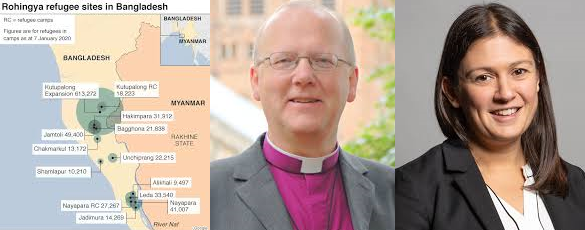
“Bangladesh: Rohingya” questions and also a “Myanmar”


On Thursday the 16th of May there were two Bangladesh: Rohingya questions in the House of Lords that were published by the Bishop of St Albans, Convenor of the Lords Spiritual, Alan Smith. They were both responded by the same Minister who is Traiq Ahmed. So here are the questions and the response and so far no one has responded to state if it is suitable for Yes or No in the response so perhaps some of us could respond from here. A previous day in the Parliament there was another similar type theme question that an MP published which was Lisa Nandy who is the MP for Wigan and her response was responded by Anne-Marie Trevelyan which is here and so far there have been no response publicly.

Alan: To ask His Majesty’s Government what: 

representations they have made to the government of Bangladesh regarding reports of officials involved in beatings and forced returns of Rohingya refugees.

assessment they have made of research by Fortify Rights, published on 26 April, that found Border Guard Bangladesh responsible for the assault and forced returns of Rohingya Refugees.

Tariq: The UK Government is committed to supporting the Rohingya refugees in Bangladesh and working to address protection risks. We regularly discuss our concerns about the deteriorating security situation in the camps with the Government of Bangladesh and often engage with the UN and NGOs. UK humanitarian funding of over £391 million since 2017 includes ongoing support to protection services. We are aware of the Fortify Rights report published on 26 April. We have raised our concerns with the Government of Bangladesh about the reported refoulement incidents on 25 April of Rohingya refugees from Myanmar and continue to monitor the situation closely.

Lisa: To ask the Deputy Foreign Secretary, what support his Department is providing to the Rohingya in (a) Myanmar and (b) refugees camps in Bangladesh.

Anne-Marie: The UK is a leading donor to the Rohingya response. We have provided over £45 million in humanitarian assistance in Myanmar and £391 million in Bangladesh to the Rohingya since 2017. We are the largest donor of water, hygiene, and sanitation facilities in the Internally Displaced Persons camps in central Rakhine State. Despite escalating conflict and ongoing access challenges, we are supporting those most in need through agile local partners. Minister Trevelyan announced a further £12 million and discussed education, training, and employment for the Rohingya with Prime Minister Hasina during her recent visit to Bangladesh on 7-8 May.

Posted in Church Teaching, Parliament and Democracy | Tagged , , , | Leave a comment

A Care Leavers discussion that includes YMCA


On Monday in the House of Lords there was a theme discussed which is entitled Care Leavers: Universal Credit and it was organised by David Walker, the Bishop of Manchester. The Minister who responded was James Younger. So here are the calls from David and the responses from James and towards the end of the second comment from David is the reference to YMCA. The rest of the session that involved other people can be obtained from here.

David: To ask His Majesty’s Government what assessment they have made of the potential benefits of bringing the rate of Universal Credit for care leavers under 25 in line with the rate for over-25s.

James: My Lords, the Government have assessed the impact of raising the rate of universal credit for care leavers under 25 in line with the rate for the over-25s. While we are not currently planning on changing the rate, we understand the challenges that care leavers face. That is why we continue to provide additional, dedicated support to simplify and improve their interaction with the benefits system and help them into sustained employment and rewarding careers.

David: I thank the Minister for that Answer. Care leavers are those for whom the state has been the corporate parent. Parenting does not stop at the age of 18; indeed, the rationale for the lower level of benefits for under-25s was always that they should continue to be supported by family until they achieve that full independence to which the Minister referred. I have to say that my own local branch bank of Mum and Dad is still very much taking on new business even though my kids are in their 30s. Will the Minister commit to looking again at the evidence, including that in the recent YMCA report on young people in supported accommodation, something that care leavers disproportionately need to access? Will he consider how we can be a better parent to the many wonderful but vulnerable young people who leave our care system each year?

James: This is an important subject. As I said earlier, we recognise the challenges that care leavers face as they move out of the care system. We look forward to continuing our very close partnership with the Department for Education, to ensure that care leavers can access the right skills, opportunities and wider support to move towards sustained employment and career progression. It might be helpful to the right reverend Prelate to know that we are providing over £250 million across this spending review to support care leavers on a whole range of issues, including housing, improving access to education, employment and training, and to help them develop social connections and networks, which can be very helpful to them as they set out in life.

Posted in Church Teaching, Parliament and Democracy | Tagged , , | Leave a comment

Audio Visual for Film and Television said Government


Yesterday on Wednesday 15th May there was a written request from Thangam Debbonaire, the Labour MP for Bristol West and the document is entitled Film and Television: Government Assistance and the question from Thangam is “To ask the Secretary of State for Culture, Media and Sport, what steps she is taking to support lower budget film and TV programmes.”. Her request was responded by Julia Lopez who is a Conservative Minister member and she is also the MP for Hornchurch and Upminster. The document can be obtained from here which enables us to respond regarding the suitability of the response. The statement from Julia is also below and at the end of the session she mentioned Audio Visual.

The UK Government has a clear plan to grow the creative industries by a further £50 billion and support another 1 million jobs by 2030. This was set out in June 2023 in the Creative Industries Sector Vision, which was accompanied by £77 million of new funding to support the sector’s growth.

We are taking steps to support producers of all sizes and the production sector more generally. This includes generous tax reliefs across studio space and visual effects, investing in studio infrastructure, and supporting innovation and promoting independent content through the UK Global Screen Fund.

At Spring Budget 2024, the Chancellor also announced the UK Independent Film Tax Credit. Eligible films with production budgets (excluding marketing and distribution) of up to £15 million will be able to opt-in to claim enhanced Audio-Visual Expenditure Credit at a rate of 53% on their qualifying expenditure.

This is in addition to our long standing interventions supporting the independent television production sector, including the independent productions quota and associated Terms of Trade regime, which have been extremely successful in furthering the diversity of the sector and its output.

Posted in Parliament and Democracy | Tagged , | Leave a comment

A significant Universal Credit: Tied Housing session


On Friday 10th May in the House of Lords, Richard Jackson who is the Bishop of Hereford raised a written question into the Government and his request was responded by George Younger who is referred as the Viscount Younger of Leckie. The response from George was fitted in the system here and so far one person has commented and they have referred “Does this answer the above question?” and they defined it as No so here is the question from Richard and the response from George. As it happens I met Richard on many times when he was working in the Sussex Church of England location and he is very significant. I am delighted to see this response and his question was titled with Universal Credit: Tied Housing and he then asks.

Richard: To ask His Majesty’s Government whether they plan to address the fact that people living in tied accommodation are not eligible to claim Universal Credit if they own more than £16,000 of a property in which they do not live.

George: People who own a second property that they do not live in, will have the equity value of that property taken into account as part of their capital when assessing their claim for Universal Credit. If this causes the total capital they hold to exceed £16,000 then they will no longer be eligible for Universal Credit support.

Posted in Church Teaching, Parliament and Democracy | Tagged , , | Leave a comment

Gatwick for Passport e-Gates Network Outage


Last Wednesday on 8th May in the House of Commons there was a session entitled Passport e-Gates Network Outage which was set out by a Minister Tom Pursglove and his first few words were “With permission, Mr Speaker, I will make a statement about disruption at the border. At around a quarter to eight last night, the Home Office became aware of a significant IT outage. Investigations determined that the incident was caused by technical issues within the Home Office network.” He did many other comments which can be obtained from here but then several MPs contributed and Tom did respond with them. One of the MPs who took part was Henry Smith the MP from Crawley and here is his comment and the response from Tom.

Henry: Whenever there are malfunctions of the e-gates at the UK border, it is the airport operators, including Gatwick in my constituency, that have to bear the brunt of the congestion caused by the delays that result. As the Home Office updates the e-gates system with new technology, what assurances can the Minister give me that he and the Home Office will engage with the airport operators, so that they are very much part of ensuring that we have a secure and free-flowing border?

Tom: I know that my hon. Friend recognises the importance of the digitisation that we are undertaking of our border from a security, efficiency and customer service perspective. All of those are very important to airlines as well as airport operators. My understanding is that there has consistently been significant engagement with our work on the future borders programme, in addition to routine engagement with Border Force officials. That was reflected in the work done on the ground last night in responding to the issue; it showed how strong those links and connections are. However, we must never be complacent, and when it comes to the programmes that we are developing and have made commitments to deliver, I guarantee my hon. Friend that we will sustain that drumbeat of engagement. I am keen to lean into that as the Minister, and officials will continue to do so as well. I am very grateful for his efforts in raising Gatwick airport’s issues and concerns. He is a very diligent representative of his area, and I am really appreciative of his input.

Posted in Parliament and Democracy | Tagged , , | Leave a comment

Debate on bid for visas for Palestinian refugees


Today in Parliament, Cat Smith, the Labour MP for Lancaster and Fleetwood has published an “e-petition 648577, relating to a visa scheme for Palestinians” to “Create a Palestinian Family Visa Scheme for Palestinian people affected by war”. Back at the end of October 2023, the York MP, Rachael Maskell, raised a similar theme in a question to the Government,

“To ask the Secretary of State for the Home Department, whether she has considered the potential merits of introducing a scheme similar to the Homes for Ukraine scheme for Palestinians.” 

Robert Jenrick, at that time, Minister for Immigration made a response which included

“The Home Office has not considered establishing a separate route for Palestinians to come to the UK. Since 2015, over half a million people were offered safe and legal routes into the UK. We are not able to provide a tailored route for every conflict.” 

This latest event organised by Cairah Areej Ahmed whose petition was published on the 18th October 2023 and closed on 18th April 2024. 10,000 signatures were achieved during November 2023 and the Government published a statement on 21st December from the home office.

“There are no plans to introduce bespoke arrangements for people arriving from the region. Those wishing to come to the UK who currently have no visa can apply under one of the existing visa routes.” 

By the beginning of April this year the petition had achieved just on 54,000 signatures and by the 18th April it had achieved almost 50,000 more with the total now at 103,834. The petition explains

“We want the government to take action and create a Visa scheme that allows Palestinian individuals affected by war, to be allowed into the UK. Just like we did for Ukraine.”

and

“This visa would provide them with an opportunity to seek refuge and reunite with their families safely in the UK. By implementing this visa, the government can demonstrate its commitment to compassion, inclusivity, and supporting those who have endured the hardships of war. Together, let’s urge the government to enact policies that provide a lifeline for Palestinians seeking safety and a chance to rebuild their lives safely.”

Signatures from across the UK include Glasgow, Edinburgh, Newcastle, York, Bradford, Manchester, Nottingham, Birmingham, Oxford, Cambridge, Bristol, Cardiff and London are included on the petition. Several of the Constituencies in Sussex have signed more of the petition than there are signatures from Cat Smith’s constituency.  Brighton and Hove being the largest with a total of 1,609 signatures and Brighton Pavilion with 781 signatures

On Monday and Tuesday this week, the Defence Committee chaired by Jeremy Quin from Horsham will discuss “Defence in the Grey Zone”. A few days ago John Spellar, the Labour MP for Warley in Birmingham referred to the Defence subject

“I want to touch briefly on the subject of hybrid warfare and the so-called grey zone, on which our Defence Committee is conducting an inquiry. I do not want to pre-empt its findings, but I do want to urge the Ministry of Defence and the wider Government to take a broader, societal approach.” 

The grey zone has been described that grey zone can be defined as coercive activities that

“….fall below perceived thresholds for military action and across areas of responsibility of different parts of the government”.

Examples of grey zone conflict include cyberattacks, information campaigns and other hostile activities that fall below the threshold of armed conflict. This inquiry will ask whether the United Kingdom’s Armed Forces are sufficiently capable of operating in this part of the spectrum of conflict. It will examine how the grey zone interacts with more conventional military activities, and what lessons can be drawn from Russia’s invasion of Ukraine. The Committee’s inquiry will focus primarily on the UK’s Armed Forces, looking across the rest of Government’s grey zone capabilities within this context, and scrutinise the Government’s ability to work cross-departmentally.  

On Friday 17th May there is a session “Commons: Main Chamber” that refers to Private Members Bills which is listed on TheyWorkForYou. Currently there are a total of 59 Bills none of which are Sussex based but interestingly there are 19 Bills being organised by individual members. A Welsh Conservative MP, Rob Roberts providing two Bills and Chris Stephens, MP with SNP, is listing 14 Bills. Finally, Christopher Chope, the Conservative MP for Dorset lists 24 Bills that seems excessive.

On Wednesday 1st May Gillian Keegan published a document relating to “Faith School designation reforms” which included the words.

”Today, I wish to inform the House that we are consulting on faith designation reforms for new and existing free schools and special academies. I think it is important to capitalise on all of the expertise in the special needs sector in order to meet the challenge of ensuring access to the right provision for every child. I want to ensure that all faith groups feel able to open special academies and provide high quality places for pupils with complex special educational needs and disabilities, who would be admitted on the basis of their need, not their faith. These proposals apply to England only and the consultation will run for 7 weeks, closing on 20 June 2024. The consultation and the government response will be published on GOV.UK. We will consider all responses to the consultation and use them to inform our proposals for better meeting the policy objectives of faith schools.”

Posted in Parliament and Democracy | Tagged , , , , , , | Leave a comment

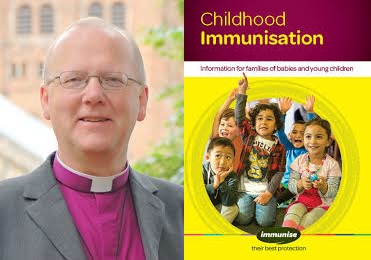
What plans the Government of childhood immunisations?


On Wednesday the 8th May there was a discussion in the House of Lords that was entitled Immunisation: Children and the person who created this session was the Bishop of St Albans, Alan Smith who is referred as Convenor of the Lords Spiritual. The Minister who took part in the session was Nick Markham who is a Conservative member who is based at Haywards Heath. A number of other people also contributed once Alan Smith set out his questions which can be seen here.

Alan: To ask His Majesty’s Government what plans they have to address the decline in uptake of childhood immunisations.

Nick: NHS England’s 2023 vaccination strategy set a range of ambitions, including to improve uptake of children’s vaccines across the board. On mumps, measles and rubella in particular, between January and March the NHS and partners administered around four times as many MMR vaccinations to those aged five to 25 as last year and focused on engaging groups with historically lower vaccination rates. We intend to build on these experiences to further improve uptake.

Alan: I thank the Minister for his reply and pay tribute to the NHS for its sterling work in this area. I have a couple of points. First, I wonder what consideration His Majesty’s Government have given to working with leaders of harder-to-reach groups, some of the smaller groups and some of the faith groups, where messaging can be more powerful when it is done by a local leader. Secondly, there is a worrying increase in the level of whooping cough. Indeed, I believe there has been a childhood death recently. Can the Minister update us on what is being done about this worrying development?

Nick: I thank the right reverend Prelate. First, I completely agree that using faith leaders is often a very good way to reach hard-to-reach communities, particularly as it is often ethnic-minority communities that have lower rates of vaccine uptake. Whooping cough has been a concern; we had about 850 cases in January 2024 compared with about 550 for the whole of 2023. We are deploying a number of strategies that have been proven to work in areas such as MMR: using outreach groups, having leaflets in 15 languages and having recall programmes. In the case of whooping cough, if we can get pregnant mothers vaccinated, that is 97% effective.

Posted in Church Teaching, Parliament and Democracy, Youth Issues | Tagged , | Leave a comment