Hastings, St Leonards and near villages burst water main


On Thursday in Parliament there is a session of Business of the House which is organised by Penny Mordaunt, the Leader of the House of Commons and one of the MPs who contributed was Sally-Ann Hart the Conservative MP for Hastings and Rye. Sally-Ann also referred to a colleague of her who is Robbie Moore who is the MP for Keighley in West Yorkshire. The comment she raised here about burst water main is very significant for a number of locations so this is very interesting for many of us and Penny states “She will know how to apply for a debate in the usual way.”

Sally-Ann: The Leader of the House may be aware that Hastings, St Leonards and some surrounding villages suffered the consequences of a burst water main over the bank holiday weekend, depriving tens of thousands of residents and businesses of running water, and impacting Hastings’ famous and amazing Jack in the Green weekend and May day celebrations. While Southern Water acted promptly in finding and fixing the leak—and I thank the Secretary of State for Environment, Food and Rural Affairs and the Under-Secretary of State for Environment, Food and Rural Affairs, my hon. Friend Robbie Moore for their huge support—can we have a debate about investing in water infrastructure, including building new reservoirs and maintaining existing infrastructure, and the impact of ageing infrastructure on water supply reliability?

Penny: I am very sorry to hear about the situation that affected my hon. Friend’s constituents so adversely. She will know that the infrastructure plan that is under way to modernise our waste water system and other water systems is the largest infrastructure project of its type in the world. She can follow the progress of that infrastructure plan on Water UK’s website. In particular, the plan on combating storm overflows is there for the general public to see. I will ensure that the Secretary of State for Environment, Food and Rural Affairs has heard the particular case that she raises. She will know how to apply for a debate in the usual way.

Posted in Parliament and Democracy | Tagged , , | Leave a comment

Bishop of St Albans reflected Church of England schools


On Tuesday 7th May in the House of Lords there was a discussion entitled Faith Schools: Impact of Removing Admissions Cap which was organised by Lorely Burt who is a Liberal Democrat member from Solihull. After Lorely had introduced the theme a number of other peoples contributed and one of them was the Bishop of St Albans who is Alan Smith and he focused on the “Church of England Schools will continue our long tradition of seeking to serve the common good and welcoming a huge diversity of people”. The Minister who responded to the various questions was Diana Barran. So here are the comments mentioned and the whole of the discussion can be obtained from here.

Lorely: To ask His Majesty’s Government what assessment they have made of the impact of removing the admissions cap on state-funded faith schools on community integration and cohesion.

Diana: My Lords, the admissions cap has not significantly increased the diversity of intake in faith-designated free schools, and it has prevented providers such as the Catholic Church, which attracts a more diverse intake, opening new schools. All faith-designated free schools are required to demonstrate their commitment to community cohesion and how they promote fundamental British values.

Lorely: My Lords, this policy would increase religious discrimination in schools that the British taxpayer is paying for. Many parents will be paying for local schools from which their own children will be excluded. It will diminish diversity and inclusiveness, increase racial segregation and further disadvantage poorer families, non-religious families, and families of the “wrong” religion. It is hard to find an upside to this, so why are the Government proposing such a retrograde step when they supported the 50% cap until only a short time ago?

Diana: The Government do not see it as a retrograde step and I do not accept the description that the noble Baroness makes of our faith schools, which are extremely inclusive, many working with other schools in their local area, and which produce some of the best academic results in the country.

Alan: My Lords, Church of England schools will continue our long tradition of seeking to serve the common good and welcoming a huge diversity of people; we are glad to do that. The Minister has spoken about the huge problem of there not being enough special educational needs places. If I have understood this correctly, it means that this will be a new possibility. We in the Church of England would be keen to play our part to help with this, but one issue is the funding available for it, which makes it very difficult to offer. Alongside this announcement, what consideration have His Majesty’s Government given to providing additional funding for those SEND places, which we hope can release more energy into that deprived area?

Diana: To be clear, and to avoid upsetting my noble friend Lord Baker one more time, the changes we are proposing in relation to special schools will not affect eligibility. Eligibility for a place in a special school will be dependent on a child’s education, health and care plan. The Government fund all the capital costs associated with developing a new free school. The funding is provided through the local authority for children with an education, health and care plan.

Posted in Church Teaching, Education, Parliament and Democracy, Youth Issues | Tagged , , | Leave a comment

Last week the Government mentioned STEM information


So last week there were a couple of events that referred to STEM. The first was on 29th April and it was a theme of Topical Questions and a number of events took place and Andrew Lewer who is a Conservative MP for Northampton asked a question and Luke Hall who is a Minister responded and he mentioned STEM. The following day in House of Lord a session Higher Education: Arts and Humanities and Diana Warwick who is Labour asked a question and the Government member Diana Barran responded and mentioned STEM. So here are the comments.

Andrew Lewer: What steps is the Department taking to make apprenticeships in building trades more attractive to young people, and especially to women and girls?

Luke Hall: I thank my hon. Friend for his question, and for all of his work on this area. I know that he has been integral to the “I am a Housebuilder” campaign to encourage more women into the building sector. Our apprenticeship diversity champions network is supporting gender representation among employers, and it is good news that STEM starts continue to increase year on year—up 7.5% in the last year—but there is more to do, and I look forward to working closely with him on the issue.

Diana Warwick: My Lords, the cap on student fees has meant that funding for students is at its lowest level in over 25 years. There is a £1 billion hole in domestic teaching funding, which will inevitably mean some very difficult decisions, as my noble friend indicated. Does the Minister agree that arts and humanities graduates have the creative and critical thinking essential for problem solving, which will be crucial to support businesses to get the most out of AI tools?

Diana Barran: As the noble Baroness knows, the Government strive to create a sustainable student finance system that both remains responsive to the needs of the wider economy and of the labour market, which she referred to, and is fair to students and taxpayers. As she remarked, those with creative and critical-thinking skills in relation to AI are of course important, but so are students with STEM skills.

Posted in Parliament and Democracy, STEM | Tagged , , , | Leave a comment

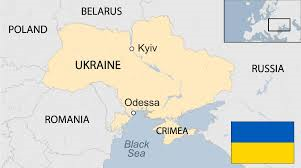
Ukraine Small Boats was referred by John Sentamu


Last week on Wednesday in the House of Lords there was a session entitled Ukraine: Small Boats which was set out by Charles Moore who began with “To ask His Majesty’s Government how many small boats impounded from illegal migrants they have in their possession, and whether they plan to grant requests from the Ukrainian authorities to contribute these to the Ukrainian war effort.” and then the final comment came from John Sentamu who was the Archbishop of York a few years ago. The initial response to Charles came from Andrew Sharpe who is from the Government and he responded to all of the others. This was what he said to Charles and this is where the session took place.

Andrew: My Lords, no such request by the Ukrainian authorities has been received by the Home Office. These boats, which are not manufactured to commercial standards, are completely unsuitable for anything other than endangering those who use them. Border Force has seized and disposed of hundreds since 2018.

The call from John was below and the response from Andrew

John: My Lords, the noble Lord, Lord Ponsonby, asked about seizing Russian assets to use them to support the war effort by Ukraine. That idea came from the Foreign Secretary. He said it on a BBC programme and everyone else there said it was the most brilliant idea that had come from the United Kingdom, so I am surprised that there has been no further conversation. I happen to agree with the Foreign Secretary; he has his finger on the pulse. Is it not time that these assets were seized and used to help Ukraine to fight its war?

Andrew: As I think I made clear, I do not disagree or otherwise with the noble and right reverend Lord. He makes a perfectly reasonable point, but the Foreign Secretary is having those discussions and I am not.

Posted in Church Teaching, Immigration, Parliament and Democracy, Ukraine | Tagged , , | Leave a comment

MP debate the right to die and rent controls


Today is a holiday for most of us including the Government. On Wednesday the 1st May Henry Smith, the Crawley MP organised a discussion about “UK trade: Aviation”. He comments

“I thank Mr Speaker for granting me this debate on the importance of aviation to UK trade and to the future of our nation’s economy more generally. Let me start by declaring my interest as the founder and current chair of the all-party parliamentary group for the future of aviation. I believe that aviation is a strategic enabler of the kind of export-led, high-growth economy that Members on both sides of the House want to see.”

On Monday 29th of April there was a vote about the “Post Office (Horizon System) Offences Bill (Instructions)” explained as focused for Scotland and Northern Ireland which included most Sussex MPs. The vote was favoured by the SNP, DUP and the Green Party with Caroline Lucas, a total 42 MPs endorsed it. The Conservatives rejected it including most Sussex MPs, a total of 265 MPs. Maria Caulfield, Nick Gibb and Henry Smith did not vote for it. Peter Kyle and Lloyd Russell-Moyle along with every other Labour MP did not vote either way.

On the same day there was a discussion of the “e-petition 653593” item entitled “Hold a parliamentary vote on assisted dying” organised by the MP for Gower, South Wales, Tonia Antoniazzi. Sussex MPs have not recently taken part in e-petitions but last Monday Caroline Lucas and Peter Bottomley both contributed. Peter ended with the comment that

“I conclude by telling the story of a member of my family who died last week. The hour-by-hour reports from those sitting with her in the care home, which had a hospice end-of-life service, and from those in my family would make a lot of people think twice before charging down a route that could lead to an increase in the number of suicides in this country by three times.”

Later, Caroline spoke and her final comment was

“Palliative care and the hospice movement need more funding, but that does not take away from the importance of giving people choice at the end of life. I am proud that the Green party will commit to supporting a change in the law in our manifesto for the next general election. I hope very much that other parties will do the same.”

Also on Monday 29th April, a discussion about “Children with Special Educational Needs and Disabilities” was created by several MPs including Lloyd Russell-Moyle. The Minister who responded to all of the MPs was Gillian Keegan and along Lloyd, there was a question from Caroline Ansell. The first question from Lloyd was “What steps she is taking to improve support for children with special educational needs and disabilities?” The response from Gillian was

“In recent years, we have seen a massive increase in special educational needs in our country, which is why we have expanded funding to a record level—at £10.5 billion, up by 60% in the last five years—and why we are reforming the system to deal with the increase in demand, including the biggest investment in building special educational needs school places in our country’s history.”

Previously on Wednesday 24th April a focus on a single vote for “the draft Economic Growth” a total of 395 MPs endorsed the vote from Labour, Conservative and DUP MPs. The MPs who rejected it, a total of 50, were from the SNP, Liberal Democrat Plaid Cymru also Caroline Lucas and Jeremy Corbyn. Most of the Sussex Conservative MPs endorsed it as did the Labour MP Peter Kyle. The conservative Ministers Maria Caulfield and Gillian Keegan ignored it as did Henry Smith and Lloyd Russell-Moyle. On the same day there were three different votes for the Renters (Reform) Bill which involved a significant number of Labour and Conservatives all voting differently for each part. Most of the Conservative Sussex MPs did support their party. Caroline Lucas and the Labour MPs voted in the opposite direction. However, Henry Smith, Lloyd and Peter Kyle did not vote at all. Two Sussex MPs did speak about the Renters (Reform) Bill, Caroline Lucas made these comments

“This morning, the Secretary of State had the brass neck to suggest that to keep his promise to outlaw no-fault evictions before the next election it is now down to the House of Lords to get on with it. Will the Minister tell us which is more disingenuous: the five years we have been waiting for the Government to keep their promise, or the blatant concessions to the significant numbers of Conservative MPs who are landlords, who have been gifted what amounts to an indefinite delay to the ban on no-fault evictions?”

Tim Loughton spoke twice and towards the end he comments

“I want to secure the Minister’s commitment to work with colleagues particularly in the Department for Education, which has the lead responsibility for children in the care system, to consider how to involve landlords when developing new rent guarantor and deposit schemes for care leavers, and to agree to keep the issue under review with the possibility of using a power the Secretary of State has under the Bill to extend the non-discrimination clauses to groups such as children with care experience.”

Posted in Brighton & Hove, Parliament and Democracy | Tagged , , , , | Leave a comment

A call from Peter Bottomley in Parliament for Acts 5:41


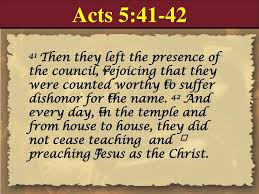
In Parliament each Thursday there is a Business of the House session which is organised by Penny Mordaunt who is the Leader of the House of Commons and there are a number of requests or comments from other MPs each week. Occasionally Peter Bottomley, the Father of the House of Commons and the Worthing West Conservative MP does contribute and he did so on Thursday last week on 2nd May. His initial comment was “The question of local council elections has been raised. Those who want some amusement can read Acts 5:41, quoted in today’s Times and provided by the Bible Society, although I am not suggesting that my right hon. Friend should read it now.” The Acts 5 contribution from the Bible Gateway Bible item was

41 The apostles left the Sanhedrin, rejoicing because they had been counted worthy of suffering disgrace for the Name. 42 Day after day, in the temple courts and from house to house, they never stopped teaching and proclaiming the good news that Jesus is the Messiah.

There is also The Hebrew-Greek Key which states

41 And they departed from the presence of the council, rejoicing that they were counted worthy to suffer shame for his name. 42 And daily in the temple, and every house, they ceased not to teach and preach Jesus Christ.

The full comment from Peter and a response from Penny Mordaunt on Thursday was

Peter: The question of local council elections has been raised. Those who want some amusement can read Acts 5:41, quoted in today’s Times and provided by the Bible Society, although I am not suggesting that my right hon. Friend should read it now.

I walked here today through Victoria Tower Gardens, where it is still impossible to walk along the river because of the barricades around the Buxton memorial fountain, which are far too extensive. If people care about memorials in Victoria Tower Gardens, they ought to make sure that the gardens are properly accessible whenever that is possible.

The Select Committee on the Holocaust Memorial Bill reported recently in document HC121, and I have tabled early-day motion 711—I do not expect my right hon. Friend to respond to this today.

[That this House notes the First Special Report of the Holocaust Memorial Bill Select Committee, HC121, on the problems with the current proposal and the restrictions faced by the Committee considering the hybrid Bill; respects the conclusions and recommendations on page 20; agrees with the list of matters related to the current proposals for a Holocaust Memorial and believes these need updated attention on deliverability from the Infrastructure Commission, from the National Audit Office on likely capital costs and recurrent annual costs, from the Chancellor on future funding control, and from the police and security services on maintaining unfettered public access for use of Victoria Tower Gardens while protecting the Memorial; asks His Majesty’s Government and the Holocaust Memorial Foundation agency to commission the views of the property consultants on a comparison of the current proposal by Sir David Adjaye in Victoria Tower Gardens with viable alternatives, to commission the full appraisal and to hold a public consultation on the selection of site; and further asks His Majesty’s Government to commit to having this or an amended proposal considered first by the local planning authority before considering whether to call in the application, noting that an open-minded observer could doubt another minister in the Levelling Up department should be asked to make an independent decision on an application by the Secretary of State.]

As the Committee has clearly indicated, before the Government think of bringing the Bill back to the Chamber of the House of Commons they need to do a number of things. First, they must review security. We have seen the Holocaust memorial in Hyde Park covered up because of marches going on around London, and everyone knows that a memorial in Victoria Tower Gardens of the kind that is proposed would be a major target. The only way of providing security is to exclude the public from this park, which is the only park for local residents.

Secondly, the National Infrastructure Commission has said that this project is undeliverable. Will the Government please ask the members of the commission whether they have changed their minds? Last year the National Audit Office reported that the costs had risen in one year from £102 million to £137 million. Will the Government please ask its members whether that can be reviewed? How will the Chancellor agree to pay running costs of between £5 million and £10 million?

I think that the Government ought to delay, do what is suggested in my early-day motion, and then report back to the House.

Penny: I am sure that my hon. Friend knows how to apply for a debate and will listen to your encouragement, Mr Speaker. I will certainly ensure, as I do every week, that the Secretary of State has heard the issues that my hon. Friend raises—I will feed them in. On the matter of security, he will know that there is a working group, led by the Houses of Parliament and those in Government, to make sure that all these very important issues are looked at.

Posted in Church Teaching, Parliament and Democracy | Tagged , | Leave a comment

Jo Gideon discussed Volunteers and added YMCA’s


Jo Gideon is the Conservative MP for Stoke on Trent Central and on Thursday 2nd May she submitted a discussion about Volunteers which began with the first few words “I beg to move, That this House has  considered the contribution of volunteers. I am delighted to speak on the theme of volunteering. The absence of a large number of Back Benchers gives me the chance to opine at length on a subject close to my heart.” She commented very significant aspects and all of her comments and the other MPs can be obtained from here. During her contribution she also referred to YMCA so here is the text she commented about YMCA.

Who knows where volunteering can lead? My good friend Danny Flynn, the head of North Staffs YMCA, began his career in the charity sector by moving to London to work as a community service volunteer at a day centre for homeless people. He now runs one of the most successful YMCAs in the country. Under his leadership, many young people are given a helping hand. The monthly community meal encourages volunteer teams from across the city to cook a meal for 100 people in the community. A few months ago, I enjoyed taking the challenge up myself.

Posted in Parliament and Democracy | Tagged , | Leave a comment

A Liverpool MP endorsed YMCA on Wednesday


Paula Barker is the Labour MP for Wavertree which is at Liverpool City and on Wednesday she introduced a discussion entitled Youth Homelessness which was contributed for “e-petition 642986, Create a national strategy to end youth homelessness”. The petition was created by Polly Stephens and it ended a few weeks ago in March and it has only achieved just over 15,000 signatures which is sad. As it happened it did obtain 122 signatures in Brighton Pavilion which was one of the largest areas in the UK. The initial comment from Paula was as below.

I beg to move, That this House has considered youth homelessness.

It is a pleasure to serve under your chairship, Dame Siobhain. I should declare that my husband is chair of YMCA Together, in Liverpool—it is an unpaid role—and that I am a national patron for YMCA. I pay tribute to the colleagues and friends from various organisations in the homelessness sector who are here today. We have representatives from New Horizon Youth Centre, Centrepoint and Depaul. Thank you for the work that you do and for being here today.

Later on in her first comment, Paula also stated

To obtain such information for England, Centrepoint had to make freedom of information requests for every local authority in the country. That is absolutely ridiculous and shameful. How can the Government properly begin to solve the problem if they do not truly understand the scale of it? That is why charities like Centrepoint—teaming up with the likes of the Albert Kennedy Trust, the YMCA and the fantastic New Horizon Youth Centre, which does so much to help young people in London, and 100 youth organisations—are calling for a national youth homelessness strategy: a plan for the 136,000.

The rest of the session can be obtained from here but sadly there were no other comments about YMCA. The petition is carried out with this text.

In 2021-22, 129,000 young people experiencing homelessness approached their council for help. Yet no one is talking about this and there is no national plan to end this ahead of the General Election. This has to change. We have the power to help so many young people, and absolutely should.

The scale of the issue may be unseen but the solutions are not. Young people’s experiences of homelessness are different from other age groups, so the solutions need to be different too. We know what works. That’s why we are calling for a cross-departmental strategy, prioritising prevention, housing & finances, to end youth homelessness. As a coalition of over 100 youth organisations, we’re calling on government to commit to a strategy to end youth homelessness. We need a #PlanForThe129k.

Posted in Parliament and Democracy, Youth Issues | Tagged , | Leave a comment

Child poverty across the United Kingdom


On Monday (29th April) in the House of Lords John Bird introduced a session which is entitled “Child Poverty – Question for Short Debate and he opened it with the statement “To ask His Majesty’s Government what plans they have to address the root causes of child poverty across the United Kingdom.” John and a number of other people have corresponded on that theme and indeed the Government responded to some of them. However not all of them were responded directly and there was a significant comment from the Bishop of Lincoln, Stephen Conway which is below but the Government did not respond to his statement. All of the other items can be obtained from here and here is Stephen’s comment.

My Lords, I too am grateful to the noble Lord, Lord Bird, for securing this debate and for his passion and his challenge. Like the noble Lord, I come from a poor London Irish family, but from south of the river, if that is allowed. We have heard from the noble Baroness, Lady Lister, about the causes of child poverty and that they are systemic, and about the potential for changing them—not by exceptionalism, as may have applied in our cases.

As the Bishop of Lincoln, I am very conscious that in greater Lincolnshire I see vibrant resilient communities but, in the midst of a commendable spirit, there are considerable challenges. The effects of deep poverty feel widespread and tangible in a way that I have not seen since I began as a priest in the mid-1980s. Damp, low-quality accommodation, particularly in the private rented sector, has an impact felt particularly by children at crucial stages of their development. In response to this, the Archbishops’ Commission on Housing, Church and Community set out five values for good housing: it should be safe, sociable, sustainable, satisfying and secure. Failure to deliver this only serves to entrench child poverty.

I worry particularly about the impact of intergenerational poverty. In many of our communities, the lack of employment and social opportunities is apparent. The industries that used to sustain towns such as Grimsby have changed. We have a fishing plant but no longer a resident fishing fleet. That affects employment prospects and a sense of pride in place. Children are profoundly affected by that context as they grow up.

The Institute for Fiscal Studies recently published a report to mark the 25th anniversary of the introduction of Sure Start centres, highlighting the extraordinary difference that these made to the educational outcomes of children who engaged with them or even those who lived near them. This second aspect explains why children living in poverty in rural areas in other parts of Lincolnshire and elsewhere did not benefit as much as those in urban areas. It is simply because those living in the countryside did not have the same access.

Partly this is a question of infrastructure—the transport links to ensure that services can be accessed. However, I wonder whether it is also a question of priorities of government and others. The recent Hidden Hardship report noted that disadvantaged young people in remote rural areas are 50% less likely to gain two or more A-levels or enter university than those living in major cities. A similarly ambitious approach to child poverty 25 years on from Sure Start must always keep in mind the rural context. What assessment is being made of the particular needs of rural communities as the Government assess the root causes of child poverty?

The noble Lord, Lord Bird, issued a challenge to the Church in relation to doing away with poverty, particularly child poverty. There is a crisis of capacity in the voluntary sector. Churches will continue to run toddler groups and open warm spaces where they are needed. Yet churches do not have an endless supply of volunteers. The real challenge for all of us is to think about what facilities we can make not just for children’s physical and food education, not only for their access to services and schools, but to think about what access they have to relationship-building and hope. A generation of hope is one of the most important things in this—giving children the possibility of confidence. One of the hidden areas of poverty in terms of relationships is the number of children who are child carers, looking after their single and sick parent. This is not being acknowledged much at all publicly. Often, one child is responsible for all their younger siblings.

One of the most impressive places which I visited recently, having done so several times, is the St John St Stephen & Shalom youth centre in Grimsby, in East Marsh, which has been celebrating its 50th anniversary. I never witnessed this before, but there is a plaque on the wall outside commemorating those former members of the centre who have been murdered or have died through drug-related incidents. This is the place where, over 50 years, 5,000-plus children and young people have been offered hope and the chance to build successful relationships with safe adults outside of their immediate family. I applaud this and hope that examples such as St John St Stephen & Shalom youth centre give us an incentive and hope not to give up on these children but to work with them and for them, in that way to transform our whole society.

Posted in Church Teaching, Parliament and Democracy, Youth Issues | Tagged , , | Leave a comment

When it will be possible for people to register?


Last week there was a session in Parliament that is entitled Infected Blood Inquiry which was organised by Diana Johnson, the MP for Kingston upon Hull North. She started the session with “To ask the Minister for the Cabinet Office to make a statement on the evidence uncovered of experiments on children and the contaminated blood scandal, and update the House on the action that the Government are taking on the second interim report from Sir Brian Langstaff.” Her contribution was very significant and the Government comment colleague was John Glen and several other MPs did contribute including Peter Bottomley who raised the theme of “I join the right hon. Lady in asking the Minister when it will be possible for people to register their names, backgrounds and circumstances for compensation.” So here is the first response from John to the first comment from Diana and then there is the comment from Peter and John’s comment. All of the other items are available here.

John’s initial comment: Let me start by stating that the stories reported in the recent BBC news article, and indeed The Sunday Times report by Caroline Wheeler, demonstrate the unimaginable suffering of all those impacted by this dreadful scandal. As the House will know, in 2017 the Government established an independent public statutory inquiry chaired by Sir Brian Langstaff, to give those impacted and their families the answers that they deserve.

Since it was established, the inquiry has taken evidence from a range of sources, and the testimonies are indicative of the bravery of every individual who has come forward. The infected blood inquiry’s final report is due to be published within a month, on 20 May, and we expect the inquiry’s findings to cover a set of extremely challenging issues. It would not be right for the Government to pre-empt the findings of this long-prepared and carefully considered report, but the Government have committed to update Parliament through an oral statement on next steps within 25 sitting days following 20 May. It is our intention to make that statement as soon as possible. The 25-day stipulation is a deadline, and certainly not a target.

In January this year, I appointed an expert group to provide technical advice to the Cabinet Office in responding to the infected blood inquiry’s recommendations on compensation. That work is well under way and will build on the recommendations of the infected blood inquiry to inform the Government’s substantive response to the inquiry’s recommendations on compensation. The Government understand the need to move quickly to provide compensation to victims of infected blood. Most recently, we tabled amendments just last Wednesday to the Victims and Prisoners Bill to impose a duty on the Government to establish an infected blood compensation scheme. It also establishes a new arm’s length body, named the infected blood compensation authority, to deliver the compensation scheme. It will operate on a UK-wide basis to ensure parity and consistency. That demonstrates our absolute commitment to deliver long overdue justice to victims of infected blood.

We understand that for many there is an urgent need for compensation. As the House will know, in October 2022, the Government paid more than £400 million in interim compensation to help to ease the short-term needs of those infected. The Government amendment also includes a statutory duty to make interim payments of £100,000 to the estates of the deceased infected people who were registering with existing or former support schemes, where previous interim payments have not already been made to infected individuals or their bereaved partners. That is an important step forward to get substantial compensation into the hands of families and victims of infected blood. Should that Government amendment be supported in the other place, it will return to this House for debate in the usual process of Commons consideration of Lords amendments.

Peter: May I follow the tributes to the great Dame—Dame Diana Johnson—for what she has been doing?

I have been actively involved in this in one way or another for 25 years. We all know that the justification for having the Langstaff inquiry has been the information that has now come out in public, which was concealed or not known over the decades. We also know that this is different from most of the discussions in the Pearson report on whether there should be compensation when things go wrong in medical treatment. This report is likely to show how, since the war, people have not paid enough attention to the warnings given by those in the field. With the update of Caroline Wheeler’s book and the BBC programme, we now know that, as well as the haemophilia trials published in the 1970s, the 1980s trials showed massive defects by the standards of those days, let alone by up-to-date standards.

I join the right hon. Lady in asking the Minister when it will be possible for people to register their names, backgrounds and circumstances for compensation. Do we have to wait until a month’s time for that to happen, and how will it be dealt with? Obviously, as the Cabinet Office Minister, he follows his predecessor in carrying this responsibility, but how far will the Department of Health and Social Care be involved, and will other Departments be involved?

John: My hon. Friend makes wise observations. I did not mean not to pay tribute to him in a similar way; his commitment to this cause, probably over my lifetime, is extraordinary.

In respect of the £100,000 payments announced through the Government amendment tabled last Wednesday, we will be working with the existing support schemes to expedite them as quickly as possible for the estates of the deceased infected. On the substantive response on the wider complete compensation, through last week’s intervention, and building on the amendment of Dame Diana Johnson, we have established the delivery vehicle for compensation.

On the challenge that we were somehow delaying compensation, which was reasonably made, I think that what I have said to the House this afternoon makes it clear that we are committed in legislation to delivering that compensation, but that the terms of how we do so, and how we respond to translating those 18 recommendations into reality, is ongoing work that I will seek to address substantively as soon as possible by 20 May.

Posted in Parliament and Democracy | Tagged , , | Leave a comment