Thousands join call for vote on assisted dying


This week there are only a few items that have been published on the Government website that are linked to Sussex but they are significant.

Today there is a plan for MPs to potentially take part in a discussion for a public e-petition organised by Tonia Antoniazzi, Labour MP for Gower, South Wales. The item is described as “e-petition 653593 relating to assisted dying” published by Hanna Geissler. The e-petition began on the 5th January and the six-month completion rule means it will close on 5th July. In the first month the petition achieved 100,000 signatures and to date there are more than 202,000 signatures. All areas of Sussex have signed it with Arundel and South Downs nearly 600 signatures, West Sussex, Lewes 530 and Bexhill and Battle 620 and in Brighton and Hove City the most significant is Hove with 470. The e-petition aims to “Hold a parliamentary vote on assisted dying” The first few words are

“This petition calls for the Government to allocate Parliamentary time for assisted dying to be fully debated in the House of Commons and to give MPs a vote on the issue. Terminally ill people who are mentally sound and near the end of their lives should not suffer unbearably against their will.” 

Tomorrow there are two Committees involving Sussex MPs. The first is the Education Committee group with Caroline Ansell from Eastbourne. The focus is “Children’s social care”, followed by debate on a motion on hospice funding. Previously an All-Party Parliamentary Group (APPG) published a report which stated

“on average, hospice services receive one-third of their overall funding from the Government via the NHS. However, the funding received hasn’t risen in line with increasing costs like energy bills and increases in staff pay to keep pace with NHS pay”

The APPG report concludes

“the way hospice services are commissioned in England is ‘not fit for purpose’ and funding often does not reflect the true cost of care” 

The Government is urged to take up the recommendations in the report. The initial few words from Sally-Ann were

“I beg to move, That this House has considered the postcode lottery of funding for hospices; and calls on integrated care boards to urgently address the funding for hospice-provided palliative care in their areas. As a member of all-party parliamentary group for hospice and end of life care, I am very happy to be co-leading this debate with my lovely friend, Peter Gibson, who applied for this debate today. I have so much admiration for hospice and palliative care providers, and empathy for those experiencing dying, death and bereavement. Both my parents died of cancer, and I will always be grateful for the amazing care that they received. Hospice care is important to so many people and we are very lucky to have St Michael’s Hospice in beautiful Hastings and Rye, and Demelza House, which offers palliative care for children—largely through outreach work.” 

The other Sussex MP who contributed to the debate was Caroline Ansell who spoke soon after a contribution led by Conservative MP for St Austell and Newquay She said

“My hon. Friend is making a moving and powerful speech, and he makes me recall my experience at Chestnut Tree House, which provides hospice care for children across Sussex. It is striving hard to meet all the demands on services.  It knows that many more families would benefit from its care,’’

On Monday 24th April Mims Davies the minister for Disabled People Health and Work and Conservative MP for mid Sussex responded to the Carers Allowance discussion. Helen Walker Chief Executive at Carers UK expressed that the “130 Organisations of the Carer Poverty Coalition have called for a full review and reform of Carers Allowance” Important subjects need full support to improve. On the 18th of April there was a session about “Covid-19: Response and Excess Deaths” and the unexpected aspect was that there were two e-petitions that are focused on this item. The two e-petions are “e-petition 639085, Launch a Public Inquiry into excess mortality in England and Wales; e-petition 628188, Investigate UK excess deaths not related to Covid.” As it happens both of these petitions are both less than 15,000 signatures but clearly the theme is very important. There were contributions from two Sussex MPs. Peter Bottomley who spoke and the government minister, Maria Caulfield. The comment from Peter included

“The hon. Gentleman has made a sensible, serious point. Ministers here and in other countries knew that when they set up the global vaccines study…. those who start saying we should not have had the vaccines are wrong, and those who think that anyone believes any treatment is completely safe are wrong as well.” 

Maria contributed her words

“I want to see any evidence about vaccine safety, because that is how we learn. I think we are all singing from the same hymn sheet. We want to do the best, but during the pandemic, when we watched TV footage from around the world, and the media were often pushing us to lock down harder, faster and longer, we had to make difficult decisions without the benefit of hindsight. I went back to the wards during covid, and I looked after covid patients who were being treated for cancer. We lost many of them, and we lost a number of staff, too. I have seen this from both sides of the fence.’’

Posted in Parliament and Democracy | Tagged , , , , , , | Leave a comment

Chris Holmes on House of Lords raised Audio-Visual


On Thursday on 25th April there was a session in the House of Lords Transport System: Failings that the Labour member Peter Snape set it out with the first few comments “That this House takes note of the case for a coherent plan to address the failings of the transport system.” Many other people took part in the discussion and when Chris Holmes who is part of the Conservative group spoke he began with this focus on Audio-Visual. Chris is also the Lord Holmes of Richmond which is based in Peterborough near Cambridgeshire. The whole of his text and indeed all of the others can be obtained from here but these first few words from Chris are as follows which is very interesting:

My Lords, it is a pleasure to take part in this debate. I congratulate the noble Lord, Lord Snape, on securing it. I declare my interests in the technology field as an adviser to Boston Ltd.

I will speak about accessibility and technology in transport. I begin with buses. In London we are incredibly fortunate with so many of our modes of transport—not least the accessibility of London buses, with their audio-visual output. In 2016 I was privileged to launch Manchester’s talking bus fleet. Other major cities have followed suit. We passed legislation to this effect a number of years ago. When the Minister comes to respond, will he say what this picture is looking like across the country? Is it still down to luck—where you happen to get on a bus—as to whether you can have that audio-visual information that so many of us require?

Posted in Parliament and Democracy | Tagged , , | Leave a comment

Sally-Ann Hart spoke about Labour in Hastings


On Wednesday on 24th April in the House of Commons there was a session entitled Engagements and towards the end of the session Sally-Ann Hart spoke about the “The Labour leader of the almost bankrupt Borough Council and several other Labour councillors”. The response came from Oliver Dowden who is the deputy Prime Minister. So the text below can also be obtained from this location

Sally-Ann Hart: The Labour leader of the almost bankrupt Hastings Borough Council and several other Labour councillors resigned from the Labour party citing that the national Labour party has become overly authoritarian, in a “dereliction of local democracy”, and has “lost its moral compass” and is suffocating local voices because its only objective is power for power’s sake. Would the Deputy Prime Minister agree that voting for Conservative candidates in upcoming elections will ensure local voters are heard, local democracy is upheld and better services are delivered?

Oliver Dowden: My hon. Friend is absolutely right to highlight the really serious concerns about Labour councillors in Hastings. One former Labour councillor said that Labour are no longer providing

“the policies, the support, or the focus on local government”.

I could not have put it better myself.

Posted in Parliament and Democracy | Tagged , | Leave a comment

A very interesting comments about BBC World Service


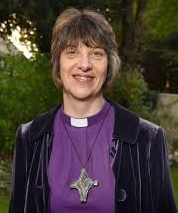
On Wednesday in the House of Lords, Roger Liddle, a Labour member created a session entitled BBC World Service: Finances which he opened up with the comment “To ask His Majesty’s Government, following the announcement of the resignation of the Director of the BBC World Service, what assessment they have made of the Service’s finances.” and the Minister who responded for Roger and the other members was Tariq Ahmed. Along with several other members the Bishop of Leeds who is Nick Baines also contributed and his question was very interesting and the response from Tariq is very unclear. All of the discussions can be obtained from here. So the response Tariq made initially to Roger was

Tariq: My Lords, our assessment of and formal agreement with the BBC guarantees the continued provision of all 42 World Service languages. We provide approximately a third of the funding for the World Service, with the remainder funded from the licence fee. Our funding totalled £305 million over the spending review period. The BBC is operationally independent and responsible for setting budgets. The DCMS is currently leading a review of BBC future funding, including that of the World Service, which it is expected to conclude by the autumn.

A little later Nick Baines asked his question and Tariq responded

Nick: My Lords, I notice that the funding agreement with the FCDO runs only until April 2025, which is not very far ahead. Can the Minister tell us whether the Government are considering, at the very least, taking back full funding of the World Service in the longer term rather than leaving it to the licence fee?

Tariq: My Lords, I hear clearly the proposal from the right reverend Prelate, which has also been suggested by the director-general. I accept the premise of his question; that model existed until 2014. It is important that we make full leverage of funding. It is a challenging fiscal environment, but the Government have demonstrably shown that when we need to provide additional funding to the BBC World Service, we do so. The funding review being undertaken by the DCMS provides an opportunity to look specifically at the funding of the World Service.

Posted in Church Teaching, Parliament and Democracy | Tagged , , , | Leave a comment

A call for Government to help people lifelong disabilities


On Tuesday the 23rd April there was a session entitled Personal Independence Payments in the House of Lords and the person who created it was Beverley Hughes and she started with “To ask His Majesty’s Government what assessment they have made of the impact on disabled people and their families of changes being considered in the review of personal independence payments announced by the Prime Minister on 19 April.” and several people contributed and one of them was the Bishop of Gloucester who is Rachel Treweek and her call is very significant. The person from the Government who responded to these people was James Younger and here are his response. However all of the discussion is here.

Rachel: My Lords, yesterday I visited National Star, an FE college that serves young people with severe lifelong disabilities. Many of them are being subjected again and again to reassessment throughout their lives. That is not only traumatising but a complete waste of time and resources. What will the Government do to take this into consideration so that people with severe lifelong disabilities are not subjected to reassessment again and again, unless, of course, that disability is generative?

James: The right reverend Prelate makes a very good point. It chimes with what I said earlier, which is that we need to target our resources in the right place and be sure that individuals are looked after in terms not of the end result but of the process. That is extremely important. I will make this point again: where an individual has severe conditions, it must be right that we, the state as a compassionate country, look after them, and we need to be able to provide a better focus. This is, again, one of the reasons why we are bringing forward this Green Paper.

Posted in Church Teaching, Parliament and Democracy | Tagged , | Leave a comment

Food Poverty Strategy discussion, referred to FareShare


On Monday in the Parliament there was a session entitled Food Poverty Strategy and the person who organised it was Chris Stephens who is from the SNP and one of the people who contributed during his session was Jo Churchill who is the Conservative MP for Bury St. Edmunds and at the end of her first item she focused on “As the hon. Gentleman pointed out, many use local or national groups to redistribute food at the end of the working day, and many interact with FareShare, among other charities.” Last week there was a discussion which can be seen here and seven other MPs contributed on that about FareShare. The text Jo Churchill she referred to on Monday included this aspect and the whole of the session is available here.

Through regular engagement, the Department for Environment, Food and Rural Affairs continues to work with food businesses throughout the supply chain to explore a range of measures that they can take to ensure the availability of affordable food by, for instance, maintaining value ranges, price matching and price freezing. However—the hon. Gentleman would expect me to say this—it is not for the Government to tell retail outlets how to set their food prices, or to tell companies what to do. Retailers have introduced incentives for customers, such as reward cards offering small discounts, and a number of stores are offering meal deals either in-store or in their cafés. As the hon. Gentleman pointed out, many use local or national groups to redistribute food at the end of the working day, and many interact with FareShare, among other charities.

Posted in Parliament and Democracy | Tagged , , | Leave a comment

An MP asked for several themes including Audio Visual


Last Wednesday the MP for Folkstone & Hythe set out a question to the Government and the initial statement was Arts: Tax Allowances and there were a range of aspects and he included Audio Visual aspects but sadly the Government Minister did not refer to several aspects and so there was no answer for Audio Visual. The question and answer is available here and the text is below which includes four locations so perhaps they can be found elsewhere?

Damian Collins: To ask the Chancellor of the Exchequer, whether his Department has made an (a) assessment of the impact on the economy and (b) estimate of the number of recipients of (i) audio-visual (A) tax relief and (B) expenditure credit, (ii) museums and gallery exhibition tax relief and (iii) theatres and orchestras tax relief since 2010.

Nigel Huddleston: a) An evaluation of the creative industry tax reliefs covering Film Tax Relief, High-end Television Tax Relief, Animation Tax Relief and Children’s Television Tax Relief was published in 2022: https://www.gov.uk/government/publications/creative-industry-tax-reliefs-evaluation

An evaluation of the video games tax relief was published in 2017: https://www.gov.uk/government/publications/video-game-tax-relief-evaluation

A qualitative evaluation capturing the wider impacts of the Museums and Galleries relief was conducted in 2020: https://www.gov.uk/government/publications/tax-relief-for-museums-and-galleries-qualitative-research

The government keeps the tax system under review. b) The number of recipients of the creative industry tax reliefs is published in HMRC’s Creative Industries Statistics: https://www.gov.uk/government/statistics/creative-industries-statistics-august-2023

Posted in Parliament and Democracy | Tagged , , | Leave a comment

All our Tories voted for the Rwanda Bill


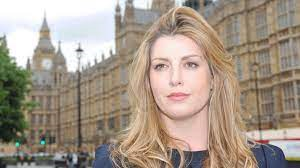
It was back on Thursday the 21st March in Parliament the Conservative, Lord President of the Council, Penny Mordaunt and MP for Portsmouth North, planned on Monday last week 15th April to organise the “Consideration of a Lords message to the Safety of Rwanda (Asylum and Immigration) Bill, followed by debate on a motion on hospice funding. The subject for this debate was determined by the Backbench Business Committee.” On Monday last week six votes connected to the “Safety of Rwanda (Asylum and Immigration) Bill” were all agreed by the Conservative and the DUPs agreed with five of them. All of the Sussex Conservatives voted for them and Caroline Lucas from Green and Peter Kyle and Lloyd Russell-Moyle from Labour voted against them. This debate was due to be followed by a debate on a motion on hospice funding. “Debate on a motion on hospice funding” being organised by Sally-Ann Hart for Hastings and Rye and Peter Gibson Conservative MP for Darlington but very sadly it did not get discussed and currently there are no indications of when this will happen again.

Last Tuesday a second reading on a Bill relating to the Tobacco and Vapes Bill took place followed by a vote which has been widely reported in the press. The Bill was approved by most Conservatives, Labour, SNP, Liberal Democrat and Plaid Cymru MPs which created 379 votes with 65 oppositions which were most Conservatives and the DUP MP’s.  However, in Sussex there were no votes from Huw Merriman and Andrew Griffith who are members of the Government and no votes from Caroline Lucas, Peter Kyle and Russell-Moyle. A significant time of discussion took place about the Tobacco and Vapes Bill before the voting took place and toward of the end of that debate Tim Loughton contributed with these comments

“If I had known that my right hon. Friend was such a keen smoker, I would not have recruited her to the Conservative party at the tender age of 18 when we were at university. I have always taken a free-choice approach to health matters, and as shadow Children’s Minister I had to lead on both the tobacco advertising ban and the public smoking ban. We were wrong to oppose them. Who would now think it remotely normal for people to be able to smoke around us in restaurants and other public places? Does my right hon. Friend not agree that in a few years’ time this measure will seem just the same as banning smoking in public places, and people will ask why we did not do it earlier?”

Last Tuesday Jo Gideon the Conservative MP for Stoke on Trent who organised the “General Debate: Food waste and food redistribution” which includes the FareShare charity a food distribution group that was set up in London in 1990 and expanded across Surrey and Sussex opening up in Brighton in 2002. Jo Gideon began with “I beg to move, that this House has considered food waste and food distribution.” And after several comments she then refers with

“I could not speak on this topic without raising the excellent work of FareShare, the UK’s largest food redistribution charity, which takes edible surplus food from more than 500 businesses and redistributes it to people in need through a UK-wide network of almost 11,000 frontline charities. One in four of the charities with which FareShare works say that if it were not for that supply, they could not keep up with demand to support the people who use their services.”

There were no Sussex MPs that spoke in the debate last week but a year ago when Nick Gibb was a Government minister when he spoke to support

“Alongside the national programme, there are several organisations such as FareShare, Magic Breakfast, Kellogg’s and Greggs providing valuable support to schools with a breakfast provision.”

The only other details released so far for debate this week which involve Sussex MPs are two Committees planned to take place on Tuesday. They are the Education Committee which includes Caroline Ansell, the Eastbourne MP taking the subject “Disabled students’ allowance”. The other group is the Defence Committee with Jeremy Quin as Chair the Horsham MP but the Committee is described as “Private Meeting” meaning a more informal committee meeting.

This afternoon in Parliament an “e-petition 640062 relating to Carer’s Allowance” is organised by Christina Rees the Labour MP for Neath, South Wales. The petition is entitled “Increase Carer’s Allowance to 35 hours a week at the minimum wage” The first words are “We want the Government to increase the amount of Carer’s Allowance to match pay for a full-time job.” It was published by Alasdair Adam although it has not had large numbers of signatures. The total list is 13,914 with less than 300 signatures in Sussex. The largest areas are Bognor Regis and Littlehampton in West Sussex, Brighton Kemptown in Brighton and Hove and Hastings and Rye in East Sussex. This is a very important matter which deserves the Governments direct support.

It emerged at the end of the recent Parliament closure that MP Tim Loughton has made it clear that he “After much reflection I have decided now is the right time for me to move on and hand over to someone new”. Henry Smith is resigning at the next Election and also Caroline Lucas so it will be interesting to see how they development.

Posted in Parliament and Democracy | Tagged , , , , , , | Leave a comment

I’ve been contacted by the Aber Valley YMCA


Hefin David is the Labour MS member of Senedd and on Wednesday he created a session entitled “The New Workplace Recycling Regulations” and his open session is entitled “Will the Cabinet Secretary make a statement on the impact of the new workplace recycling regulations that came into effect in Wales on 6 April 2024? OQ60911” and one of the other Labour MS people Huw Irranca-Davies responds and then Hefin comments and he refers to the Aber Valley YMCA. The full session can be obtained from here and here are the comments from Huw and Hefin.

Huw: Thank you, Hefin. Yes. The regulations in question will increase recycling and reduce carbon emissions by keeping high-quality materials in use for as long as possible. This will reduce waste incinerated and landfilled whilst helping our economy and the resilience of supply chains, and it represents a vital step in tackling the climate and nature emergencies that we face.

Hefin: Now that the changes have been introduced, charities have contacted me about some of the difficulties that the regulations entail, particularly the cost of multiple new bins and creating the space to store additional recycling waste. So, just to give you an example, I’ve been contacted by the Aber Valley YMCA in Abertridwr, the First Senghenydd Scout Group, who run the CRAI Scout Activity Park, and Tŷ Hafan, who have a shop in Caerphilly, and all of them have concerns that the multiple requirements that the regulations have for storage of waste are costing them money. For example, the Tŷ Hafan shop in Caerphilly recycles or reuses 90 per cent of its donations and, therefore, although they’re committed and passionate about recycling, they are having to take the burden of the additional costs, and you add onto that the fact that municipal tips don’t take business waste—not in Caerphilly. So, what can the Welsh Government do to provide that kind of practical help to resolve some of those issues, particularly for those most deserving cases, such as charitable organisations?

Posted in Charities, Parliament and Democracy | Tagged , , , | Leave a comment

Organisations such as FareShare reduce Food Waste


On Thursday on the 18th April in the House of Commons there was a very brief conversation entitled “Food Waste: Parliamentary Estate” and Charles Walker MP referred to FareShare when he spoke. Charles is the Conservative for Broxbourne which is in Hertfordshire and he is also the Chair of the Administration Committee and the session was opened by Patrick Grady who is an SNP MP. So here is the location and here are the comments from both of them during the session.

Patrick: To ask the hon. Member for Broxbourne, representing the House of Commons Commission, what steps the Commission is taking to reduce food waste on the parliamentary estate.

Charles: The House of Commons Commission takes food waste extremely seriously. We work with organisations, such as FareShare, to use unused food and distribute it, but we also take food that is not eaten on one day and safely use it in other recipes on another day.

Patrick: We have probably all been to events and occasions here where the hosts have perhaps enthusiastically over-ordered. It would be useful to be assured that none of that food goes to landfill and that ways are found to reuse it. These days there are a number of initiatives and apps where venues and stores can make food available at discounted prices at the end of the day. Could that be something that could be extended to staff—obviously not to Members—particularly those who work late on the estate, so that absolutely no food in this place goes to waste?

Charles: We will always look at suggestions. I can reassure the hon. Member that our catering team recently achieved the highest mark in the Sustainable Restaurant Association “Food Made Good” rating. One of the areas that we were assessed on was our commitment to reducing food waste, but clearly we will look at the hon. Member’s suggestions and we will act on them if they have merit.

Posted in Parliament and Democracy | Tagged , , | Leave a comment