Bishop of Winchester refers to India Religion Freedom


On Tuesday in the House of Lords there is a session entitled India: Freedom of Religion or Belief which was set out by the Bishop of Winchester who is Philip Mounstephen and the Minister who responded to his questions and the questions from several other people is David Cameron who is the Foreign Secretary. The whole of the session is available here but the initial two questions and responses are below.

Philip: To ask the Secretary of State for Foreign, Commonwealth and Development Affairs what assessment he has made of the current state of freedom of religion or belief in India.

David: My Lords, India is a multifaith, multiethnic democracy and remains among the most religiously diverse societies in the world. It is home to 966 million Hindus, 172 million Muslims, 28 million Christians, 20 million Sikhs, 8 million Buddhists and 4.5 million Jains. India is committed via its constitution to freedom of religion and belief. Where specific issues or concerns arise, the UK Government of course raise these directly with the Government of India.

Philip: I thank the noble Lord for his Answer. Disturbing reports of violations of freedom of religion or belief in the Indian state of Manipur over the past year have been rightly highlighted by the International Religious Freedom or Belief Alliance —of which the UK is a member, under the leadership of the Member of Parliament for Congleton, Fiona Bruce MP, the Prime Minister’s Special Envoy on Freedom of Religion or Belief. Will the Foreign Secretary confirm his support for the Bill to place the vital international role of the Prime Minister’s Special Envoy on FORB on a statutory footing? I hope to bring that Bill forward to this House in the next few weeks once it concludes its current stages in another place. The statutory establishment of this role was a recommendation of the Truro review that I was honoured to author, the implementation of which remains government policy.

David: I can certainly give the right reverend Prelate that confirmation. I very much agree with the Bill. In fact, I insisted that it went forward with government support. Fiona Bruce does an excellent job in this regard and, for the first time, one of these governmental envoys will be placed on a statutory footing. That reflects the importance that we in this Government and in the Foreign, Commonwealth and Development Office attach to celebrating freedom of religious belief. She does a great job and should be able to do it on a statutory basis.

Posted in Church Teaching, Parliament and Democracy | Tagged , , | Leave a comment

Food Waste and Food Distribution refers to FareShare


On Tuesday a session took place in Parliament that is entitled Food Waste and Food Distribution and the person who opened this is Jo Gideon who is the Conservative MP for Stoke on Trent and she states “I beg to move, That this House has considered food waste and food distribution” and she then says “Let me begin by reflecting on our connection to food.” After several other people and many words from Jo she then states

“I could not speak on this topic without raising the excellent work of FareShare, the UK’s largest food redistribution charity, which takes edible surplus food from more than 500 businesses and redistributes it to people in need through a UK-wide network of almost 11,000 frontline charities. One in four of the charities with which FareShare works say that if it were not for that supply, they could not keep up with demand to support the people who use their services.”

The next person comments about it who is Anne McLaughlin who is the SNP MP

As has been mentioned, FareShare is one of the charities at the coalface. To cut down on time, I will not say the wonderful things that I was going to say about it, because the hon. Member for Stoke-on-Trent Central has already done that.

She then states a bit later about FareShare

FareShare supplies most of the food to our pantries, but it often struggles to keep up with demand. Right now, FareShare accesses around 4% of the surplus food in the UK. Other businesses, such as discount stores, also buy up the surplus food. If FareShare could access its fair share, organisations such as mine could feed more people.

Then the next person is Selaine Saxby who is the Conservative MP from North Devon

I have been a big supporter of FareShare and its work, which in 2023 delivered 33,500 meals through six local community groups back home in North Devon, and more than 132 million meals nationwide. FareShare is the UK’s largest food redistribution charity. It takes surplus food from the food industry that would otherwise go to waste and gets it to a network of 8,500 charities across the UK. However, budget constraints meant that FareShare had to turn down up to 2 million meals-worth of good-to-eat surplus food last year. I wrote to the Chancellor last November to support the food redistribution sector, because I felt that it was important that the Government continue to support FareShare’s invaluable work for our communities, and that they reconsider the ringfencing of funding for the sector. I am glad that after FareShare’s continuous campaigning, the Government have recently announced a new £15 million fund to tackle surplus food at farm level. The fund will enable farmers to redistribute surplus food that cannot be used commercially. As a very rural MP, I occasionally see different surplus food products in my constituency. I met FareShare very early on in my time in this place, and I was particularly interested to discuss its work with the Country Food Trust, which has championed dishes such as pheasant curry and venison bolognese as high-protein meat sources.

A few more people contribute for the discussion and then Wera Hobhouse who is the Liberal Democrat MP in Bath and she includes this text

There are many examples from the voluntary sector of the distribution of food that would otherwise go to waste. Organisations such as FareShare, which has been mentioned several times, play a pivotal role in diverting surplus food from the food industry. It redistributes food to a network of 8,500 charities across the nation. In my constituency of Bath last year, FareShare delivered the equivalent of more than 230,000 meals through 27 local organisations. That is an enormous amount, and we must congratulate FareShare on its incredible work.

Then a few moments later Paul Girvan from DUP in Northern Ireland speaks and he states at the end

Generally, we should be encouraging the housewife—maybe that is the wrong term to use—or those who are cooking in the home to be far more efficient about what they put on the table and what they do whenever they go out shopping, and ensure that we do not buy more than we can consume. That message will go back. I want to thank those charities that have been so successful in putting forward the FareShare scheme and the food reduction system. The Too Good To Go scheme is also fantastic; I was unaware of it until recently. I again thank the hon. Member for Stoke-on-Trent Central for securing this debate.

Later on Steven Bonnar who is SNP MP states

Fortunately for those of us in Scotland, there is hope on the horizon. The Scottish Government have taken bold steps to address food waste head-on. In 2018, they committed to reducing Scotland’s food waste by 33%, which set a precedent across the rest of Europe. Through regulations and partnerships with organisations such as Zero Waste Scotland and FareShare, whose excellent work we have heard so much about today, the SNP has implemented measures to reduce waste at every level, from production to distribution and all the way through to consumption. We have also improved monitoring and have put infrastructure programmes in place to enhance public engagement and communication. We are leaving no stone unturned in the fight to reduce food waste.

The final person who referred to FareShare during the session was Daniel Zeichner who is the Labour MP for Cambridge:

With the encouragement of WRAP and the food waste reduction road map, almost a third of large UK food businesses are implementing “target, measure, act”, representing almost 60% of the overall turnover for UK food manufacture, retail, and hospitality and food service. The redistribution of food by groups and businesses that we have heard much about this morning, such as FareShare and Too Good To Go, helps to feed hungry people through food banks and is of course praiseworthy, but frankly we should not kid ourselves. Voluntary waste reduction and surplus redistribution can, at best, only ever be short-term sticking plaster solutions to food waste, poverty and hunger.

Posted in Parliament and Democracy | Tagged , , , , , , , | 1 Comment

Two significant voting items for the House of Lords


Yesterday on Tuesday in the House of Lords there were two themes to focus on. The first groups were four votes for the “Safety of Rwanda (Asylum and Immigration) Bill – Commons Amendments and Reasons” which were details that focus in favour from the Labour, Liberal Democrat, Plaid Cymru, Green and many Crossbench groups. The people who rejected it where the Conservatives and DUPs for the first three items. These four items were approved. The other theme was the “Victims and Prisoners Bill – Report (1st Day)” and although the same groups acted, the numbers were reduced and so these two votes were not successful. It was fascinating that several Bishops have acted on these items

The Bishop of Gloucester, Rachel Treweek and the Bishop of Manchester David Walker both voted for all of the six items. The Bishop of Worcester John Inge, Bishop of Bristol Vivienne Faull, and Bishop of Newcastle Helen-Ann Hartley voted for the the first four items for the Safety of Rwanda (Asylum and Immigration) Bill item but they did not vote for the Victims and Prisoners Bill. The other two Bishops were the Bishop of St Edmundsbury and Ipswich Martin Seeley, and the Bishop of Oxford Steve Croft who did not vote for the first three items but they voted for the final item of the Safety of Rwanda (Asylum and Immigration) Bill and they did vote for the two items for the Victims and Prisoners Bill

Posted in Church Teaching, Parliament and Democracy | Tagged , , , , , , , | Leave a comment

MPs unite in debate on funding for hospice


This morning is the first day of Parliament following the nearly three-week break. According to ‘TheyWorkForYou’ Parliament will be open until the end of May when it closes for a further week. There are very few public listings in Parliament and the House of Lords during closure periods but some Parliament business that occurs during these periods is that of written questions with a few raised by Sussex MPs.

Lloyd Russell-Moyle in Brighton Kemptown asked three questions, “Department for Education: Sign Language: GCSE” both answered by Damian Hinds. His other question “Home Office: Asylum: Housing” was answered by Tom Pursglove. Caroline Ansell from Eastbourne asked two questions under the theme of “Adoption and Guardianship: Finance”, the Minister David Johnston provided both with a single published document but there was not an actual response for her. There was one question from Henry Smith from Crawley. Caroline Lucas from Brighton Pavilion asked several questions over two weeks. Her questions related to “Foreign, Commonwealth and Development Office: Israel: Hamas”, two “Foreign, Commonwealth and Development Office: Gaza: Food Supply” and one “Foreign, Commonwealth and Development Office: Gaza: Israel” all of which were answered by Andrew Mitchell Minister of State Foreign, Commonwealth and Development Office and Development and Africa. 

“To ask the Minister of State, Foreign, Commonwealth and Development Office, if he will seek legal advice on the potential implications for his policies of the Integrated Food Security Phase Classification Famine Review Committee’s report entitled Famine Review Committee: Gaza Strip, March 2024 – Conclusions and Recommendations, published on 18 March 2024.”

and the response

“The UK is also doing all it can to get as much food into Gaza as possible. We recently announced that more than 2,000 tonnes of UK-funded food aid are being distributed by the World Food Programme on the ground. This is our largest delivery of aid to Gaza in this crisis. This follows 750 tonnes of UK funded food aid arriving in Gaza in December, delivered through the World Food Programme and a second delivery of 315 tonnes in January. We and our partners are stepping up efforts to get aid in as quickly as possible by land, sea and air. Israel must take action to allow more aid into Gaza, including scaling up the Jordan corridor, opening a crossing in northern Gaza (Karni, Erez or a new crossing point), fully opening Ashdod Port for aid delivery and increasing screening capacity at Kerem Shalom and Nitzana to seven days a week and extended hours.”

On the 4th April Caroline asked a question about school nurses

“To ask the Secretary of State for Health and Social Care, how many full-time equivalent qualified school nurses are working in a public health-commissioned (a) school nursing service, (b) zero to 19 service and (c) five to 19 healthy child programme in each local authority area?”

The response from Andrew Stephenson the Assistant Whip, Minister of State for Department of Health and Social Care,

“Since April 2013, local authorities have held responsibility for commissioning public health services for school-aged children. These services may be commissioned from a range of providers both inside and outside of the National Health Service. NHS England publishes monthly workforce data which includes information on the number of school nurses directly employed by NHS trusts and other core NHS organisations in England. This data will not represent the total number of school nurses delivering local authority commissioned services, as it will excludes places where services are commissioned outside of the NHS. It is not possible to identify the specific service or programme that these staff are working within’’

There have been no indications that there will be any e-Petition items this week. However, at the end of this week there are plans for a total of 51 private Bills including 19 from Christopher Chope the Conservative MP for Christchurch in Dorset, 12 from Chris Stephens, the SNP MP for Glasgow South West and 2 from Owen Thompson, the SNP MP for Midlothian, South of Edinburgh. The other 18 Bills are from individual MPs.

Today in Parliament sees a very important discussion “Debate on a motion on hospice funding” organised by Sally-Ann Hart the MP for Hastings and Rye and Peter Gibson MP for Darlington, Yorkshire. In January this year an All-Party Parliamentary Group (APPG) published a report “Government funding for hospices” it states that

“on average, hospice services receive one-third of their overall funding from the Government via the NHS. However, the funding received hasn’t risen in line with increasing costs like energy bills and increases in staff pay to keep pace with NHS pay.”

The APPG report concludes that

“the way hospice services are commissioned in England is ‘not fit for purpose’ and funding often does not reflect the true cost of care.” 

The Government has been urged to take up the recommendations in the report.

On Wednesday another important debate in the Home Affairs Committee with Tim Loughton from East Worthing and Shoreham discussing “Violence and abuse towards retail workers”. Earlier this year a report found violent and abusive incidents against shop workers rose by 50% in 2022-23 and Helen Dickinson, chair of the British Retail Consortium, welcomed the announcement, saying “the voices of the three million people working in retail are finally being heard”. In Scotland assault or abuse of staff has been a specific offence since 2021.

I hope that Sussex MPs will make progress this Parliament 

Posted in Brighton & Hove, Parliament and Democracy | Tagged , , , , , , | Leave a comment

A “Church Services: Attendance” question last week


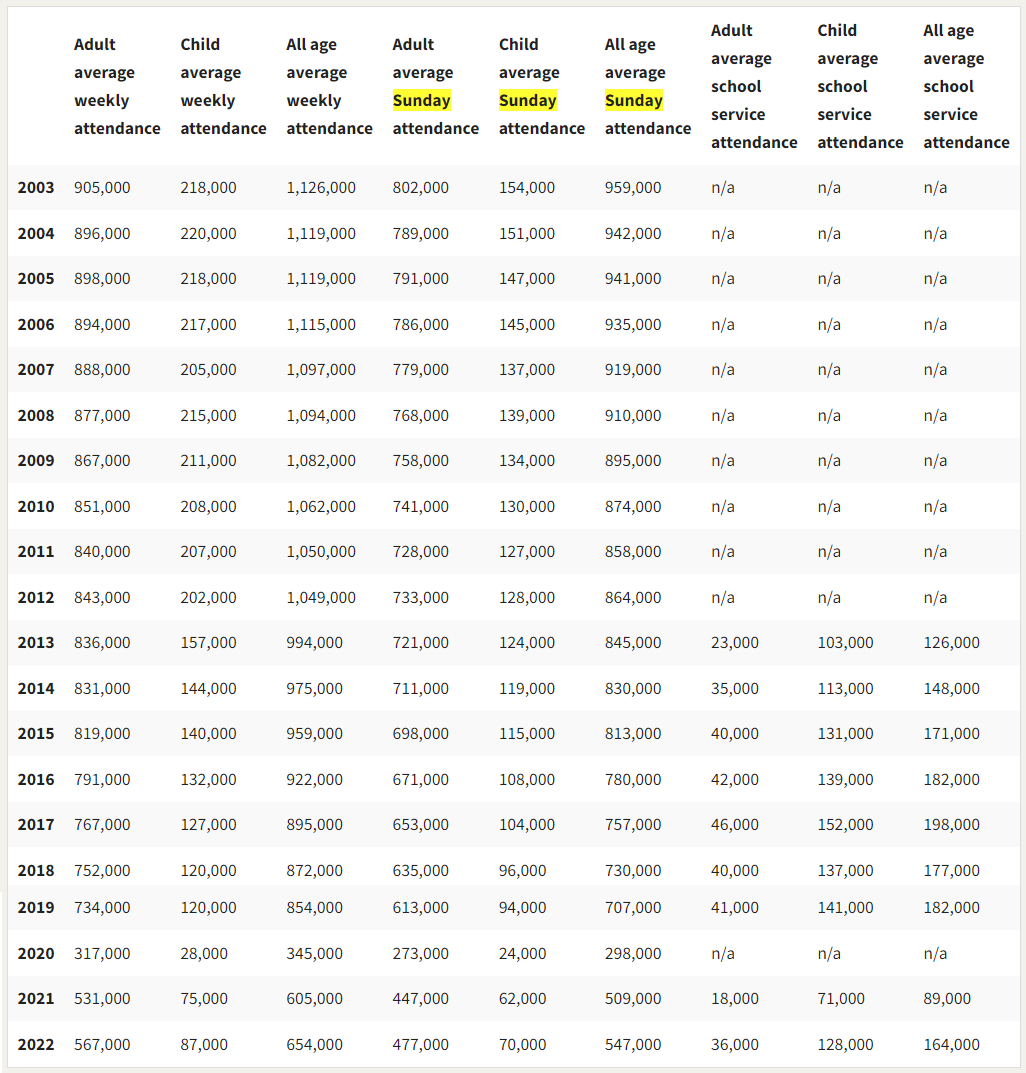
Neil O’Brien is the Conservative MP for Harborough and on Friday he submitted this question which is entitled “To ask the Member for South West Bedfordshire, representing the Church Commissioners, what average weekly attendance was in each year since 1994.” The person who has submitted the response is Andrew Selous who is the Second Church Estates Commissioner and he is the South West Bedfordshire MP. His response is below and it is also on this location and he has included a very significant list of documents. Two people have said Yes for his response so they are very interested in this.

The National Church Institutions first started collecting attendance data centrally in the autumn of 2000; as a result, it is not possible to publish data for the period 1994-1999. A methodological change also took place between 2000 and 2003 which means statistics for those years are not directly comparable with the data now collected. The data displayed below shows the longest period of comparable figures available, from 2003-2022.

Attendance figures are collected from churches for the first 4 Sundays of October and in the following Monday-Saturday midweek periods – this exercise is referred to as the “October count”. Figures include attendance at baptisms, as these usually take place in service, but not attendance at weddings and funerals. Attendance at services for schools is NOT included in the average weekly and average Sunday attendance figures but is reported separately.

In 2013, the question was changed to specifically ask about attendance at school services. Prior to 2013, it was apparent that some churches included such attendance in their reported figures while others did not. The change in question during this year resulted in a large change in the average weekly attendance from 2012 to 2013 and a more consistent practice across the church as a whole.

Posted in Church Teaching, Parliament and Democracy | Tagged , | Leave a comment

Public Transport on major junction on Brighton 


When the Government was closing down Parliament for the MPs to enjoy Easter there was a session being discussed called Public Transport: Carshalton and Wallington which can be seen there. A Conservative MP corresponded it who is Elliot Colburn, the MP for Carshalton and Wallington and the other person who took part in it was Guy Opperman who is the Government Minister. No one else corresponded in the discussion but the comment from Elliot included these words.

Moving slightly outside my constituency, if I may, another area that would greatly improve transport for my constituents—indeed, this is probably the major sticking point when it comes to increasing rail capacity for my constituency and most of suburban London—is the Croydon area remodelling scheme, which is the major junction on the Brighton main line and the suburban rail network in south London and the home counties. The project does a number of things. It would upgrade East Croydon station and the surrounding rail infrastructure to enhance capacity and efficiency, and it encompasses several pivotal elements, including the revitalisation and renovation of the station itself, the remodelling of Selhurst junction, which is where trains are becoming congested, and the expansion of railway tracks north of East Croydon.

The capacity issues that that project would resolve are often the sticking point for running more rail services in the region. Indeed, GTR and Network Rail have spoken regularly about their ambitions to make suburban rail services a lot more like the metro system that we have on the London underground—a sort of turn-up-and-go system, rather than the strict and limited timetable we currently have.

By delivering on the Croydon area remodelling scheme, or the Croydon bottleneck, we would help alleviate the congestion, which would be good not just for my constituents, but for the majority of London and the south-east. It would unlock rail capacity all the way down to Brighton and parts of the south coast, as well as in the capital. In the words of the Rail Minister, my hon. Friend Huw Merriman:

Posted in Brighton & Hove, Parliament and Democracy | Tagged , | Leave a comment

Health for happiness of young people under the age of 30


Yesterday on 11th April a significant question was raised by the Bishop of St Albans who is Alan Smith in the Government and his request was answered by Jane Scott who is known the Baroness Scott of Bybrook and she has provided two significant publish documents that can be obtained from here. The question and the response which can be obtained from here on the Parliament system.

Alan: To ask His Majesty’s Government what assessment they have made of the report by Gallup, the Oxford Wellbeing Research Centre and the UN Sustainable Development Solutions Network World Happiness Report, published on 20 March; in particular, the finding that the happiness of young people under the age of 30 in the UK has declined.

Jane: The Government is committed to improving the well-being of individuals in every area of the UK as set out in our (attached) update on the Well-being mission in January 2024. We continue to engage with new data and evidence in the delivery of all Levelling Up Missions, including on how we can improve well-being.

This includes considering the work of Professor Lord Richard Layard, one of the authors of the World Happiness Report, and other experts in our ongoing work on this mission.

Update on well-being mission (pdf, 310.0KB)

Posted in Church Teaching, Education, Parliament and Democracy, Youth Issues | Tagged , | Leave a comment

A request for Asylum: Housing from Bishop of Leicester


Yesterday a written request was published to the Government from Martyn Snow, the Bishop of Leicester which is entitled Asylum: Housing and the question included the content Asylum accommodation could cost £46 million more than using hotels, and “high risk or undeliverable” and the response from the Government was published by Andrew Sharpe and the full question and answer are shown below. One of the themes is Does this answer the above question? and so far only three people have commented and two have indicated that it is “No” and one has indicated “Yes”. The source for the questions are at here.

Martyn Snow: To ask His Majesty’s Government, in the light of the National Audit Office’s report Investigation into asylum accommodation, published on 20 March, which found that (1) using large sites to accommodate asylum seekers could cost £46 million more than using hotels, and (2) the Home Office rated their own plans as “high risk or undeliverable”, why the large sites accommodation programme will be continued.

Andrew Sharpe: The Government has always been clear that the use of asylum hotels is unacceptable, and that’s why we acted swiftly to reduce the impact on local communities by moving asylum seekers on to barges and former military sites.

Thanks to the actions the Government has taken to maximise the use of existing space and our work to cut small boat crossings by a third last year, the cost of hotels will fall, and we are now closing dozens of asylum hotels every month to return them to communities.

Large sites provide adequate and functional accommodation for asylum seekers and are designed to be as self-sufficient as possible, helping to minimise the impact on local communities and services. They reduce demand on an already pressured private rental market and their larger capacity allows the Home Office to be agile in responding to fluctuations in demand.

It is better value for money for the taxpayer to continue with these sites than to continue using hotels. The latest assessment of value for money, which excludes committed or spent costs in line with the Green Book methodology, shows that large sites would be £153 million cheaper than hotels.

Despite the need to stand up large sites at speed, controls were in place to assure value for money for the taxpayer. Operational challenges at the sites have changed our costs since original estimates. We continue to keep costs under review while developing ways to reduce it.

The latest Infrastructure and Projects Authority (IPA) review has upgraded the rating of the programme, meaning that the successful delivery of time, quality and cost is feasible.

Posted in Church Teaching, Parliament and Democracy | Tagged , , | Leave a comment

Bishop St Albans asked questions for Crime: Rural Areas


On Monday the Bishop of St Albans who is known as Alan Smith supplied four questions to the Government which he is connected to the House of Lords and the response came from the Lord Sharpe of Epsom, Andrew Sharpe. So far only one person has responded on the Does this answer the above question? section and they have stated that the response was No and that aspect can be seen here and other people can respond for it with Yes or No. Here are the four questions from Alan and the single answer from Andrew.

Alan: To ask His Majesty’s Government what:

consideration they have given to the National Rural Crime Network’s call for the Home Office to undertake a comprehensive economic impact assessment of rural crime in its report Rural Crime: Serious, Organised and International, published on 10 March.

consideration they have given to producing a rural crime strategy which would be fully integrated into the overall Government Crime Strategy, as called for in the National Rural Crime Network’s recent report, Rural Crime: Serious, Organised and International, published on 10 March.

assessment they have made of the links between wildlife offences and the drugs trade, as highlighted in the report Rural Crime: Serious, Organised and International published by the National Rural Crime Network, published on 10 March.

assessment they have made of the impact of the UK’s decision to leave the EU on the UK’s ability to track down or trace stolen plant and agricultural machinery.

Andrew: We welcome the National Rural Crime Network’s report and will consider its recommendations.

This Government is committed to tackling the threat from Serious and Organised Crime (SOC). In December 2023, we published the 2023 Serious and Organised Crime Strategy that commits to reducing SOC in the UK by disrupting and dismantling organised crime groups and networks operating in and against the UK.

Serious and organised crime is a major threat to the national security and prosperity of the UK. It costs lives, blights communities, hampers economic growth, and corrodes the global reputation of the UK and its institutions.

The Government welcomed the rural and wildlife crime strategy published by the National Police Chiefs’ Council in September 2022, this provides a comprehensive framework through which policing, and partner agencies can work together to tackle rural and wildlife crime, including where it is linked to other forms of serious and organised crime such as the drugs trade.

The National Rural Crime Unit works closely with Interpol to share information about stolen agricultural and construction machinery. As a result of the partnership it has established with INTERPOL, equipment has been recovered from criminal gangs across Europe.

Posted in Church Teaching, Parliament and Democracy | Tagged , | Leave a comment

 United Nations Relief and Works Agency: Finance


Last week in Minister on Thursday there were two questions from Dr John Inge, the Bishop of Worcester which both referred to the UNRWA (United Nations Relief and Works Agency): Finance – Foreign, Commonwealth and Development Office. Both of the questions were responded from the Government by Tariq Ahmad who is from Wimbledon. So here are the questions and the answers here and there.

John: To ask His Majesty’s Government what assessment they have made of the impact on the livelihoods of Palestinian refugees in Syria, Jordan and Lebanon of the decision to suspend aid to the United Nations Refugee and Works Agency for Palestine Refugees in the Near East.

Tariq: The UK provided £35 million to UNRWA this financial year, including an uplift of £16 million for the Gaza humanitarian response, all of which was disbursed before the recent allegations came to light. No more British funding is due this financial year and we have paused any future funding of UNRWA..

Indeed, we are appalled by allegations that UNRWA staff were involved in the 7 October attack against Israel, a heinous act of terrorism that the UK Government has repeatedly condemned.

We want UNRWA to give detailed undertakings about changes in personnel, policy and precedents to ensure this can never happen again. We are working with allies to try to bring this situation to a rapid conclusion. I have discussed this with Commissioner-General Philippe Lazzarini on several occasions, most recently on 4 April.

We are aware that the UN Office of Internal Oversight Services and Catherine Colonna have now provided their interim reports to the UN Secretary-General.

John: To ask His Majesty’s Government what assessment they have made of the impact on the humanitarian relief effort in Gaza and the West Bank of the decision to suspend aid to the United Nations Relief and Works Agency for Palestine Refugees in the Near East.

Tariq: Our decision to pause future funding to UNRWA has no impact on the UK’s contribution to the humanitarian response. We remain committed to getting humanitarian aid to people in Gaza who desperately need it, including through other UN agencies and British charities. We trebled our aid commitment this financial year and we are doing everything we can to get more aid in as quickly as possible by land, sea and air. UK funding has supported the work of partners including the British Red Cross, World Food Programme, UNICEF and Egyptian Red Crescent Society (ERCS) to deliver vital supplies.

Posted in Church Teaching, Parliament and Democracy | Tagged , | Leave a comment