Kent MP asks more questions about Brighton & Hove


On Tuesday 18th February the Sevenoaks in Kent Conservative MP, Laura Trott, asked the Government about Brighton & Hove Schools, which I published here last week. I subsequently read that Laura asked several other questions on Monday 24th February is here and then on Tuesday 25th February she asked for two questions which are here.

The Minister who responded to Laura is Catherine McKinnell, the Labour MP, Minister of State (Education) MP for Newcastle upon Tyne North and she responded on all of them. These later exchanges are shown below:

Laura Trott (24/2/25): To ask the Secretary of State for Education, what discussions she has had with Brighton and Hove City Council on its proposed new school admissions policy.

Catherine McKinnell: My right hon. Friend, the Secretary of State for Education has not had discussions with Brighton and Hove City Council on its proposed new school admissions policy.

When changes are proposed to admission arrangements, paragraphs 1.45 – 1.48 of the school admissions code require admission authorities to consult for at least six weeks with relevant parties. Brighton and Hove City Council held their consultation between 6 December 2024 to 31 January 2025. The council are then required to determine (agree) the final admission arrangements by 28 February 2025. Once the council have determined their admission arrangements they must publish a copy of the determined admission arrangements on their website by 15 March 2025.

Once the admission arrangements have been determined anyone who considers them to be unfair may raise an objection to the Schools Adjudicator. Objections to admission arrangements must be referred to the Adjudicator by 15 May 2025.

The Adjudicator’s role is to consider whether the admission arrangements and consultation comply with the school admissions code and admissions law.

The Adjudicator can only act on an objection that they have received through the correct channels. Information on how to object to an admission authority’s admission arrangements can be found on the Office of the Schools Adjudicator’s website, which can be accessed here: https://www.gov.uk/guidance/school-admissions-arrangements.

As Brighton and Hove City Council’s admission arrangements have not yet been determined, an objection cannot be raised.

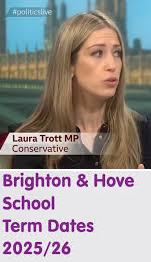
Laura Trott (25/2/25): To ask the Secretary of State for Education,

whether she has received any (a) advice or (b) communication from the Office of the Schools Adjudicator on Brighton and Hove City Council’s proposed new school admissions policy.

if she will take steps to refer the proposed new Brighton and Hove City Council school admissions policy to the Office of the Schools Adjudicator.

Catherine McKinnell: My right hon. Friend, the Secretary of State for Education has not had discussions with Brighton and Hove City Council on its proposed new school admissions policy.

When changes are proposed to admission arrangements, paragraphs 1.45 – 1.48 of the school admissions code require admission authorities to consult for at least six weeks with relevant parties. Brighton and Hove City Council held their consultation between 6 December 2024 to 31 January 2025. The council are then required to determine (agree) the final admission arrangements by 28 February 2025. Once the council have determined their admission arrangements they must publish a copy of the determined admission arrangements on their website by 15 March 2025.

Once the admission arrangements have been determined anyone who considers them to be unfair may raise an objection to the Schools Adjudicator. Objections to admission arrangements must be referred to the Adjudicator by 15 May 2025.

The Adjudicator’s role is to consider whether the admission arrangements and consultation comply with the school admissions code and admissions law.

The Adjudicator can only act on an objection that they have received through the correct channels. Information on how to object to an admission authority’s admission arrangements can be found on the Office of the Schools Adjudicator’s website, which can be accessed here: https://www.gov.uk/guidance/school-admissions-arrangements.

As Brighton and Hove City Council’s admission arrangements have not yet been determined, an objection cannot be raised.

Posted in Brighton & Hove, Education, Parliament and Democracy, Youth Issues | Tagged , , , , , , , , , | Leave a comment

MPs debate use of social media by the under 16s


Today in Parliament the ‘e-petition 700086’ will be discussed ‘relating to a minimum age for social media’ arranged by Tony Vaughan, the Labour MP for Folkestone and Hythe. It is described as ‘Introduce 16 as the minimum age for children to have social media’ set up by Kim Campbell with about 128,000 signatures. In Sussex the two largest signatures are Mid Sussex, Hove and Portslade. Kim Campbell refers

“We believe social media companies should be banned from letting children under 16 create social media accounts.” And then “We think this would help: 1. Stop online bullying, 2. Stop children being influenced by false posts, 3. Stop children seeing content that encourages violence/could be harmful for their future. We believe social media is having more of a negative impact to children than a positive one. We think people should be of an age where they can make decisions about their life before accessing social media applications. We believe that we really need to introduce a minimum age of 16 to access social media for the sake of our children’s future along with their mental and physical health.”

On Tuesday Jessica Brown-Fuller, Chichester Liberal Democrat is chairing ‘Maternity services’ and on Thursday Helena Dollimore, Hastings and Rye Labour is chairing ‘Women’s Health’ and some people on ‘General Committees’ this week. On Tuesday & Wednesday the ‘Environment, Food and Rural Affairs Committee’ includes Helena with ‘Reforming the water sector’ on Tuesday. On Tuesday ‘Backbench Business Committee: Proposals for backbench debates’ for Jessica and ‘Business and Trade Committee: Export led growth’ involves Alison Griffith, Conservative for Bognor Regis and Littlehampton.

Previously, on the 11th February, in ‘about debates’ ‘Youth Provision: Universal and Targeted Support’ which involved Sian Berry, Green for Brighton Pavilion. A Labour Harpreet Uppal, Huddersfield responded to many MPs after each comment in this session.

Sian said: “Does the hon. Lady agree that the Minister should answer two questions? The first is about the funding and jobs that will flow from the national youth strategy, and the second is about integration. We need a youth chapter in the housing strategy, as Centrepoint has asked for, and to bring its co-production values into the “Get Britain Working” strategy, aspects of which are quite worrying.”

Harpreet responded: “I am sure the Minister has heard what the hon. Lady has said. I am proud that the Government are developing a national youth strategy, which has not happened before. Research by the Institute for Fiscal Studies found that the closure of youth clubs led to a 4% drop in GCSE performance at age 16, with even greater effects on pupils from disadvantaged backgrounds. Worse still, the loss of youth services has been linked to a 14% increase in youth crime within six years of youth services closures.”

At the end of the Parliament holiday, a ‘Backbench Business: HIV Testing Week’, involving Sian and Alison Bennett, Liberal Democrat for Mid Sussex. They spoke describing the benefits of local support,

Sian: “As an MP for Brighton, I am proud of the work of the Terrence Higgins Trust—which is partly based in my constituency, not far from my office—for making this a bigger event every year, and more and more inclusive. I recently visited THT to see first-hand the incredible work it is doing to end new transmissions of HIV, supporting people to live well with HIV, and challenging the stigma and all the things that go around that. Its work with partners in my city, like the pioneering Lawson unit at the Royal Sussex County hospital and the local HIV charity, the Sussex Beacon, is all so exciting. Opt-out testing was mentioned. The emergency department at the Royal Sussex has been doing that testing since March 2022. It has since been rolled out nationally in areas of very high HIV prevalence. In Brighton, the team at the Lawson clinic has identified 16 new HIV diagnoses in recent years…. Brighton also has some groundbreaking digital pathway work happening. The locally co-designed HIV app EmERGE has been a big success. It is a European project centred in Brighton, and I am told that people absolutely love it. There are about 720 people using it for PrEP access, appointments and support…. The work in Brighton that I have just described proves that. I truly believe that Brighton could be the first place in the UK to achieve that target, given the comprehensive work going on.”

Alison: “The good news is that there is much we can do, but we have to get on with it. At home, dying from AIDS is no longer an inevitable outcome—indeed, organisations that Siân Berry mentioned, such as the Sussex Beacon, which serves both her constituents and mine in Mid Sussex, are now looking to reconfigure services to adapt to changing patient needs—but the alarming rise in HIV diagnoses demands stronger action to expand access to testing, treatment and education for those most at risk. My Liberal Democrat colleagues and I have long called for equitable access to PrEP for all those who can benefit from it, but the Conservative Government’s cuts to the public health grant undermined the delivery of vital sexual health services. The Liberal Democrats are committed to reversing those cuts and investing £1 billion annually to strengthen public health programmes. Among other things, that would help to ensure that we can eliminate HIV transmissions in England by 2030.”

Posted in Brighton & Hove, Parliament and Democracy | Tagged , , , , , , , , , | 1 Comment

A Kent MP asks about Brighton & Hove Schools


On Tuesday last week there were several questions asked by MP’s and one of them was published by Laura Trott, the Conservative Kent MP for Sevenoaks. Her request was to the Minister of State (Education), Catherine McKinnell and the response from Laura was “what assessment she has made of potential impact of Brighton and Hove City Council new schools admission policy on school children.” Catherine is the Labour MP for Newcastle upon Tyne North.

The question and response are very interesting for us in Sussex. The text is as follows and it is below. No Sussex MPs have made similar comments since last Summer although recently two Sussex MPs have raised questions about new secondary schools’ admissions. From BBC Sussex news source;

Both Brighton MPs have raised concerns about the impact on children with SEND, particularly those without an education, health and care plan (ECHP).

Chris Ward, Labour MP for Brighton Kemptown and Peacehaven, is concerned that the current catchment proposals “could result in some children with SEND having to travel a long way and potentially via multiple forms of transport” to go to school.

The proposals will go before councillors on 27 February.

Here is the question from Laura and the response to Catherine on 18th February

Laura Trott: To ask the Secretary of State for Education, what assessment she has made of potential impact of Brighton and Hove City Council new schools admission policy on school children.

Catherine McKinnell: This government believes admissions arrangements should be fair, lawful and support good outcomes for all children.

School admission arrangements are set and applied locally by the admission authority for each school. After providing highest priority to looked after and previously looked after children, it is for the council, as the admission authority for the community and voluntary-controlled schools in its area, to decide what oversubscription criteria to apply for places at its secondary schools and in what order the criteria are applied. The purpose of consultation is to provide the local community the opportunity to express any concerns that they may have about the proposed admission arrangements.

Admission arrangements must be fair, clear and objective, and comply with the school admissions code. To ensure that a school’s admission arrangements meet the needs of their local community, the admission authority is required to consult on them locally when making a change.

The consultation for Brighton and Hove City Council went live on 6 December 2024 and closed on 31 January 2025. The council is required to determine the final admission arrangements for September 2026 by 28 February 2025.

Once the council has determined their admission arrangements, anyone who feels they are unlawful or unfair may raise an objection to the schools adjudicator. Objections to admission arrangements must be referred to the adjudicator by 15 May in the year they were determined. The adjudicator’s role is to consider whether the admission arrangements and consultation comply with the school admissions code and admissions law. The adjudicator’s decisions are binding and enforceable.

Posted in Brighton & Hove, Education, Parliament and Democracy, Youth Issues | Tagged , , , , , , , | 2 Comments

Ipswich Bishop raises questions in House of Lords


The Bishop of St Edmundsbury and Ipswich, Martin Seeley has been listed at the House of Lords since May 2022 and he comments occasionally each year.

In November 2024 he asked a question to the Armed Forces Commissioner and in early December he raised three questions which are linked to Armed Forces: Housing all of those can be seen here.

He has recently contributed to a discussion in late January 2025 about ‘Child Sexual Exploitation and Abuse’. A Sussex MP contributed to that debate; Josh Babarinde, the Liberal Democrat for Eastbourne that can be seen here on the 16th January. The Minister of State, David Hanson, Lord Hanson of Flint, the Minister of State, Home Affairs responded to the comments on 20th January which can be seen here which involve many people and here are the Bishops item. Sadly he is now published to retire this month so this will be his only respond:

Bishop of St Edmundsbury and Ipswich: My Lords, I also pay tribute to victims and survivors in this regard, recognising that the failure to respond perpetuates and prolongs their suffering, and recognising—as noble Lords will all know—that the Church of England is facing significant challenges in putting its own house in order in that regard. I want to ask, therefore, a wider question on faith communities, all of which provide places of gathering and moral and social influence, and all of which strive to make those places as safe as possible. What conversations are continuing with leaders of faith communities to support them in that vital work?

Lord Hanson of Flint: I welcome the right reverend Prelate’s contribution. I think I can say to him that the Church has had difficulties, which he has acknowledged, and those difficulties might well have been resolved had some of the measures in the IICSA report been in place at the time. For example, had mandatory reporting been in place seven or eight years ago, it is very possible that some of the concerns that have arisen in the last few weeks and months in relation to the reporting of sex abuse in the Church might have been resolved.

I reach out to the right reverend Prelate, as I reach out to teachers, social workers and others who have a place of responsibility for the safeguarding of children, to say that the measures in the IICSA report, following the helpful inquiry led by Alexis Jay, are in areas where I hope we can work in co-operation with any authority, be it the Church, teachers or others, to see whether they impact upon the areas where the right reverend Prelate and his colleagues have had concerns.

Posted in Church Teaching, Parliament and Democracy, Youth Issues | Tagged , , , , , , , | 1 Comment

MP in plea for U-turn on farm inheritance tax


Today is the start of a week’s closure in Parliament. Last week there was a significant item from the e-Petition, 700138 described as ‘Don’t change inheritance tax relief for working farms’ created by Tim Burt. He started with “We think that changing inheritance tax relief for agricultural land will devastate farms nationwide, forcing families to sell land and assets just to stay on their property. We urge the government to keep the current exemptions for working farms.” So far it has over 151,000 signatures approving it which includes a number of Sussex residents with Arundel and South Downs as the largest contributors, followed by signatures in East Sussex and some in Horsham. Soon after Mr Burt published his Petition, Tom Bradshaw from Farmers Guide commented “There’s still time for the Government to accept they’ve got this wrong, and my message to ministers is that they should do the right thing and reverse this awful ‘family farm tax’”. The Horsham, Liberal Democrat MP, John Milne responded to the e-Petition following the contribution from Brian Mathew, the Liberal Democrat MP for Melksham and Devizes who described the challenging situation that small farms are facing.

Brian: “Earlier today I had the opportunity to meet a constituent, Darcy Johnson, and I want to share her and her family’s story. Four generations of Darcy’s family have worked Dogwood farm, which is a small, family-run beef and arable farm of about 250 acres. Her grandfather is the current owner. The plan was always to follow the sensible business advice that they and other farmers were given: to wait until her grandfather’s death to pass the farm on to the next generation. Her parents currently manage the farm, and Darcy is studying agricultural business, hoping to take it on herself later. Generations-worth of planning has followed the suggested advice, but that was suddenly changed overnight with the Budget announcement. Because Darcy’s grandfather is now 92, beyond insurable age, they do not have seven years to wait. If the Government’s plan comes into effect unchanged, Darcy and her family will somehow have to find nearly £500,000 to keep their farm, with barely any notice. If they cannot find the money, because they, like most small farmers, do not have hundreds of thousands of pounds to spare, they will lose their farm—a small, sustainable family business that will likely be replaced by a corporate with no connection to the local community. The Government need to acknowledge the effect that this sudden rise in inheritance tax will have on small family farms—on people whose families have been working hard for generations to put food on Britain’s tables.”

John Milne commented: “It is a fundamental principle that legislation should not be retrospective, but here we have a tax that requires farmers to have acted seven years before they ever knew the tax was going to exist. It is fundamentally wrong and I ask the Government to withdraw the measure.”

Brian Mathew responded by thanking Mr Milne, commenting: “These small family-run businesses cannot afford it. If the plan continues, many will be wiped out completely. Such farms are often the backbone of rural communities, doing everything from clearing snow in winter to providing hay bales for village fairs. The loss of the farms will not only devastate the families that own them, but completely change rural life in England — I would argue for the worse. Farmers like Darcy, who is here with us and travelled up for the day to make her voice heard, need to be given a seat at the table so that they can give the Government useful advice on how to dig themselves out of the hole they have unfortunately dug.”

On the 3rd of February, e-Petition 638449 ‘Require employers to offer career breaks for parents with a seriously ill child’ was set by Christina Harris who stated “My daughter was diagnosed with Leukaemia. I became a full-time nurse overnight. My employer is unable to keep my job open so I have lost my job of 19 years. Employers should be required to grant special breaks for parents in this situation enabling them to return to their jobs afterwards.”. The largest Sussex support for the e-Petition came from Mid Sussex and the MP who took part in the discussion was Alison Bennett the Liberal Democrat for the area.

Alison said that: “I recently spoke to my constituent Kat from Hassocks, whose son Teddy has battled life-threatening neuroblastoma since July 2022. Kat told me that although her employer went above and beyond to support her, she is the exception and not the rule. With many employers either not able or not willing to do so, does the hon. Member agree that it is unacceptable for there to be—in Kat’s words— “a total lottery” regarding whether parents of seriously ill children receive employment support?”

Robbie Moore, the Conservative MP for Keighley and Ilkley responded throughout to each MP who contributed to debates and said: “The hon. Member’s intervention gets to the nub of the why this petition is so important: not all employers are doing the right thing by their employees. That parent may be a single parent or have no support around them, and they can end up in a very difficult situation, having to deal quite immediately with the challenge that they face. A lack of reassurance in the workplace can add to their anxiety.”

Posted in Parliament and Democracy | Tagged , , , , | 4 Comments

The Welsh Parliament recently spoke about FareShare


Sadly, there has not been a reference about FareShare from the UK Parliament since April 2024. I have written about FareShare early and the most recent one was at the beginning of December which can be seen here. In mid-October, two of the MS Welsh Members of the Senedd referred to FareShare, Baroness Mair Eluned Morgan and Huw Irranca-Davies. The document I published in December provides the links for both of those Welsh comments.

However it was very interesting that a few days ago, Huw Irranca-Davies MS mentioned about FareShare again twice. On Wednesday the 12th February which is here in is comment and then a week later on Tuesday 18th of February he mentioned it again here. Much later he referred to FareShare on 29th April of 2025 which is shown below on the ‘5. Statement by the Deputy First Minister and Cabinet Secretary for Climate Change and Rural Affairs: Building on Wales’s Recycling Success‘. However there have been no other comments from MPs who have referred to FareShare so far on comments yet on the end of June currently.

It would be good to hear from the FareShare on Wednesday 12th February:

The investment within the local food partnerships, just to say, will also inspire new supply chain opportunities for locally based farmers and local businesses. It’s already being demonstrated through initiatives such as the Food Systems Development Project delivered by Bwyd Sir Gâr Food, which supports communities to develop horticultural businesses and to access key public sector markets. We’ll continue to work with community redistribution hubs like FareShare and others to ensure that surplus food reaches those who need it and avoids it going to waste, and we will work in close collaboration with the future generations commissioner, supporting public bodies and public services boards to embed food as a focus area within local-level planning and delivery. I really welcome the focus of the commissioner’s seven-year strategy, ‘Cymru Can’, on food activities and work streams already under way to encourage public bodies across Wales to include food in their well-being plans. The point that was raised: we need to see this not just for patients, but for staff. We need to see this in all aspects of our public bodies. Our work will complement and reinforce this.

And here is the items for Tuesday 18th February:

Building this fairer, greener Wales is at the heart of everything we do in this Welsh Labour Government. That’s why we are working in partnership with FareShare Cymru, where we have taken action to fight food poverty and are also tackling food waste. Indeed, I visited with the Cabinet Secretary for Housing and Local Government their facilities in south Wales, to witness how our investment of £3.9 million supports FareShare Cymru to redistribute over 6,600 tonnes of surplus food. They have provided over 15 million meals to Wales, to over 441 community groups and charities like Huggard, helping the homeless in the heart of Cardiff; Hope House just outside Llanelli, which helps young people with drug and alcohol addiction; Y Pantri in Colwyn Bay, Wales’s first social supermarket; and North Cornelly Luncheon Club near Bridgend, which brings older people together, as well as helping to reduce the greenhouse gas impacts of food waste.

And a few minutes later he mentioned on that same item on 18th Feb:

On the issue of food waste, surely, the first point of food surplus—. It shouldn’t be food waste, it’s food surplus, and should be going to actually feed people, and also to build that circular economy, so it’s not waste, it’s actually feeding people. So, when I was, on Monday, with Jayne Bryant, my Cabinet Secretary colleague, at the investment that we’ve done in FareShare here in south Wales, looking at the work that they are doing, and they can do more, indeed—. But, actually, the first point of call is that you get it to people who can use it and feed themselves well, and providing alongside that, by the way, menu advice, cooking advice and so on. So, they’re doing things now like pop-up kitchen stuff as well—really, really excellent.

So here is the item at the end of 29th April 2025:

Food insecurity is a pressure on households right across the country. It undermines health and it contributes to obesity, disease, and indeed to malnutrition. The impact of food insecurity and food poverty are real, and they are lasting. That’s why, since 2019, we’ve invested over £26 million to support those most in need, including through local authorities, Trussell Trust foodbanks, and FareShare Cymru. Initiatives such as Food Power, Healthy Start, Big Bocs Bwyd and the PIPYN pilot in Merthyr Tydfil are supporting people to make those healthier choices and improving food literacy. In February, I was delighted to visit Fareshare Cymru to see their work, and how they have made 15 million meals available since 2015. I’d like to take this opportunity to thank the staff and the volunteers at all such organisations for their continued support of these initiatives. The local food partnership funding will support making healthy, locally sourced food more accessible to more people across Wales.

And he mentioned later on that session:

So, it’s not only—. And this was one of the big takeaways that I’ve come across before, but also from my recent visit in February to FareShare Cymru—the work that they’re doing now, not purely in diverting what would be waste food, but actually diverting that into people’s menus, but then working with people to actually educate parents and children in cookery and in how to use some of these ingredients as well. 

Posted in Parliament and Democracy | Tagged , | Leave a comment

House of Lords member referred to Pets: Insecticides


On Tuesday in the House of Lords one of only two Green Party politicians asked a question about  “Pets: Insecticides” and interestingly referred to “a recent University of Sussex study indicating the presence of insecticides, commonly used on companion animals and livestock, in the nests of songbirds

The comment came from Natalie Louise Bennett listed as Baroness Bennett of Manor Castle, who is an Australian-British politician and journalist and a former leader of the Green Party of England and Wales. Her question is below with a response from Sue Hayman, Baroness Hayman of Ullock the Labour Parliamentary Under-Secretary of State for Environment, Food and Rural Affairs. So far no one has responded but that can be amended here.

Baroness Bennett of Manor Castle: To ask His Majesty’s Government what assessment they have made of (1) regulation of topical flea and tick treatments for pets; and (2) of a recent University of Sussex study on the impact of these chemicals on songbird reproduction.

Baroness Hayman of Ullock: 1) Parasiticides play an important role in the protecting of animal health from fleas, ticks, and vector-borne diseases, and in protecting human health from zoonotic transfer of disease. Therefore, their regulation requires a careful balance between effective parasite control for animal health and welfare and human health whilst minimising potential risks to the environment.

To address environmental safety, every veterinary pharmaceutical undergoes an environmental exposure assessment, with products for companion animals usually ending in a Phase 1 assessment. If exposure is deemed high, a more detailed Phase II risk assessment is conducted, evaluating potential environmental impact based on expected exposure and toxicity. The findings from these assessments are considered as part of the final benefit/risk assessment during the approval process. There are also warnings that accompany products advising on use and to mitigate against dogs entering water courses directly after treatment. Environmental assessments are conducted in accordance with international guidelines and data standards.

The Veterinary Medicines Directorate (VMD) is conducting a number of research activities to provide further evidence on environmental impacts and causes. Furthermore, the VMD supports a review of the international environmental risk assessment guidelines for companion animal parasiticides, which has been proposed and is currently under consideration by the body for International Cooperation of Technical Requirements for Registration of Veterinary Medicinal Products (VICH).

2) The VMD is also aware of a University of Sussex study indicating the presence of insecticides, commonly used on companion animals and livestock, in the nests of songbirds. The study suggests a potential correlation between pesticide levels and reduced reproductive success. However, causality has not been confirmed, and further research is required to determine whether the observed effects are due to pesticide exposure or other factors.

Posted in Parliament and Democracy | Tagged , , , , , , | 1 Comment

MPs hit out at new fraud bill in the Commons


This week there are no listed contributions for Sussex MPs in Parliament, however this afternoon the e-Petition of ‘700138 relating to inheritance tax relief for working farms’ described as ‘Don’t change inheritance tax relief for working farms’ will be discussed. It achieved 148,000 signatures with the largest signing from Arundel and South Downs.

Last Monday there was an important debate Public Authorities (Fraud, Error and Recovery) Bill, approved by Labour with 340 votes. A group of 87 MPs rejected it with Liberal Democrats, Greens, SNP, Plaid Cymru and DUPs. Two Sussex MPs spoke at length.

First, Siân Berry: “I will speak against giving it a Second Reading and, alongside my fellow Green Members, will vote against it later…. It has a focus on fraud when a far bigger issue is unclaimed and under-claimed benefits due to a lack of awareness, complexity in the system and stigma…. The Chair of the Select Committee, Debbie Abrahams, set out the risk of damaging trust in and engagement with the DWP. We also have the risk of reigniting damaging and unfair stereotypes from some people involved in wider debates on these issues on social media, in newspapers and in broadcast media…. I had hoped better of this Government…. I have had so much correspondence on this from constituents…. I am talking about pensioners who need pension credit, people who are permanently disabled and whose entitlement to employment and support allowance is clear and settled, people who are precariously underemployed or unemployed who need universal credit, family carers, and people who are simply on low wages and cannot make ends meet. These are citizens, not suspects. The clauses about what appear to be routine and regular Government access to information from bank accounts for eligibility verification—not linked to serious crime—most concern me. I am also opposed to the clauses that increase powers of search and access to homes for more serious matters, and those that would remove driving licences from people who are having difficulty paying back to the DWP overpaid money due to what may simply be human error at a difficult time in their lives, not fraud at all. I therefore suggest that the Government come back to this House with the parts relating to covid fraud and to contractors and businesses, and maybe add something on the much bigger problem of tax fraud. On the rest, I suggest that they start again with a process of genuine listening and co-production…. This process would fit together very well with the recent proposal from the charity Mind in response to other upcoming changes to benefit processes, which asks for a new approach to the benefits system and a commission led by disabled people to redesign benefit assessments. Mind says that this kind of process would help to rebuild trust between disabled people and the DWP. I agree, and my personal view is that this Bill will do the absolute opposite.”

John Milne, Liberal Democrat for Horsham commented: “Many of my Horsham constituents have contacted me to say that the powers outlined in the Bill are very far-reaching and, if abused, could have hugely detrimental effects on benefit claimants through no fault of their own. As my hon. Friend Steve Darling said, the carer’s allowance repayment scandal shows exactly what can go wrong when the state has high-level powers over debt recovery. Due to departmental error, not the claimants’ error, there were more than 250,000 cases of overpayment to carers in the last five years of the Conservative Government. That is an enormous number. What would have happened to those carers, who are paid very little for the huge service to society that they provide, if the powers in the Bill had been in place during those five years? They would probably have faced forced withdrawals from their bank account, the possible removal of their driving licence or even forced entry to their home by the DWP. The Bill will give increased powers to access private bank accounts. This requires careful consideration from a civil liberties perspective. However, the DWP already has the power to compel third parties to share data where criminal activity is suspected. The new powers appear to reduce the need for prior evidence and simply grant access at will. Given that access to banking information is estimated to recover just 1.4% of the Government’s annual loss to fraud and error, do these powers of forced withdrawal represent a proportionate action?…. The Government have asserted that the public purse saving will be £1.5 billion, but in the absence of an impact statement, how do we know?…. In particular, we need to be sure that the savings predicted do not come from the blameless victims of departmental error, as happened with the carer’s allowance overpayment scandal. It is of huge importance that fraud be reduced, but until we are sure that we have learned the lessons of the past, we run the risk of damaging people’s lives for insufficient benefit. We are at risk of making the same mistakes again, but with fewer checks and balances…. I am concerned that it builds a narrative that assumes that the claimant is the guilty party, when it could be the Department that is at fault. I therefore call on the Government to apply all possible care before launching new regulations that, at present, would amount to a matter of trial and error.”

Posted in Brighton & Hove, Parliament and Democracy | Tagged , | Leave a comment

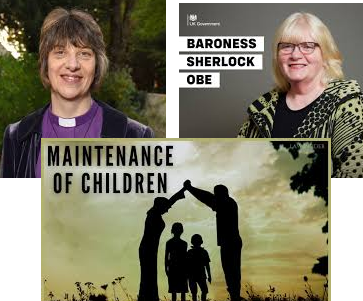
Bishop of Gloucester asks about “Maintenance: Children”


On Monday 3rd of February in the House of Lords, the Bishop of Gloucester, Rachel Treweek, submitted question: “Maintenance: Children”.

The Government response came from Baroness Sherlock, The Minister of State, Department for Work and Pensions.

Previously, on Monday 27th of January, the Bishop asked two similar questions and Maeve Sherlock responded to both.

The most recent question which is here that was on 3rd February and currently there are no comments:

The Bishop of Gloucester: To ask His Majesty’s Government what (1) practical, and (2) mental health, support is offered to parents struggling to pay child maintenance.

Baroness Sherlock: The Child Maintenance Service (CMS) is committed to ensuring that it delivers a safe service that is sensitive to the needs of all the parents that use it. We recognise that some parents may face difficult circumstances, particularly at a time of separation.

The CMS is well prepared to respond quickly and effectively if it becomes aware that the safety of any of its customers are at risk, and caseworkers receive extensive training and follow a well-managed process with clear steps to support vulnerable clients.

Caseworkers have access to several tools and procedures to help support customers when they advise they cannot afford to pay child maintenance or are struggling with the cost of living in general and are in financial or emotional crisis.

This includes the National District Provision Toolkit and Affordability Hub which provides invaluable information to allow caseworkers to signpost to national and local support organisations for debt help and mental health assistance across the UK.

Additionally, Caseworkers can refer particularly vulnerable customers to the DWP Advanced Customer Support team for debt advice, access to benefits and mental health support or refer to the Money Advisory Service, Money Helper, an arm’s length body of DWP which provides confidential debt advice.  They also have access to the Benefit Calculator tool to check if the paying parent is entitled to any benefits.

In addition, Caseworkers can check income information is correct through Real Time Information (RTI) from His Majesty’s Revenue and Customs. Once this has been confirmed with the paying parent, they can discuss making an interim arrangement to clear the arrears.

The government has committed to reviewing the calculation to make sure it is fit for purpose and reflects today’s trends. Any changes will be subject to extensive consultation and legislation brought forward where necessary for approval.

The first question the 27th of January was this one

The Bishop of Gloucester: To ask His Majesty’s Government what steps they are taking to ensure survivors of domestic abuse are exempt from fees associated with child maintenance.

Baroness Sherlock: The Child Maintenance Service (CMS) removed the £20 application fee in February 2024. This has removed any requirement to report domestic abuse. It has also removed one of the affordability barriers for parents who wish to apply to the scheme.

A consultation on proposed reforms to the CMS was published by the previous Government on 8 May 2024. This included:

  • removing Direct Pay and managing all CMS cases in one service to allow the CMS to tackle non-compliance faster,
  • exploring views on collection fees and the impact of proposals to reduce, but maintain, fees and
  • exploring how victims and survivors of domestic abuse can be better supported. This follows the Child Support Collection (Domestic Abuse) Act receiving royal assent in July 2023.

The consultation was extended by this Government at the end of July and ran until 30 September 2024. We are currently analysing the responses we have received, and the Government will publish a response in due course.

The second one on in that week is here

The Bishop of Gloucester: To ask His Majesty’s Government when they intend to publish the review of calculations of child maintenance.

Baroness Sherlock: The Department has been conducting a review of the child maintenance calculation to make sure it is fit for purpose and reflects today’s social trends. This process is ongoing and no date for announcing the outcome has yet been set. When it is, any changes will be subject to extensive consultation and legislation brought forward where necessary for approval.

Posted in Church Teaching, Parliament and Democracy, Youth Issues | Tagged , , | Leave a comment

MPs debate airport’s plans to expand site


Today in Parliament there is a plan for “e-petition 638449 relating to career breaks for parents of seriously ill children” described as “Require employers to offer career breaks for parents with a seriously ill child”. It obtained 102,316 signatures since December 2023. The Sussex areas with the most signatures were Mid Sussex, Bognor Regis and Littlehampton and Crawley. Brighton Kemptown had the largest signing in East Sussex. I will be interested to see if any of our MPs take part. Robbie Moore is organising the debate today who is the Conservative MP for Keighley and Ilkley in West Yorkshire.

Currently there are not many items listed that involve Sussex MPs this week but there is a committee on Tuesday afternoon from 3pm-4.30pm; the Finance Committee (Commons)which is simply listed as Private Meeting. Nusrat Ghani, the Conservative for Sussex Weald and James MacCleary, the Liberal Democrat for Lewes are part of the group and the Chair is Steve Barclay, Conservative MP for North East Cambridgeshire.

At the beginning of last week there were several debates. One was the Creative Industries with Nusrat Ghani, John Milne the Liberal Democrat for Horsham and Sian Berry, the Green MP for Brighton Pavilion. There was also a debate about Road Safety: Young Driversinvolving John Milne and Alison Bennett, the Liberal Democrat for Mid Sussex. Later on, there was a discussion about Airport Expansion with a significant contribution from Sian Berry, John Milne and Alison Bennett also contributed and Mike Kane, Labour MP for Wythenshawe and Sale East responded.

Sian Berry began with: “To ask the Secretary of State for Transport if she will make a statement on Government policy on airport expansion.”

Mike Kane responded and the debate continued for some time. At the end of her comments Sian Berry asked:

“Has he seen research from the New Economics Foundation estimating that approving airport expansion plans for Heathrow, Gatwick and Luton airports alone will serve to cancel out the carbon savings of the Government’s clean power action plan? The Government’s arguments that I have seen appear to rest on the idea that there are new technologies ready to go that will cut carbon emissions and allow large airport expansions. In reality, does the Minister accept that such innovations, many of which are still not ready for commercial use, cannot be relied upon? Will he act in line with the science and our climate commitments, do the responsible thing and rule out a reckless airport expansion policy?”

Mr Kane commented with: “There is always a trade-off to be had, if applications come forward, between noise, carbon and growing our economy. We recognise that Heathrow has operated at over 95% capacity for most of the past two decades, which has presented limited opportunities for growth in route networks and passenger numbers. We live in an interconnected world, where people want to visit their family members and do business across our planet. This Government have moved faster in the first six months than the previous Government did in 14 years, by introducing the sustainable aviation fuel mandate, so that 2% of all fuel sourced from 1 January this year must come from a renewable source. Where was the hon. Member when we introduced that in this House? It is one of the most forward-thinking, sustainable measures that we have brought to this place. In the next few months, as part of His Majesty’s legislative agenda, we will be introducing the revenue certainty mechanism to create a world-class SAF industry here in the UK. I hope to see the hon. Member supporting the Government from the opposition Benches as we clean up our transport sector, our aviation sector and our economy as a whole.”

During the debate John Milne asked:“Will the Minister confirm what compensating measures the Government will take, if airport expansion is to go ahead, to ensure adherence to carbon budgets? They must have already been agreed on by now.”

Mr Kane responded with:“I thank the hon. Gentleman for his considered approach in all these matters. I was pleased to receive him at the Department the other day to talk about a particular constituency issue that related to Gatwick. We do not have a development consent order, but noise and pollution are the tests to meet our climate commitments, and they will remain the tests. It will be up to the Chair of the Transport Committee, my hon. Friend Ruth Cadbury, and Members across this House to hold the Government’s feet to the fire on this matter.”

The last Sussex contribution was from Alison Bennett who stated: “The expansion of Heathrow feels a bit like the Schrödinger’s cat of expansion at the moment—it is both happening and not happening, depending on what one’s perspective is today. I realise that the Minister will not be tempted to comment on Gatwick either, as it is a live DCO process. Given that the shadow Minister, Gareth Bacon, and the Minister have both asserted that growth is an inevitable consequence of airport expansion, can I ask the Minister what evidence he has to support that assertion?”

Mr Kane replied:“I thank the hon. Lady for her question, but I do not think I will take any lectures from Liberal Democrat Members about sitting on the fence. I am sure the hon. Lady will have her opportunity to raise her concerns at a later date in this place.”

Posted in Parliament and Democracy | Tagged , , , , | Leave a comment