A mix of opinions on the Early Day Motions


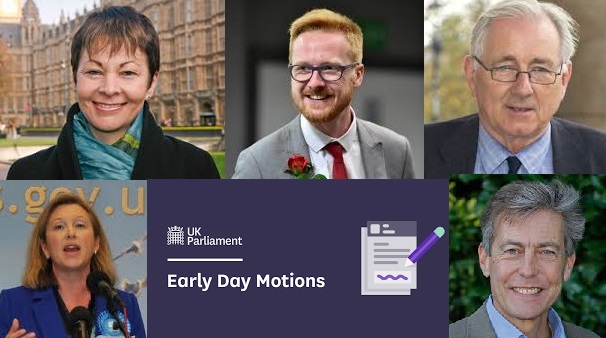
One significant Parliament theme when it closes down for the holidays are the Early Day Motions (EDM) which are petitions endorsed by MPs who are not members of the Government. There is a mix of views amongst MP’s and political commentators about EDM’s. Ben Bradshaw the Labour MP for Exeter expresses

“I regularly get requests from constituents for me to sign what are called Early Day Motions (EDMs) of the House of Commons. I write back explaining why I don’t sign EDMs. This is what I say: There are a number of reasons why I don’t sign EDMs. The main one, as I have already said, is that they have no effect and there are numerous other ways which are effective in which I can raise an issue or lobby the Government. Many MP’s sign EDMs, I’m afraid, because it requires no effort and it gets the lobby group, charity or individual who is urging them to do so “off their backs”. Signing EDMs has become a displacement activity for doing something useful like writing personally to the Minister, raising the issue in questions or debates in Parliament, applying for a debate, tabling amendments to Bills etc – all of which require much more time and effort. Over the years a whole industry has grown up around EDMs with lobbyists and organisations encouraging members of the public to urge their MPs to sign them and judging their success/justifying their existence by how many do so. The tax payer also picks up a substantial bill for the cost of processing the hundreds of EDMs tabled’’.

Other MP’s and commentators suggest EDMS are useful for gathering support from different politicians about an issue but not particularly good for influencing policy changes. Some think amendments are necessary.

During this period of Parliament closure there have been 193 EDM’s, the largest obtaining 95 signatures published by Conservative MP William Wragg from Hazel Grove, Manchester, “No confidence in the Speaker” on 21st February. Sally-Ann Hart signed it and until then had never signed any. Four Conservatives have now withdrawn. Ninety-one signatures remain and including Sally-Ann 43 are Conservatives, 42 Scottish National Party (SNPs) 3 Plaid Cymru and 3 Independent MPs.

Dawn Butler, Labour MP for Brent Central London proposed an EDM entitled “Alleged comments by Frank Hester” a Conservative party member on 11th March with 69 signatures.  Caroline Lucas, Brighton Pavilion together with 33 Labour MP’s, 15 SNPs, 10 Liberal Democrats, 3 Plaid Cymru, and 1 Conservative MP signed.

The third largest item was published by William Wragg entitled “Referral of matters of 21 February 2024 to the Committee” obtaining 55 signatures on the 26th March. Twelve Conservatives including Sally-Ann the only other item she has signed so far. Also signing were Liz Saville Roberts from Plaid Cymru and forty-two SNP members.

Another 33 EDM’s have more than 14 signatures during this period and a further ten have 14 signatures including two that have been created by Caroline Lucas the only Sussex MP. Her first one was published on 23rd February entitled “Sanctions against Russia”, endorsed by 6 Labour MP’s, 4 SNP and 3 MPs from Plaid Cymru.

“This House notes that it has been two years since the Russian invasion of Ukraine and welcomes the existing sanctions against Russia, including those in relation to the sale of oil; further notes that, under the existing sanctions regime, the legal country-of-origin for a refined oil product, namely diesel, jet fuel or petrol, is considered to be the country in which it was refined from crude oil to a refined product; is concerned that this loophole means it remains legal to import fuels made using Russian crude, provided they have been refined elsewhere; is further concerned that in the 12 months since 5 December 2022 when the crude oil embargo was enforced, the loophole was worth £141 million to the Kremlin in direct tax revenues and that, in the summer of 2023, one in every 20 UK flights ran on jet fuel derived from Russian oil; welcomes moves in the US to close a similar refining loophole; supports the Government’s policy of imposing measures to weaken Russia’s economic and financial ability to wage war against the people of Ukraine; and therefore calls on the Government to take immediate steps to extend the current import ban to include refined petroleum products from any refinery that has processed Russian crude oil.”

Her second EDM published on the 13th March, entitled “Palestinians and the Researchers at Risk scheme” obtaining 6 SNP, 3 Plaid Cymru, 3 independents and 2 Labour MPs signatures. Caroline signed 29 other EDM’s endorsed by 20 Labour MP’s, 3 Lib Dem, 4 SNP, 1 Plaid Cymru and 1 Independent MP.  

Lloyd Russell-Moyle has signed five EDMs with support from four Labour MP’s, one Independent and four by Caroline Lucas. Peter Bottomley, the conservative MP for Worthing, signed an EDM “Neurodiversity Celebration Week” submitted by a SNP MP and endorsed by Caroline.

Sussex MPs who have previously signed EDMs but who are now members of the Government are Maria Caulfield, Mims Davies, Gillian Keegan. Also, Nick Gibb, Tim Loughton, Henry Smith and Peter Kyle.  Three Ministers who have never signed any EDM’s Nusrat Ghani, Andrew Griffith and Huw Merriman. Two Sussex Conservative MPs that have not signed include Caroline Ansell and Jeremy Quin. It will be interesting to see if Government will endorse these important viewpoints on their return.  

Posted in Brighton & Hove, Parliament and Democracy | Tagged , , , , , , | Leave a comment

Prisoners’ Release: Temporary Accommodation


A few days ago in Parliament there were a couple of published questions from Simon Fell who is the Conservative MP for Barrow and Furness and his questions were responded by Edward Argar who is a Minister and he referred to HMPPS which is presumably the “His Majesty’s Prison and Probation Service” and he then refers to a few places which includes “Kent, Surrey and Sussex” The questions can be obtained from here if anyone wants to raise a Yes or No.

Simon Fell: To ask the Secretary of State for Justice:

what performance measures his Department uses to measure the success of transitional accommodation for prison leavers.

whether his Department collects information on how many people who leave prison for transitional accommodation leave with settled accommodation.

Edward Argar: Prison leavers without settled accommodation are almost 50 per cent more likely to re-offend compared with those with settled accommodation: a settled place to live is a key factor in reducing re-offending, cutting crime and protecting the public.

The data collected on people leaving prison for transitional accommodation, together with data on settled accommodation three months after release, can be found at the following link: https://assets.publishing.service.gov.uk/media/64c10b4e90b54500143e8375/Probation_Performance_Data_Tables_2022-23.xlsx.

HMPPS Community Accommodation Service (CAS) currently provides transitional accommodation via three tiers of support, each focused on a different cohort. CAS1 (Approved Premises) is used as a public protection resource to accommodate higher-risk offenders. CAS2 provides accommodation for medium-risk defendants on bail and prisoners eligible for release under home detention curfew. CAS3 is our ground-breaking new temporary accommodation service.

HMPPS launched CAS3 in July 2021, providing up to 12 weeks’ guaranteed accommodation on release for those leaving prison at risk of homelessness, with support to move on to settled accommodation. Initially implemented in five probation regions (Yorkshire and the Humber; North West; Greater Manchester; East of England; and Kent, Surrey and Sussex), the service was rolled out to Wales in June 2022. From April 2023, the CAS3 service was operating in all probation regions in England and Wales.

Between 2019-20 and 2022-23, the proportion of prison leavers who were homeless upon release decreased by five percentage points, from 16 per cent to 11 per cent.

By January 2023, the proportion of offenders housed on the first night of release from custody was 7.6 percentage points higher in CAS3 regions in comparison with regions where CAS3 had yet to be implemented.

Posted in Parliament and Democracy | Tagged , | Leave a comment

Significant questions for Asylum: Sleeping Rough


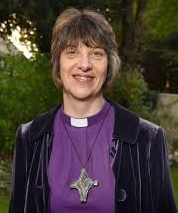
On Thursday there were three Asylum: Sleeping Rough questions raised by the Bishop of Chelmsford who is Guli Francis-Dehqani and the three questions were responded by Andrew Sharpe from the Government. So here are the three questions and the one answer. They are obtained from here. One of the opportunities that we can contribute is there is an option for “Does this answer the above question?” and so far there have been no Yes or No options.

Guli Francis-Dehqani: To ask His Majesty’s Government:

following the publication of their rough sleeping statistics on 29 February which showed a 965.91 per cent increase from July to December 2023 in people sleeping rough after leaving asylum support over the previous 85 days, what consideration they have given to extending the move-on period from 28 days to 56 days for refugees leaving asylum support; and what assessment they have made of the impact this extension would have on homelessness.

what assessment they have made of the benefits of staggering evictions of refugees from Home Office accommodation, particularly where the person is working with their local authority or a third sector organisation, to prevent their homelessness.

what plans they have to work with the third sector to jointly create a comprehensive and properly funded transition process for people whose asylum support is due to end, to enable information and support around housing and benefits to be given as far in advance as possible.

Andrew Sharpe: The Second Permanent Secretary and I recently met with the Bishop of London to discuss the Government support available to newly recognised refugees moving on from asylum accommodation.

Following the service of an asylum decision, an individual continues to be an asylum seeker for the purpose of asylum support until the end of the relevant prescribed period set out in legislation. This period is 28 calendar days from when an individual is notified of a decision to accept their asylum claim and grant them leave and we have no plans to extend this period. Whilst our legislative power is clear, we do in practice already extend support beyond this. Our current process means that individuals can remain on asylum support for at least 28 days after they have been issued a Biometric Residence Permit (BRP), which means that individuals have longer than 28 days to make arrangements to move on before their asylum support ends. It is important that individuals initiate plans to move on from asylum support as soon as they are served their asylum decision in order to maximise the time they have to make move on arrangements.

We offer move on support to all individuals through Migrant Help or their partner organisation.  This includes providing advice on accessing the labour market, on applying for Universal Credit and signposting to local authorities for assistance with housing.  Individuals do not need to wait for their BRP to make a claim for benefits and are encouraged to do so as early as possible if they require them.

We continue to identify and make efficiencies in supporting newly recognised refugees during the move on period and to mitigate the risk of homelessness. We are fully committed to working with partners in doing this. We have already worked closely with the Department for Levelling Up, Housing and Communities (DLUHC) to ensure the right asylum decision data is being shared with local authorities to enable effective planning and to lessen the impact on existing homelessness and rough sleeping pressures.  We are also utilising Home Office Liaison Officers to replicate part of the Afghan resettlement move on process. We have been working in three local authority areas since December 2023; Glasgow, Brent and Hillingdon. This has now been expanded to Manchester and Liverpool.

Posted in Church Teaching, Parliament and Democracy | Tagged , | Leave a comment

The Victims and Prisoners Bill is assisted by a Bishop


On Monday 25th March there was a session on the House of Lords for the “Amendment 172 Victims and Prisoners Bill” and the person who spoke the most was the Bishop of Gloucester who is Rachel Treweek. All of her comments are published below and the comments from the four other members of the House of Lords can be found on the full item which is available here. Her first comment is the opening of the session:

The Lord Bishop of Gloucester: Moved by The Lord Bishop of Gloucester 172: After Clause 56, insert the following new Clause—“Data collection in relation to children of prisonersThe Secretary of State must collect and publish annual data identifying—(a) how many prisoners are the primary carers of a child,(b) how many children have a primary carer who is a prisoner, and(c) the ages of those children.”

After that she then comments

My Lords, the noble Lord, Lord Farmer, tabled this amendment, to which I am very pleased to add my name in support and to move it today in this final stage of Committee on the Bill. In his absence, I take this opportunity to pay tribute to the noble Lord for his commitment to the families of prisoners. This is also an issue which I know my right reverend friend the Archbishop of Canterbury cares deeply about, as well.

This amendment was selected for Report stage in the other place but not discussed. Introduced by Harriet Harman, it is an important progress chaser to the Government’s response to the 2019 report from the Joint Committee on Human Rights, which she then chaired. This proposed new clause would require the Secretary of State to collect and publish annual data, identifying how many prisoners are primary carers of a child or children, how many children have a primary carer in prison, and the ages of those children. Its inclusion would be highly appropriate for this Bill, which focuses on both victims and prisoners.

When a parent is committed to custody, their child should not also receive a sentence; they should not be punished or overlooked as a result of their parent’s crime. When a primary carer, or indeed any parent, is removed from the home, children and other family members are deprived of a provider of care and income. Often a shadow world of shame and stigma begins, which can haunt them throughout life and put them at risk of getting caught up in the criminal justice system themselves. If we are to prevent offending and anti-social behaviour then we need to be serious about looking upstream to support those at risk. This includes children with a parent in prison.

Charities working with prisoners’ families, such as Children Heard and Seen and the Prison Advice and Care Trust, have repeatedly highlighted the gap in our understanding of the scale of parental imprisonment. I commend to noble Lords two short films released by both those charities that show the heartbreaking realities of this issue and the impact on a child when their parent is sent to prison. It also shows the remarkable work done by both charities alongside families.

The 2019 Joint Committee report highlighted the

“complete lack of reliable quantitative data on the number of mothers in prison” and

“the number of children whose mothers are in prison”.

It argued that

“without improved data collection, collation and publication” it is both

“impossible to fully understand the scale and nature of this issue and to properly address it”.

It continued:

“Mandatory data collection and publication must be urgently prioritised by the Ministry of Justice”.

A few months before that was published, Crest Advisory’s report on the children of prisoners found that

“during a parent’s journey through the criminal justice system there are numerous points which children of prisoners could be identified—on arrest, at sentencing, on entry to prison, and under probation supervision. But at the moment, at no point does the system ask: ‘If this is a parent in custody, where is their child?’”

The point of doing this would be to ensure the welfare of the children and to establish whether help is needed for the family or friends now caring for them. As that report said:

“Instead it is left up to the offender or the parent left behind to seek help—something which we know is problematic because of stigma and fear about children being taken into care”.

That is echoed again and again by the charity Children Heard and Seen, which does such fantastic work with children with a parent in prison, including a ground-breaking initiative across the Thames Valley region.

Rightly, the Government broadened their response to the Joint Committee to all primary carers, not just mothers. Many men are also in this position—albeit with a very different proportion of the male prison population compared with the female estate. Again, we are hampered by the lack of reliable data. However, the Farmer review on women in the criminal justice system, the Ministry of Justice, His Majesty’s Inspectorate of Prisons and many others highlight that relatively more women than men report being parents and, likely, primary carers.

The Government’s position in 2019 was that their aim was to establish more accurate metrics to measure the number of prisoners with primary carer responsibilities. However, they also acknowledged that gathering information about dependent children is a sensitive matter and committed to exploring the most accurate way to collect and then collate and publish that data,

“provided an accurate method can be found to estimate it, and provided it can be done in a way that protects the rights of vulnerable individuals”.

Given the significant body of evidence showing that the children of prisoners are at risk of markedly worse outcomes in areas such as mental health, underachievement at school and becoming offenders themselves, we should, at the very least, know how many children there are and their age and stage of childhood. The amendment is limited to quantitative data collection, given the inherent problems of collecting identifiers in such a delicate and sensitive area and given that a key aim at this stage is to progress-chase the Government on behalf of these particularly neglected children. I beg to move.

Four other people do contribute and then Rachel assists at the end of the session with

I thank the Minister and all other noble Lords who have spoken. I am interested in his answer, because in one way he is saying, “Yes, we need this and recognise this”, but in another is saying “But we do not actually need this amendment”. I look forward to hearing more on that. As has been pointed out, the basic custody screening tool is very basic, and many parents do not want to declare on entry to prison that they have children. I will be watching with interest the BOLD programme and what comes out of that.

It is really important that the progress the Government are making in this area is now put on public record. It is nearly five years since the Joint Committee published its report. Also, I stress that it has been important to touch on family relationships and prisoners having those family relationships, but I do not want to lose sight of the fact that this is about the child. Not all children want to have contact with the parent who is in prison. So we need to be looking through the eyes of the child here.

As has been said, when children are given support, through charities such as Children Heard and Seen, we know that the results are remarkable. If, as the noble Lord says, education and other people are going to have this data, we need the data in the first place. That is where we need to start.

Many remain very concerned about these children who are invisible and that we are not able to support them, but I will not delay the Committee any longer now. I will take the comments back to the noble Lord, Lord Farmer; we will discuss it together and look at how to proceed on Report. Given all that, I beg leave to withdraw the amendment.

Amendment 172 withdrawn.

Clauses 57 to 59 agreed.

Clause 60: Extent

Amendment 173 not moved.

Clause 60 agreed.

Clause 61: Commencement

Amendments 174 and 175 not moved.

Clause 61 agreed.

Clause 62 agreed.

House resumed.

Bill reported with an amendment.

Posted in Church Teaching, Parliament and Democracy | Tagged | Leave a comment

The Scottish Parliament Green person opened FareShare


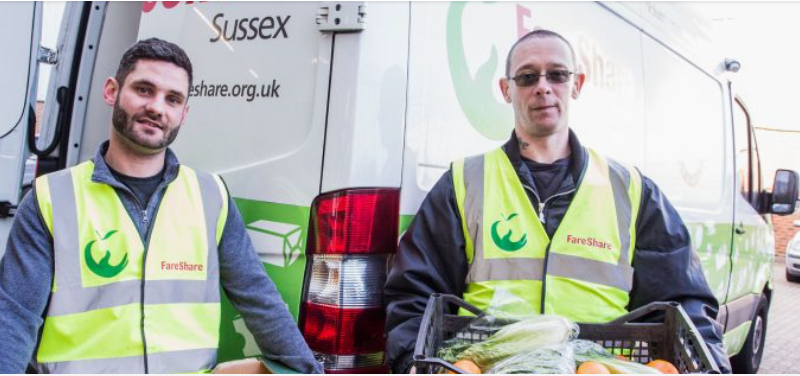
Last week on Wednesday 27th March the Scottish Parliament was still open and they held a discussion of “Food Waste Reduction Target”. It was opened by Annie Wells who is a Conservative MSP in Glasgow and she began with “To ask the Scottish Government whether it will provide an update on any progress towards meeting its target of reducing food waste by 33 per cent by 2025.” The person who responded to her was Lorna Slater who is a Green MSP in Edinburgh and she also commented to all other MSPs for the event. The final question came from Foysol Choudhury the MSP Labour person for Lothian which is near Edinburgh and when Lorna responded she introduced FareShare. The whole session can be obtained from here and here is the response from Lorna to Annie’s first comment and then the question from Foysol and the response from Lorna.

Lorna: Scotland is not on track to meet its target, due to an increase in food waste levels, which has been observed across the United Kingdom. To accelerate progress towards our 50 per cent reduction target in 2030, the Scottish Government has committed to resetting its approach. As proposed in the Circular Economy (Scotland) Bill, our refreshed approach will include the mandatory public reporting of waste and surplus by businesses. We also have ambitions to target household food waste, and we aim to deliver a behaviour change intervention plan to enhance support for householders and enable them to take action.

Foysol: Last year, I visited Empty Kitchens Full Hearts in Edinburgh, which is an organisation that creates meals for vulnerable people using surplus food. Surplus food sharing can help to fight food poverty and reduce food waste. Will the minister outline how the Scottish Government is encouraging businesses to join the surplus food scheme?

Lorna: The member is absolutely right. I know that he volunteers and is very active in this area. During a cost of living crisis, waste food costs a four-person family around £1,000 a year. For people who are unable to access food, organisations such as FareShare, which share out surplus food, are vital. Since 2021, the Scottish Government has provided around £1.4 million of funding to FareShare, and we are delighted with the work that it does.

Posted in Parliament and Democracy | Tagged , , , | Leave a comment

The Bishop of Leeds contributed on Israel and Gaza


Last Tuesday on 26th March there was a session in the House of Lords in the afternoon that focused on the Israel and Gaza subject and it was organised by a Government Minister who is Tariq Ahmad. A number of members of the House of Lords contributed and one of them was the Bishop of Leeds who is Nick Baines. The various items can be obtained from the session here and below is the question from Nick and his response from Tariq.

Nick Baines: My Lords, given that UN resolutions are not always seen through, as it were, or observed, is the Minister optimistic that this resolution will have the impact we want it to have? What impact will it have on countries like Russia, China and Iran continuing to supply weapons?

Tariq Ahmad: This is an important first step in the diplomacy. There has been an incredible challenge at the United Nations Security Council in getting an agreed form of words. There was a resolution about a week ago which was rejected and vetoed by Russia and China. In front of us now is an important first step in recognising that the release of hostages is necessary for a peaceful resolution. It is an important first step to ensure a ceasefire for the period of Ramadan, leading to a sustainable ceasefire and to getting aid in. If we start building on those first steps, I am hopeful. I have immense hope—one thing I have learned in life is that one should never give up hope.

Posted in Church Teaching, Parliament and Democracy | Tagged , , , | Leave a comment

National Networks National Policy Statement


At the end of Parliament before their Easter break, there was a session organised by Guy Opperman from the Government and the first few words were “Relevant document: Ninth Report of the Transport Committee of Session 2022-23, National Networks National Policy Statement, HC 903, and the Government response, Session 2023-24.” and he then below are his first few words. A few MPs also contributed in the discussion and one of the final MPs is Caroline Lucas, the Green MP who represents Brighton Pavilion. So the significant item from Caroline is below and a response from Guy Opperman. So here is his first few words

I beg to move, That this House approves the National Policy Statement for National Networks, which was laid before this House on 6 March. It is me again—it is déjà vu all over again. I will be brief in my opening speech. I stand here today as the Minister in the Department for Transport who is responsible for infrastructure planning and delivery, although some of my colleagues handle some of the other key development consent orders in that respect.

And towards the end of the session here is the initial comment from Caroline and the response from Guy Opperman and the other items can be seen here

Caroline Lucas: Once again, the Government seem to be dodging scrutiny. This national policy statement for national networks has significant implications for the delivery of our climate and environment targets, yet rather than giving MPs the opportunity to properly debate it, this Government have, it feels to me at least, rather cynically left the approval of it to the very last minute before the Easter recess, when many colleagues have already returned to their constituencies. There are barely 10 people here in the Chamber this afternoon.

There are many concerns, in my view, about this particular statement, but I wish to focus in my brief intervention on the climate and nature consequences. As the Minister is well aware, when the review of the NPS was announced in July 2021, it was explained by the then Secretary of State on the basis that the 2014 NPS predated the UK’s commitment to net zero by 2050, the sixth carbon budget and the transport decarbonisation plan.

Aligning the NPS with our climate targets is, of course, absolutely essential, not least because about 10% of the UK’s CO2 emissions come from driving on the strategic road network and, according to the National Audit Office, transport-related emissions between 1990 and 2022 were reduced by just 11%—the lowest of any sector. There is a real problem here and, frankly, this policy statement fundamentally fails to rise to the occasion and to the challenge that that poses.

In its 2023 progress report to Parliament, the Committee on Climate Change recommended what it called

“a systematic review of all current and proposed road schemes”, with only those that

“meaningfully support cost-effective delivery of Net Zero and climate adaptation” to be taken forward. Perhaps the Minister can explain to me why his Department has refused to undertake any assessment, and why the NPS essentially reverts to the current pre-net zero carbon test. In the absence of such a review, can he explain how he plans to close the gaping delivery gap when it comes to cutting transport emissions?

Just last week, the Green Alliance think-tank published the latest update of its net zero policy tracker, which revealed that transport accounts for 70%—yes, 70%—of the overall policy gap for delivering the fifth carbon budget, so this is a huge issue, with 37% of the required emission cuts having absolutely no policy set out for them. Crucially, Green Alliance suggests that measures such as reviewing road building and redirecting funding into public transport would help to close the policy gap, so why is it not in this plan?

Rather than making our constituents ever more dependent on private cars, this NPS should have set out the need for bold rail and urban transport upgrades. It should have been about levelling up public transport outside London and improving cross-country rail. The first priority of the transport decarbonisation plan is modal shift, yet the NPS has no target for that. In fact, seven of the eight Department for Transport scenarios on which it is based assume exactly the wrong kind of modal shift—in other words, a shift to cars. Will the Minister explain why the statement does not reference the 2030 target for 50% of urban journeys to be made by active travel?

Looking at our environmental targets, it is profoundly disappointing that the NPS fails to set out the implications of the new Environment Act 2021 targets at the strategic or scheme level. It is just not good enough to simply have due regard to some of the targets.

Not only is this NPS unclear—as observed by Professor Stephen Glaister, former chair of the Office of Rail and Road and director of the RAC Foundation, who told MPs that

“I do not see clarity in that draft myself” but it fundamentally fails to set out a new direction of travel to ensure the delivery of our climate and environmental targets. In the age of climate crisis, we need more than passing references to net zero and muddled attempts to justify the roads programme. We need urgent and bold action to decarbonise the transport system. This statement clearly does not provide that.

Guy Opperman: I will try to address some of the points that have been raised.

The shadow Minister, Bill Esterson, mentioned freight. He will be aware that we published the future freight strategy, which is a long-term plan, in June 2022. It was developed with industry and sets out a cross-modal approach to achieve the long-term vision of a freight and logistics sector that is economically efficient, reliant, resilient, environmentally sustainable and valued by society. I am the co-chair of the Freight Council, alongside Isabel Dedring, who is an independent industry representative. The “Generation Logistics” campaign, which we hosted in the House of Commons, and the work that the Road Haulage Association and others are doing to drive forward true change in freight should genuinely be admired.

Turning to the points raised by the Chair of the Transport Committee, my hon. Friend Iain Stewart, I take his two out of three cheers as being damned by faint praise. However, at the same time, no one is pretending that the statement is perfect. It is a work in progress—we all understand that. The document runs to over 100 pages and has been available for public consultation and oral hearings, and the Transport Committee has done an assessment of it, to which the Government have responded, so with respect, it is a substantial approach to this particular issue. I endorse the comments that he made about the future plans.

Matt Rodda, whom I will insult by calling a friend of mine, raised a number of points, and I will ensure that the Rail Minister responds to him. On the electrification of vehicles, I push back gently. One has to be aware that the network of publicly available charge points is rapidly increasing, with almost 57,000 installed—a 47% increase since March 2023. Clearly, more can be done—no one would dispute that—and I echo and share his desire. He makes the fair point that we need more charging points, and I take that on board. As for the Great Western delays, the Rail Minister will respond on that.

The hon. Member for Reading East and others raised the state of the roads. The allegation was made that there is no vision either to support local authorities or to address that, and that there is no long-term levelling-up plan for the north. With respect, the Prime Minister’s decision on HS2 has done a number of key things. The first, obviously, is that £8.3 billion has gone out to local authorities up and down the country, responding to the HS2 profile over 11 years. On average, that is a 30% increase in funding over the past year for every local authority—genuinely game-changing amounts of money—and the long-term funding pattern allows local authorities to invest in the future. That is something that every local authority says it wants more of.

Turning to the aspiration to support the north, one of the key decisions was to ensure that almost all of the HS2 money was spent in the north and/or the midlands as the areas affected by HS2. That is why the money is going into Network North and into the local transport fund that was announced, which has seen hundreds of millions of pounds going out to lots of different local authorities. Some local authorities have seen their transport budget increased by nine times.

The types of announcements that the Government have made also outline their direction of travel in relation to this issue. With respect, I will outline five things that the Government have done in the past 10 days alone. I was proud to announce the safer roads fund, which is spending a further £35 million in multiple locations across the country to try to enhance their road safety. Last Friday, the Secretary of State announced the ZEBRA scheme—for those who do not know, that is the zero-emission bus regional areas. There are dozens of locations up and down the country with hundreds of zero-emission buses funded and supported by this Government.

On Saturday, I announced active travel fund 4, which is worth £101 million, and saw some of the schemes that are being put in place in Darlington with the excellent Mayor, Ben Houchen, and my hon. Friend Peter Gibson. I have also been with my hon. Friend Tracey Crouch to see the £1.2 million that is going into the Medway active travel scheme. Clearly, the Automated Vehicles Bill is something that this Government have also championed.

Posted in Brighton & Hove, Parliament and Democracy | Tagged , | Leave a comment

Debate wrapped up in time for Easter break


Parliament is closed for two weeks and some of us wish an election would occur in May but there is no information about an voting listed for debate this week on the Government website. Many Sussex MPs however contributed to several other debates just before Parliament closed.

Last Tuesday the theme of RNLI (Royal National Lifeboat Institution) Bicentenary was raised and one of the speakers was Therese Coffey, MP for Suffolk Coastal, who said

To date, I do not believe that there has been any other similar peacetime operation, although there may potentially be situations currently off the Sussex and Kent coast. It is right that we recognise the contribution of all these people in Hansard once more. Lives could have been lost.

On the same day the government minister Lee Rowley spoke on a Building Safety discussion involving Peter Bottomley. One of the themes that Lee referred to was

On enforcement, I gently say that it is absolutely incorrect to talk about reactive, piecemeal announcements. If we go down the list of what is being announced in the league table today, we can see clear evidence of progress being made all across the country: London Fire Brigade, 94 statutory enforcement notices; Greater Manchester, 32; East Sussex, 26; West Yorkshire, 14; and Hampshire and the Isle of Wight, 11. I could go on and on and on.

On Monday 25th March Parliament held a voting session for the “Investigatory Powers (Amendment) Bill” a bill for public authorities in the UK which ended with the third reading but before that took place there were requests for three changes that were supplied by the House of Lords. The Government rejected the changes made in the House of Lords but they then endorsed the reading of the Bill. The Sussex Conservative MPs endorsed the third and final reading apart from Nick Gibb of Bognor Regis and Littlehampton who did not vote at all. Two of the amendments were supported by Labour and the Liberal Democrats but they ignored the Low or no reasonable expectation of privacy and the third reading of the Bill. The SNP endorsed all of the three changes in the House of Lords but they voted against the third reading. Lloyd Russell-Moyle supported his two Labour colleagues but Caroline Lucas and Peter Kyle both did not vote for any of the amendments.

The previous working day, Friday 22nd March, included contributions from Sussex MPs. One of the themes that had previously been arranged for that day was from Lloyd Russell-Moyle for his Bill “Conversion Practices (Prohibition) Bill”. This began on the 1st March and at the end of that session it was proposed for discussion on 15th March and was then shifted to the 22nd March. However, information published on that day stated “Hon. Members: Object. Debate to be resumed on Friday 17th May.” I will be interested to see if that Private Member’s Bill actually takes place in seven weeks. 

On the 22nd March a debate entitled “Hunting Trophies (Import Prohibition) Bill” that has been created by John Spellar, the Labour MP for Warley in Birmingham. The Bill makes provision prohibiting the import of hunting trophies into Great Britain. It had two sponsors, Henry Smith from Crawley and Janet Fookes, a Conservative of the House of Lords. Forty-nine MPs endorsed Johns Bill with no oppositions. Interestingly the support for John Spellar from 26 Conservatives included Mims Davies, Henry Smith and Maria Caulfield from Sussex and also 20 Labour MPs 1 SNP and 2 Independent MPs, one of which was Jeremy Corbyn the previous leader of the Labour party. John Spellar initially began his comment with

I beg to move, That the Bill be now read a Second time. Often in debates that have had a long genesis and been considered many times in the House, there is that hackneyed phrase: everything that needs to be said has been said, but not everyone has said it. One cannot even use that phrase now, because everyone has said what they need to say many times over. Of course, that is not true in this case, not least because of the Bill tabled and pioneered very ably by Henry Smith in the last Session of Parliament.

Sussex MP, Tim Loughton spoke although he did not vote. His first words were

I agree with everything that the right hon. Gentleman has said, as well as paying tribute to my Sussex colleague, my hon. Friend Henry Smith, for having persevered with this issue for so long.

Surprisingly Tim did not vote for the item. Henry Smith spoke four times with his initial comments

“It is a great privilege to follow John Spellar. I pay tribute to him, and to many other Members from across this House who have worked so hard, not only in supporting my Bill when it was before the House last year, but in campaigning to end the importation of hunting trophies—the body parts of endangered species —to this country. It has been a fantastic effort. As we have heard, the Bill enjoys the support of well over four fifths of the British public. Indeed, there was a commitment to do what the Bill proposes in a manifesto on which I stood for election four and a half years ago, and I understand that that commitment has been reflected in the manifestos of many other parties represented in this House.”

Posted in Brighton & Hove, Parliament and Democracy | Tagged , , , , , , , , | Leave a comment

I call for Happy Easter from a few people in Parliament


On Tuesday at the end of the Parliament there was a session of the RNLI Bicentenary and one of the people who contributed was Chris Stephens who is the SNP MP for Glasgow South West and when he began to speak about the RNLI item he stated “It is always good to have some of these debates before recess. I wish all hon. Members, Clerks and everyone else a very good Easter when it comes.” so a few comments after Chris there was a statement from Bill Esterson who is the Labour MP from Sefton Central and he begins with “a happy Easter to everybody” and both of them can be seen here. A previous day on Monday in House of Lords in the session for Christians: Persecution which can be obtained from here when Arlene Foster from Northern Ireland DUP stated “As we come to celebrate Easter in the Christian calendar and all the events that took place in Jerusalem in that Holy Week” and then David Alton from Liberal Democrat stated “The noble Baroness reminded us that this is a great week for Christianity, with Easter” and Maeve Sherlock who is Labour who stated “I should declare as an interest that I am an ordained minister in the established Church of England. When I go freely to church on Easter morning to celebrate the resurrection, it will be an occasion of great joy”

Posted in Church Teaching, Parliament and Democracy | Tagged , , , , , | Leave a comment

Steve Bassam contributed in Regional Arts Facilities


On Wednesday this week in House of Lords just before the Easter break there was a discussion of Regional Arts Facilities which was opened by Nicholas Trench who is the 9th Earl of Clancarty. He opened the discussion with the comment “To ask His Majesty’s Government what steps they are taking to protect regional arts organisations and facilities funded by local authorities, particularly where those local authorities are facing financial difficulties.” and the Minister who responded to Nicholas and the other members was Steve Parkinson. At the end of the session the final question came from Steve Bassam so here below is the response from Steve Parkinson following the first question from Nicholas and then here is the question and response from Steve Bassam and the whole of the session is available from here.

Steve Parkinson: My Lords, we recognise that local authorities face challenges. That is why we have announced an additional £600 million to bolster our existing support, alongside our £64 billion local government finance settlement. We have also made permanent the increases to cultural tax reliefs and provided support for energy bills over the past two years. DCMS continues to advocate for and help local decision-makers understand the full value of culture, including through our culture and heritage capital programme.

Steve Bassam: My Lords, I know the Minister supports Labour’s view of a positive approach to the arts and to culture. The UK originates blockbuster films; it is one of only three net exporters of music; we are the second-largest advertising supporter and the largest book exporter; and the cultural sector, as the Minister well knows, supports 2.5 million jobs and is worth £125 billion. Yet, in 2021, the Government said that arts subjects were not a strategic priority. Given that culture is one of our most dynamic and growing sectors, is this still official Government policy? If it is, will the Minister commit to reviewing and reversing this damaging and neglectful approach to our arts and cultural industries?

Steve Parkinson: The noble Lord is absolutely right to point to the importance of arts and culture to our economy, as well as our society. It is one of the Chancellor’s five priority areas for the economy, and that was reflected in the Budget through the tax reliefs and through the direct investment that was made. He is also right to talk about the importance of cultural education, so that we can unleash the talents of everybody and make sure that future generations have the ability to join, enjoy and pursue a lifetime in arts and culture. That is why I am delighted that the noble Baroness, Lady Bull, is helping lead the advisory panel to inform our new cultural education plan, working jointly with DCMS and the Department for Education.

Posted in Uncategorized | Leave a comment