Ask Government to support Christians around the world.


On Monday in the House of Lords a lady called Arlene Foster who is a member of DUP and from Northern Ireland opened up a session entitled Christians: Persecution and her first few words are “To ask His Majesty’s Government what steps they are taking to support persecuted Christians around the world. My Lords, I thank all those who have put down their names to speak tonight on this important but unfortunately largely ignored issue of the global persecution of Christians. I also thank the Minister for being here to respond.” and after her full comments there were a couple of other peoples who spoked before Steven Croft, the Bishop of Oxford spoke and so here is his comment. The whole of the text can be seen from here.

My Lords, I too add my congratulations and appreciation to the noble Baroness, Lady Foster, on securing this important debate and her comprehensive and moving survey and speech. It is a pleasure to follow the noble and right reverend Lord, Lord Carey, and I pay tribute to his considerable expertise in this area over many years. I am grateful to my colleague, the right reverend Prelate the Bishop of Winchester, formerly the Bishop of Truro, for a briefing in advance of this debate. He is not able to be present, but I know he will follow deliberations closely.

As the noble Baroness, Lady Foster, set out so eloquently, the beginning of Holy Week is a fitting time to remember the persecution of Christians across the world and the costs of faith. This persecution has been evident since the very beginning of the Church. Even so, it is extremely sobering and moving to reflect that, according to Open Doors, 365 million Christians face some sort of persecution worldwide—about one in seven of the global Christian population. I also note with other noble Lords the disproportionate consequences and costs for women and girls.

We pay tribute today to the courage and perseverance of persecuted Christians, and, in turn, appreciate the freedom of belief which is a feature of our own democracy. As the historian Tom Holland argued recently in his powerful book, Dominion, many of the core values of our society can be traced directly to our Christian heritage and need to be sustained by that Christian heritage now.

However, this debate has a broader significance, because freedom of religion or belief, and violations against anyone, can be important indicators of the state of human rights in any context globally. As the former UN special rapporteur on freedom of religion or belief, Heiner Bielefeldt, said:

“Freedom of religion or belief rightly has been termed a ‘gateway’ to other freedoms, including freedom of expression and freedom of peaceful assembly and association”.

An approach that guarantees freedom of religion or belief for all, as advocated by the Truro review, is the best way of addressing Christian persecution for two important reasons. First, singling out Christians inevitably others them, increasing their vulnerability. It is also antithetical to the Christian faith itself to favour Christians over other faiths. Christianity puts no limit on its definitions of who is our neighbour, so it is wrong to argue theologically for special treatment of persecuted Christians. Secondly, it is also impossible to support persecuted Christians without supporting the freedom of religion or belief of all persons. Freedom of religion or belief is intertwined with other human rights and a matter of legally binding international human rights obligations.

We need to note and acknowledge in this debate that we have seen a regrettable increase in Islamophobia and anti-Semitism in the United Kingdom since the terrible 7 October attacks and the devastating conflict in Gaza. The work of faith leaders building bridges, strong relationships and understanding locally has been a vital part of the local response to events in Israel and Gaza in my own city and county and across the country. Religious freedom and tolerance need to be nurtured and guarded nationally and locally. It is as important to do that in our own country as it is across the world; the two go together,

The Library briefing provides some estimates on the numbers of Christians persecuted globally. Estimating persecution is problematic and contentious for obvious reasons. A comment made by the former UN special rapporteur Asma Jahangir on all FoRB statistics is very helpful:

“When I am asked which community is persecuted most, I always reply ‘human beings’”.

Our responsibility is always to stand up for the world’s most vulnerable people, wherever they may be found. Freedom of religion or belief is a foundation of human rights.

The Truro review argued that freedom of religion or belief should be “central” in FCDO policy. However, religious literacy in policy and diplomacy remains a significant challenge, even though only religiously literate responses will be effective in addressing some of the world’s most serious instances of persecution in countries such as Nigeria, India, Iran, Russia and China. What steps is the FCDO taking to build religious literacy across its work?

Fiona Bruce is sponsoring a Private Member’s Bill in the other place, the International Freedom of Religion or Belief Bill, which would establish an office of the special envoy and require the Prime Minister by law to appoint someone to the role. I very much hope that this House will play its part in supporting the Private Member’s Bill to establish the special envoy post in law when my right reverend friend the Bishop of Winchester brings it to the House in due course.

Finally, I invite both the Minister and the Opposition to tell this House what future strategies they intend to have in place to continue or enhance the role of the Special Envoy on Freedom of Religion or Belief and the support for persecuted Christians globally.
Posted in Church Teaching, Parliament and Democracy | Tagged , | Leave a comment

Steve Bassam contributed Human Rights: Sportswashing


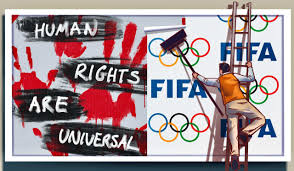
Last Thursday there was a session in the House of Lords that was entitled Human Rights: Sportswashing and the initial few words for it was “That this House takes note of countries that use sporting events to “sportswash” their human rights record, and the role of sporting bodies in aiding this practice.” introduced by Paul Scriven who opened up the session and several other people took part including Steve Bassam who is based in Brighton and Hove and he contributed in this location and these are his words.

My Lords, the noble Lord, Lord Scriven, is to be heartily congratulated this afternoon on bringing forward this topic for debate. I am not sure what hotline he has to the heart of government, but his foresight in choosing this issue for this week—the week in which the Government plucked up the courage to publish their football regulation Bill—is to be admired. Like me, he sees the opportunity with the football regulation Bill to make a stand on sportswashing—the noble Lord, Lord Addington, has advertised the point well—and to try to set a high bar, not just nationally but internationally.

This afternoon’s debate has been fascinating, with a broad range of views, from the noble Lord, Lord Scriven, through to the noble Lord, Lord Moynihan, with his nuanced take on how best to tackle sportswashing and achieve change and improvements in human rights. The noble Baroness, Lady Grey-Thompson, largely echoed his take on how we make more inclusive international events such as the Olympics and the Paralympics. I personally found her take on politics in sport not just realistic but insightful and fascinating. I was particularly drawn to, and enjoyed, the comments of the noble Lord, Lord Hayward; they were not just thoughtful and illuminating but very revealing too. I had not included any points in my comments about sponsorship, as noble Lords will hear, but that was a well-made argument, and one that we should reflect more on when we look at some of the issues associated with sportswashing in the future.

As pretty much all noble Lord have said, sportswashing is nothing new. As long as there have been international competitions between competing nations, an element of sportswashing has always been present. The fascist states of Italy and Germany made ruthless use of sporting events, notably football and the Olympics, to project themselves to the wider world. Of course, the 1936 Berlin Olympics was the most obvious and probably the largest example. I particularly enjoyed the fulsome and witty explanation of all of that from the noble Lord, Lord Thomas. In more recent decades, the practice has become more subtle—but arguably not that much more subtle.

What do we mean by the term “sportswashing”? The noble Lord, Lord Scriven, gave his definition and academics have tried to define the idea. Jonathan Grix perhaps nailed it when he wrote that it had become

“a short-hand way of criticising (usually) non-democratic regimes or large corporations for using investment in world-renowned athletes, sports clubs, and sports events to detract from illiberal, non-democratic, and/or exploitative practices in their home countries or businesses”.

As the House of Lord’s Library note says, the term has been applied to hosting large events such as the Olympics and Paralympics or the World Cup, setting up new facilities, sports infrastructure and domestic competitions, investment in teams and leagues internationally, usually through sovereign wealth funds, the sponsorship of teams or tournaments by state-associated bodies such as tourism departments and national airlines and, of course and in particular, engaging well-known international sportspeople in ambassadorial roles for new leagues and bodies.

Many commentators have observed that states getting involved in support, direct sponsorship and other forms of sports-related alignment provides endless opportunities for soft power and reputational enhancement. The opportunities for promoting a positive image of the states themselves and increasing their status and credibility are limitless. From Berlin in 1936 to Beijing in 2008, via the FIFA World Cup in Russia in 2018, the pattern is the same.

In recent years, more attention has, as we have heard, focused on the Gulf states. The noble Lord, Lord Scriven, made a good job of displaying exactly how Bahrain is operated, but also Saudi Arabia, the UAE, Kuwait, Qatar and Oman. The expansion of Formula 1 is an interesting case study in this regard. The Bahrain grand prix has been running for two decades and has been joined on the calendar by races in Abu Dhabi, Saudi Arabia and Qatar.

A BBC estimate suggests that Saudi Arabia has invested some £5 billion in sport since 2021. As well as F1, there have been major investments in events such as boxing, the LIV golf series, the ATP tennis championships and the America’s Cup regatta. In recent times, we have seen the takeover of Newcastle United, and the state’s interest in football seems more to be more widespread, with reports that the country is seeking the rights to the 2034 FIFA World Cup and, interestingly, the 2035 FIFA Women’s World Cup. In the case of the latter, it is worth noting that the growth of the women’s game in Saudi Arabia is both very recent and limited by international comparison.

Of course, elite sport can contribute to economic growth. Crown Prince Mohammed bin Salman argued in September last year:

“If sportswashing increases my GDP by 1% then I will continue doing sportswashing”.

It could not be more blatant than that. The Sports Minister of Saudi Arabia, Prince Abdulaziz bin Turki al Saud, explained to the BBC that accusations of sportswashing were “shallow”. On human rights, he said:

“Any country has room for improvement, no one’s perfect”.

He added that

“these events help us reform to a better future for everyone”.

There is little doubt that the Saudi states sees being a player across many different sports, in particular football, as a form of soft power. We in this Chamber often talk about the notion of soft power and the influence that UK institutions can wield through the BBC, the British Council and our aid budget, but these are by comparison benign interventions designed to promote liberal and democratic values. They are not designed primarily to advance solely economic interests or to provide cover for human rights abuses or unregulated workplace practices such as those reported widely during the construction of football stadia for the Qatar World Cup. In that context, yesterday’s report in the Guardian about emerging evidence of similar construction-related deaths in Saudi is very worrying indeed and I think should be reflected in action from FIFA as football’s governing body.

What should be the approach of government to states that use the power of sport to impact upon reputation, international standing, trade and much more? First, we should encourage greater transparency. For example, FIFA should be more open in its dealings with any nation seeking to host a future World Cup. This means that there can be no allegations of corruption surrounding the awarding process, and the adoption of a zero-tolerance approach towards human rights abuse claims. The bidding process should not be used to excuse poor human rights records. For example, if Saudi Arabia is to play host, the Saudi Sports Minister should be held to his words about events being a driver towards genuine and verifiable reform on human rights and much else.

Secondly, we must make it plain internationally that sport—and, in particular, football in this instance—is sport for all. Labour has long believed in sport for all. Our vision is of sports being not just of interest at elite levels but inclusive and participative, so that we can all play our part, and play a role—this, after all, was the motif for the London Olympics of 2012. As we have seen, for many countries, from Afghanistan to the Gulf states, this is an issue. So we should be using our version of soft power to influence Governments who seek to use their wealth to promote strategic investments in sport for less altruistic purposes.

A Labour Government would seek to use their influence to promote human rights and tackle abuses such as those experienced by construction workers in Qatar. Equally, we would wish that influence to stop the abuse of LGBT+ fans and the discrimination that women suffer. In football, we take the view that FIFA should put its house in order. Ahead of the 2034 World Cup, the next 10 years should be used constructively to tackle the issues that emerged during the Qatar event. FIFA should show some leadership and work with its partners to bring change.

In this context, the welcome publication—finally—of the Government’s Football Governance Bill could be used constructively to set a high bar in football regulation that shows what can be done to tackle a myriad of regulatory issues, starting with financial fair play and fairer competition. One important objective of the moves towards football regulation was to give fans a bigger say in the governance of football and put them very much at the heart of the game. We should look to extrapolate that example elsewhere, and use that power to change attitudes nationally and internationally.

I am looking forward to the Minister’s response to this highly significant and well-timed debate. Will the Minister use his time to say a little about how His Majesty’s Government see the regulation of our nation’s number one obsession, football, as a way forward to improve not just governance but other related matters in the culture of the game? Can he also set out the Government’s approach to ensuring higher standards around human rights, LGBT+ rights and workers’ rights in the context of future World Cup bids, and international sports events more generally? Perhaps he could be tempted to reference any discussions that he and other Ministers have had with FIFA and other international sporting bodies to ensure that there are far higher standards for countries bidding to host the World Cup and other similar international events.

This has been a valuable debate, and one that, as I think the noble Lord, Lord Addington, said, will probably prefigure similar debates during the passage of the football regulation Bill in the future. I have greatly enjoyed, and been fascinated by, the compelling, wide and varied contributions.

Posted in Brighton & Hove, Parliament and Democracy | Tagged | Leave a comment

Who is the honourable Member for Hove, for Science?


It was very interesting on Friday morning last week in the House of Lords on 22nd March that there was a discussion of the Artificial Intelligence (Regulation) Bill [HL] and one of the people who took part in the discussion was Fiona Twycross who is a Labour member of the Oxford area. During her significant comment she introduced the involvement of a Hove person so here is that item of her discussion. It would be very interesting to see who she is referring to. The location can be seen below or it can be found on here.

The honourable Member for Hove, the shadow Secretary of State for Science, Innovation and Technology, outlined Labour’s plans recently at techUK’s annual conference. He said:

“Businesses need fast, clear and consistent regulation … that … does not unnecessarily slow down innovation”— a point reflected in comments by the noble and learned Lord, Lord Thomas. We also need regulation that encourages risk taking and finding new ways of working. We need regulation that addresses the concerns and protects the privacy of the public.

As my noble friend Lord Chandos said, the UK also needs to address concerns about misinformation and disinformation, not least in instances where these are democratic threats. This point was also reflected by the noble Lords, Lord Vaizey and Lord Fairfax.

Posted in Brighton & Hove, Parliament and Democracy | Tagged | Leave a comment

“You can play with any toys that you want”


Today and tomorrow are the last two days when MPs can participate in matters of Government. Tuesday 26th of March is the final day until April 15th Our local MPs will be able to work in Sussex for some of this three and a half weeks period.

Today a meeting of the Public Accounts Committee which includes Jeremy Quin relating to “Value for Money from Legal Aid”. Tomorrow morning there is an Education Committee with Caroline Ansell about “Children’s social care”. In the afternoon there is the Liaison Committee (Commons) including “Work of the Prime Minister” with Jeremy. There is also the Defence Committee which includes Jeremy who is the Chair of that group. The group refers to “One-off session with the Secretary of State for Defence” 

Taking place today is a debate about “e-petition 206851 relating to a public inquiry into the James Bulger murder case” organised by George Howarth the Liverpool MP for Knowsley.  The petition explained “We want a Public Inquiry into the James Bulger murder case.” This was established from 11 January 2018 to 11 July 2018, achieving 213,624 signatures. It is clear that most of the signatures were created in the Liverpool area and indeed the most signatures? is from Knowsley whose group had just over 8,000 signatures. Here in Sussex the total signatures on all of our 16 areas were less than 2,900 for the whole of our region. The most significant locations are Crawley, Bognor Regis and Littlehampton and Eastbourne.

Last week in Parliament there was a e-petition introduced by the Conservative MP from South London, Elliot Colburn who organised the event with debate for two “e-petitions 630932 published by Fares Rahmani and 631529 published by Dan McCarthy relating to LGBT content in relationships education”. Of note one of the Sussex MPs made a contribution as previously none of the Sussex MPs have contributed to any petition items for many months. Lloyd Russell-Moyle from Brighton Kemptown spoke five times during the session with many other MPs endorsing his contributions. The debate relating to the petition focussed around education in particular the age children and young people at school engage with information about relationships.

I rise to support the second petition, but it is important that we recognise the concerns of those who signed the first petition. I hope those concerns can be allayed.

I think that children in lower primary school—infant school—generally should not be divided very much by sex at all. At that age, they should be taught, “Actually, you can be anything you want. You can play with any of the toys you want. You can do all of the sports activities that you want.” We should have almost no gender-specific activities or separation at that age, and I think that it is a great shame that we now see adverts for Lego that are gendered, whereas only 30 years ago they would have no gender attached to them. I think that we have gone backwards in many respects for infant and lower-primary-school age groups’ 

There were plans for Friday the 15th March intended to involve two Sussex MPs. One was the proposal of the Sally-Ann Hart document “Support for Infants and Parents etc (Information) Bill” although she did discuss the “Animal Welfare (Import of Dogs, Cats and Ferrets) Bill” organised by Selaine Saxby, the MP for North Devon, tragically Sally-Ann’s own item did not get included on that day and there has no indication of when it will take place. Previously an indication that the document from Lloyd Russell-Moyle which is “Conversion Practices (Prohibition) Bill” discussed on 1st March and planned to repeat it on 15th March was not included. It was promised for Friday 22nd March.

Last Monday, a discussion from most MPs in the House of Lords were responding to a proposed Bill three weeks ago on the theme of “Safety of Rwanda (Asylum and Immigration) Bill”. There were votes last Monday for the 10 discussions established by the House of Lords but which the Government rejected. However, there were attempts by most of the other MPs to support the Lord votes. In Sussex Caroline Lucas and Lloyd both voted to assist the Lords. Most of the other Sussex MPs voted for the Government to close down the Bill. Huw Merriman and Nusrat Ghani both ignored one of 10 items even though they are Government Ministers. Sadly, Peter Kyle from Hove did not vote at all. Only one of the Sussex MPs spoke in the session before the votes and that was Caroline Lucas and her final comment included these words

I sum up with a message that I hope that peers in the other place will consider. It is, of course, right and fundamental that the House of Lords should act in accordance with its subordinate position in relation to this elected House of Commons—that is the usual way in which we proceed. For the other place to override the Commons, the bar must be an extraordinary and profound attack on the very fabric and operation of our constitutional democracy. I regret to conclude that this Bill is just that and so the other place would be well within its rights—indeed, this is its responsibility—to uphold the amendments it has already put in place. This Bill is demeaning and degrades both Houses by ignoring the rule of laws that we have passed.

Posted in Brighton & Hove, Parliament and Democracy | Tagged , , , , , , , | Leave a comment

A Welsh Parliament states Brighton has a shingle beach


A few days ago in the Welsh Parliament there was a discussion entitled “Debate on petition P-06-1367, ‘Fund the removal of quarry rocks and the restoration of sand and groynes to Llandudno North Shore'” and one of the people who spoke was Julie James who is the Labour Senedd MS. She raised several comments but one of them included a focus on Brighton. Here is the location of the discussion that Julie stated about Brighton.

I have to say, the tourist point here is an interesting one. I’m very familiar with Llandudno. We go there every year, and have done for years. I’ve swam off the coast many times. I love a cold-water swim, and it’s very nice to do that there. I also went to university in Brighton, which famously has a shingle beach. It’s loved. I do think that just talking it down is not a good look. It’s a beautiful beach; the promenade is glorious. It is a lovely walk; it’s a nice place to swim. But the point here really is that this is a flood protection programme, and it’s important that we protect people from flooding with it. The amenity value is not something that a cost-effective flood defence programme can possibly be taking into account. You can have, of course—

Posted in Brighton & Hove, Parliament and Democracy | Tagged | Leave a comment

Gatwick area are delivering to the Brighton main line


On Thursday this week on 21st March 2024 there was a session in the Parliament being discussed by several MPs on the subject of Rail Services and the first MP was Elliot Colburn, from Carshalton and Wallington who started with “What steps he is taking to improve rail services.” and the Government Minister was Huw Merriman who is the MP for Bexhill and Battle in East Sussex. After his initial section to the first call from Elliot, that person then asked a second question and the comment from Huw was focused on “Upgrades made in the Gatwick area are already delivering significant improvements to the Brighton main line, and the industry continually reviews how best to respond to changes in demand.” So here are these items below and they can be observed from here.

Elliot: What steps he is taking to improve rail services.

Huw: Officials and I are focusing on improving rail services in the short and long term. This week, I brought together representatives from across the rail industry for a leaders in rail session to discuss how, collectively, we can make changes to deliver a better passenger experience. Longer term, we remain committed to bringing track and train back together under Great British Railways, and to continuing to build on the £100 billion of investment since 2010.

Elliot: Carshalton and Wallington is one of the poorer parts of London for connectivity. It was promised that the ultra low emission zone would bring additional public transport investment, but instead the 455 bus has been scrapped, the Go Sutton bus has been scrapped, the 410 bus service is being reduced, and the Superloop is just an existing bus route that has been rebranded. One thing that would improve connectivity is delivering on the Croydon area remodelling scheme that National Rail and Network Rail are working on to improve connectivity in London and the south-east. What discussions is the Department having with Network Rail about moving this project forward?

Huw: I thank my hon. Friend, who is an absolute champion of that project, and he makes his point clear. Upgrades made in the Gatwick area are already delivering significant improvements to the Brighton main line, and the industry continually reviews how best to respond to changes in demand. I understand that my hon. Friend has been in discussions with the operator on the options for increasing capacity on busy weekend services between Carshalton and London Victoria, and that Govia Thameslink Railway will shortly respond to him directly. I will continue to work with him on the enhancement project that he champions.

Posted in Brighton & Hove, Parliament and Democracy | Tagged , | Leave a comment

A Welsh member spoke about YMCA in Parliament


On Tuesday in the Welsh Parliament that is called Senedd set out a session entitled Business Statement and Announcement. One of the people who corresponded on it is the Labour member who is Hefin David who is from Caerphilly and he referred to the Aber Valley YMCA based in the South East area of Wales. Here is his document which can be seen here along with the other comments.

I would welcome an oral or a written update from the Minister for Climate Change with regard to the incoming changes to commercial recycling regulations. Now that the date of implementation of 6 April is rapidly approaching, charities, in particular, are contacting my office to ask what support—financial or otherwise—will be provided to help them adapt, including the cost of multiple new bins and creating the space to store recycling waste. Aber Valley YMCA in Abertridwr, for example, which is entirely a social enterprise, and Tŷ Hafan, who have a shop in Caerphilly, have both contacted me about this, and I visited both premises. Caerphilly County Borough Council have also expressed their concerns about the possibly inadvertent effects these changes may have on small businesses and volunteer-led organisations. Therefore, can I ask for that update on what support might be provided for those kinds of organisations? 

Posted in Parliament and Democracy | Tagged , | Leave a comment

Safety of Rwanda Bill – Commons Reasons from Bishops


On Wednesday in the House of Lords there were a range of Common Reasons for the Safety of Rwanda (Asylum and Immigration) Bill and there were seven votes which took place in the House of Lords. These seven items were approved by the Labour, Liberal Democrat, most of the Crossbench’s, the Green Party and the Plaid Cymru and one or more Conservatives. Nearly all of the Conservatives and the DUP and a few Crossbenches rejected all of these seven items but because the Conservatives are not bigger than the other groups the seven events were approved. It was fascinating that there were several Bishops who took part in support of these items, and indeed most of them approved for all of the seven items.

Three of the Bishops who are David Walker, Bishop of Manchester, John Inge, Bishop of Worcester and Guli Francis-Dehqani, Bishop of Chelmsford who each endorsed all seven of the items. The other Bishop is Paul Williams, the Bishop of Southwell and Nottingham who endorsed the first four items and he did not vote on the last three items. It is very significant that all of these four Bishops have endorsed these items and indeed many more other people.

Posted in Church Teaching, Parliament and Democracy | Leave a comment

A call that Hasting spends half its budget accommodation


Last week in the House of Lords on 14th March there was a session entitled Housing: Young People and several people corresponded on it. One of them was Rita Donaghy who is a Labour member. During her comment she explained after some time that

However, since 2010, councils have had a 60% cut in spending by central government. Government Ministers, as the noble Lord, Lord Young, has said, encourage councils to be more entrepreneurial and raise their own funds. In 2015, the Government abolished the Audit Commission, which kept a check on local government spending; this was an appalling act of irresponsibility.

This week’s New Statesman contains an article about the dire financial state of local government. It gave the example of Hastings in East Sussex as

“a borough full of Airbnbs and Londoners moving in and pushing up house prices”.

Hastings is spending nearly half its annual budget on temporary accommodation. The council leader has called for a Ukrainian refugee-style scheme to house local people in spare rooms.

The director of the Institute for Fiscal Studies has indicated that house price rises since rates were last set mean that the average property in the Westminster council area is taxed at 0.06% of its value, while a far cheaper property in Hartlepool is taxed at 1.3%. We all know that it would be a brave Government that did something about rateable values.

The whole of the discussion can be obtained from here.

Posted in Parliament and Democracy, Youth Issues | Tagged | Leave a comment

Minister says Kathleen Stock is distinguished academic.


On Thursday lunchtime Peter Bottomley from Worthing West took part in the Extremism Definition and Community Engagement event that Michael Gove had created and when Peter contributed he stated during his session that “More recently, when Kathleen Stock was at the University of Sussex” and Michael Gove responded with the comment that “I completely endorse the point he makes about Kathleen Stock, who is a distinguished academic.” and he also stated he was grateful of Peter who is “the Father of the House“. The session can be obtained from here and the text from these items is below.

Peter Bottomley: I am glad to follow both Front Benchers, who have given a lead to the House.

It is interesting to consider whether it would have been right 90 years ago to identify as a threat Oswald Mosley’s approach, as well as the people who marched through the streets to intimidate others. More recently, when Kathleen Stock was at the University of Sussex, the students’ union and many others called her a dangerous extremist for writing a rather good book and having views that are now mainstream.

Filling the gap between what is not necessarily criminal but should be identified as wrong is important, and I hope the whole House can give support to today’s proposals.

Michael Gove: I am very grateful to the Father of the House. There should, rightly, be a high bar on the use of criminal sanctions. We should always seek to encourage free speech, but he is quite right to draw attention to the freedom-restricting harassment that some people have engaged in. I completely endorse the point he makes about Kathleen Stock, who is a distinguished academic.

Posted in Brighton & Hove, Education, Parliament and Democracy | Tagged , , , | Leave a comment