Will the Government discuss the Avanti Trains?


Last week on 27th February there was a discussion that took place in the House of Lords which was entitled Avanti Trains that was initially set out by Peter Snape. Peter was the Labour MP from West Bromwich whose first few words were “To ask His Majesty’s Government when they next expect to meet Avanti Trains to discuss payments made to the company under the service quality regime.” and the response from that and most of the other people was from Byron Davies who initially responded with

Byron Davies: My Lords, officials regularly meet Avanti to discuss its performance against service quality regime targets and how it will make improvements for passengers and to the customer experience. To date, no payments have been made to Avanti under the service quality regime. The evaluation to determine the first service quality regime performance fee for April to October 2023 is currently under way.

Peter Snape: My Lords, does the Minister accept that, at a recent internal meeting at Avanti trains, various slides were produced for its management? I have some of them with me at the moment and I shall quote from them. Managers joked about receiving “free money” from the Government and performance-related payments being

“too good to be true”.

The presentation went on to say that the Department for Transport supports the firm and added:

“And here’s the fantastic thing!—if we achieve those figures”— that is, the Government’s punctuality figures—

“they pay us some more money—which is ours to keep—in the form of a performance-based fee!!”

Does the Minister accept that this is a situation where the Treasury takes the revenue, the passengers take the strain and the directors take a bonus for providing the worst train service in the UK? This is not a policy; it is lunacy.

Byron Davies: As I referred to in my opening response, no payments have been made to Avanti under the service quality regime thus far. The department considers the comments from the leak to be a very serious issue, and expects the highest standards of culture and leadership from Avanti’s operators and senior management. We are extremely disappointed by the tone expressed in the leaked presentation. Officials have met their counterparts at First Rail Holdings, Avanti’s parent company, and spoken to the managing director to convey the seriousness of this issue. The Rail Minister has also met the chief executive of FirstGroup.

The whole of the session can be obtained from here. After Peter had another comment and several other people did so, there was a session from the Bishop of Manchester who is David Walker and his response from Byron Davies

David Walker: My Lords, a number of times in this short session, we seem to have had it suggested that somehow the Avanti staff are to blame. I suffer along with the noble Lord, Lord Goddard, regularly on that Manchester Piccadilly to Euston route. The staff are wonderful; it is not the driver’s fault if they are eight minutes late, or the fault of the person bringing you a cup of tea if they are 40 minutes late. The problem does not lie with the Avanti staff, who are working under incredibly difficult conditions. Can the Minister join me in expressing support for those staff in the work that they are doing under very trying circumstances?

Byron Davies: I absolutely agree with the right reverend Prelate. I travel from Wales on the GWR system. Yesterday, we were an hour late arriving at Paddington. The staff are very good, and they keep us informed as to what the issues are. As I have said previously, the issues are not always the operators’ fault; they are very often to do with infrastructure.

Posted in Church Teaching, Parliament and Democracy | Tagged , , , , | Leave a comment

MPs set to debate new rules on whistleblowers


The plans for today and this week in Parliament only indicate one contribution from a Sussex MP which is happening this afternoon. The Public Accounts Committee which includes Jeremy Quin discussing the theme “Investigation into whistleblowing in the civil service”. The committee is responding to the National Audit Office (NAO) which published an article in February this year describing it as “This guide provides insights and good practice for people who deal with whistleblowers, investigate concerns or manage whistleblowing processes in the civil service.” They go on to state that “Whistleblowing is a vital organisational protection. It provides a way for organisations to hear concerns about serious wrongdoing that may not otherwise be discovered.”

Last week sadly no Sussex MP’s participated in the planned session about “Financial Risk Checks for Gambling” which was set out from the e-petition 649894 which is listed as “Stop the implementation of betting affordability/financial risk checks”

Reviewing items from earlier debates is worth a look at when the information becomes available. In the previous week beginning on 19th of February there was some interesting voting that took place. On the Monday there were three votes for the “Offshore Petroleum Licensing Bill” but what was odd was that all three votes covered “Clause 1 – Duty to invite applications for offshore licences”. The clause had 3 parts in its content. Part one was approved by the SNP and the Plaid Cymru and opposed by the Conservatives and the DUP.  There were no votes from the Labour, Liberal Democrats or indeed Caroline Lucas for the Green Party. Labour and the SNPs were in favour of the second part which was opposed by the Conservatives and DUP. The third part saw Conservatives and DUP vote in favour but it was rejected by all of the other Parties. Inevitably the Conservative group is large enough to be successful in its requests. In Sussex most of the Conservatives did vote along with the Government but Peter Bottomley and Tim Loughton did not vote for any of the parts of the clause. Interestingly Peter Kyle who did vote in favour of the second part of the clause but did not vote against the Government on the third part of the clause. Caroline Lucas and Lloyd Russell-Moyle both participated in the discussion about Offshore Petroleum with two statements from Lloyd and five from Caroline. The first call from Caroline was stated

“it might be useful to remind Conservative Members that, according to the UN production gap report, Governments are already planning for their existing developments to produce more than double the amount of fossil fuels in 2030 than is consistent with keeping global heating to 1.5°C or below?”. 

On the following day there were two other votes that took place, they were both very different. The first was entitled “Motor Vehicles (Driving Licences) (Reform)” This issue was raised by Therese Coffey a previous cabinet minister and Conservative MP for Suffolk with an aim of supporting local community transport groups in seeking appropriate drivers’ licences. People have had to pay £2000 or £3000 to do a course and pass a test in order to obtain a a licence which for not-for-profit organisations is a considerable amount of money. The Community Transport Association support the opportunity to bring about a Bill- to change the law on this issue including Bexhill Community Bus which stated “We are a small Community Bus operator, and we rely on persons with D1 on their licence. We are facing a future when Cat B drivers lose their automatic right to drive a mini bus and would face the expense of training all the new volunteer drivers’’. The Labour party did not appear to endorse the Motor Vehicle reform and in Sussex most of the Conservatives did not vote at all except Tim Loughton who voted in favour of reform and Peter Kyle who voted against. The Motor Vehicle reform vote was ignored by Caroline and Lloyd which across the whole of the UK saw 59 MP’s vote in favour and 79 voting in opposition.

The second vote of the day was the “Ceasefire in Gaza”, gaining only 9 Aye’s which were Conservatives and 210 No’s which were 175 Labour, 24 Conservatives, 3 DUPs and several Independent voters. The three Sussex MPs who voted against it were Caroline Lucas, Peter Kyle and Lloyd. Caroline also submitted a question on the next day, stated,

“exports to Israel of the press notice by Amnesty International entitled Israel/OPT: New evidence of unlawful Israeli attacks in Gaza causing mass civilian casualties amid real risk of genocide” The answer from Greg Hands began with “The Government continues to monitor closely the situation in Israel and Gaza.”

The Gaza ceasefire vote process caused significant challenge described widely across the news channels and here from the BBC; “Sir Lindsay Hoyle broke with convention to allow the vote during a debate, sparking fury from SNP and Conservative MPs. He said he allowed the vote  to protect MPs’ safety, but it saw the Commons descend into acrimony. Sir Lindsay later apologised, but still faces calls to resign.” Lindsay has since apologised but the BBC news describes the Health Minister “Maria Caulfield claimed the decision was made “under undue pressure” from Labour, and accused Sir Lindsay of “putting party politics” above his obligation as Speaker to be impartial.” Sally-Ann Hart and Peter Kyle from Sussex both contributed to the debate.

Posted in Parliament and Democracy | Tagged , , , , , , , , | Leave a comment

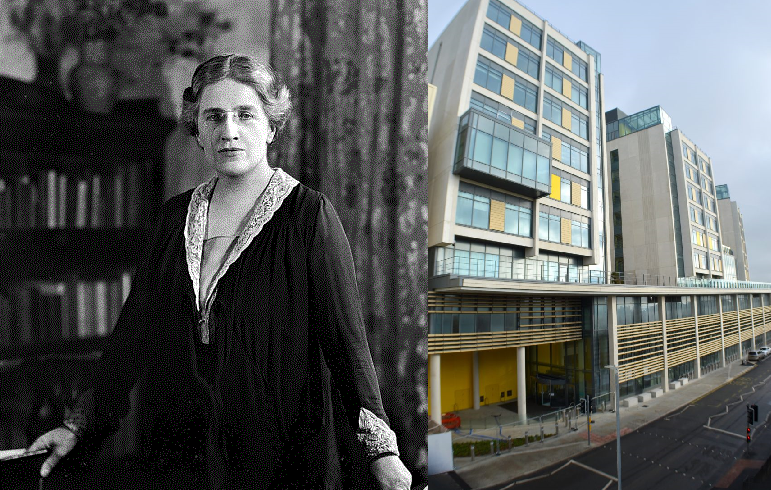
Louisa Martindale is known as 3Ts Hospital, in Brighton


On Friday afternoon in Parliament there was a discussion entitled St Helier Hospital Improvements and New Hospital: Sutton which was set out by Elliot Colburn who is the MP for Carshalton and Wallington in the North Surrey area. After he had spoken there were responses from Andrea Leadsom who is a member of the Minister. The initial discussion from Elliot was:

It is a pleasure to have the opportunity to raise in this House my local hospital, St Helier Hospital, once again, and of course the delivery of a new hospital in the London Borough of Sutton. A rudimentary search of Hansard tells me that I have mentioned this over two dozen times, so I am grateful to the House for indulging me once again. Indeed, it was just one week ago last year that I had an Adjournment debate on a similar topic.

He commented many other comments and then when he had finished his first comment the initial comment from Andrea and Elliot then stated a bit more and when Andrea spoke the second time she included these words which are also listed from here:

I take this opportunity to provide a general update on the new hospital programme and the ambitious work it has been undertaking. I am very pleased that four of our new hospitals are now open to patients: the Northern Centre for Cancer Care; the Royal Liverpool Hospital; stage 1 of the Louisa Martindale, also known as the 3Ts Hospital, in Brighton; and the Northgate and Ferndene Hospitals in Northumberland. A further four hospitals are expected to be opened by the end of the next financial year: the Salford Royal major trauma centre, Dyson Cancer Centre, the National Rehabilitation Centre and Midland Metropolitan University Hospital. 

The NHS documents refer to both the Hospital and also to Louise Martindale on their websites. The comment about Louise includes:

Dr Louisa Martindale championed the cause of medical education for women, worked as a surgeon during two world wars, and was a world-renowned gynaecologist. Born in 1872 Louisa’s family moved around Europe in her early years, but finally settled in Brighton so that she and her sister could attend Brighton High School for Girls. Her mother, a dedicated suffragist, was determined to secure the best possible education for her daughters, and it would seem she succeeded. 

The content for the Hospital is entitled The Louisa Martindale Building – fully open and it includes the comments:

The Louisa Martindale is now fully open and is the home to 28 clinical wards and departments. It is the new main entrance for the hospital with connections to the rest of the hospital and the new underground car park.

Standing at the front of the main hospital site, the Louisa Martindale Building offers state of the art accommodation for 28 outpatient, ward and specialist services across its 11 floors. It is the first stage of the 3Ts Redevelopment of the hospital. The Louisa Martindale Building is the newest clinical building in NHS England. Alongside it is the Barry Building, the oldest.

Posted in Brighton & Hove, Health Reform, Parliament and Democracy | Tagged , , , | Leave a comment

Winchester Bishop adds the Schools Mental Health Bill


On Friday 1st March in the House of Lords there was a discussion for the Schools (Mental Health Professionals) Bill and one of the people who contributed was Philip Mounstephen who can be obtained from this email for his Diocese of Winchester website and the first few words from that piece is

The next Bishop of Winchester will be the Right Reverend Philip Mounstephen, currently Bishop of Truro, Downing Street has announced today. Bishop Philip will serve as the 98th Bishop of the Winchester Diocese, which covers 255 parishes across most of Hampshire and part of Dorset. He will be welcomed at a service of installation in Winchester Cathedral later this year.”

So the discussion on the House of Lords included the comments from Philip Mountstephen and that is available here and it is:

My Lords, I am grateful to the noble Baroness for bringing this Bill to us for its Second Reading. We indeed face a crisis in this area and need to be aware of the long-term consequences of not addressing it.

The Bill would pave the way for just the kinds of interventions that are sorely needed. The NSPCC and our own Library briefing state that more than 20% of children and young people are living with poor mental health. CAMHS referrals are provided for only the most severe presenting issues, while early intervention, though widely recognised to be key to good long-term outcomes, is now a thing of distant memory. The sobering fact is that children are taking their own lives while they wait to be seen, and that is deeply shameful.

Last summer, the Church of England published the document Our Hope for a Flourishing Schools System, which makes specific mention of mental health, it being the issue school leaders most often raise with us. It states:

“Children’s mental health and wellbeing is prioritised and resourced generously by a society that invests in the long-term future of its nation by placing children first in funding and political direction. The fulfilling of a child’s potential should never be hindered, blocked or prevented by the system in which they find themselves”.

However, those words are, sadly, far from being the current reality.

There is, of course, much good practice out there. In my own diocese, Abbotts Ann Primary School has a group of “gardening grannies”, who have helped the children plant and maintain their own veg patch. Milford uses its “beach school” activities to engage pupils with beach art and games, to help them feel better connected to the natural world. St Katherine’s in Bournemouth has “head, heart, hands” time every Friday, to promote mental, spiritual, emotional and physical health. St James’ school in Pokesdown has just rethought pupils’ mental and emotional health, with several designated rooms where children can receive extra support—in the sunshine room, the rainbow room and the harbour.

There are many other excellent examples I could cite, but, excellent as they are, they are not a substitute for policy consistently applied. Schools need specific training in children’s mental health and on its impact on pupils’ behaviour, their attendance and their ability to access learning. This should be for all staff, not just for one individual, as all staff have contact with pupils. Schools also need access to specialist expert support to support and manage children’s mental health in their own settings. This is critical, since access to CAMHS has become so limited over recent years. Schools should not have to find the funding for this from their own budgets.

The intersectionality of mental health with poverty, those involved with social care and other disadvantaged groups must also be considered, since pupils are much more likely to be excluded or refused schooling the more disadvantaged they are. I chair the ChurchWorks Commission, and it is no surprise that our three priorities are vulnerable children and families, tackling poverty, and mental health and well-being. This issue sits at the intersection of all three. According to the Church of England’s toolkit on UKME mental health, a disproportionately large number of people from a GMH background will come into contact with mental health professionals not through the NHS or education system but through the criminal justice system. School and government policy needs to recognise all of the above, and not negatively disadvantage pupils who struggle because of their mental health, leading to yet more severe issues and, ultimately, to disengagement from education.

More broadly, we must recognise that the quality of education matters much more than standards in education. I welcome the fresh approach of Ofsted to include mental health training for its inspectors, but it is tragic that it took the death of a dedicated head teacher to precipitate that. Quality must always trump standards, for without high quality you will not have high standards. Specifically, a narrow focus on attendance statistics might be positively counterproductive. Poor attendance needs addressing by prevention, via high-quality, value-rich education, rather than by simply penalising non-attenders, because poor mental health is the main reason that children—especially those with special needs and disabilities—give for failing to attend. So investing more broadly in mental health via holistic person-centred education would effectively address the Government’s narrower focus on attendance.

In closing, I will set this in an even broader context: we must look at causes. There are abundant reasons why young people today might suffer from poor mental health. The world in which they are growing up is an increasingly dark place. They live with the growing threat of climate change and against a background of the rise of aggressive, dominant and domineering global powers. Is it any wonder that they face the future with anxiety? We may feel that we have little agency in the face of such pressures, but we have much more than the children of whom we speak today. I feel this very much as a new grandparent. What kind of world will Josiah Arthur Zachary, just five weeks old, grow up in? What kind of world are we making for him? I hope and pray we will not let him down, nor so many others like him.

Posted in Church Teaching, Education, Parliament and Democracy, Youth Issues | Tagged , | Leave a comment

Parliament comment for Southampton YMCA Fairthorne


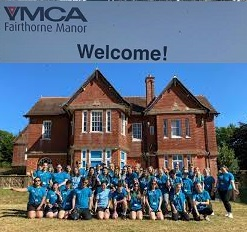
On Thursday afternoon in the House of Lords there was a discussion entitled Pollution in Rivers and Regulation of Private Water Companies which is available here. It was set out by Cathy Bakewell who is from Liberal Democrat and she was previously the councillor for the South Somerset Council. The discussion took place on the afternoon of the 29th of February 2024 and Cathy commented on a session that impaired the Southampton YMCA. One of the other people who did contribute during the session was Jennifer Jones who is the Brighton Green Party member. I was personally a Trustee of the Hove YMCA at the beginning of 2000 and I became the Chair leader for 12 years and it is now the YMCA Downslink Group which is very significant. I do recall that we visited the YMCA Fairthorne Manor at least once in that time and so I am aware that both of these YMCAs are very significant. So here is the document from Cathy Bakewell.

On Tuesday this week, Southern Water was fined £330,000 over a raw sewage spill at a rural beauty spot. That killed more than 2,000 fish, with staff ignoring an alarm about the emergency for five hours. The YMCA Fairthorne Manor, an outdoor activity centre popular for school trips, had to stop water activities for 10 days after the incident and cancel more than 1,000 sessions. The health implications of sewage are why Liberal Democrats have previously called for sewage sickness victims to receive compensation, and we repeat that call today. It is not right that, as water companies make large profits, swimmers get sick. If someone is poisoned by sewage, they should be compensated for it.

Posted in Brighton & Hove, Charities, Parliament and Democracy, Youth Issues | Tagged , , , | Leave a comment

Children & Young Mental Health Early Support Hubs


Yesterday on Tuesday 27th February 2024 there was a publication from the Government that was entitled “Children and Young People Mental Health Early Support Hubs” and Department of Health and Social Care written statement which was published by Maria Caulfield who is the Lewes MP and a member of the Government. The information came from here and it is below.

I wish to inform the House that the government has provided additional funding so that 24 Early Support Hubs across England are able to help children and young people receive quicker mental health support.

The government is taking the long-term decisions needed to make our healthcare system faster, simpler and fairer. Mental health support for our young people is a key part of that.

We announced in October 2023 that £4.92 million from HM Treasury’s Shared Outcomes Fund would be available to support hubs and an evaluation to build the evidence base underpinning these services.

Following evaluation of excellent commercial tenders from hubs across the country, I am very pleased to be able to let you know that the government is now providing an additional £3 million, meaning a total of 24 hubs will receive a share of almost £8 million in 2024/25. This is more than double our original target of funding 10 hubs, and organisations across the length of England – from Gateshead to Truro – will now benefit.

This investment in front-line services means that thousands of children and young people will receive earlier, open-access mental health interventions in local communities.

Crucially, alongside boosting 24 hubs, the funding will also enable us to evaluate the impact of the services and inform any potential expansion of the model in the future. The evaluation aims to report its findings by Summer 2025.

As this new investment shows, we want to intervene earlier to prevent children and young people from developing severe or enduring mental health conditions. That is why we are also continuing at pace with the roll-out of mental health support teams to schools and colleges in England. There are currently around 400 mental health support teams in place across England, covering over 3 million children or around 35% of pupils in schools and colleges, and we are extending coverage to at least 50% of pupils in England by the end of March 2025.

I know that we still have a long way to go to ensure that all young people struggling with their mental health get the support they need at the right time but today’s new investment is a positive step to support children and young people’s mental health and one that should be celebrated.

Hub NameConstituency
1ABL HealthBolton South East, Yasmin Qureshi
2Base 25Wolverhampton South West, Stuart Anderson
3Brook Young PeopleTruro and Falmouth, Cherilyn Mackrory
4Brent, Wandsworth and Westminster MindCities of London and Westminster, Nickie Aiken
5Centre 33Cambridge, Daniel Zeichner
6ChilyPepBarnsley Central, Dan Jarvis
7The Children’s SocietyTorbay, Kevin Foster
8The Children’s SocietyGateshead, Ian Mearns
9CHUMS CharityMid Bedfordshire, Alistair Strathern
10Family ActionHackney South and Shoreditch, Meg Hillier
11Isle of Wight Youth TrustIsle of Wight, Bob Seely
12Lancashire MindChorley, Lindsay Hoyle
13Mancroft Advice Project (MAP)Norwich South, Clive Lewis
14Noah’s Ark CentreHallifax, Holly Lynch
15No Limits SouthSouthampton, Test, Alan Whitehead
16OnsideWorcester, Robin Walker
17People Potential PossibilitiesErewash, Maggie Throup
18Sheffield FuturesSheffield Central, Paul Blomfield
19Spring NorthBlackburn, Kate Hollern
20Warrington Youth Zone LimitedWarrington South, Andy Carter
21YMCA St HelensSt Helens South and Whiston, Marie Rimmer
22Young DevonNorth Devon, Selaine Saxby
23Youth Enquiry ServiceWycombe, Steve Baker
24YPASLiverpool, Riverside, Kim Johnson
Posted in Parliament and Democracy, Youth Issues | Tagged | Leave a comment

Sewage releases in Sussex, Surrey and Kent


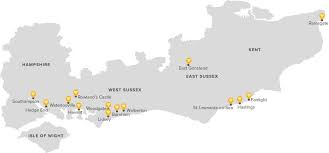
Last week on Thursday in the House of Lords there was a discussion entitled Water and Sewage Companies: Directors’ Remuneration – Question for Short Debate which was set out by Prem Nath Sikka (Lord Sikka) who opened the session with “To ask His Majesty’s Government what plans they have for reforming remuneration of the directors of water and sewage companies operating in England.” and he and several other people contributed including Stephen Benn (Viscount Stansgate) who included this comment which can be seen on the discussion which is available here. The image above relates to the Southern Water area which does not include Surrey in their location.

In 2020, I believe there were more than 400,000 raw sewage dumps into England’s rivers and seas or more than 3 million hours of spillages. In one incident, in June 2022, raw sewage spilled into Windermere lake for three hours. In 2020, Severn Trent was fined £2 million by Cannock magistrates for illegally spilling more than 260 million litres of raw sewage into the River Trent. Finally—I think I am right about this—in the High Weald of Sussex, Surrey and Kent, almost 27 hours of sewage releases took place in a single year. If we cannot protect the vital ecosystems of our areas of outstanding natural beauty, we are failing badly. I could go on, but I will not. The bad news is that they still continue.

Posted in Parliament and Democracy | Tagged , | Leave a comment

MPs debate checks to ‘safeguard’ gamblers


In Parliament this week several important debates will take place. This afternoon a subject will be organised by Christina Rees, the Labour MP for Neath in South Wales. Christina sets out “e-petition 649894 relating to financial risk checks for gambling” relating to the petition entitled “Stop the implementation of betting affordability/financial risk checks” which currently has more than 103,000 signatures. It was created by Nevin Truesdale obtaining over 102,000 signatures in the first month of its’ release and which is due to continue until the first of May this year. Interestingly there are less than 100 signatures in Neath. By comparison only in Crawley are there less than hundred names and the largest signature areas in Sussex are Chichester, Arundel and South Downs. The initial document is

“We want the Government to abandon the planned implementation of affordability checks for some people who want to place a bet. We believe such checks – which could include assessing whether people are ‘at risk of harm’ based on their postcode or job title – are inappropriate and discriminatory.”

The rest of the text is

“The proposed checks could see bettors having to prove they can afford their hobby if they sustain losses as low as £1.37 per day. We accept the need to help those with problem gambling but more intrusive checks triggered at a higher threshold risks bettors moving to the black market where there are no consumer protections or safer gambling tools. We are concerned there will also be a negative impact on British horseracing’s finances due to a reduction in betting turnover and resulting fall in Levy yield.”

Last Monday, “e-petitions 633591 and 645885 relating to animal testing and non-animal research methods” which was organised by Elliot Colburn. Although no other Sussex MPs contributed on the discussion, the Minister was Andrew Griffith, the MP for Arundel and South Downs. His constituency was the most significant contribution in Sussex for both e-petitions. Andrew began with

“I thank my hon. Friend Elliot Colburn for opening today’s important debate. As this is the first time I have spoken since, let me also commend him for his personal bravery when he spoke at the most recent Prime Minister’s questions. The number of signatories to these petitions—I think almost all hon. Members have mentioned it—indicates the strength of public feeling on this matter. This is not the first time that this issue has been debated, although it is my first time. Although I think none of us would want such a debate to become an annual event, this is absolutely the right forum in which to debate these important matters. I therefore congratulate all those who have contributed and everybody who has signed the petitions. I completely understand that the use of animals in science, including in toxicity testing, is a sensitive issue. More than that, I believe that everyone here would share my view that the day cannot come quickly enough when we are able to end the practice of animal testing.”

The planned sessions for Commons Committees that involve Sussex MPs include the Public Accounts Committee. Jeremy Quin from Horsham is debating with “Investigation into student loans issued to those studying at franchised higher education providers”. Tomorrow there are three Committees that involve Sussex MP’s The Education Committee involving Caroline Ansell from Eastbourne, focusing on, “Children’s social care”. There are two other items on Tuesday both involve Jeremy Quin. In the morning there is the Defence Sub-Committee debating

“Developing AI capacity and expertise in UK Defence” and in the afternoon Jeremy is Chair of that Defence Committee which is looking at “Service Accommodation” which refers to Armed Forces accommodation. The final item is on Wednesday the Foreign Affairs Sub-Committee on the Overseas Territories involving Henry Smith from Crawley. The committee is considering “The UK Government’s engagement regarding the British Indian Ocean Territory”

On Friday there are a number of private members’ bills. Before Christmas there were plans for two Sussex bills to be fitted in this week. However, on the 9th February the Bill from Sally-Ann Hart was moved out to the 15th March, but the item for Lloyd Russell-Moyle has remained to be submitted for his second reading and is entitled “Conversion Practices (Prohibition) Bill”. On the 6th December his document was published with the comment

“Presentation and First Reading (Standing Order No. 57): Alicia Kearns, on behalf of Lloyd Russell-Moyle, supported by Elliot Colburn, Mr William Wragg, Dr Jamie Wallis, Caroline Nokes, Gary Sambrook, Dehenna Davison, Iain Stewart and Michael Fabricant, presented a Bill to prohibit practices whose predetermined purpose is to change a person’s sexual orientation or to change a person to or from being transgender; and for connected purposes.”

Last Monday a discussion connected to “Ukraine: Military Support” with Jeremy Quin the Horsham MP speaking. He was listed as the Chair of the Defence Committee. His comment

“Ukraine can win the war, and must win the war. The Minister touched on the provision of ammunition and equipment, but Ukraine also needs hundreds of thousands of trained personnel. I very much welcome the extension. Operation Interflex, and the work that we are doing, but could we not be doing far more of that with our allies to assist Ukraine?”

This Government faces huge challenges with Ukraine and like many others I would like to see more support being offered to the Ukrainians which currently live here in the UK.

Posted in Parliament and Democracy | Tagged , , , , , , | Leave a comment

Sally-Ann Hart spoke Independent School Fees: VAT


On Wednesday afternoon in Parliament there was a session entitled “Independent School Fees: VAT” and one of the MPs who contributed was Sally-Ann Hart from Hastings and Rye in East Sussex. Indeed she was the only Sussex MP who took part and the whole of the discussion is available here but below is the three texts from Sally-Ann Hart. The most significant item is first:

Labour’s plans to charge VAT and end business rate relief for independent schools is based on the politics of envy, from a party that wants to crush aspiration and ambition. Labour says its primary motivation is to generate revenue to invest in the state education system and that the policy might raise £1.7 billion for that purpose. Well, Labour had better get building more schools, because it intends to implement the policy as soon as Keir Starmer enters Downing Street, with no consultation or risk analysis. What a nonsense. The policy will harm both the state and the independent sector, and there will be an exodus of pupils into an increasingly stretched state system, with some independent schools closing altogether.

We must not trust Labour with our schools. About 12 years ago, the OECD “Education at a Glance” report found that expenditure on schools as a percentage of GDP increased from 3.6% in 1995 to 4.5% in 2009. The OECD average was 4%. Billions of pounds of spending went into schools under the last Labour Government, but that huge increase in spending led to no improvement in student learning outcomes. UK teenagers slipped down the league tables in crucial subjects, while our schools became the most segregated in the world, with Britain’s immigrant children clustered in the most disadvantaged schools. Primary school class sizes were bigger only in places such as Turkey and Chile, and there was an alarming rise in children not in education, employment or training. Taxpayers failed to get value for money and Labour’s policies had little impact.

Labour will never understand that it is not just about money; it is about leadership and structure. We have some amazing headteachers in Hastings and Rye. I will not name them, but they know who they are, and they work best with the support of positive and effective Government policy, and with the support of their academy trusts. In Hastings and Rye, 32% of schools were rated as being good or outstanding in 2010, compared with 82% in 2022. There is more work to do, but it can be done, as we have seen from the Conservative Government’s record, without destroying our valuable independent sector.

I have two independent schools in my beautiful constituency of Hastings and Rye: Claremont and Buckswood. Buckswood boards about 50 pupils from 48 different countries and has 200 local day-school pupils. Both schools have lower fees for local children, and they have a diverse mix of children, which contributes to a rich cultural environment—one that would not normally be expected in a coastal community. Thos schools enrich our communities, to the benefit of all our residents.

Later on she raised this comment referring to Gordon Henderson and he responded.

On a point of order, Mr Henderson. I neglected to say earlier that I might have an interest to declare, as my husband is a governor of an independent school.

Noted. Thank you.

Later again she responded to a call from Nigel Huddleston

It is well known that many of our major independent schools such as Eton and Harrow give 100% bursaries to children from disadvantaged areas to give them a chance to skill up and to benefit for their own communities. That is amazing.

Posted in Education, Parliament and Democracy | Tagged , , | Leave a comment

How far non-engagement extends on Inter Faith Network


On Thursday Afternoon yesterday on 22nd February in the House of Lords there was a session entitled Inter Faith Network that was organised by the Government Minister Jane Scott and several member contributed including the Bishop of Worcester, John Geoffrey Inge. So here is his question and the response from Jane Scott. The whole of the discussion can be obtained from here.

John Inge: My Lords, I too pay tribute to the work of the Inter Faith Network. As has been stated, surely the optics of this are not good. I would like to ask the Minister how far non-engagement extends, because surely, in our society, we want to encourage dialogue, even with those organisations that may express some views with which we disagree. To not be willing to engage at all with an organisation that has not been proscribed goes against all the efforts being made to bring our society together—it seems very strange.

Jane Scott: I do not particularly think it is strange. It is a long-standing decision not to engage with the MCB. The Government are doing what successive Governments have done. The person was on the council as a member, but it was when they became a trustee that things became more difficult for the Government.

Posted in Church Teaching, Parliament and Democracy | Tagged , , | Leave a comment