On Tuesday in the House of Lords there was a discussion entitled Knife Crime: Violence Reduction Units which is available here and it began with Shaun Bailey for this comment “To ask His Majesty’s Government what steps they are taking to assess the efficacy of violence reduction units in addressing knife crime.” he is a member of the Conservative and he and indeed all of the other members of the House of Lords were responded by Andrew Sharpe from Epsom who is a member of the Government. Here is the response to Shaun in his first comment.
Andrew: My Lords, the Home Office has commissioned a multiyear independent evaluation to assess the impact of violence reduction units on the most serious forms of violence and their progress in adopting a public health approach. Recent findings have shown a statistically significant reduction in hospital admissions for violent injuries in VRU areas since funding began in 2019.
Then after another comment from Shaun and comments from a few other people, Jenny Jones who is a member of the Green Party for Moulsecoomb in Brighton spoked
Jenny: My Lords, obviously, large urban areas such as London have particular problems, and I would argue that there is a lot more crime. Are any comparative assessments being done so that each VRU can learn from others in all sorts of ways?
Andrew: Yes, again, the noble Baroness raises a very good point. She is right, of course, that London has particular problems in this area. The activities of certain violence reduction units have absolutely influenced the way that the whole programme has been established across England and Wales—and indeed taking a lot of the lead from Scotland.
Then later on Frederick Ponsonby who is Labour member from Roehampton and he raised the question about the YMCA so here is his call.
Frederick: My Lords, knife crime is up by 70% since 2015 and, according to the YMCA, youth services were cut by 71% in the decade after 2010. Does the noble Lord think these two statistics are linked? Does he also believe that, building on the work of the VRUs, local youth services should be introduced and backed in a way to try to prevent further knife crime?
Andrew: On the noble Lord’s latter point, I agree, which is one of the reasons the Home Office has invested £200 million in the youth endowment fund, to which I have already referred. As regards knife crime across the country, the rise is driven largely by the situation in London. For police-recorded offences involving knives or sharp instruments, there was a 5% increase year-on-year nationally, but the increase in London was 22%. If London was taken out of those figures, the natural trend would be a 1% reduction.
Henry Smith is the Crawley MP and he was one of the people who spoke in this discussion for “Death of Alexei Navalny” on Monday 19th February. The first comment came from Leo Docherty who is a Minister of Parliament and he began with “With permission, I would like to update the House on the death of Alexei Navalny. I am sure that I speak for the whole House in sending our deepest condolences to Mr Navalny’s family, friends and supporters. We are appalled at the news of his death.” and later on the session Henry spoked and Leo responded
Henry: It is clear that domestically the Putin regime is a criminal racket, and that internationally it has brought war against Ukraine and threatens many others. What discussions are the UK Government having, and what diplomatic efforts are they making, with other NATO members that do not pay the minimum 2% of GDP towards our common defence?
Leo: My hon. Friend has asked a very good question, and we continue to make that point to our NATO allies in a full-throated way. As he knows, NATO is a growing organisation with a growing potency and capability, but collectively we must and will put our money where our mouth is.
Last Tuesday in the House of Lords several people contributed discussions that was initially organised by the Conservative member Charlotte Owen who was fitted into the House of Lords last July and she is currently only a 30 year old person. She opened the session with the comment “To ask His Majesty’s Government whether they plan to prohibit “nudify” apps which create intimate images of other people using artificial intelligence without their consent.” and the Government Minister who responded was Jonathan Berry who is the Department for Science, Innovation and Technology. After he responded to this text Charlotte did ask another question and then several other peoples contributed and then Steve Bassam commented and then a few more people before at the end the Archbishop of York who is Stephen Cottrell contributed. So here is the initial response from Jonathan to Charlotte and then the questions and responses from Steve Bassam and Stephen Cottrell. Here is the source of the whole discussion.
Jonathan Berry to Charlotte: My Lords, the Online Safety Act introduced new offences which criminalised the sharing of, or threatening to share, intimate images, including deepfakes, without consent. Where individuals create these images using any kind of technology and share or threaten to share them online, they may be committing an offence. The Act will additionally give online platforms new duties to tackle this content by removing it, including where it has been created via AI apps.
Steve Bassam: My Lords, the Government have been far too complacent on this issue. During the passage of the then Online Safety Bill, we warned a number of times that, given that this is a fast-moving technology, as the Minister says, the Government needed to get ahead of the game. Given the proliferation of these ghastly images and the appalling impact this has on people’s lives, does the Minister now agree that neither the emergence of these apps nor their misuse is surprising? If that is the case, why did the Government not broaden the scope of their amendments when they had the opportunity to do so? Will the Minister now look for ways in which we can plug the gaps that are clearly emerging?
Jonathan Berry: As the noble Lord said, it is a fast-moving space, and that requires an adaptive, agile response in legislating for it. That is the approach that we are taking. As to the argument that we can now see that it is not working, I am not sure that that is the case. The intimate image abuse offences commenced on 31 January—two weeks ago. I am pleased to see that, yesterday, we had our first cyberflashing conviction under those provisions. Using an evidence base, looking forward, we will have to consider carefully what is working before we go ahead and implement further bans.
Stephen Cottrell: My Lords, it would be very helpful if the Minister could explain. If I heard him correctly, he said that sharing has a six month ban but for malicious sharing it could be up to two years. Could he explain what non-malicious use would be?c
Jonathan Berry: There is a base offence in the law of sharing intimate images without consent or the reasonable belief of consent. That can extend to two years if the intent is to cause alarm, distress or humiliation, or if the purpose is to gain sexual gratification. Crucially, there is an offence of threatening to share these materials which also carries a two-year penalty.
This week in Parliament there are several themes under discussion and many of us would like to see Sussex MPs making a response. This afternoon there is debate organised by Elliot Colburn, the Conservative MP for Carshalton and Wallington in North Surrey. The items entitled “e-petitions 633591 and 645885 relating to animal testing and non-animal research methods” The first petition was described “End the use of animals for toxicity tests & prioritise non-animal methods (NAMs)” which achieved nearly 110,000 signatures that was established by Maria Iriart. The more recent petition is “Ban the use of dogs for testing and research purposes in the UK” which began in October last year and will close in April this year. It was proposed by William Young and so far it only has about £31,000 signatures. Along with the petition session there are also several Committees that reference the contributions from Sussex MPs.
Today there is an item related to Foreign Affairs Sub-Committee on the Overseas Territories which involves Henry Smith from Crawley and the Public Accounts Committee which includes Jeremy Quin from Horsham. It refers to “NAO (National Audit Office) Main Estimate 2024-2025” Tomorrow there is Education Committee which includes Caroline Ansell from Eastbourne which addresses “Screen Time: Impacts on education and wellbeing” also a Defence Sub-Committee which comprises Jeremy Quin debating “Developing AI capacity and expertise in UK Defence”. On Wednesday the Home Affairs Committee sees Tim Loughton from East Worthing and Shoreham and address “non-contact sexual offences”. The Environmental Audit Committee takes place at 2pm that includes Caroline Lucas. On Wednesday there are two Committees both of which expect participation from Jeremy Quin and they are both at the same time! The Defence Committee which is “Future Aviation Capabilities” has Jeremy as the Chair and the Public Accounts Committee which includes “Government resilience: extreme weather”
Last week Parliament was not open for MPs but the House of Lords was. On Monday two significant events “School capacity to identify and implement a plan of support for special educational needs” and “Safety of Rwanda (Asylum and Immigration) Bill” that took place. It was not easy to identify who all of the Sussex contributors were. However, I noted two conservatives Viscount Hailsham and Lord Soames of Fletching and Baroness Jones of Moulsecoomb who is a Green member of the House of Lords participated. It would be very helpful if more House of Lords could indicate their representations in the future.
So far, this year there have only been five weeks of Parliament. One of the items that takes place when the Parliament is open are the Early Day Motions which enable MPs that are not members of the Government to raise their interests which can then be proposed to the Government. This year there have been a total of 140 EDMs of which five have been submitted by Sussex MPs. The most productive Sussex MP contributor this year was Caroline Lucas who has written four EDMs which are “Right to Buy”, “Jay Abatan”, “Fuel poverty and the private rented sector” and “Achieving clean air”. She has also signed another 26 EDMs which includes an item provided from Lloyd Russell-Moyle which is “Provision of council homes at social and living rents” on 6th February. So far, he has only obtained five MP signatures including Caroline, a DUP and four Labour MP’s. He has signed eleven other EDMs which including two of the Caroline’s items. Peter Bottomley from Worthing West who signed one of Caroline’s EDM’s.
The largest support for Caroline’s EDM has been signed by a total of twenty-three other MPs including Lloyd and Peter who were members of the first five MPs that “support the motion are the sponsors”. The other signatures are three Liberal Democrats, four SNPs, all of the others are Labour MPs.
Subsequently there have been another 4 MPs which are 3 more Labour and one more SNP signatures signed on 19th February.
Although it is not the largest EDM in the group it is the fourteen largest of the 140 items. It was published on the 1st February, entitled “Jay Abatan” which expresses the following.
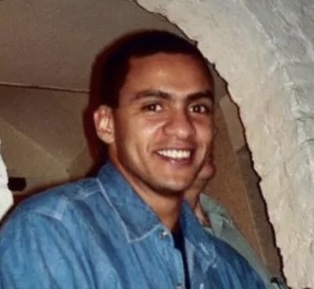
“That this House expresses concern that 25 years after Jay Abatan was killed in a racist attack in Brighton his murderers have still not been brought to justice; notes that Sussex police have apologised to Jay Abatan’s family for the multiple failures in the way the investigation was conducted, as revealed by subsequent reports into his murder; further notes that a 2010 inquest into Jay’s death returned a verdict of unlawful killing; considers that not all the overarching issues raised in the Macpherson report appear to have been addressed; recognises that Michael Abatan has been campaigning since 1999 for justice for his brother and that there are countless other families of the victims of racially motivated murders who have been let down by the criminal justice system; calls on the IOPC to conduct an independent investigation into Sussex Police’s handling of Jay’s death and for a different police force to take over the investigation; and further calls on the Secretary of State for the Home Department to establish and chair a Race Equality Steering Group to help ensure oversight of progress in addressing race equality across all police forces in England and Wales, as recommended by the Home Affairs Select Committee’’
These words from Caroline Lucas focus on a very important issue for Sussex and Brighton and Hove in particular. Let us hope that more Sussex MPs will sign it now that the Government is open again.
A few days ago on Thursday 15th February Susan Garden, the Baroness Garden of Frognal from the House of Lords set out a question entitled STEM Subjects: Girls which was “To ask His Majesty’s Government what steps they are taking to address the confidence gap between girls and boys studying STEM subjects at school.” and an answer from the Government was sent by Diana Barran who is responded here and she stated several comments on the STEM theme. On the previous week on Thursday 8th February another member of the House of Lords, Natalie Bennett, the Baroness Bennett of Manor Castle for Green corresponded in a discussion entitled Digital Exclusion (Communications and Digital Committee Report) and she included “a knowledge of Plato and Aristotle should be seen as mutually exclusive with knowledge of STEM subjects and digital skills” which can be seen here.
On the previous day in Parliament, on Wednesday 7th February there was a session entitled Women and Equalities:STEM Jobs which can be seen here and it was organised by Flick Drummond who is the Conservative Meon Valley MP and she began with “What steps she is taking to help support women into science, technology, engineering and mathematics jobs.” and the Minister who responded was the Lewes MP, Maria Caulfield who began with “We are helping to get young girls and women into STEM sectors in three key ways: first, by increasing the number of young girls taking up courses.” The other person who took part was Jim Shannon, the DUP MP.
On the previous day of Tuesday, 6th February there were three sessions that took place in Parliament referring to STEM. One of them was a written session and it came from Jim Shannon who asked “To ask the Secretary of State for Education, what assessment she has made of trends in the uptake of STEM subjects studied at universities.” and it was responded by Robert Halfon for the Government. The question and answer can be obtained from here. On the same day Caroline Nokes who is the Conservative MP for Romsey and Southampton asked another question with the headline “International Assistance: Education” and her question was answered by Andrew Mitchell from the Government and he referred with this response at the beginning “The UK is committed to supporting foundational learning (literacy, numeracy, socio-emotional skills) for all. Foundational learning is critical for achieving higher order skills and effective understanding of STEM subjects from an early age.” The question and answer can be obtained from here. The other item that took place on that day was in the Welsh Government and the session was entitled Statement by the Minister for Education and the Welsh Language: Vocational qualifications and at the end of the session Jeremy Miles who is a Labour MP stated “There are also good examples in Blaenau Gwent through the Tech Valleys STEM facilitation project, and the work that my department is doing now, together with the economy department, really is trying to identify where those good relationships exist.” That session can be obtained from here.
It will be very interested to see what happens this next week given that the Parliament has opened up again following last weeks holiday period.
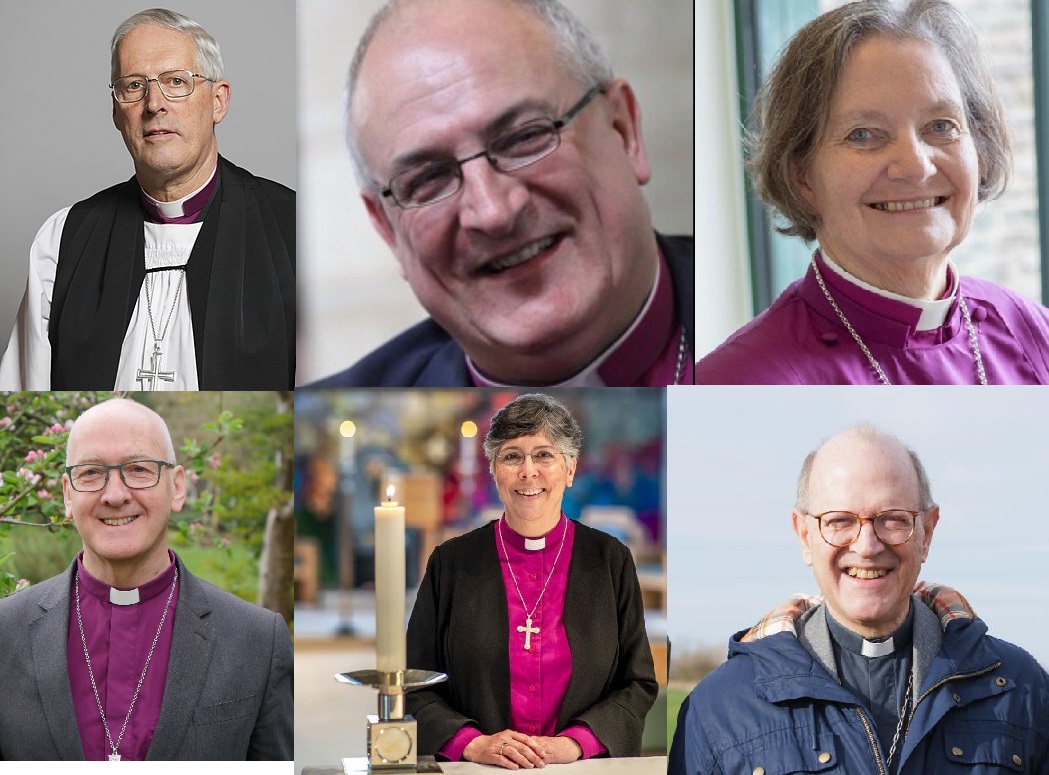
Last week in the House of Lords there were several discussions for the Safety of Rwanda (Asylum and Immigration) Bill that related for Amendments and it was very significant that a total of six Bishops corresponded on the contribution. It was very encouraging. On Monday 12th February the Bishop of Southwark published on the first Amendment 1 discussion which can be obtained from here. Also the Amendment 6 discussion took place with the Bishop of Lincoln who corresponded here and later on the Bishop of Southwark corresponded which is here. Then on Tuesday 13th February the Amendment 18 was published with people including the Bishop of Bristol who corresponded here and then the Amendment 19 which was contributed early on by the Bishop of Bristol here and then also the Bishop of Leeds who contributed here. On the same day there was also the Amendment 31 which was contributed by the Bishop of Chelmsford whose comment is here and also the Bishop of St Edmunsbury and Ipswich who later commented here. It was very significant for all of these Bishops to correspond on the amendments for this Bill.
Steve Bassam was in the House of Lords on Tuesday during a session of Combating Disinformation: Freedom of Expression which was started out by a Liberal Democrat representative Paul Strasburger from Somerset and the Minister who responded to him was Jonathan Berry. He also responded to all of the others including Steve Bassam who was a leader in Brighton and Hove previously. Here is his call and the response and the rest of the comments is available here.
Steve: My Lords, the issue is much more complex than that. I am concerned that the unit to which the Minister referred seems to be concerned only about security issues now. In December, I asked the Minister about the rise of political deepfakes, which often originate from overseas and have the potential to undermine trust in political leaders and our wider democratic processes. With the Data Protection and Digital Information Bill currently before the House already containing measures on what the Government call “democratic engagement”, can I tempt the Minister to bring forward new anti-deepfake provisions to help preserve the integrity of our upcoming general election—and not just our election in a year of big elections?
Jonathan: Indeed. It is worth reminding the House that close to 2 billion people will go to the polls over this calendar year. A great many of those elections in which they participate will come under attack from malign foreign influences. Therefore, we have implemented the Defending Democracy Taskforce, chaired by the Security Minister, which set up a new unit last year specifically dedicated to safeguarding our coming election, whenever it may be. It continues to engage with various committees of Parliament and with the Electoral Commission. We will look carefully at any proposals on deepfake provisions in the DPDI Bill. Deepfakes are already illegal today if they violate either the foreign interference offence or the false communications offence.
On Monday, 12th February there was a session in the House of Lords that included Schools: Special Educational Needs which was set out by Dominic Hubbard who is a Liberal Democrat member and the Government Minister who responded was Diana Barran. Several other peoples took part including the Bishop of Lincoln. Here are some of the comments and the other words can be found here.
Dominic: To ask His Majesty’s Government what plans they have to ensure that all schools have the capacity to identify and implement a plan of support for the most commonly occurring special educational needs, including Dyslexia, ADHD, Dyspraxia, Dyscalculia, and Autism. My Lords, I beg leave to ask the Question standing in my name on the Order Paper and remind the House of my declared interests.
Diana: My Lords, ensuring everyone, regardless of need, gets the best education possible is vital. Our SEND and AP improvement plan will ensure all children get the support they need. So far, we have opened 15 special free schools since September; announced the Partnerships for Inclusion of Neurodiversity in Schools programme; trained 100,000 professionals in autism awareness; confirmed funding for 400 more education psychologists; and updated the initial teacher training and early career framework, including additional content on SEND.
Bishop of Lincoln: My Lords, I welcome everything that the Minister has said, but we all know that, even with the initial screening online, a full diagnosis for many children with any of these needs can take years to confirm. I am interested in what the noble Baroness has to say about how families—and the children themselves—are accompanied through several years of negotiation with the NHS and with local authorities, especially when, as has already been said, certainly in Lincolnshire, staffing costs outstrip the need that is expressed within our schools.
Diana: Again, I stress that not every special educational need requires a diagnosis. Children should get support regardless. If we look at the age at which children get an education, health and care plan as a proxy for diagnosis, we see that around a quarter receive an EHCP under the age of five, with almost half getting one between the ages of five and 10. That has been very stable over the last 10 years. The remaining quarter are above 11. I understand that these can be stressful, difficult times, but there has been relative stability over many years at the age of diagnosis, although there is greater identification of specific issues—in particular, autism.
Although the Government is not fully open on Monday one of the written questions came from Caroline Nokes who is the Conservative MP for Romsey and Southampton North and she asked about STEM for these people. The question is available here and the response from the Government came from Anne-Marie Trevelyan. So here is the question and response.
Caroline Nokes: To ask the Minister of State, Foreign, Commonwealth and Development Office, what discussions he has had with NGOs in Afghanistan on STEM teaching for girls in that country.
Anne-Marie Trevelyan: Girl’s education globally is a priority for the FCDO. The UK has not specifically engaged with NGOs in Afghanistan on STEM teaching for girls. Our support focuses on foundational learning, which includes numeracy, literacy and socio-emotional skills. We are working with the international community to press the Taliban to reverse their restrictive decisions on girls’ education, while we continue to support the delivery of education, including through NGOs, UN partners, the World Bank, Asian Development Bank, Education Cannot Wait, and the Global Partnership for Education. Our bilateral support has enabled 125,000 children, of which 83,700 are girls, to access education between September 2022 and June 2023.
A few days ago, the Catholic Bishop of Arundel and Brighton published this document. I was very interested to read the text from Bishop Richard which refers to the message written by Cardinal Vincent Nichols to King Charles. I was pleased to have met them both along with work colleagues at different times in the past. I met Vincent Nichols when he was the Archbishop of Birmingham until 2009 and I visited him and some of the people in his area for Hope08. I also met Prince Charles in 2008 when he invited to meet a group of people who were involved in the Hope08 that I organised. I had the opportunity to visit his home and involve people from across the UK and he spoke to some of the Hope08 colleagues. So here is the article from the Arundel and Brighton Bishop.
Cardinal Vincent Nichols, Archbishop of Westminster and President of the Bishops’ Conference, has expressed his prayerful support for King Charles III after Buckingham Palace confirmed His Majesty’s cancer diagnosis. A statement issued by Buckingham Palace said:
“The King is grateful to his medical team for their swift intervention, which was made possible thanks to his recent hospital procedure. He remains wholly positive about his treatment and looks forward to returning to full public duty as soon as possible. His Majesty has chosen to share his diagnosis to prevent speculation and in the hope it may assist public understanding for all those around the world who are affected by cancer.”
Speaking on Tuesday, Cardinal Vincent said: “I am saddened to learn that His Majesty King Charles is now facing a time of treatment for cancer. On behalf of the entire Catholic Community in England and Wales, I offer His Majesty our warmest wishes and assurance of steadfast prayers for his full and speedy recovery.”
If you find any of these posts relevant to some of the social or political issues of the moment do leave a comment or contact me directly (click on my photo for my contact details)








 ianchisnall