MPs return to Commons with election in the air


Today is the first opening day and week of Parliament for MPs to contribute this year. It will be interesting to see if there will be any discussions calling for this year’s General Election today or in the next few days. Based on the TheyWorkForYou website there are not as many scheduled discussion subjects as they often include and during this week there are no debates that are organised by Sussex MPs. However, there are some Committee events that will involve some local MPs. On Tuesday the Education Committee which includes Caroline Ansell, the Eastbourne MP will discuss “Screen Time: Impacts on education and wellbeing”. There are two other Sussex members involved in Committees on Wednesday with a session at the beginning of the day which involves the Home Affairs Committee including Tim Loughton for East Worthing and Shoreham. That sitting is about “Police and Crime Commissioners: 10 years on”. In the afternoon there will be a debate for the Public Accounts Committee which includes Jeremy Quinn the MP for Horsham entitled “Cabinet Office functional savings”.

There are no e-petition events due to take place this week but the website has indicated that in the next two weeks there will be suitable subjects presented as the current items for this year so far. Next Monday there is a discussion for the petition “Review and increase foster care allowances and tax exemptions” which has been organised by Martyn Day who is a SNP MP. That e-petition only has just over thirteen thousand signatures although there are a few people in each area of Sussex included. The following week on Monday there is a session about the “Reform the Grocery Supply Code of Practice to better protect farmers” organised by Christina Rees who is an Independent Labour MP from South Wales. That petition is still active until the middle of March and so far it has more than one hundred and twelve thousand signatures. There have been a number of signatures from all parts of Sussex so it would be interesting to see if any of the Sussex MPs will participate in either of these events in the next two weeks. It was disappointing that the e-petition that took place back in Parliament on the 18th December which is called “Hold a parliamentary vote on whether to reject amendments to the IHR 2005” did not involve any of the Sussex MPs although a significant number of MPs did take participate. It was also very strange that the person who was planned to organise it Scott Benton the Conservative MP for Blackpool South was not involved and instead it was Cat Smith, the Labour MP for Lancaster and Fleetwood who had organised the event the week earlier.

Since the closure of Parliament at the end of the 19th December there have been some public contributions directed to the Government from some Sussex MPs involving written questions. Inevitably with these sorts of items the responses from the Government are sometimes significant but they are also often only very vague contributions. Of note, the TheyWorkForYou website does provide opportunities for the public to respond to any observed questions and responses, by using a comment box format “Does this answer the above question?” There is also a request for “Would you like to ask a question like this yourself? Use our Freedom of Information site.” These responses are often interesting as references to the questions that our MPs have raised and the answers that members of the Government have published. In terms of the Sussex MPs from Wednesday 20th December through to the end of the year there were a number of questions and responses from the public. Caroline Lucas from Brighton Pavilion asked three questions on 20th December, eight on 21st December and one on 27th December. Tim Loughton and Henry Smith from Crawley each asked two on the 20th December, Lloyd Russell-Moyle from Brighton Kemptown asked one on 20th December and Peter Bottomley from Worthing West asked one question on 21st December. There were no other Sussex MP contributions at the time. The twelve questions that Caroline asked included four with no responses, one endorsed by one person, another endorsed by two people, three were approved and rejected equally by two people. The other three were opposed by one person, three people and four people.

I was pleased to read from the National Autistic Society which published an updated report

You might remember our disappointment last year when our Let Every Autistic Child Learn Parliamentary event had to be cancelled. We can’t afford to give up the fight, so we’ve rescheduled the event for the end of this month. Our education system is in urgent need of reform, sowe need your help to make sure that the room is filled with as many MPs as possible.  

Another statement published by one of our local MPs after the New Year was from Peter Bottomley who started his comment with

Virginia and I send best wishes for the coming 2024 New Year to you and those you love. Thanks go to all of those involved in our essential public and community services. This is an important time of the year for Christians. The Nativity’s spiritual message of hope can resonate with people of all faiths and none. The coronation of King Charles III in May was the first time many had witnessed such an occasion.

Posted in Parliament and Democracy | Tagged , , , , , , , , | Leave a comment

One Sussex question in Parliament since New Year


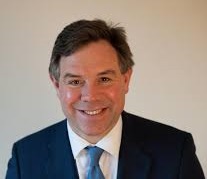
Caroline Ansell, the Conservative MP for Eastbourne, does not ask many questions from the Government when the Parliament is closed down but on Thursday she asked a significant question and interestingly she was the only Sussex MP who has asked any questions since the New Year. The theme of the question “Wind Power” and the person who is responding her question is Rebecca Pow Minister for Department for Environment, Food and Rural Affairs and MP for Taunton Deane in Somerset. Here is the question and response.

Caroline Ansell: To ask the Secretary of State for Environment, Food and Rural Affairs, whether he has made an assessment of the environmental sustainability of biomass lubricants in wind turbines.

Rebecca Pow: The Marine Management Organisation’s (MMO) general objective, as set out by the Marine and Coastal Access Act 2009 (MCAA), is to manage its activities with the objective of contributing to the achievement of sustainable development, taking account of all relevant facts and matters and in a consistent and coordinated manner (section 2(1) MCAA). In our decision making and when making our recommendations to the Secretary of State where applicable, the MMO considers the need to protect the environment, human health, and to prevent interference with legitimate uses of the sea (and such other matters as thought relevant) (section 69 MCAA). As a signatory to the Oslo and Paris convention (specifically OSPAR 1992 Annex lll Article 4) the UK must ensure that chemicals are approved for use in the marine environment. This is a requirement for each signatory country for their exclusive economic zone beyond 12 nautical miles and covers the area up to the recognised international boundaries.

Offshore wind farm (OWF) applications with a generating capacity of more than 100MW are classed as Nationally Significant Infrastructure Projects (NSIPs), as set out in Part 3 of the Planning Act 2008 (as amended), and as such are granted or refused by the Secretary of State for Energy Security and Net Zero. OWF developments

The OSPAR guidance on environmental considerations for OWF development suggests that all chemicals, paints and coverings used in the maintenance and repair of OWFs should be approved for use in the marine environment and their properties should be sufficiently understood. DML conditions are contained within DCOs consented by the Secretary of State, to capture this requirement, alongside others regarding the control of chemicals in the offshore environment.

Under the management of DML conditions, the MMO reviews chemicals used, and any chemicals not already approved under the List of Notified Chemicals require a chemical risk assessment to be submitted before being approved for use.

Generally, lubricants are used in small quantities with low risk to enter the marine environment. They are used to maintain low friction, allow for efficient heat transfer and for the maintenance of hydraulics or moving mechanical parts in activities relating to foundations, cable laying, substation platforms and wind turbine generators where applicable. Regardless, all lubricants are considered for their environmental sustainability alongside all chemicals as part of the process outlined above.

Posted in Parliament and Democracy | Tagged , , | Leave a comment

Another question for Farmers published in Parliament


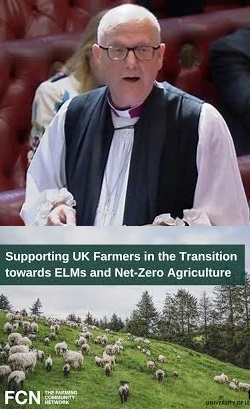
During the week between Christmas and the end of the year, a question was raised by the Bishop of St Albans which was “what steps they are taking to assist farmers transitioning towards net zero”. That detail can be obtained from another page on this session which is here. Subsequently during the first week following the New Year a few more questions arose in Parliament, two of them were provided by the Bishop of Southwell and Nottingham, Paul Williams. On Thursday he asked a second question relating to Farmers under the headline of ”Agriculture: Subsidies” The answer from the Government came from Lord Douglas-Miller, the Minister for Environment Food and Rural Affairs, Robbie Douglas-Miller. The question and response is here

The Bishop of Southwell and Nottingham: To ask His Majesty’s Government what consideration they have given to permitting farmers transitioning from Basic Payments to Delinked Payments to discount one or more of the years in the reference period as a result of (1) events outside their control, or (2) a mistake; and whether they intend to review and amend the Agriculture (Delinked Payments and Consequential Provisions) (England) Regulations 2023 in this regard.

Lord Douglas-Miller: Delinked payments will be based on the average Basic Payment Scheme (BPS) payment made to the farmer during the 2020 to 2022 reference period. The Government considers that using an average over three years is fair as any anomalies will be evened out. This takes account of responses to our 2021 consultation on delinked payments.

In addition, where a farmer suffered exceptional circumstances which affected their ability to meet the BPS rules in the reference period, they were able to apply at the time under the BPS force majeure rules. In such cases, the Rural Payments Agency may not have applied a reduction to the BPS payment for non-compliance with the rules.

Posted in Church Teaching, Parliament and Democracy | Tagged , , | Leave a comment

A Welsh House of Lords has focused on Sussex NHS!


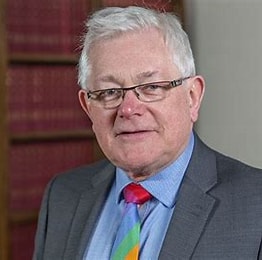
Mike or Michael, James German is a Liberal Democrat who is called Lord Baron German in the House of Lords. His information in the wikipedia is explained as “OBE (born 8 May 1945) is a British politician, serving currently as a member of the House of Lords and formerly as a member of the National Assembly for Wales for the South Wales East region. He was leader of the Welsh Liberal Democrats from 2007 to 2008. In 1996, he was awarded an OBE for his public and political service.” On Thursday this week he published a question to the Government which was answered by Lord Nick Markham, the Health and Social Care Minister. The question and answer is located below and can be obtained from here So far no one has commented.

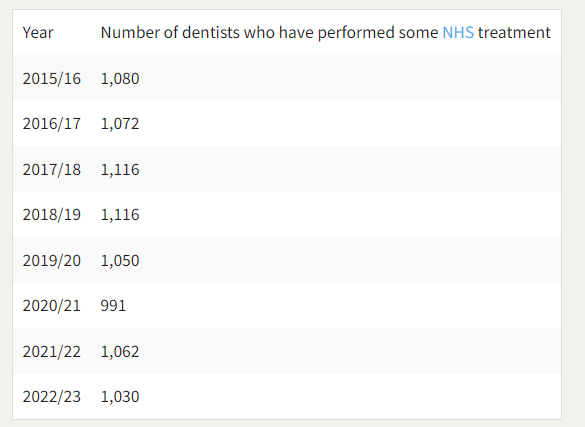
Lord German: To ask His Majesty’s Government how many dentists delivered NHS services in Sussex for each year from 2015 to the present.

Lord Markham: The following table shows the number of dentists delivering National Health Service treatment for Sussex Integrated Care Board in each year from 2015/16 onwards:

Posted in Health Reform, Parliament and Democracy | Tagged , | Leave a comment

A Bishop has asked for a Home Education: Registration


At the moment because Parliament is closed, there are very few questions being asked for the Government and one of them who asked a question on Tuesday was the Bishop of Southwell and Nottingham who is Paul Williams. He asked a question under the name of Home Education: Registration and he asked Baroness Barran to answer. That person is Diana Barran and she is a Government Minster. So here is the question and the answer which can be obtained from here. So far one person has endorsed that the answer was very positive.

Bishop: To ask His Majesty’s Government, further to the remarks by Baroness Barran on 19 December 2023, what consideration they have given to expediting the introduction of a statutory register of children schooled at home and online, given the rise in those numbers, in order to identify children (1) who are at risk, or (2) who have unmet needs.

Baroness: The government is committed to a statutory system of registration for children not in school and intends to legislate for that at the next suitable opportunity. My honourable Friend, the Member for Meon Valley introduced a Private Member’s Bill on 11 December with the aim of creating legal duties on local authorities to maintain such registers. The department welcomes her long and ongoing support for those measures, which the department had previously introduced as part of the Schools Bill.

Posted in Church Teaching, Parliament and Democracy | Tagged , | Leave a comment

Changes lie ahead as a general election looms


(This article was published in the Brighton Argus today – 1st January 2024) Today is the first day of our new year and those of us who are interested in the political scene for Sussex and for the Nation will be aware that this year is going to be a significant time. There will be at least one General Election that will take place during this year following the election that was organised by Boris Johnson which took place on the 12th December 2019. His actions as Prime Minister from 2019 until September 2022 directly led to many calls from a wide range of Politicians and the general public for a subsequent election. However sadly that did not take place. Given that national elections must take place every five years many of us would want the General Election to take place in early May at the same time as the local Council Elections that will occur at that same time. The Government may select a different date sooner or later than May but they will certainly need to organise it before the end of this December.

One emerging news item following several earlier announcements from at least three of our sixteen MPs who have indicated that they are arranging to retire from Parliament by this year’s General Election.

The youngest one so far is Henry Smith from the Crawley area who represents Conservatives and he is due to hold his 55th Birthday this May. He has been their MP since 2010 and he was previously a senior West Sussex leader Councillor in the region. Caroline Lucas, the Green MP for Brighton Pavilion will celebrate her 64th birthday in December having been an MP since 2010. Previously she was a member of the European Parliament for the South East. The third person is Nick Gibb, the Conservative MP for Bognor Regis and Littlehampton, who is celebrating his 64th Birthday this September. He has been that MP since 1997 representing a significant number of years.  Along with these three who have announced retirement there is one other Sussex MP of a considerable age for Sussex Politician’s and indeed for the whole of the UK. In July this year Peter Bottomley the MP for Worthing West is celebrating his 80th Birthday and we can celebrate his role as Father of the House and an MP since 1975 so for 49 years so far. The other Sussex MP of similar age to Nick and Caroline is Tim Loughton the other East Worthing and Shoreham MP, he will be 62 this May. There are three other Sussex MPs who are of a similar age to Henry Smith. The other eight Sussex MPs are younger than Henry and these others.

One of the other aspects that has emerged in connection to the General Election is a reflection from some Sussex constituents who feel the current political system is very restrictive and keeps Conservative MPs retaining their locations. These constituencies would like a choice of MP’s from across the Political spectrum so they can express their important viewpoints.

Only Crawley, one of the constituencies in West Sussex, has been successful in having more flexible voting in the recent past. Interestingly Crawley was first established as an individual voting area in 1983 and for the first three elections it obtained a Conservative MP. In 1997 it changed to Labour for another three elections. Then since 2010 it has been held by Henry Smith and it will be interesting to observe what takes place this year now, he is retiring.

Three locations in East Sussex have changed in recent years. The Lewes area was held by Conservatives from 1874 until 1997 when a Liberal Democrat MP, Norman Baker took over and he was the MP until 2015 when Maria Caulfield succeeded and she currently remains as their MP and is a government minister. Eastbourne was established in 1885 and has mainly been Conservatives but a Liberal Democrat won in 1906 for four years. Since 1990 there have been a number of changes from Liberal MPs in competition with Conservatives. Hastings and Rye became a constituency in 1983 and was initially held by Conservatives until Labour succeeded in 1997 to 2010. It has been Conservative since then.

The three Brighton and Hove constituencies have changed several times in the recent years. Brighton Pavilion and Hove have both challenged Conservative MPs since 1997 and the Brighton Kemptown area has been more radical switching between Conservative and Labour settings since 1964.  

Of course, the other locations in Sussex have so far ever had alternatives to Conservatives. There are two in East Sussex, Wealden, Bexhill and Battle. There are seven in West Sussex which are Chichester, Horsham, Arundel and South Downs, Bognor Regis and Littlehampton, Mid Sussex, Worthing West, East Worthing and Shoreham. In addition to Sussex there are other areas across the country that would benefit if more flexible voting arrangements were possible. Kent and Surrey are closest to us, but I am also aware of a Labour MP’s dominance in the Liverpool and there are other places in the UK. At present there are some active discussions across a wide range of settings seeking to challenge the way in which MP’s are selected. It would be very significant if the next Government would enable several different MPs to represent the range of views held by constituents. Many of us would like at least one Green MP to emerge for the country in the future.

Posted in Brighton & Hove, Parliament and Democracy | Tagged , , , , , , | Leave a comment

A good question in Parliament from Bishop of St Albans


This week between Christmas and New Year there have not been many comments submitted to the Government but one of the members of the House of Lord is Alan Smith, the Bishop of St Albans. His question is focusing on “what steps they are taking to assist farmers transitioning towards net zero; and what steps, if any, they are taking”. The response from the Minister came from Lord Benyon a previous Conservative MP for Newbury. Here is the full question and response.

The Bishop of St Albans: To ask His Majesty’s Government what steps they are taking to assist farmers transitioning towards net zero; and what steps, if any, they are taking to (1) support carbon auditing on farms, (2) standardise carbon calculators, and (3) invest in water management infrastructure.

Lord Benyon: We are taking a range of measures to support farmers’ transition to net zero. We are investing in a range of actions through farming schemes such as the Sustainable Farming Incentive and Countryside Stewardship and Landscape Recovery. Our schemes will help farmers deliver environmental outcomes on the land they manage while helping their businesses become more productive and sustainable.

We will also pay farmers for improvements to animal health and welfare, as those improvements in turn can support lower emissions and improve productivity. We will also support market-led approaches such as improved productivity and use of precision techniques.

Robust and accurate carbon audits which are based on business-level data can be valuable in benchmarking performance and help farm businesses plan and action decarbonising measures and enhance management of negative emissions. To help farmers confidently understand the emissions on their land and take advantage of the new financial opportunities this will unlock, we are committed to developing a harmonised approach to measuring carbon on farms. We are also considering how we can best support the implementation of carbon audits through a controlled expansion of the Defra Farming and Countryside Programme sustainable farming advice offer.

We recognise the challenges in improving the robustness and consistency of carbon auditing tools. Defra is currently funding a ‘Harmonisation of Carbon Accounting Tools for Agriculture’ project to assess the level of divergence between a number of market leading carbon calculators, to understand the causes of this divergence and how it impacts tool users and consider recommendations for harmonisation. Defra aims to publish the full research report in 2024. Building on this research and working with existing tool providers, Defra aims to support carbon tool providers to harmonise their underlying methodologies so that outputs are consistent and comparable, and their ability to serve different customer needs is maintained.

Defra is also working to provide greater access to the calculations and the models developed as part of the UK’s Agricultural Inventory of Ammonia and Greenhouse Gas (GHG) Emissions to interested third parties. This will support longer term alignment between the UK’s national GHG accounts and primary data gathered from farms

The Government and the Environment Agency also support the agricultural sector with the Water Management Grant, under the Farming Transformation Fund, for the construction of new on-farm reservoirs and the adoption of best practice irrigation application equipment to help ensure farmers have access to water when they need it most. Through the first round of the grant, launched in November 2021, we are forecast to create an additional 4.7million cubic meters of reservoir storage. The total investment in reservoirs and irrigation equipment is predicted to be £7.4 million. Round 2 of the grant was launched in April 2023 with a total budget of £10 million.

Posted in Church Teaching, Parliament and Democracy | Tagged , , | 1 Comment

MPs who have raised Sussex Wildlife Trust in the past


It is always interesting to observe when MPs raise significant themes in Parliament and here are several existing Sussex MPs that have referred to Sussex Wildlife Trust in Parliament in the past. It will be very interesting to see if any of our MPs will raise it this next year. The most recent one was in September 2022 and the first one was in December 1997. So here are the MPs that have commented and indeed their current words. The first one that commented was Tim Loughton from East Worthing and Shoreham who raised it in December 1997 and also in May 2003, Caroline Lucas from Brighton Pavilion did so in March 2014 and she also added to a section in 2019, Maria Caulfield from Lewes in September 2016, Henry Smith from Crawley in October 2019, Andrew Griffith from Arundel and South Downs in September 2020 and finally Sally-Ann Hart from Hastings and Rye in September 2022.

Tim Loughton December 1997

What is the point of giving local authorities flexibility in planning future housebuilding levels if politicians simply reinstate their own inflexible figures? The Sussex Wildlife Trust stated: This makes a mockery of the enormous amount of work done to establish a sustainable level of housing development in West Sussex. 

Tim Loughton May 2003

Another quote from the time of that report was from the Sussex Wildlife Trust, which stated that the news of the Deputy Prime Minister’s action was

“a severe blow against local democracy. The EIP process appears to have been a waste of time and resources. The month of eloquent discussion and the winning of the argument count for nothing against an ill-judged government direction.”

How right all those comments turned out to be.

Caroline Lucas March 2014

Last week, I received a report from the Sussex Wildlife Trust that sets out an evidence-based approach to flood protection that was produced by the Chartered Institution of Water and Environmental Management, which is made up of independent and professional people who are experts in their field. 

Maria Caulfield September 2016

We have talked to the Minister about being a trial area for a vaccination programme and he has been very supportive of farmers in East Sussex. We would be ideal because we are an edge area and have support from our farmers, the National Farmers Union and our residents. We also have a trained and licensed group of volunteers ready to go, and the support of the Sussex Wildlife Trust.

Henry Smith and Caroline Lucas – October 2019

Henry: In that recognition of where humans can enhance our environment, will the hon. Gentleman join me in paying tribute to the Sussex Wildlife Trust and the wildlife trusts around the country that do so much to support our environment with innovative and practical solutions?

Caroline: The hon. Gentleman is being generous with his time. It is great that we are all paying tribute to our local wildlife trusts; I will put in a word for the wonderful Sussex Wildlife Trust. 

Andrew Griffith September 2020

I accept that they may currently be somewhat out of favour, but, as the excellent Sussex Wildlife Trust has highlighted to me, there are also extremely rare bat colonies relying on the native woodlands, ancient hedgerows and streams of West Sussex.

Sally-Ann Hart September 2022

We might look, for example, at the work my hon. Friend Tim Loughton is doing with the Sussex Wildlife Trust on restoring the kelp forest off the coast of Worthing, which is helping to capture carbon. Restoring and maintaining blue carbon habitats in our seas could create jobs directly in conservation, as well as indirectly in nature-based tourism, helping to level up our coastal communities even further.

Posted in Brighton & Hove, Parliament and Democracy | Tagged , , , , , , | Leave a comment

I wish all the best for Christmas and a peaceful new year?


It was fantastic that several MPs raised Christmas celebrations at the last few days of Parliament. Indeed there is a list of significant comments that can be seen here. On the last day of the public Parliament this year on Tuesday 19th December several of them did so and one of them was Lindsay Hoyle who is the Speaker of the House of Commons and he stated here and also focused on the New Year celebration.

“Before I start questions, may I wish all Members and their families the best for Christmas and a peaceful new year? I thank all staff within the House of Commons—those in security, catering, Clerks, you name it—for all they do. It is appreciated. It has been another hard year, and I just hope we can have a peaceful world, peace in the middle east, and certainly peace in Europe.”

Posted in Parliament and Democracy | Tagged | 1 Comment

A “Right to Buy Scheme” question from House of Lords


The member of the House of Lords who asked this question was the Bishop of Derby the Rt Revd Libby Lane and the response came from Baroness Joanna Penn, a Government Minister. The two comments which have been received so far suggest the response from Rachel Penn are inadequate that can be seen here and here is the text.

Bishop of Derby: To ask His Majesty’s Government what assessment they have made of the case for allowing local authorities to set their own right-to-buy discounts to reflect local circumstances.

Baroness Penn: The Government remains committed to the Right to Buy, which has helped over 2 million social housing tenants to become homeowners.

The Right to Buy is a statutory right for eligible local authority tenants across England, with the discount formulae set in regulations. This approach already recognizes higher property prices in London with a higher maximum discount for any sales inside London. This ensures a consistent offer for tenants across the country.

Posted in Church Teaching, Parliament and Democracy | Tagged , | Leave a comment