A fascinating discussion for Long-term Plan for Housing


On Tuesday in Parliament at the last day for their Christmas period on 19th December there was a session organised by a Government Minister Lee Rowley who is the MP for North East Derbyshire. Clearly the theme is organised by Michael Gove but he was not speaking during that session. A number of other MPs responded with Lee Rowley one of which was the Conservative Worthing West MP Peter Bottomley who is also the Father of the House of Commons. It was very interesting to read what Peter stated and there was a response from Lee which is also interesting. The whole session is available from here and the first few comments Lee took at the beginning of the event:

Lee Rowley: With permission, I would like to make a statement on the Government’s commitment to house building and the planning policy reforms we are making today.

This Government want to build more homes in the right places, more quickly, more beautifully and more sustainably. We know that the right way to deliver this is through a reformed planning system. Today, the Secretary of State and I are laying out our plan for that reform, and we are clear that it is only through up-to-date local plans that local authorities can deliver for communities, protect the land and the assets that matter most, and create the conditions for more homes to be delivered.

At the end of his comment and following a comment from a Labour MP the next person was Peter Bottomley and his call is as follows and the response from Lee Rowley

Peter Bottomley: Before talking about the general policy, may I mention one small point? In paragraph 22 of his statement, the Minister talks about energy efficiency in heritage buildings. In Ambrose Place in Worthing—including at the house of one of my neighbours, where Harold Pinter lived—people are being told that they can have only secondary glazing, not double glazing, because it is in a conservation area. I hope that the Minister will talk with experts and say that double glazing is acceptable in reasonable circumstances, when people want to improve the energy efficiency of their homes.

On the general point, the Minister mentions the green belt. According to one calculation, there are 16 green belts in England, none of which is in East Sussex or West Sussex. I interpret his words as meaning “green gaps”: an expression used by the Secretary of State when he commented on the problems of Worthing, where every single bit of grass—the vineyards, the golf courses and the green fields—between Worthing and its neighbours to the west is subject to a planning application. It is important that the inspectors in his Department do not come along, as they did over the land north of Goring station, to Chatsmore Farm and the Goring Gap and say that even if Worthing built on every bit of lawn in town, it would not meet the full target, and yet give permission to build on that farm, which distinguishes Worthing from its neighbours.

It is also important to follow up the Minister’s words about intense development in the centre of villages, towns and cities, so that there are homes in high-density accommodation that elderly people can choose to live in, so that their family homes can be freed for families. The idea that most of the development on our green fields is for families is for the birds—it is for people on their second or third homes. I think people who are my sort of age ought to have the choice to live securely in high-thermal efficiency apartments, with services that do not require cars, and where they can live more easily and happily.

Lee Rowley: My hon. Friend makes an important point about energy efficiency, which I am happy to talk to him about in more detail. He is a champion for Worthing West. I have family who live close to Worthing, and know the Goring Gap well. He makes a strong point about the importance of preserving character and ensuring communities build the right homes in the right places, while recognising that there are places where that should not be the case. I am always happy to talk to him about that.

Posted in Housing, Parliament and Democracy | Tagged , , | Leave a comment

Will extra £50m support University Technical Colleges?


There was a Topical Questions session that took in place in Parliament on Monday 11th December and one of the people who corresponded was Sally-Ann Hart who is the Conservative MP for Hastings and Rye. There was a response from a Minister MP, Robert Halfon and here is the question and answer which relates to the £50 Million figure and how it will assist UTC’s and also STEM items.

Sally-Ann: The Government are rightly focusing on technical as well as academic education with the new British standard. University technical college sleeves would support the Government to enhance pre-16 technical education in secondary schools. Will the extra £50 million made available for technical education in schools in the autumn statement be available for UTC sleeves?

Robert: My hon. Friend is a champion for UTCs and technical education. I am delighted that the Secretary of State recently approved two more UTCs. A couple of weeks ago I visited the brilliant Harlow BMAT STEM Academy, which is a UTC, and UTC Portsmouth. We will respond shortly to Lord Baker’s request for a UTC sleeve pilot, as she mentioned.

Posted in Education, Parliament and Democracy, Youth Issues | Tagged , , , | Leave a comment

Parliament included Israel issues and Auditory Verbal


(This article was published in the Brighton Argus today – 18th December 2023) There have also been a couple of groups of events that have taken place in the last few days focusing on public controlled e-petitions. One of these items is arranging to take place this afternoon which is an e-petition 635904 named “Hold a parliamentary vote on whether to reject amendments to the IHR 2005” which is a reference to International Health Regulations (2005) a legally binding agreement that provides a framework to detect, assess, report, and respond to public health events that have the potential to cross borders. This is being organised by the MP Scott Benton the Conservative Parliament for Blackpool South. Dr Tess Lawrie published it in early April this year and it closed at the beginning of October with 116,391 signatures. Given that there have been nearly 4,500 Sussex signatures it would be very encouraging if some of our local MPs will participate. The largest locations represented by signatures are Arundel in West Sussex, Hove in Brighton and Hove and Wealden in East Sussex. Although the Lewes, Bexhill and Eastbourne areas have been significant across our region.   

Last week the “TheyWorkForYou” website published a schedule for next year which is proposed to take place on the first Friday in March. The MP for Hastings and Rye, Sally-Ann Hart is presenting a Bill to

require the provision of information relating to support available for parents and carers of infants for the purpose of supporting those infants; to require the Government to publish an annual report on the support available for infants and the impact that that support has had on outcomes for infants and children; and for connected purposes.

This bill is holding the second reading of her “Support for Infants Bill”. On the same day there is also the second reading of a Bill organised by Lloyd Russell-Moyle, the Brighton Pavilion MP. His piece is called “Conversion Practices (Prohibition) Bill” published a week before the one from Sally-Ann and his piece is described as

a Bill to prohibit practices whose predetermined purpose is to change a person’s sexual orientation or to change a person to or from being transgender; and for connected purposes.

It is unusual to have the opportunity for two Sussex MP’s speaking on the same day especially as there has been little discussion from Sussex MP’s for quite some time.

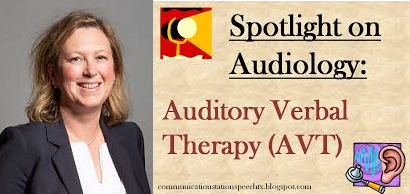
Last Tuesday included an important discussion called Auditory Verbal Therapy organised by Sally-Ann Hart. This was related to a charity called “auditory verbal” who were obviously delighted that the event was taking place. Four other MPs participated a SNP, a DUP, and a London based Labour MP and Maria Caulfield from Lewes contributing as the government minister. Sally-Ann stated

There are about 50,000 deaf children in the UK, with over 7,000 under the age of five. They face the prospect of lower academic achievement and lower employment and are at a high risk of poor mental health, bullying and social exclusion. But it does not have to be this way: when deaf children and their families have access to early, effective support, opportunities are transformed. Expanding opportunities for children with special educational needs, including deaf children, so that they can reach their full potential is really important to them, their families and us as legislators. Early support should be available to all deaf children, whether their parents choose to communicate with spoken language, sign language or both.

At the end of the session Sally-Ann also called for Maria to meet with the Charity.  Also on Tuesday an Education Committee session involving Caroline Ansell from Eastbourne together with a discussion about “Animal Welfare (Livestock Exports) Bill: Second reading” will take place The Bill is focused to prohibit the export of livestock in Great Britain which involves cattle, sheep, goats, pigs and horses

The other discussion about e-petitions which took place Monday has only appeared to emerge. The event was organised by Cat Smith, the Labour MP for Lancaster and Fleetwood and she picked up the three significant e-petitions that are focused on Israel and Palestine issues. All three of these events are still public and they are “Remain neutral in Israel-Palestine conflict and withdraw support for Israel” which has more than 150,000 signatures, “Urge the Israel Government to allow fuel, electricity and food into Gaza” which has almost 200,000 signatures and “Seek a ceasefire and to end Israeli occupation of the West Bank and Gaza Strip” which has almost 260,000 signatures. The three items had very large signature support from Brighton Pavilion and two of them had also significant Crawley support. The only Sussex MP who took part was Caroline Lucas who is clearly reflecting the significant number of her members of the group. Her initial words were

“Like everyone who has watched the footage and read the accounts of the Hamas atrocities on 7 October, and anyone who has followed the utter devastation and mass killing happening in Gaza and the growing violence in the west bank, my overwhelming response is, “How do we stop this?” That is why I urge the Government and the Labour Front Bench to support an immediate bilateral ceasefire.”

She then states a few minutes later

Of course, the scale of the deaths and the horror is vastly different now, but the fundamentals of then and now are the same: the lives of civilians in both Israel and Gaza must be protected.

Every effort to prevent suffering is vital.

Posted in Brighton & Hove, Parliament and Democracy | Tagged , , , , , , , | Leave a comment

A discussion of “Loot Boxes in Video Games”


In the House of Lord the “Loot Boxes in Video Games” took part on Wednesday 13th December which can be obtained from here and the opening few words were from a Liberal Democrat member Don Foster who is the Lord Foster of Bath “To ask His Majesty’s Government what measures they are planning to take to mitigate the risks caused by loot boxes in video games. My Lords, in begging leave to ask the Question standing in my name on the Order Paper, I declare an interest as chairman of Peers for Gambling Reform.” The person who responded for the Government was Stephen Parkinson who responded to that question.

Stephen Parkinson: We welcome new industry-led guidance to strengthen player protections in relation to loot boxes. We have agreed a 12-month implementation period, during which we expect the industry to work with players, parents, academics, consumer groups and government bodies to implement this guidance in full. We are working closely with academics to support independent scrutiny of these new measures, and we will provide further updates and keep under review our position on possible future legislative options.

Later on one of the people who also contributed was Steve Bassam from Brighton who is a person I have met on several times and he was a significant person

Steve Bassam: My Lords, whether it is the two-year gap between the Government’s call for evidence and their response, or the further year-long wait for the games industry to announce guidelines, efforts to tackle child access to loot boxes and other in-game features with gambling-like features have been far too slow, in our view. Like others, we hope that voluntary arrangements will work, but if they do not, can the Minister confirm whether the Government have a specific regulatory approach in mind? If so, how long might implementation take?

Stephen Parkinson: We think the industry-led guidance on loot boxes has the potential, if fully implemented, to improve protections and to meet the Government’s objectives. We expect the games industry to implement the guidance in full and we will monitor that carefully. If the industry is unable to meet our objectives, there are a range of options that the Government may consider, but we would like to see how they bed in first.

Posted in Brighton & Hove, Parliament and Democracy | Tagged , , | Leave a comment

On this “Israel-Hamas War: Diplomacy” Faiths get raised


On Tuesday the House of Lords held a debate of Israel-Hamas War: Diplomacy and several members of the members took part which can all be obtained from here. One of them was the Bishop of Durham, Paul Butler who stated “My Lords, this tragic situation is also caught up in the complexity of the religious faiths of the region. In what way are faith leaders involved in the diplomatic conversations to seek to bring peace?” and the Minister who was speaking on the session was Lord Ahmad of Wimbledon who is Tariq Ahmad and his response was

My Lords, to me that is fundamental. There is a unifying factor, which from the Muslim perspective was the prophet Abraham, and we all recognise that. Faith leaders have an important role: they can bring people together as an important part of track 2 diplomacy. I am engaging directly with faith leaders because I believe to my core that faith is about bringing people together, not dividing us.

Posted in Church Teaching, Parliament and Democracy | Tagged , , | Leave a comment

The “Arms Export Licences: Israel” includes Brighton


On Tuesday this week there was a session entitled “Arms Export Licences: Israel” and it was opened by Zarah Sultana who is the Labour MP for Coventry South who began with “I beg to move, That this House has considered arms export licences for sales to Israel” and she commented on several discussions that involved in other MPs. She then contributes this one which refers to Brighton on her comment with the comment “Some 15% of the parts for these aircraft are made in British factories, including the Brighton factory that makes the weapon-release system on the jet, allowing it to unleash deadly airstrikes on the people below.” It is very interesting for those of us who are based in Brighton to consider it and it was clear that there were no Sussex MPs that took part in the event on that session. The whole of the text is here and this is her comment that refers to Brighton.

Absolutely—I completely agree with that intervention.

Just to go back a little, we know that we have issued arms licences to the Israeli military worth £474 million since 2015. Included in those licences are parts for F-35 fighter jets—stealth aircraft that are currently unleashing hell on Gaza.

According to US arms company Lockheed Martin, which is the lead contractor for these jets, they are:

“ the most lethal…fighter jets in the world.”

Some 15% of the parts for these aircraft are made in British factories, including the Brighton factory that makes the weapon-release system on the jet, allowing it to unleash deadly airstrikes on the people below. We must ask whether it was a British-made release system that sent death screaming on to Safaa and her baby girl in Rafah? Was Nour robbed of her dream of becoming a doctor because a British-made weapon launched an airstrike on her home? And were British-made arms involved in robbing Khaled of his beautiful grand-daughter? The answer is that we do not know, although there is no doubt that British-made arms have been used in the massacre of Palestinians in Gaza. Despite hollow protestations by Ministers, there is also no doubt that Israel has committed clear violations of international law, as the UN Secretary-General, Amnesty International, Human Rights Watch and others have said.

Posted in Brighton & Hove, Parliament and Democracy | Tagged , , | Leave a comment

On Monday Chi Onwurah asked a STEM question


On Monday in Parliament there was a written question from Chi Onwurah who is the Newcastle upon Tyne Central MP. Her question was focused on STEM and it was interesting that the response came from Andrew Griffith who is a Sussex MP from Arundel and South Downs as well as him being a Minister member of the Government. The question and response is here and these are the words.

Chi Onwurah: To ask the Secretary of State for Science, Innovation and Technology, pursuant to the Answer of 5 December 2023 to Question 3808 on STEM Subjects: Employment, what steps he is taking to promote diversity in the private sector STEM workforce.

Andrew Griffith: DSIT continues to work closely with other departments, including DfE, to ensure that the UK has the skilled and diverse workforce needed to sustain our global science superpower ambitions.

The Government through UK Research and Innovation supports STEM Ambassadors, a nationwide network of over 30,000 volunteers from a wide range of employers, who engage with a diversity of young people to provide stimulating and inspirational activities to increase their interest in STEM subjects and the range of careers that STEM qualifications offer.

Posted in Parliament and Democracy, STEM | Tagged , | Leave a comment

The Government decide without consulting Parliament.


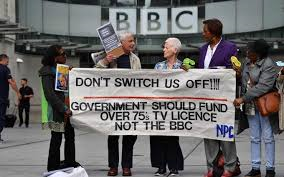
At the end of last week in Parliament there was a debate about BBC Funding and one of the first people to comment was Peter Bottomley who is the MP for Worthing West and is also the Father of the House of Commons. This is his contribution and the response from Lucy Frazer who is the Minister for Culture, Media and Sport. The whole of the contribution can be can be obtained from here. The comment from Peter includes “the Government have decided, again, to make a decision without consulting Parliament” which is very significant to come from him as he is a member of the Conservative group. He also states at the end “The BBC needs defenders, and I am one of them” and interesting Lucy states “I, too, am a defender of the BBC”. So here is his content and the response from Lucy.

Peter Bottomley: At the risk of correcting Thangam Debbonaire, I think the Housing Minister has changed more often than the Secretary of State for Culture, Media and Sport.

I say to my right hon. and learned Friend the Secretary of State that I do not think that anyone will go to the stake for the difference between the September CPI and others, although we can note that, were the BBC licence fee to go up by another 10%, it would still be 50p a week per household, which is probably the best value in broadcasting anywhere.

I am worried that the Government have decided, again, to make a decision without consulting Parliament. If we are to have a public broadcaster funded by a licence fee or some equivalent, Parliament should be brought in more often by Governments. This is probably the fourth time that there has been an announcement of what will happen without Parliament having been consulted first. I hope that my right hon. and learned Friend and others will say that Parliament should be brought in. If the choice is between the United States model and public broadcasting, Parliament ought to be able make its views known.

The House will have noticed that the Secretary of State said that the review will look at alternative options for funding the BBC and then said that she

“can…rule out…creating any new taxes.”

I thought that it was Parliament that decides whether we have taxes. The review may want to consider some kind of household payment, whatever we call it—at present it is called the licence fee; if we do not call it a tax, we call it a charge or something else—or something to be taken from existing taxation. If the BBC is a public benefit, why not add to whatever households pay for the licence fee the implied tax on the income that they use to pay it, for example? That would allow the income from existing taxes to go up.

The BBC needs defenders, and I am one of them. As long as I am here, the Government can expect detailed attention, and a great deal of support for doing sensible things.

Lucy Frazer: I, too, am a defender of the BBC. It provides an outstanding service across the world. I am proud to have seen at first hand the fantastic job that it did for Eurovision, for the coronation and for the last night of the Proms. If we were to create something that spread our values and soft power abroad, we could not do better than creating the BBC. I certainly do not want to see its services diminished, but I want to ensure that it continues to survive in this changing media world. At the moment, it is losing audiences and licence fee payers, and I want to help to support it. That is one thing that we will look at carefully in the review.

The Father of the House rightly mentions the importance of discussion and consultation. My door is open to all those who want to raise points with me. Of course, in due course, we will need to consult, and this is part of the charter review, which will involve a wider consultation exercise.

Posted in Parliament and Democracy | Tagged , | Leave a comment

MPs vote to rebel on infected blood scandal


(This article was published in the Brighton Argus today – 11th December 2023) On Monday last week there were five votes in Parliament for two Bills under discussion. Four were relating to the clause aspects for the “Victims and Prisoners Bill” and the final item was the voting for “Delegated Legislation – Climate Change”. It was very interesting to see how several of our local MPs responded to some of the two Bills. Only one Sussex MP’s, Sally Ann Hart did not vote at all on any of these clauses which was disappointing. The majority of the Sussex Conservatives along with the Government rejected all of the four clauses that took place and the Labour Party approved the second to four clauses but they ignored the first clause which was called “10 – Sewage Illness Victim Compensation Scheme”. Both of the Sussex Labour MPs did ignore it but Caroline Lucas approved it along with the other three clauses as did all of the DUP and the Liberal Democrat MP’s. Apart from Sally-Ann all of the Sussex Conservative MPs rejected the first two and fourth clauses but the third clause “27 – Compensation for victims of the infected blood scandal (No. 2)” was endorsed by three Sussex Conservative MPs; Tim Loughton, Peter Bottomley and Henry Smith. That clause was very significant because it obtained two hundred and forty-seven endorsements from MPs including 22 Conservatives, a number of DUP, SNP, Liberal Democrats and Plaid Cymru and Green groups that supported it. With only two hundred Conservative MPs rejecting that particular Clause it was approved. Only one other Sussex MP acted differently which was Caroline Ansell from Eastbourne who did not vote for or against that clause. The fifth vote on Monday was entitled “Delegated Legislation – Climate Change”. Interestingly most of the Conservatives, Labour and the Plaid Cymru and Green Party endorsed it so a total of three hundred and sixty-eight supporters. The opposition was a small group of Conservatives and the DUP a total of thirty-five rejections. Most of the Sussex MPs did endorse it apart from Tim Loughton and Henry Smith who did not vote. Amongst the Conservatives in Government who opposed it, included Suella Braverman, Iain Duncan Smith, Priti Patel, Christopher Chope, John Redwood and Jacob Rees-Mogg.

This week in Parliament on Tuesday morning there is a discussion entitled “Provision of auditory verbal therapy” which is being organising by Sally-Ann Hart who is the MP for Hastings and Rye. It reflects a proposal from the “auditory verbal” charity that explains

Auditory Verbal therapy is a highly specialist, early intervention, family-centred, coaching programme which equips parents and caregivers with the tools needed to support the development of their deaf child’s listening and spoken language. Auditory Verbal therapy supports deaf children to learn how to make sense of the sound they receive through their hearing technology so they can learn to talk like their hearing friends.

It will take place in Westminster Hall. It would be great if some of our other Sussex MPs will take part in it.

I noticed last week that Jeremy Quin, the MP for Horsham stepped down from the Government back in mid-November at a similar time to when Nick Gibb stepped down. It will be interesting if stepping down will influence any new and different approaches they both make towards the Government now that they are not Conservative Minsters. The next few months could potentially offer flexible voting behaviour towards Government. The votes last week show what changes can be created.

Along with the voting information that emerged last week I noticed the activity of three Sussex MPs. The Argus Newspaper last Monday published a piece relating to Peter Kyle the Hove MP under the headline of “Peter tells pupils how he became and MP”. Peter held a discussion at a local School, Blatchington Mill, for some year 8 pupils. A short while later on the same day Huw Merriman, the MP for Bexhill and Battle published on X, formerly Twitter, referring to a visit of two Schools which involved Gillian Keegan who is the MP for Chichester and the government minister for education.  All three had visited schools on the 1st of December. The text from Huw Merriman was

Pleased to welcome Education Secretary @GillianKeegan to two of our excellent local secondary schools last Friday. After spending time talking to staff & pupils at #Heathfield, we went on to #Claverham to see the very impressive new school building and meet with students & staff

All Sussex MPs have recently raised issues in Parliament relating to Education. The most recent one came from Lloyd Russell-Moyle who at the end of November set out an Early Day Motion document entitled “Free School Meals” He stated;  

That this House notes that free school meals ensure millions of children get a hot and healthy meal each day; is concerned that children whose families meet financial eligibility requirements, but receive their education other than at school, do not benefit from these meals; congratulates both Brighton and Hove City Council and East Sussex County Council for their work to guarantee equity of access for all eligible families; and calls on the Government to provide clearer guidance and, if necessary, additional funding to ensure that no child in education goes hungry during the school day.

So far fifteen MPs have endorsed it, but sadly not any from Sussex. Let us hope they will add their names to underline the importance of healthy food for children.

Posted in Brighton & Hove, Parliament and Democracy | Tagged , , , , , , , , | Leave a comment

A Minister on “Pupils: Breakfast Clubs” states FareShare


On Friday a Labour MP for York, Rachael Maskell submitted a written question and the title of the question is “Pupils: Breakfast Clubs” and her question which is relatively short is “To ask the Secretary of State for Education, whether she has made a recent assessment of the impact of children (a) not eating breakfast and (b) having access to a school breakfast club on educational outcomes.” The Government Minister who responded to the answer is David Johnston who is a member of the State of Education session. The whole of his response is shown below but he focused on FareShare along with “Magic Breakfast, Kellogg’s and Greggs”. It will be very interesting to see if he is willing to promote FareShare within the Government. The question and answer can be seen from here and this is his response.

​​​The government is committed to continuing support for school breakfasts. The department is investing up to £30 million in its national school breakfast programme until the end of the summer term in 2024. This funding will support up to 2,700 schools in disadvantaged areas and is currently supporting approximately 350,000 children a day from low-income families with free nutritious breakfasts to better support their attainment, wellbeing, and readiness to learn.

Alongside the department’s national programme, there are a number of organisations such as FareShare, Magic Breakfast, Kellogg’s and Greggs providing valuable support to schools with a breakfast provision.

​The 2019 breakfast evaluation report conducted by the Education Endowment Foundation found that Year 2 children in breakfast club schools made the equivalent of two months’ additional progress compared to Year 2 children in the business-as-usual control group. Additionally, pupil behaviour improved in breakfast club schools, therefore enhancing their readiness to learn and improving classroom environments.

​At the end of this iteration of the programme the department will be working with its delivery partner Family Action to produce and publish an impact report which will include analysis such as how a school breakfast club has impacted children’s educational outcomes.

Posted in Charities, Education, Parliament and Democracy, Youth Issues | Tagged , , | Leave a comment