Dr John Inge asked about Children Seeking Asylum


The Bishop of Worcester Rt Revd Dr John Inge is one of the very constructive members of the House of Lords and on Tuesday there was a session called “Children Seeking Asylum” which was opened up by Paul Scriven who is a Liberal Democrat member who was a previously the leader of Sheffield Council. He opened the session and the response came from Benjamin Gascoigne who is a Conservative Minister member. A few minutes after comments from Paul and Benjamin, John Inge raised his question and Benjamin responded to his question. So here is the location for the whole session and here is the first item from Paul Scriven.

Lord Scriven: To ask His Majesty’s Government, in the past two years, how many unaccompanied children seeking asylum aged 12 and under have been placed in hotels while waiting for local authority placement.

Lord Gascoigne: My Lords, the well-being of unaccompanied asylum-seeking children is our priority. We maintain that the best place to accommodate these children is in the care of the local authority. From November 2021 to November 2023, 32 unaccompanied children aged 12 and under were temporarily accommodated in hotels, awaiting placement. It is important to clarify that this data has been extracted from live operational databases and is not available in routine published data.

They both commented again and there was a call from Alf Dubs who is Labour and then this question from John Inge took place and a response from Benjamin Gascoigne

The Bishop of Worcester: My Lords, I join others in welcoming the Minister to his place. I note that Kent County Council announced last week that new arrival centres for unaccompanied asylum-seeking children are being planned in the area but that the council is waiting for funding from central government. As the Minister said, the right and best place for separated children is under local authority care. What is the timeline for the funding to be issued to support Kent County Council fulfilling its statutory duty, especially given that it is responsible for hundreds more children than the prescribed limit under the national distribution system? We do not want to return to the use of hotels.

Lord Gascoigne: I thank the right reverend Prelate for his question. He will have to forgive me, but I missed the beginning of it. I will take it away and make sure he gets a proper response from the department. He is absolutely right to say that local authority care is the right place for the children in question—we have been very clear about that. I know that the Government have provided funding support to local authorities. If he has specific examples where he feels that that has not been done then I will happily take them away. I am sure that the department is already aware of them.

Posted in Church Teaching, Immigration, Parliament and Democracy, Youth Issues | Tagged , , | Leave a comment

Water Companies: Executive Bonuses for Eastbourne


On Tuesday in Parliament there was a significant discussion on the theme of “Water Companies: Executive Bonuses” that took place here and none of the Sussex MPs took part. However towards the end of the session one of the MPs was Sarah Dyke, the Liberal Democrat for Somerton and Frome which is on the South West of UK. She spoke about a number of themes and then at the end of her statement she commented on

It is shocking that water firms are not only polluting our waterways but using dodgy sewage monitors, the number of which actually increased this year. I was shocked to hear reports that in areas such as Eastbourne in Sussex, there are concerns that Southern Water’s monitoring service, Beachbuoy, is not updating until days after sewage discharges on to a beach. Swimmers are taking their last moonlight swim before the great white attacks—but the great white is a patch of human waste with Weil’s disease and dysentery dripping from its teeth.

Our waterways can recover, but they need action now, before it is too late. We need a tax on sewage water companies, not huge holiday bonuses. We need a tough, toothed tiger shark of a regulator. We need our environment to have long-term protection from a serious and committed Government. Liberal Democrats support a public benefit company model for water companies so that particular economic and environmental policy objectives must be considered explicitly in the running of the companies. This Government need to listen to the people speaking up for our silent water. The clock is ticking.

Posted in Parliament and Democracy | Tagged , , | Leave a comment

We need to have good Town Centre Safety


On Tuesday there was a session in Parliament which was entitled “Town Centre Safety” that involved a number of MPs which can be found from here. As it happens there were no Sussex MPs involved but one of the MPs who contributed was Michael Ellis who is a Conservative MP for Northampton and he is also a member of the Jewish community. When he was speaking he included this content and I spotted one of the elements that is focused on Brighton which was very sad because of the challenge from a person that was criticising the a Jewish person. His first few words were

I commend this debate. When it comes to safety in town centres, my constituency of Northampton North has seen knife crime, and it has had a very painful impact. We all want safety in our town centres, and at the moment that is particularly true of the Jewish community, who have been subject to numerous antisemitic incidents in the last few weeks.

A few minutes later he then added

A Jewish organisation that works in holocaust education received a message via its website saying:

“Nazi Israel, which has nuclear weapons, must all surrender and be arrested to stand trial. White-hat hackers blast these Nazis.”

In Manchester, two men were walking towards a woman wearing a star of David, shouting, “Gas, gas.” In Essex a woman was woken up by banging on her front door, and a group of men shouting “get out bloody Jews.” In London, a woman said to a visibly Jewish man:

“Oh you are everywhere, just like the rest.”

On a bus in Brighton, a man repeatedly called a woman an “evil Jew”. A woman at a pro-Palestinian protest in Glasgow was holding a sign saying,

“one holocaust does not justify another.”

Posted in Brighton & Hove, Parliament and Democracy | Tagged | Leave a comment

AI has rise to deepfake video & audio of political leaders


On Monday 4th December in the House of Lords there was a session called Artificial Intelligence and it was opened by Desmond Browne, a Labour representative from Scotland. He stated “To ask His Majesty’s Government, further to the Bletchley Declaration, what timescale they believe is appropriate for the introduction of further UK legislation to regulate artificial intelligence.” and the whole of the session is available from here. A few minutes later Steve Bassam from Brighton asked a question that refers to the video and audio of political leaders so here is his question and the response from the Minister.

Steve Bassam: My Lords, the Minister referred earlier to new risks. Sadly, the rapid development of AI has given rise to deepfake video and audio of political leaders, most recently the London Mayor, Sadiq Khan. We debated such issues during the passage of the Online Safety Act, but many were left feeling that the challenges that AI poses to our democratic processes were not sufficiently addressed. With a general election on the horizon who knows when, what steps are the Minister and his ministerial colleagues taking to protect our proud democratic traditions from bad actors and their exploitation of these new technologies? This is urgent.

Viscount Camrose: I thank the noble Lord for raising this; it is extremely urgent. In my view, few things could be more catastrophic than the loss of faith in our electoral process. In addition to the protections that will be in place through the Online Safety Act, the Government have set up the Defending Democracy Taskforce under the chairmanship of the Minister for Security, with a range of ministerial and official activities around it. That task force will engage closely, both nationally, with Parliament and other groups and stakeholders, and internationally, to learn from allies who are also facing elections over the same period.

Posted in Brighton & Hove, Parliament and Democracy | Tagged , | Leave a comment

Tories reject motions on the Renters Reform Bill


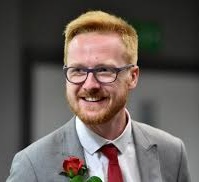
(This article was published in the Brighton Argus today – 4th December 2023) Over the last two weeks in Parliament there has been a significant number of discussions for the “Renters (Reform) Bill” organised by a Commons General Committee which involves seventeen MP members. There is only one Sussex member in that group, Lloyd Russell-Moyle, the Labour MP for Brighton Kemptown who is one of six Labour members. There are ten Conservative MPs and one Liberal Democrat MP. This important Bill has been discussed for many years with the first presentation in May this year and it was published as

to make provision changing the law about rented homes, including provision abolishing fixed term assured tenancies and assured shorthold tenancies; imposing obligations on landlords and others in relation to rented homes and temporary and supported accommodation; and for connected purposes.

It was discussed for its second reading just over a month ago in late October, organised by the Government minister Michael Gove. There were a number of MPs that took part including two Sussex MPs, Lloyd and Caroline Lucas who made important contributions. Several MPs that are not part of the Committee have chaired the events over the last two weeks. James Gray the Conservative participated and a week earlier he had commented in Parliament with

Welcome to the first evidence session of the Renters (Reform) Bill Committee. In particular, I welcome our first panel: Polly Neate, chief executive of Shelter; Dame Clare Moriarty, chief executive officer of Citizens Advice; and Darren Baxter, the principal policy adviser on housing and land for the Joseph Rowntree Foundation.

Another charity called Renters’ Reform Coalition published a piece on ‘X’ formerly Twitter on the day after the first session and they stated

Discussing the Government’s amendment for a new ground for possession for PRS landlord’s operating in the student market, @lloyd_rm questions the logic behind the need for a special student carve out, quoting @nusuk ’s scepticism on the matter.

The nusuk are the National Union of Students.

Jacob Young from the Conservatives and Matthew Pennycock from Labour have spoken the most about all aspects of the Bill and the different clauses. Based on the rest of the fifteen MP’s Lloyd contributed the next largest contributions. There are two other Labour MPs and the Liberal Democrat MP who contributed. Tragically nine Conservatives and two Labour said very little. However, the voting was very challenging. All of the clauses that were created were adopted by the Labour and often the Liberal Democrat MP. Most of the Conservative MPs rejected them all. None of the clauses were accepted. It was very disturbing that so little was achieved. It is very disappointing that the important work from the Labour Party which involved Lloyd and one of his colleagues has not been recognised. During the second reading of this Bill last month Lloyd included

On the enhanced grounds for antisocial behaviour, I have one constituent who has been evicted because their baby was crying too much, and another who has been evicted because her husband was beating her too loudly. Does the Secretary of State not recognise that the grounds need to be discretionary ones on which the courts can deliberate, not mandatory ones? Otherwise, it will be a handle for abusers to use.

Michael Gove responded back

I very much take the hon. Gentleman’s point. I do not believe that either of those two cases would count as antisocial behaviour under our proposals, but we need to ensure that we are clear about what constitutes antisocial behaviour liable to lead to eviction and what is, as in those cases, either a preposterous claim or an example of domestic abuse that the police should be investigating.

Let us hope that some more of the clauses can be raised for approval again later before the Bill is completed, perhaps with members of the House of Lords.

Last Monday, the “e-petitions 624876 and 643611 relating to legislation in respect of dangerous dogs” session was organised by Nicholas Fletcher the Don Valley MP. The petitions reflected significant numbers of people across Sussex but sadly none of the Sussex MPs took part in the session which is very disappointing.

On Tuesday three voting settings two of which listed as the “Delegated Legislation — Trade unions”, the first one was defined as “Delegated Legislation — Trade union and Labour Relations”. Most of the Conservatives but not Henry Smith from Crawley and Jeremy Quin the Minister and MP for Horsham, endorsed all three items. Labour party MP’s and Caroline Lucas from the Green Party rejected them all. The group that did not vote at all were all of the Liberal Democrat members. Interestingly one Conservative MP Stephen McPartland the MP for Stevenage, rejected all three items. On Wednesday there were nine votes. The first, “Deferred Division – Strikes: Minimum Service Levels” with most Conservatives voting Aye, and the majority of other groups voting No. Only Henry Smith did not vote for this and he did not vote for any other items. The other eight items referred to “Data Protection and Digital Information Bill”. The first six were rejected by the Conservatives and approved by most other groups. The final two items were approved by Conservatives and rejected by only few Labour MPs. It was fascinating that Lloyd Russell-Moyle, Gillian Keegan and Andrew Griffith who are both conservative ministers only voted for one or two of those first items and Peter Kyle only voted for five of the six items.

Posted in Brighton & Hove, Parliament and Democracy | Tagged , , , , , , , | Leave a comment

Criminal Justice Bill, Second Team from Eastbourne MP


On Tuesday in Parliament the Second Reading of the Criminal Justice Bill took place and the Minister who corresponded it was James Cleverly and his initial words are below. A wide range of MPs corresponded with it and there was one Sussex MP who took part which was Caroline Ansell, the MP for Eastbourne. Her text is shown below the text from James. It is interesting to see what she has said as she did refer to the whole of Sussex. When she spoke one of her colleagues Bob Stewart who is the Conservative MP for Beckenham which is in South of London and he did comment. It will be interesting to see what happens when the Bill is approved in due course in the future. This was one of the themes that the King stated at the early start of November. The text for the discussion can be obtained from here.

James Cleverly: I beg to move, That the Bill be now read a Second time.

Victims of crime must have justice, and lawbreakers must face the consequences of their actions. This Criminal Justice Bill will give the police the powers they need to crack down on criminals and ensure that those who pose the biggest threat to the public are imprisoned for longer. It will give the public greater trust in the police and more confidence that the system works for them. We have always faced criminal threats, but those threats mutate and evolve, so we have to stay ahead of them by updating our technological capability and also updating our laws.

We are building on strong foundations. Compared with the year ending spring 2010, as measured by the crime survey of England and Wales, domestic burglary is down 57%, vehicle-related theft is down 39% and violent crime is down by 52%. Police-recorded homicide is down by 15% and the number of under-25 NHS admissions for assault by a sharp object is down by 26% in the year ending June 2023, compared with the year ending December 2019.

After many other comments including the comments from James Cleverly there was the contribution from Caroline.

Caroline Ansell: I am pleased to welcome the Bill, and many of the measures to tackle serious organised crime and antisocial behaviour that it contains. These are important issues that are often raised by my constituents in surgeries and through surveys, because they impact on people’s daily life and their sense of safety and belonging in their community. I pay tribute to the work of Sussex police, as well as the Government funding that has focused action on the town centre most particularly, delivering the safer streets that give people the confidence to be out and about, especially in the night-time economy. However, I will confine my remarks not to measures that are in the Bill but to one measure that is not in the Bill but might be.

If there is one place where everyone should feel safe, it is surely within the comfort and confines of their own home, but the reality is that thousands of vulnerable people across the country are terrorised in their own home by criminals who take control of that home and use the property for criminal purposes. That horrendous exploitation is known as cuckooing, where criminals target the most vulnerable, such as socially isolated people, those with learning difficulties or those dealing with addiction and drug use. They may initially befriend those people, or may simply threaten them. They are often violent, ultimately taking over the victim’s home to store drugs, grow cannabis and facilitate prostitution or any number of other criminal activities. The influence of cuckooing goes further and wider, because the neighbours of people whose homes have been invaded have to contend with disruption, antisocial behaviour and intimidation from the criminals who operate from that property.

Cuckooing happens across all communities in our country, including—I am very sorry to say—in my own constituency of Eastbourne, and it is a rapidly growing problem. Figures from Sussex police reflect that: in the past five years, there has been a tenfold increase in cuckooing. Understanding the impact on the victim in one local case—their powerlessness, despair and shame at having been so abused and exploited—must surely command further action.

Bob Stewart: May I ask my hon. Friend what the reason is for a tenfold increase in cuckooing in Eastbourne?

Caroline Ansell: I thank my right hon. and gallant Friend for his question. I cannot explain the increase in Eastbourne, but I imagine that the increase is across the land. There will be an increase and an uptick because it has been found to be a very effective way for criminal gangs to operate, and they move from home to home to evade detection. It is an absolutely vile crime, but one that clearly lends itself to the activities being pursued.

It was actually a real shock to me to discover that this hostile takeover or invasion—this taking over of somebody’s home—was not already a crime. However, I believe the Government recognise the need for it to be, because in the antisocial behaviour action plan, published just in March, there was a commitment

“to target the awful practice of ‘cuckooing’ or home invasion” and a pledge or commitment to

“engage with stakeholders on making it a new criminal offence.”

Indeed, Emily Drew, who is the exploitation co-ordinator at Sussex police, substantiated that point when she said:

“It’s definitely hard to tackle cuckooing when it’s not technically a crime. There are lots of other tools and powers we can utilise and we can be quite creative with it but it does rely on perpetrators committing other offences.”

Hence the real challenge of making this a stand-alone and discrete crime.

Clearly the action plan was a very positive step forward, but at the moment the Bill does not include such an offence. However, in his opening remarks, the Secretary of State talked of “every possible support” and “additional powers” for the police. He spoke about people feeling safe in their homes, and about opportunities during the passage of the Bill to consider further amendments to cover some of the concerns raised by hon. Members. I very much hope that the Bill will provide the perfect opportunity to introduce a new criminal offence to outlaw cuckooing once and for all. I hope the Minister and the excellent ministerial team, with the Secretary of State, will bring forward such an amendment in due course.

Posted in Parliament and Democracy, Policing | Tagged , , | Leave a comment

Two voting cases that both included one of the Bishops


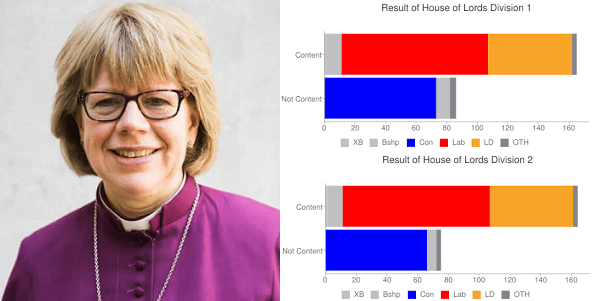
Last week on 27th November 2023 there were two voting items that took place in the House of Lords location and both of them included the Bishop of London, The Rt Revd and Rt Hon Dame Sarah Mullally DBE. It was very significant that on both of these cases the vote from Sarah was agreeing the votes of the Labour Lords and Liberal Democrats Lords. The people who were opposed to them were the Conservative Lords. These two voting items are listed “Justification Decision (Scientific Age Imaging) Regulations 2023” and “Immigration (Age Assessments) Regulations 2023“. During the first item there were significant comments from people who contributed and Sarah Mullally was one of them who stated with these comments.

My Lords, I promise that I will be brief. I thank the noble Baroness, Lady Brinton, for moving this regret amendment and thank all those who have spoken so far and so well. I thank the noble Lord, Lord Winston, for pointing out that this is not science; it is the use of scientific instruments. My two concerns relate to consent, as many have spoken about, and to the workforce.

We have spent a long time in the health service over the last couple of decades to improve the way we consent and how people are able to give informed consent. Most of us going for tests and operations will have pages of documents that we will be taken through and then sign. I have concerns around whether people will truly consent. The Royal College of Paediatrics and Child Health has said that

“informed consent is fundamental to all medical practice, and by definition must be free from duress … This directly opposes both the principles of informed consent and the recommendations set out by the independent body commissioned to look at the policy—the Age Estimation Scientific Advisory Committee”.

Questions of capacity have also been raised here. Who will make the decision on behalf of a child if they have no legal guardian present? I am concerned about not only the issue of the X-rays but the impact of being asked to do this psychologically, emotionally and mentally. Could the Minister tell us what consideration has been given to safeguarding and support during and after medical examinations, especially in relation to consent and capacity?

My final point relates to capacity. The House does not need to be reminded that the health service at present—both the estate and workforce—is under pressure. The question is: who will take the X-rays? Will it be radiographers or other trained professionals? Where will the kit be that will be used? I also have a concern around those professionals undertaking this. Has the department consulted with professional bodies, such as those for radiographers? Has the Home Office developed plans for capacity? If so, has this been done in partnership with the NHS and professional bodies?

Posted in Church Teaching, Immigration, Parliament and Democracy | Tagged , | Leave a comment

Caroline Lucas raises COP28 for the UK Government


On Wednesday 29th November there was a session in Parliament organised by Caroline Lucas which is entitled “COP28” and her initial comment is “(Urgent Question): To ask the Secretary of State for Energy Security and Net Zero if she will provide an update on the UK Government’s commitments in relation to COP28.” The next comment comes from Amanda Solloway who is a Minister from the Government and her initial text is below. Also two days earlier on Monday 27th November Caroline submitted an Early Day Motion which was called “COP28” and in that week there were twelve other MPs who endorsed that EDM which included Lloyd Russell-Moyle who is our other Brighton MP. Then in the next week so far on Wednesday there have been another 18 MPs have supported it. There are currently 16 Labour’s, 3 SNPs, all 3 Plaid Cymru MPs and 2 Liberal Democrat MPs. The text of that is below and the information and the list of the MPs are available here. Interestingly there was another EDM in mid September that Caroline created on COP28 and that only achieved 13 more MPs. So here is the text for the current EDM item:

That this House notes that COP28 in Dubai marks a critical moment in efforts to secure a liveable future; expresses profound alarm that, according to the UN, governments plan to produce double the amount of fossil fuels in 2030 than is consistent with limiting global heating to 1.5 degrees and that current pledges under the Paris Agreement would lead to a 2.5-2.9°C temperature rise this century; welcomes the Prime Minister’s attendance at COP28 in person and calls on him to work with other leaders to deliver an agreement on the urgent and just phase-out of all fossil fuels in recognition of the end of the fossil fuel era; calls on the UK to back an ambitious political deal in response to the Global Stocktake; further notes the damaging impact of the delayed delivery of the $100bn climate finance pledge and the UK’s changes to its climate finance definitions on trust between countries and efforts to achieve the Paris Agreement goals; urges the Government to deliver its existing climate finance commitments in full, ensure funding is new and additional and support efforts to increase climate finance at COP28, laying the ground work for agreement of the New Collective Quantified Goal; notes that the full operationalisation of a properly resourced Loss and Damage Finance Fund will be the litmus test of success at COP28; and further urges the UK to support this goal and to contribute by providing grant-based funds which are additional to existing ODA and climate finance commitments.

So here is the initial few words from Amanda Solloway in the discussion last week and the location is here

I am glad to come to the House to discuss this important subject today. The upcoming COP hosted by the United Arab Emirates is an important moment in the climate crisis. Amid record temperatures and emissions, the first comprehensive stocktake of progress against the Paris agreement at COP28 will show that the world is badly off-track. We have made significant progress through the Paris agreement, with temperature projections shifting from 4°C before Paris to between 2.4°C and 2.7°C after Glasgow through nationally determined contribution commitments, but we know that that is not enough.

When Amanda had finished her initial comment there were some comments from Caroline which included these first few words.

I thank the Minister for her response. COP28 will be the most consequential climate summit since COP21 in Paris, yet we are way off track. The UN’s recent emissions gap report warns that current pledges under the Paris agreement would see temperature rises of between 2.5°C and 2.9°C this century. Ministers are fond of saying that the UK has the most ambitious nationally determined contribution for 2030 of any major economy, yet the Minister will also be aware of the Climate Change Committee’s recent assessment that

“the UK is unlikely to meet its NDC”.

That is not least because the committee calculates that just 28% of the required emission reductions for 2030 are covered by credible Government plans. She will know that targets without plans are cheap. What concrete plans do the Government have to urgently close that gap? Does she agree that we must see an ambitious outcome from the global stocktake, with significantly strengthened 2030 NDCs and new economy-wide targets by 2025 that see the richest countries going further and faster?

Posted in Brighton & Hove, Parliament and Democracy | Tagged , , , | Leave a comment

Organised Crime discussion included Sussex


On Monday there was a discussion entitled “Organised Crime” that was arranged by three Conservative MPs from Devon, Buckingham and Burnley and they initially each asked the question “What steps he is taking to help reduce levels of organised crime.” and the Minister who responded was James Cleverly. However later on in the session Chris Elmore, the Labour MP asked a different question and James responded and he referred to Sussex in his response. So here are the initial comment from James to the three Conservative MPs with their question listed above.

James: We will continue to break the business model of organised crime gangs to keep the people of this country safe. We are disrupting their activities both domestically in the UK and internationally, including disrupting the work of the gangs behind the illegal small-boat crossings, and it is why the Criminal Justice Bill creates new powers to target organised criminal gangs. We will also publish a new serious and organised crime strategy soon.

And here is the question from Chris Elmore and the response from James Cleverly that refers to Sussex.

Chris: The police report a 25% increase in shoplifting in recent months. There is much evidence, as the Home Secretary will be aware, that organised criminal gangs go into shops to try to steal as much as they can and target shop workers. As we approach Christmas, what assurance can the Home Secretary provide to shop workers—not just at Christmas, but across the year—that he will start dealing with these gangs and start realising that all retail crime is a problem in this country that needs tackling?

James: The hon. Gentleman is absolutely right to highlight this issue. It is one that we take seriously through Operation Pegasus. We are working through the leadership of the police and crime commissioner for Sussex on this very issue. No doubt either the Policing Minister, my right hon. Friend Chris Philp or I will have the opportunity to update the House on this work as it progresses.

Posted in Parliament and Democracy, Police & Crime Commissioner, Policing | Tagged , , | Leave a comment

Leaving aside the newsrooms in Worthing, Sussex and ..


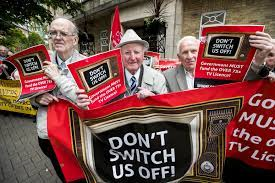
The Worthing West MP, Peter Bottomley contributed in the Media Bill discussion On Tuesday 21st November and his second comment explains on his comment that I had a large number of them in my constituency. Three of them made contact with me, one of whom objected, and two of whom were trying to pay in an old-fashioned way” The response came from Rob Butler who is the Conservative MP for Aylesbury and he was responding to Peter after he had finished. Rob responded so here are the comments from Peter and from Rob. The rest of the text is available here.

Peter Bottomley: Leaving aside the newsroom, when pensioners started paying the licence fee again, I had a large number of them in my constituency. Three of them made contact with me, one of whom objected, and two of whom were trying to pay in an old-fashioned way that the BBC’s agents could not cope with. That shows that the licence subscription system works pretty well and is welcomed. I say to my hon. Friend that if we had the alternative to the licence fee, or some other kind of household impost, we would have a subscription where the BBC stops serving everyone in the country, and starts serving those who choose to pay. As it is a national institution, we still face the question put by the Canadian, Graham Spry, nearly 100 years ago:

“It is a choice between the state and the United States.”

Let us choose the state and make it a public broadcaster still.

Rob Butler: I thank the Father of the House for his intervention. He raises important points, which is why we will need to have a long and detailed debate on the future of the licence fee at another time. I chose my words relatively carefully in saying that I hoped the licence fee was living on borrowed time, rather than saying that the end must come immediately. My hon. Friend raises points that will have to be addressed before we move to another system, but I personally feel that the current model is not sustainable in the medium to long term.

It is not just me who has raised concerns about the BBC. According to the Reuters Institute for the Study of Journalism, trust in BBC News has plummeted from 75% in 2018 to 55% in 2022. That trend clearly cannot continue.

I have focused my remarks principally on broadcasters, as that is where the majority of my experience lies, but I will turn for a moment to the print media. I listened carefully to the comments of my right hon. Friend George Eustice, and I am afraid to disappoint him but I agree rather more with my right hon. Friend Dr Coffey on section 40. I am glad to see the Bill removing that sword of Damocles from newspapers. It struck me that, although it was never commenced, it loomed over papers and magazines as a potential form of state control that would have been unconscionable interference in the freedom of the press. While I have many quibbles with both national and local newspapers about how they cover some stories, I felt that the draconian measures in section 40 were an entirely disproportionate way to tackle complaints.

Posted in Parliament and Democracy | Tagged , , | Leave a comment