MP grills minister on carers’ overpayments


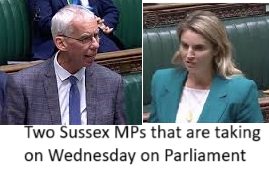
On Monday last week in Parliament there were two debates with significant contributions from Sussex MPs. The first, Topical Questions, Work and Pensionsand second, was Water (Special Measures) Bill [Lords].

Alison Griffiths, the Conservative for Bognor Regis and Littlehampton, opened the debate to the Minister, Liz Kendall ‘The Secretary of State for Work and Pensions’ and the MP for Leicester West. Alison asked if the Minister will make a statement on her “departmental responsibilities.” The discussion had a focus on Carer Overpayments and Winter Fuel payment.

Liz Kendall responded to Alisons question: “As a lifelong champion of family carers, dealing with the problem of carer’s allowance overpayments is a priority for me and for my right hon. Friend the Minister for Social Security and Disability. Last week we set out the next steps in our independent review led by Liz Sayce, the former chief executive of Disability Rights UK. It will report by the summer and will look at how and why overpayments were built up, the changes we can make for the future and how best to help those affected. Along with the biggest ever cash boost to the earnings threshold for carer’s allowance announced in the Budget, it shows our determination to give family carers the support they need and deserve”.

Alison responded:In Bognor Regis and Littlehampton more than 23,000 people have lost their winter fuel allowance—more than 90% of former claimants. Does the Secretary of State think that it is fair that someone who has paid tax all their working life will now be taxed on their state pension as well as losing their winter fuel allowance?”

Liz replied further: “The hon. Lady talked about the winter fuel payment, but she failed to mention our determination to ensure that the 880,000 pensioners who do not claim pension credit, but are eligible, claim it so that they can get their winter fuel payment. The £4.9 million allocated from the household support fund to West Sussex, which covers her constituency, can be used precisely for those pensioners just above the pension credit threshold who have worked hard all their lives but need extra support with the cost of heating.”

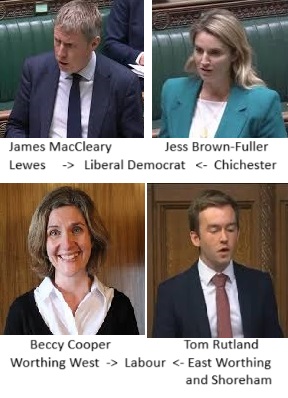
Tom Rutland, the Labour MP from East Worthing and Shoreham challenged:I welcome the review into the overpayment of carer’s allowance, which will come as a huge relief to many people in East Worthing and Shoreham. Can the Minister confirm that the Department will do everything it can to prevent family carers unnecessarily getting into debt?”

Helena Dollimore, MP for Hastings and Rye stated on the “Water (Special Measures)Bill [Lords]” beginning on:

“I thank the Secretary of State for the work he and his Department are doing to change the compensation rules so that when these incidents happen, my constituents get higher levels of compensation…. I declare an interest as co-chair of the all-party parliamentary group on water pollution. Today, we will vote on a landmark piece of legislation to begin the clean-up of our water industry. The measures in the Bill ramp up regulation, ban bosses’ bonuses and ensure independent monitors on every sewage outlet, linked to a system of automatic severe fines. Make no mistake: these are the biggest increase in powers for a generation, and the changes cannot come soon enough for my constituency…… I pay tribute to the campaigners and community volunteers who exposed the scandal. It is only because of their determination and detective work that we have understood the scale of the problem. Volunteers from the clean water action group in Hastings go out testing the water three times a week. I also thank our local East Sussex Fire and Rescue Service, who time after time are the first on the scene when sewage is spilling out on to the street.

The community that I represent in Hastings and Rye is furious at the conduct of Southern Water. From Camber Sands to Old Roar Gill, sewage has poured on to our beaches and beauty spots. Our way of life as a seaside community has been compromised…. Another constituent in Winchelsea beach told me that he cannot grow vegetables because for the last decade his back garden has been regularly flooded with sewage. A family in West St Leonards had to move out of their home for months and live in temporary accommodation after sewage flooded their home.

The town centre in Hastings was flooded twice in one year. Businesses and residents who had just moved back into redecorated homes saw their homes flooded all over again under a foot of sewage water. They then had to be rescued by firefighters…. We have been left on our own to pick up the pieces, all while Southern Water’s boss has been allowed to collect a huge bonus. That money should be spent on fixing broken pipes, not rewarding failure”.

At the end of the debate Josh Babarinde Liberal Democrat MP for Eastbourne commented: “our water quality has dropped from “excellent” in 2015, to a low of “satisfactory” under the last Government. At the same time, Southern Water has made significant amounts of money—with more than £2.9 billion in dividends, and the chief executive receiving £183,000 in bonuses this year and a salary of £765,000. Does the hon. Gentleman agree that the last Government allowed that to happen, and will he apologise for what they allowed to happen to our water industry?” 

Posted in Parliament and Democracy | Tagged , , , , , | Leave a comment

MPs arrange debates in Westminster Hall


Today is the start of the last week for Parliament business. It will close for the Christmas period with Thursday being the last day. Parliament opens again on Monday 6th January 2025. Two events this Wednesday are organised by Sussex MPs in Westminster Hall, an alternative venue for MPs to hold debates and named after the adjoining Westminster Hall. At 11am, John Milne, the Liberal Democrat MP for Horsham, has arranged to discuss the ‘Potential impact of Gatwick airspace modernisation review on local communities’. At 4.30pm Jessica Brown-Fuller, the Liberal Democrat MP for Chichester plans to debate ‘Creative arts education’.

Another possible item this afternoon might include some of our Sussex MPs as it is based on significant responses for two e-petitions. ‘relating to Israel and Palestine’ organised by Roz Savage the Liberal Democrat MP for South Cotswolds. The 653509 e-petition ‘For the United Kingdom to recognise the state of Palestine immediately’ was proposed in early July 2024 but it closed at the end of May achieving 283,669 signatures after 12,427 in early May. It had significant signatures in Sussex with the largest locations in Brighton Pavilion at 1,743, for Hove at 1,047 and in Brighton Kemptown for 873. The other, 652949, ‘Immediately revoke all licences for arms exports to Israel’ was due for the end of July but it ended in May with 107,316 signatures after was only 46,203 in early May. The largest support in Sussex was 682 for Brighton Pavilion, 437 in Hove and 365 for Brighton Kemptown.

James MacCleary, MP for Lewes, was to present his personal “Football (Gender Inequality) Bill: Second Reading” on 8th November but it is now proposed for Friday, 16 May 2025. I hope it does get discussed. There is also a new contribution from Peter Lamb, Labour MP for Crawley for his new “Free School Meals (Automatic Registration of Eligible Children) Bill: Second Reading” currently due to be discussed on Friday 14th March 2025.

Sussex MP Andrew Griffith from Arundel and South Downs participated in a debate last Monday based on two e-Petitions named ‘Fireworks: Sale and Use’ The first, 639319 named ‘Ban the sale of fireworks to the general public’ achieved 50,288 signatures by 15th December 2023. The most significant signatures were in Crawley. The second, 700013 began on 5th November, ‘Limit the sale and use of Fireworks to licence holders only’ which currently has 79,321 signatures since last Thursday. It will continue to May next year and there has been support in all Sussex locations. The e-petitions were organised by Chloe Brindley and Alan Smith. Both were mentioned and present during the debate.

The Conservative MP, Julie Lopez representing Hornchurch and Upminster describes the loss of Alans mother through the use of fireworks “Alan is the son of Josephine Smith. She was a beautiful 88-year-old lady from Harold Wood, who lost her life in a house fire after a lit firework was stuffed through her letterbox in October 2021. Alan is in the Gallery today and I am very grateful to him for his courage in highlighting an issue that has caused him and his family such pain and trauma”

During his speech Andrew Griffith commented I will particularly commend Alan’s bravery in highlighting an issue that has a real personal resonance for him and his family. He has bravely shared his story, and his Member of Parliament, my hon. Friend (Julia Lopez), did it great justice…. It is clear that this is a matter of great concern across the House…. I am familiar with the real challenges created by the deployment of unlicensed explosives over a significant part of the year: …I am told that it is objectively the case that fireworks have become bigger and louder…. It is clear that, as we have heard from both sides of the Chamber, no action is not the answer. I really hope the Government are listening. Members of my party and others, as well as some of the petitioners, think that although a ban should not be a first resort, it should not be taken off the table as a last resort…. We heard about the lack of sentences for the improper sale of fireworks; if such sentences had been in place, the tragic death of Alan’s mother might not have happened.We know that our police and blue light forces are under great pressure, but we also know that to govern is to choose. We all have to make choices with limited resources, and it would be good to see this area of criminality targeted. We heard about a menu of opportunities to tighten up regulations and particularly to restrict the stockpiling of fireworks. Although I am concerned about rushing to a ban that would deny the enjoyment…. it is also true that there is no possible reason for people to stockpile explosive fireworks, potentially in residential premises. This is an area that could be looked at again. The same is true of the age limit on purchase. Without answering those questions for the Government, the House should explore all those areas in more detail. I suspect that measures that are couched in the right way and are evidence-led will attract support across the House. Substantial contributions have been made today. On the Opposition’s part, let me say that we hear them loud and clear. I commend all involved: this has been an excellent use of the House’s time”.

Posted in Parliament and Democracy | Tagged , , , , , , | Leave a comment

Crawley MP supports NHS Hospice locations


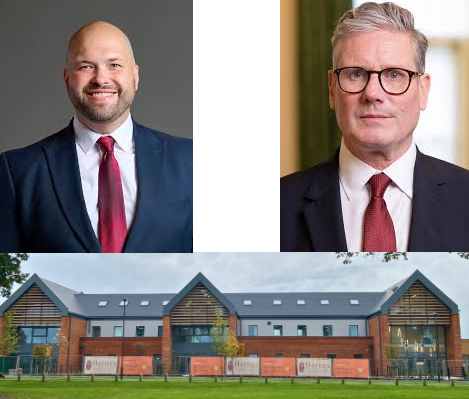
Peter Lamb is the Labour MP for Crawley. He was appointed in July 2024. He spoke on Wednesday 11th December with the Prime Minister and he focused on the NHS Hospice in Crawley, St Catherine’s hospice, and considers palliative care in all hospices across  communities

Here is Peter Lamb’s question and the response from Keir Starmer.

Peter Lamb: Following years of real-terms cuts to its funding, St Catherine’s hospice, which serves my constituency, has recently made a number of redundancies. Palliative care is hugely important to our communities, and I pay tribute to those who work in it. Will the Prime Minister join me in thanking St Catherine’s for its work and outline how the Government will look to support palliative care moving forward?

Keir Starmer: I join my hon. Friend in that, and I recognise the vital role that hospices play in providing support to people at the end of their life. I understand the challenges that they face. Most hospices receive funding by providing NHS services, and funding will be set out in the usual way.

Posted in Parliament and Democracy | Tagged , , | Leave a comment

The Bishop of Hereford speaks about Food Security


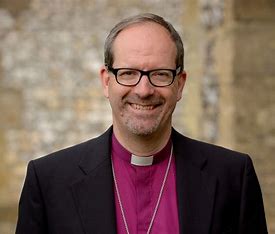
In the afternoon of Monday 2nd December in the House of Lords there was a debate about Food Security. It was created by Richard Jackson who is the Bishop of Hereford.

The member of the Labour group who responded to Richard was the Baroness Hayman of Ullock, the Parliamentary Under-Secretary of State for Environment, Food and Rural Affairs, Sue Hayman. She was the MP for Workington from 2015 to 2019 in Cumbria and she joined the House of Lords in 2020.

Here are the comments from Richard and Sue, with some contibutions from other members. Here are the first comments:

The Bishop of Hereford: To ask His Majesty’s Government what steps they are taking to improve food security.

Baroness Hayman of Ullock: My Lords, the Labour Government have committed £5 billion to the agricultural budget over the next two years, which is the biggest budget for sustainable food production and nature’s recovery in our history. The uplift to £1.8 billion, in 2025-26, for environmental land management schemes will boost food security and accelerate the transition to a more resilient and sustainable farming sector. We are also investing £60 million to support farmers who were affected by the unprecedented extreme wet weather last winter.

The Bishop of Hereford: I thank the Minister for her Answer. As an agricultural adviser in a previous life, I observed at first hand the vital contribution of both research and investment to agricultural productivity, which is fundamental to domestic food production and food security. Yet both the NFU and CLA estimate that the recent changes to APR and BPR will lead to a substantial reduction in investment. Were the impacts of these tax changes on investment and productivity modelled with Defra before their introduction? If not, can His Majesty’s Government undertake such an impact assessment and make it available to Members of the House?

Baroness Hayman of Ullock: As I am sure noble Lords are aware, we are reforming APR and looking to do it in a way that protects small family farms and protects food security and resilience. The right reverend Prelate made some good points around this and the potential impacts of it. I will take his comments back to my honourable friend the Farming Minister, who is currently in discussions on those matters.

Posted in Church Teaching, Parliament and Democracy | Tagged , | Leave a comment

Two Bishops raise Housing Supply and Homelessness


A few days ago in the House of Lords there was a discussion about Housing Supply and Homelessness on the 5th December. The Labour Baroness Warwick of Undercliffe, Diana Warwick, set out the debate which includes a reference to a Bishop:

“That this House takes note of the need to increase housing supply and tackle homelessness. My Lords, I welcome this opportunity to highlight again the current housing crisis and the rise in homelessness, and I am grateful to all noble Lords who have chosen to speak in this debate. The facts are truly shocking. They are reflected in innumerable reports over the last few years. Charities such as Shelter and Crisis have been sounding warnings for years. Sector bodies such as the National Housing Federation have lobbied hard for an increased supply of homes that can be afforded and are of good quality. The Church of England has produced two important reports re-emphasising the crisis we face, and I am glad that the most reverend Primate the Archbishop of Canterbury has chosen this debate to make his valedictory speech to the House. He instigated the two reports and has shown a strong commitment to ending homelessness. I know that the House will appreciate his many valuable contributions over the years and looks forward to his valedictory address.”

Several other people corresponded comments from here. The comments from the bishops are here so here is the comments from Justin Welby, the Archbishop of Canterbury:

My Lords, it is often said and it is a cliché to say it—but hey, I am the Archbishop still—that if you want to make God laugh, make plans. On that basis, next year, I will be causing God more hilarity than anyone else for many years, because the plans for next year were very detailed and extensive. If you pity anyone, pity my poor diary secretary, who has seen weeks and months of work disappear in a puff of a resignation announcement.

The reality, which I wish to start with—then pay some thanks, and then talk about housing—is that there comes a time, if you are technically leading a particular institution or area of responsibility when the shame of what has gone wrong, whether one is personally responsible or not, must require a head to roll. There is only, in this case, one head that rolls well enough. I hope not literally: one of my predecessors in 1381, Simon of Sudbury, had his head cut off and the revolting peasants at the time then played football with it at the Tower of London. I do not know who won, but it certainly was not Simon of Sudbury.

The reality is that the safeguarding and care of children and vulnerable adults in the Church of England today is, thanks to tens of thousands of people across the Church, particularly in parishes, by parish safeguarding officers, a completely different picture from the past. However, when I look back at the last 50 or 60 years, not only through the eyes of the Makin report, however one takes one’s view of personal responsibility, it is clear that I had to stand down, and it is for that reason that I do so.

Next, I want to say thank you to so many people in the House. In these 12 years, I cannot think of a single moment when I have come in here and the hair on the back of my neck has not stood up at the privilege of being allowed to sit on these Benches. It has been an extraordinary period, and I have listened to so many debates of great wisdom, so many amendments to Bills that have improved them, so much hard work.

I have also found that, despite the fact that I still cannot find my way round this building, the staff here are endlessly patient as I look panic-struck when I suddenly find I am standing on a green carpet, not a red one, and have guided me to the right place. I am hugely grateful, and I am very grateful to noble Lords who have been kind enough to send supportive and encouraging notes over the last few weeks. It has been a great privilege and strength to have that.

Housing, as has been said, is one of the key areas of life in any society. When I look back historically—I will not develop the whole history—whenever this nation has taken a huge step forward since the end of the Napoleonic Wars, three things have played a part: housing, education and health. Where they have changed, they have laid a new basis for a healthy society, not just physically but in every way, and I believe that is what we are called to do now.

There has been much reference to the two reports that the Church of England has issued, and I am in the same place, as much of what I was going to say has been said. So, I will not say it again and will say something slightly different—but very briefly. The Coming Home report that the noble Lord, Lord Young, referred to so kindly, sets out five words beginning with “s” which it decided to recommend as the moral centre of good housing. They are: that housing should be safe, and we have heard and know about the need for that through Grenfell, mould, and the need to improve the safety of housing; that housing should be secure, so that people know they can bring up families; that housing should be stable, as people should not constantly be forced to move without choice—it is utterly disruptive; and that housing should be sustainable and zero carbon. We cannot afford to build tens of thousands of houses which increase the problems of climate change.

But I want to add two things. First of all, housing must be affordable, particularly social housing. Social housing is one of the areas which is very inelastic in terms of supply and demand. We need clear criteria for what “affordable” means. One of them should not be in proportion to the average cost in the area, which is the present test: 80% of average cost. I can assure noble Lords that, as we come to the end of our time where we are living at the moment and start looking for a house to buy, 80% of average market cost puts us a very long way away from where we would like to be—and that serves us right, in some ways. Affordable housing needs to be related to income, not to average cost. It needs to be measured against real living wage in a particular area if it is going to be genuinely affordable.

Secondly, it is no use building houses unless you build communities. Housing without community sets us up perfectly for the social problems of the future, so, when we build houses, we have to create the open spaces. And I forgot one “s”, which is satisfying. It has to be a place where children can play, where families get to know each other and where—obviously, I would say this—there is a church, or at least a community centre that acts as a church, where people are brought together. Community facilities in most of our new developments are nugatory, nil, useless; we have to do better.

My last comment: the Church Commissioners for England hold about 5,000 to 6,000 acres of strategic land, out of the 100,000 acres of the Church Commissioners’ total landholdings and another 100,000 acres in the hands of dioceses, parishes, trusts and so on. I know that they are now working on plans for working with government and local authorities, using the mapping tool developed in the Coming Home report, to see the best places to get together with others and have economically helpful areas with good returns. Look at what the Duchy of Cornwall has done with that: you can look down a street and you cannot distinguish which is social housing and which is non-subsidised housing. That also is part of the way in which we treat people with respect.

I look forward to hearing from the Minister. I hope that the Government will undertake to work right across the sector of landholders, so there will be good mixed development that brings people together and sets us up for a better future—and that, as part of that, it is done in the deliberate building of communities before we talk about individual houses.

My Lords, I am hugely grateful to have been here. You remain in my prayers and in my deep affection and profound respect for the huge contribution made by this House to our nation, which it usually does not recognise. I am hugely grateful to the noble Baroness, Lady Taylor, for allowing this debate to happen.

Here is the comment from Alan Smith, the Bishop of St Albans:

My Lords, I too thank the noble Baroness, Lady Warwick of Undercliffe, for securing this important debate. I declare my interests as president of the Rural Coalition and vice-president of the LGA. I offer my thanks to the most reverend Primate the Archbishop of Canterbury for his valedictory speech. During his tenure, he has been a champion of housing, and we have already referred to the Coming Home report, which is pertinent both to today’s debate and to His Majesty’s Government, with their very good and ambitious targets to build more housing. I hope we can assist the Government in achieving that.

Homelessness and rough sleeping are on the rise. Government statutory homelessness figures, released last week, reveal that 159,380 children are now homeless and living in temporary accommodation, a 15% increase in a year and the highest figure since records began in 2004. More particularly, the November 2023 CPRE report on the state of rural housing showed that rural homelessness has increased by 20% since 2021 and 40% since 2018-19.

There are a number of particular challenges around the housing crisis in rural areas which are often overlooked in national policy, and that is where I want to focus my remarks. There is an acute shortage of affordable housing, particularly in smaller rural communities. Only 9% of the housing stock in parishes with a population of under 300 is social housing, compared with 17% of the housing stock in urban areas. Between 2019 and 2022, rural local authority affordable housing waiting lists were up by 31%, compared with an increase of 3% in urban areas. There are still not enough affordable housing developments being delivered on rural exception sites. Very few affordable houses are being provided in settlements with a population of under 3,000. The impact on rural communities is immense and often overlooked.

I turn to the difficulties in planning policy that are holding back the development of rural affordable housing. In 66% of smaller rural communities, the National Planning Policy Framework prevents local authorities taking an affordable housing contribution from small sites. Will His Majesty’s Government respond favourably to the calls from many rural organisations to allow local planning authorities to seek affordable housing contributions from sites of fewer than 10 dwellings in communities with a population of 3,000 or fewer?

There is also the untapped potential of rural exception sites. The rural exception site policy, as it stands, is poorly implemented. There is a lack of consistency in its application and a number of risks and costs associated with its development. Between 2021 and 2022, only 17% of local planning authorities used the rural exception site policy. In 2023-24, 56% of rural exception site completions were in only two local authorities. There is a really great opportunity here, and we need to work out how we can develop it. Can the Minister say whether the Government will introduce a national development management policy for rural exception sites, as well as a bespoke planning passport, so we can speed up delivery?

Defra’s evaluation of the Rural Housing Enablers programme has allowed people to return to their communities, maintain support networks, provide care and support for the elderly and vulnerable, and help with childcare. RHE programmes have been supporting community engagement on housing developments, funded by Defra, for the past two years at a cost of just over £2 million annually. This was a great initiative by the previous Government, and I commend them for the work that was done. Such work has led to an increase in schemes in the pipeline, with the potential to deliver over 2,000 new affordable homes, but this is in jeopardy as the funding is due to end in March 2025. Can the Minister update us on whether there are any plans to renew that funding?

I have just one more request of the Minister. Developing rural affordable housing involves a number of challenges specific to the rural context. Will she therefore commit to ensuring that the housing strategy contains a positive rural element—rural proofing—so that we can include delivering more affordable rural housing in order to increase the level of sustainability in the countryside?

Posted in Church Teaching, Parliament and Democracy | Tagged , , | Leave a comment

Calls for hospices to be exempt from NIC rises


At the beginning of last week there were three very significant votes. The first, ‘Elections (Proportional Representation)’ with 135 MPs approving and 132 opposing. The other, ‘National Insurance Contributions Bill’ referred to as ‘:Reasoned Amendment to Second Reading’ which was approved by Conservative, Liberal Democrat, SNP, DUP, Plaid Cymruachieving 186 votes The Labour Party voted it out with 329 votes. The called ‘:Second Reading’ was approved by Labour 332 passed but the people who opposed it were Conservative, Liberal Democrat, SNP, DUP, Plaid Cymru and also Green’s with 187 votes in all. Andrew Griffith and Alison Griffiths did not vote at all that day and James MacCleary of Lib Dems only voted for the Proportional Representation.

Jessica Brown-Fuller spoke to the National Insurance Bill: “First, I would like to acknowledge the Labour Government’s inheritance from the previous Government, and recognise that tough decisions need to be made to rebuild public services. The Liberal Democrats welcome the proposed increase to employment allowance, but the blanket increase in the rate of secondary class 1 contributions across all sectors is going to make things harder for GPs, social care providers, charities and local authorities in my constituency and across the country. Those sectors have had a tough time for years, struggling with rising energy costs and higher interest rates, with thousands of care providers on the brink of bankruptcy, NHS dentists already delivering some NHS treatments at a financial loss, and charities already grappling with underfunded public sector contracts

….The Government’s treatment of GPs as private entities excludes them from the employment allowance support, and if we do not fix the front and the back door of our national health service, the middle—our secondary care, our hospitals—will continue to bear the burden.

St Wilfrid’s hospice echoes these challenges, citing the inequity in exemptions being granted to NHS services, but not to charities providing similar health-related services. The hospice predicts a bill increase of £175,000. That would pay for four nurses, who could be out in the community providing care for the most vulnerable. The predicted national impact of this rise on the charitable sector is £1.4 billion…..

The Secretary of State for Health and Social Care talked of moving the health model in this country from treatment to prevention and from hospital to community, but the increase in NICs directly undermines the ability to do that, if GPs have to reduce their services, if more dentists move further away from NHS contracts, if social care staff lose their jobs when their small and medium-sized care providers go bankrupt, and if community pharmacies, a key pillar in the NHS ecosystem, face spiralling debt and struggle to keep pace with operating costs.

In the interests of constructive opposition, I am not minded to bring problems without solutions. The Chancellor could have chosen to raise the money needed through the much fairer tax changes laid out in the Liberal Democrat manifesto during the general election, such as the reversal of the Conservative tax cuts for the big banks, doubling the rate of gaming duty paid by online gambling services or a fairer reform of capital gains tax….”

Alison Bennett, Liberal Democrat spokes: “On Saturday evening, I was lucky to attend Sussex Chorus’s performance of Handel’s “Messiah” at St Andrew’s church in Burgess Hill. There was a collection at the end for the St Peter and St James hospice, which looks after many people in Mid Sussex. As I put my donation in the bucket, the lady holding the bucket thanked me, and she told me that her husband had spent his last days at St Peter and St James. When she realised that I was the local MP, she grasped my hand tightly, and said, “You have to do something about NICs.” I said that I had been trying to, and had been raising the matter in the Houses of Parliament, but having not been heard so far, I will raise it again today.

Our hospices and social care providers do hugely difficult, often invisible work. They look after the weak, the vulnerable and the dying, but these organisations are themselves even more vulnerable than they were as a result of the Government’s proposed changes to employer national insurance contributions, announced in the Budget…. The children’s hospice charity Together for Short Lives estimates that the rise from 13.8% to 15% in April 2025 that was announced in the Budget will increase costs for children’s hospices, which provide lifeline care to seriously ill children, by nearly £5 million annually

….In the social care sector, MHA, supports more than 17,000 older people across 80 care homes, 59 retirement communities, and 43 community-based hubs, estimates an additional £4.6 million in costs in the first year alone.”

Alison Bennett spoke later “….Around 18,000 private social care providers operate in the UK. We must help them to help those in need…. How can we expect those providers to survive if we impose higher taxes on them? This is not making the most of an opportunity for long-term positive change;… My Liberal Democrat colleagues and I have repeatedly urged the Government to exempt social care providers and hospices from the tax rise, and I do so once again today. Let us do right by those who work tirelessly to support and protect our most vulnerable, and in doing so, let us build a healthcare system fit for the future”

Posted in Parliament and Democracy | Tagged , , | Leave a comment

We need UK Parliament MPs to promote FareShare


At the beginning of October, I published a petition to ask UK MPs to respond to FareShare, Foodbank and the Trussell Trust within Parliament that was here. Since then there have been a few comments in UK Parliament for Foodbank and more Trussell Trust and they were also for Welsh, Scotland and Northern Ireland Parliament groups.

It is clearly vital for the new Government to promote FareShare, but so far, they have not done so. The only mentions have occurred since then were two comments on 15th October, provided by the Welsh Parliament in the Senedd group.

Baroness Mair Eluned Morgan a Labour MS who on spoke on ‘Reducing Food Waste’ session:

“When it comes to the industry, FareShare Cymru, who you’ll be aware of, takes surplus food from the food and drink industry and redistributes it to organisations in Wales that feed people in need….That’s why we have this FareShare Cymru project. They administer the Surplus with Purpose Cymru fund. That aims to overcome the barriers that Welsh food and drink businesses face when they’re thinking about redistributing that food surplus, so that at least the surplus then can go to somewhere that needs it, rather than become waste. I’ll give you an example of that in Haverfordwest: Puffin Produce. They’ve been donating their surplus food to FareShare Cymru since 2020.”

Also, Huw Irranca-Davies a Labour MS who spoke at another session with:

“We have also expanded FareShare Cymru, which redistributes surplus edible food from businesses.”

So far there have not been any references to FareShare on the UK Parliament since last April and we need MPs to speak as soon as possible. I initially checked this item on the beginning of December and sadly even now at the beginning of early February there are still no comments from any MPs.

Posted in Parliament and Democracy | Tagged , , | 1 Comment

MPs speak out on new bill to tackle smoking


I was very sorry that none of the Sussex MPs contributed to the petition last Monday which was focused on “Allow students to be taken out of school for two weeks a year without penalty”. The event, organised by Dave Robertson, the Labour MP for Lichfield in Staffordshire, his final few words were:

“Although we have had only a small number of speakers, the depth of research that has been done, and the depth of understanding of the issue across the Chamber by Members from the vast majority of parties has shown that this is being looked at by individual Members, the Government and all political parties. It has been a very good debate, in that we have heard a lot of different viewpoints, and it was good to hear the Minister’s response.”

Today there is another e-petition session, organised by Labour MP, Kevin Bonavia, Stevenage Hertfordshire. It focuses on two e-petitions referring to “relating to children and bereavement”

A debate about a ‘Tobacco and Vapes Bill’ emerged on Tuesday last week with participation from several Sussex MPs. The Bill was published by 413 MPs, the majority votes came from Labour votes, most Liberal Democrats, the Greens, the SNP, Plaid Cymru, DUP and 23 Conservatives. However, two Sussex Conservatives and one Liberal Democrat voted against it. Peter Kyle did not respond. James Macleary spoke

“I am grateful for the opportunity to speak in this debate about a Bill that seeks to change the way in which our society approaches smoking and vaping particularly for future generations. We know that vaping is increasingly marketed in ways that appeal to children, from brightly coloured packaging to sweet, toy-like flavours. That is unacceptable. The Liberal Democrats have long called for tougher regulation of vapes, and I welcome the provisions to ban advertising, restrict packaging and flavours and enforce age restrictions. These are sensible measures that will protect young people without penalising adults who use vaping as a tool to quit smoking”.

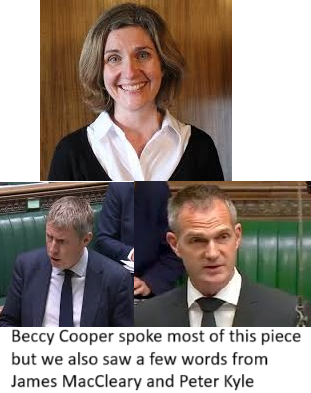
Beccy spoke to describe some important considerations

“We have come a long way since the 2004 White Paper proposed a smoking ban in almost all public places in England and Wales. Smoking on public transport and in workplaces now feels inconceivable thanks to decades of work by campaigners and public health professionals and bold action from Government.

As a public health consultant, I pay special tribute to my public health colleagues who have worked so tirelessly in this area, from the seminal 1956 research undertaken by Sir Richard Doll and team that first established the link between smoking and lung cancer—something we take for granted today—through to the smoking cessation advisers who work daily to help people combat this destructive addiction.

Mark Twain is reported to have said ““Giving up smoking is the easiest thing in the world…I’ve done it thousands of times.”

In my career, to date, I have been fortunate enough to undertake smoking cessation training and I can testify to the incredible amount of hard work and determination that both the quitter and the adviser put in to overcome the nicotine receptors that demand to be fed. This is an addiction, not a choice.

So, it is better by far not to start this destructive habit in the first place. Currently, every day about 350 young adults still start smoking and about 160 people are diagnosed with cancer caused by smoking. Smoking is still the leading cause of premature death and disability in the UK, and is responsible for half the difference in healthy life expectancy between rich and poor. Other Members have talked about the appalling health inequalities in this country and how the Bill will really contribute to reducing them.

So, it is right that this Bill will phase out the sale of tobacco and create a smokefree generation. Already ever fewer people smoke, and this legislation will increase the rate of decline. By increasing the age of sale by one year every year we can expect smoking rates among 14 to 30-year-olds to reach zero by 2050. As a mum of two young sons, I greatly welcome that.

I welcome, too, the increased powers to tackle vaping in the Government’s Bill. Vaping can be an effective aid for adult smokers to quit, but much tougher measures are needed to regulate products designed to appeal to young people. As ASH puts it:

“Vaping is an adult quitting aid, not a children’s toy.”

The chief medical officer further underlines this by stating;

“If you smoke, vaping is much safer; if you don’t smoke, don’t vape; marketing vapes to children is utterly unacceptable.”

This Bill will give the Government far greater control over the marketing and design of vapes and the flexibility to adjust regulations in the future if the market or evidence changes.”

Listed under the process ‘Topical Questions’ Beccy Cooper asked Peter Kyle “If he will make a statement on his departmental responsibilities” He said,

“To protect people online, today I became the first Secretary of State to exercise the power to set out my strategic online safety proposals for Ofcom to consider. From increasing transparency to baking safety into social media platforms from the outset, those priorities will support Government in monitoring progress on acting where our laws are coming up short. I have also launched a new research project to explore the impact of social media on young people’s wellbeing and mental health.”

Posted in Brighton & Hove, Parliament and Democracy | Tagged , , , | Leave a comment

More comments in Parliament about the YMCA


At the end of October 2024 several MPs had responded positively to their local YMCA which are here. Then in November I was interested to read that two more members had commented.

The first was early that month from the Labour MP on Stoke on Trent and then later there was a session was from the House of Lords who is in Whitley Bay. It is great to see these two people who have spoken for YMCA’s.

On the 6th November, David Williams, the Labour MP for Stoke on Trent made a reference during a debate about Income Tax (Charge) item.

I did not set out to become an MP. After studying at Keele University—one of our two great local universities—I worked in a local Sure Start centre. I saw how mums had been let down by the state, but I also saw how, with a hand up from the new Labour Government at the time, they were able to get back on their feet. I then worked for the YMCA, where we set up training schemes, secured funding to reopen youth clubs that were closed under austerity, and supported young people into affordable housing. However, 14 years of Conservative Government left our services on their knees and levelling up was a failed promise. We faced a 97% cut in spending on youth services in my constituency alone. Our Sure Start centres were hollowed out. Annual household incomes have fallen behind rising living costs. Indeed, in some areas of my constituency as many as two thirds of families live in poverty and weekly earnings are some £100 lower than the England average.

On the 20th November, Lord Parkinson, Stephen of Whitley Bay, the Conservative member of the House of Lords spoke. He was previously involved in the National Youth Strategy

UK Youth summarised the views of the sector neatly when it said that the Statement was deeply unsettling. As noble Lords will be aware, the National Citizen Service funded countless projects throughout the country. The specific structure of the programme ensured that funds were widely distributed to grass-roots organisations. These include, among others, London Youth, Children North East, the YMCA, which we talked about in our debate last week on the implications of the Budget for cultural organisations and charities, and the EFL trust, which is a charity that helps drive young people through the football talent pipeline. I find it slightly strange that the Government are taking a Bill through your Lordships’ House that seeks to improve the sustainability of English football and the future of the sport at the same time as they are pulling funding from charities that help support the grass roots of the beautiful game.

Posted in Parliament and Democracy, Youth Issues | Tagged , , | 1 Comment

Second reading of MP’s new bill in Commons


There are lists of planned events for this week in Parliament. On Friday there is an opportunity for James MacCleary, the Lewes Liberal Democrat MP to submit his personal Bill, a Second Reading of the “Football (Gender Inequality) Bill”. So far, the public information is very modest because the first reading, at the end of October stated “James MacCleary presented a Bill to require the Secretary of State to publish proposals for measures to address gender inequality in football.” The planned Bill on Friday, is currently listed in second place in a range of thirteen potential items so hopefully it will be read even though these planned events are subject to change.

Today there is an important session involving an e-Petition. Dave Robertson is organising the event. He is the Labour MP for Lichfield and this e-Petition is 658365 states “Allow students to be taken out of school for two weeks a year without penalty”. This was created in March this year and on 1st April it had 285 signatures, at the beginning of May it achieved 225,911 signatures and by the end of May when the former Government closed down it had achieved 254,530 signatures. The largest areas for Sussex were Hastings and Rye with 756, Crawley for 686, East Worthing and Shoreham for 679. The support for Sussex was 4,293 for West Sussex, 2,396 for East Sussex and 1,092 for Brighton & Hove. The words initially were

“Families face school fines for taking their children out of school to go on affordable holidays. This can be a particular issue for low-income families, and families with children that have additional needs, who want or need to avoid busier and more expensive periods.”

The additional items were

“I feel these families are being discriminated against as they may not find it possible to travel outside of term time, as it could be too costly or overwhelming, with travel, queues, noise, busy airports, busy public transport, busy resorts etc. We think it’s unfair that these families and children might not be able to go on holiday because they can’t take time off during term time. Parents may also have additional needs that would make travelling at busy times difficult.”

The first e-Petition in Parliament was last week listed as item 631412, there are several others planned over the next few weeks. Item 631412 is called “Offer healthcare workers on tier2 visa ILR after 2 years instead of 5 years” with 52,962 signatures from January to July in 2023. The largest signatures in Sussex were Eastbourne with 231 all of West Sussex recorded 712, East Sussex 544 and 293 for Brighton & Hove. None of the Sussex MPs took part in the session last week, however, some of our MPs could attend to today’s debate.

So far there has been around 120 new e-Petitions that were published when the Government opened the system at the end of October. Currently, one of them has reached 100,000 signatures, “Introduce 16 as the minimum age for children to have social media” published on 7th of November. Here in Sussex, there are many supporters across Mid Sussex, Hove and Portslade and Brighton Pavilion are currently the most significant groups.

On 12th November, Jess Brown-Fuller, Liberal Democrat commented during the “National Youth Strategy” session

“I am pleased that the Secretary of State’s statement talked of widening the Creative Careers programme. As the chair of the all-party parliamentary group for performing arts education and a proud graduate of Chichester University with a creative degree, I am living proof that a creative degree can take people many places, including Parliament.”

There was a debate on Thursday 14th November about “Environment, Food and Rural Affairs” opened by Beccy Cooper, the Labour MP for Worthing West. She began with “If he will make a statement on his departmental responsibilities.” The person who responded was Steve Reed, the Secretary of State for Environment, Food and Rural Affairs, he stated

“As we have heard this morning, the public are rightly furious about the filthy, polluted state in which the previous Administration left our rivers, lakes and seas. That is why there is such strong support for the Water (Special Measures) Bill, which is working its way through Parliament. I urge all Members to make submissions to Sir Jon Cunliffe’s review, and to encourage their constituents to feed in to it. This is our chance to conduct a root-and-branch review of the entire sector to ensure that it is fit for the future and will properly serve both consumers and the environment for decades to come.”

Beccy responded with

“Research estimates that as many as 170 dolphins and other mammals are caught and killed every year off the Sussex coast, yet no bycatch data is recorded. Will the Secretary of State please outline how he is ensuring that supertrawlers operating in UK waters are fulfilling their legal duty to report marine mammal bycatch to the Marine Management Organisation?”

A few minutes later, Tom Rutland, Labour MP for East Worthing and Shoreham added

“Sewage spills are a scourge for my residents, and not just in the sea but in the street too. Raw sewage and used toilet roll flooded a street in Southwick recently. What are the Government’s plans to force the water companies to upgrade their infrastructure and bring an end to those foul, smelly spills that are blighting the lives of local residents?”

Posted in Parliament and Democracy | Tagged , , , , | Leave a comment