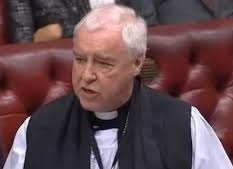
Diocese of Chichester newsletter update.


On Thursday 21st November the Diocese of Chichester document published their weekly WELCOME TO THIS WEEK’S E-NEWS. One of the themes that was written about was the Assisted Dying Bill.

The article includes and invitation to write to your local MP. The section is attached here and shown below.

Assisted Dying Bill

The debate and vote on Assisted Dying has had a great deal of coverage in recent weeks. As the date of the debate fast approaches (Friday 29th November) it is still not too late to do three things:

1) Write to your MP

The sample letter below may prove useful as a draft to those who would wish to urge their Member or Parliament to vote against the proposed legislation.   Simply address it to your MP and send it from your own email address. 

2) Talk about it

Secondly, lets talk about it, in our church communities and beyond especially if that opens up a healthy conversation about death and dying.

3) Pray

We can continue to pray for the dying, especially those whose death may be lonely or painful. We can pray for those who care for them. We can pray for our MPs and all who will have to make such a complex and agonising decision. And we can pray for our nation, that we will continue to be a place that values the beauty and dignity of every human person made in the image and likeness of God.

+Will

Posted in Church Teaching, Parliament and Democracy | Tagged , | Leave a comment

Bishop of Lichfield in Parliament ‘Written Answers’


On the 1st of November there was a Parliamentary ‘Written Answers’ question that was hosted by Adam Jogee, the Labour MP for Newcastle-under-Lyme. His question was “Church of England: Newcastle-under-Lyme” he asked to discuss the condition of the Church estate in that constituency. The Labour Minister who responded was Marsha de Cordva, the MP for Battersea also referred to as “The Second Church Estates Commissioner”. She referred to the “the Bishop of Lichfield and the team in the Diocese of Lichfield, who are responsible for the condition of the church” The question session is here and all of the words are shown:

Adam Jogee: To ask the Member for Battersea, representing the Church Commissioners, if she will meet with the hon. Member for Newcastle-under-Lyme to discuss the condition of the Church estate in that constituency.

Marsha de Cordova: My responsibilities relate to the work of the seven National Church Institutions, and I can give best-practice advice about diocesan and parish activity. I would be happy to meet with the Hon. Member for Newcastle-under-Lyme to discuss his constituency and any specific concerns he may have. However, he may find a discussion with the Bishop of Lichfield and the team in the Diocese of Lichfield, who are responsible for the condition of the church estate in Newcastle-under-Lyme, more productive. I will write to him to arrange an introduction.

The Bishop of Lichfield, Michael Ipgrave, arrived on October 2022 and first arrived in the House of Lords on 20th February 2023. He spoked on 25th April 2023 in the “Parliamentary Democracy in the United Kingdom – Question for Short Debate which is here that was initially mentioned by the Baroness Jones of Moulsecoomb. Michael then submitted a few written questions on the 23rd and 24th May and commented on a discussion on 9th September for “Anti-Muslim Prejudice and Hate Crime – Question which is here. At the session that Baroness Jones opened on 25th April she stated below and several other people referred to him and Michael also spoked on the session.

Jenny Jones: To ask His Majesty’s Government what assessment they have made of the strength of parliamentary democracy in the United Kingdom. My Lords, I am delighted to see so many noble Lords keen to talk about parliamentary democracy; it is absolutely wonderful. I hope I will not shock them too much when I say that we do not really have democracy in this country any more. I extend a welcome to the right reverend Prelate the Bishop of Lichfield, who I think I met in a former existence. It is good to see him here. I hope he will have more than two minutes to make his maiden speech.

Posted in Church Teaching, Parliament and Democracy | Tagged , , , | Leave a comment

Comments for the Football Governance Bill


On Wednesday 13th November there was a discussion about the “Football Governance Bill [HL] – Second Readingin the House of Lords and a number of members of the House of Lords made comments.

Pete Wilcox the Bishop of Sheffield spoke, then Steve Bassam the Labour Lord Bassam of Brighton and later Jenny Jones the Green Baroness Jones of Moulsecoomb contributed.

Fiona Twycross was the minister to respond to the comments

Their comments are below, and the whole discussion can be obtained from here and the first few words from Fiona are below:

Baroness Twycross: Moved by Baroness Twycross Welsh Legislative Consent sought. That the Bill be now read a second time.

My Lords, football brings joy to fans right across the country, as well as a shared sense of community. It is an essential part of the social fabric of our country. Growing up, I lived within earshot of the Manor Ground, Oxford United’s former home. My dad, who was a season ticket holder, took me and my siblings to games, including to Wembley when Oxford won the Milk Cup.

Loyalty to clubs runs through families and creates a sense of pride within communities across the generations. With apologies to noble Lords who support Bolton, I was delighted when my niece Talullah and nephew Winston got to experience the same euphoria I did as a teenager—and in May as well—when we went to see Oxford win the League One play-off final at Wembley earlier this year.

English football goes beyond family loyalty and local communities. It is a global success story and one of our greatest cultural exports. It is an industry we want to protect, for its economic value and for the fans who turn out to support every week, even when their team is down on its luck.

Then after a few others, the comments are from Bishop of Sheffield

My Lords, I congratulate the Department for Culture, Media and Sport and the Minister for securing this debate, and thank the previous Government for their efforts to ensure that the sport of football—a national treasure beloved of so many—is more effectively regulated.

I realise that I cannot claim that football was made in Sheffield but, in addition to the codification referred to by the noble Lord, Lord Parkinson, in London in 1863, a second codification of the beautiful game took place in Sheffield in 1867—another early governance document for the sport that was influential for decades across the north. The city is home to the oldest football club in the world, Hallam FC, as well as to the two much better-known professional football clubs, Sheffield United and Sheffield Wednesday.

As Bishop of Sheffield, it gives me great pleasure to contribute to this important debate. It is a particular privilege to follow the noble Baroness, Lady Grey-Thompson. I want to say, first, something about the relationship between football clubs and their communities; secondly, something about financial stability; and thirdly, something about the responsibility of football clubs in relation to the climate emergency.

On football clubs and their communities, we are right to celebrate the off-field successes of English football, including club community programmes and the work of the Football Foundation to support grass-roots pitches and facilities. In addition to the tens of thousands of jobs and billions of pounds of investment that the football pyramid channels into the UK economy, its social impact is profound. A recent report compiled by Substance using data from 2019-22 revealed that English football generated over £101 million for community investment, bolstering physical health, mental well-being, education and employment.

Football clubs have a clear and undeniable duty to their fans and their localities. In any conversation about the future of football, I hope these two groups will take centre field. Fan investment is the lifeblood of the sport and I applaud the Government’s intention to place fans back at the heart of the game. To name just one example, I was pleased to see that the Bill will ensure that fans are consulted on changes to ticket prices. I hope the Bill might also require football clubs to take their civic responsibilities extremely seriously. These go above and beyond those of charity foundations and extend to local regeneration schemes.

As a mildly obsessed fan of Newcastle United, I have rejoiced to see how the 2021 takeover of the club, following the deeply unpopular ownership tenure of Mike Ashley, has led to a wonderful reconnection of the football club with the fan base and with the city. Having said that, I acknowledge that the 2021 takeover raised significant concerns about the application of the owners’ and directors’ test, and I hope very much that the new Bill will tighten up that process.

Secondly, on financial stability, while acknowledging that the majority of football clubs are stable, the Bill rightly recognises the need to protect fans, players and club staff from costly club closures and the irresponsible mismanagement of club finances. My right reverend friend the Bishop of Derby, the Church of England’s lead bishop for sport, wishes she could be here to discuss the Bill. I know how much she cares about the high-profile collapse of Derby County Football Club in 2022. Ultimately, the club was, thankfully, rescued by local businessman and lifelong supporter David Clowes, but the turbulent negotiations with investors abroad exposed serious concerns and vulnerabilities. I hope the Bill will help to prevent such collapses in future.

Finally, and briefly, on the climate emergency, I particularly welcome the enhanced provisions in the Bill to improve transparency and accountability by requiring football clubs to publish what actions they are taking to improve equality, diversity and inclusion. May I suggest that this responsibility is extended to include actions that clubs take to reduce their carbon footprint and to move towards net zero? I look forward very much to hearing the views of other noble Lords and to following the progress of the Bill in the coming months.

Then the comments from Lord Bassam of Brighton

My Lords, it is an honour and a privilege to speak in the debate on the Football Governance Bill, which is fundamentally a good Bill and one that the Government should be proud of. We should give thanks in that pride to the previous Government for doing much of the hard work in preparing it. I also personally thank the Minister for her careful introduction to the Bill and the Premier League, the EFL, Fair Game, Women in Football, the LSE, Civitas, the LCP, the FSA and the PFA for their informative briefings. I apologise to anybody I have missed out.

Many of us have waited a long time for this Bill and then, of course, we get two Bills in a year. Both major parties have edged towards increasing the level of regulation of our beautiful game. Some say that we do not require it, others that existing regulation does not go far enough. But, for those of us who have been watching football for a long time, the current system is failing both clubs and fans and is no longer financially sustainable.

The desire for a degree of regulation to make the game more sustainable has a long history. Back in the 1990s, Labour had a mini-manifesto for the game. Once elected, our efforts were of necessity focused on countering disorder and hooliganism. Tackling racism and violence were a priority for me in my role as the football hooligan Minister back in the late 1990s, and our actions were key to ensuring that we were able, as a nation, to continue participating in international tournaments.

In 2019, both the Tory Party and Labour made a commitment to football regulation in their manifestos. As we know, to their credit, the new Tory Government invited Tracey Crouch to lead the fan-led review, and this in turn led to a White Paper and, earlier this year, the first iteration of the governance Bill. Now it falls to Labour, as ever, to complete the job. The post-election gap has enabled the improvement of the Bill in several respects, including the regulation of the financial distribution payments system across the football pyramid and the issue of parachute payments. Changes relating to fan engagement and the equalities, diversity and inclusion provisions are also welcome, as is the shortening of the time for the production of the first “state of the game” report, which will help put football on a more sustainable financial footing.

While we produce some of the world’s best clubs and fantastic football, the Premier League is becoming a closed shop, dominated by the money generated by TV rights. The top of the league is the preserve of a few clubs, primarily the richest. The rest of the Premier League is made up of clubs trying to get into two of the three European competitions or struggling to retain their place in the Premier League. In 2022-23, 25 clubs, 20 Premier League clubs and five EFL clubs, received 92% of the distributable revenues of the English game, £3 billion, while the other 67 clubs shared just 8%, £245 million. The football regulator’s task will be to ensure that there is a more equitable distribution of football revenues across the pyramid.

Football must remain a sport about risk, reward and fair competition. The current relegation payments scheme prevents this. In the last seven seasons, two of the three promoted teams from the Championship have been those relegated the season before, bolstered as they were by their financial protection following relegation. Back in 2010-11, parachute payments were just £30 million. By 2020-21, they had grown to £233 million, an eightfold increase at a time when wages had merely doubled. In the Championship, the non-parachute payment clubs are forced to overspend on players to compete effectively for promotion, creating a risk of bankruptcy, relegation and often a long, painful recovery period. We need the regulator to come up with a system that softens the financial blow of relegation, but in a way that does not distort competition. Change will need to be gradual and carefully managed, so that club viability and competitiveness are preserved, and the strength of the leagues protected.

I welcome greater fan engagement and the protection of the heritage and culture of clubs. The devil will be in the detail on how best to achieve this. The prevention of breakaway competitions will, of course, benefit players and clubs at a time when I think we are reaching the limit of what extra competitions can bring to the game.

Finally, where would I like to see improvements and changes? The first “state of the game” report will set the tone for the future development of the regulator. The last Bill gave the regulator three years to complete this work. That was too long, so I am pleased that it has been reduced to 18 months, but see no reason at all why it should not be six months or perhaps, at most, a year. Shadow staff, already in place, will have access to data and football market intel sufficient to hit the ground running. There are urgent issues to be resolved and, if they want to demonstrate change by the time of the next election, the Government would be wise to listen to those supporting faster progress. A shorter period for the initial report would justify a longer gap before the second.

In relation to the regulator’s scope, I am strongly sympathetic to bringing the clubs in the top two women’s leagues into the regulatory framework. The rapid growth in women’s football brings with it the same issues and risks, and with this Bill we have an opportunity to address these before they become a problem. It might also help tackle discriminatory behaviour and the macho culture that can impact on the game. It does seem odd, having strengthened the EDI commitment, to then exclude the women’s game from the regulatory framework. Access to even a small element of the solidarity payments produced currently would be transformational for the game.

Similarly, we should look to include the regulation of all clubs in National League North and National League South. It seems odd to regulate one-third of the National League clubs and leave the sixth tier unregulated. Some of these clubs are significant community assets and businesses with turnover figures of £4 million, £5 million and £6 million a year. More fans are turning to watch grass-roots football, and here again is an opportunity to ensure consistency in our approach at all levels.

I have a small but significant point for the Minister. Can we ensure that, among the statutory consultees, we include the players’ union, the PFA? Try having a football match without its staff.

The Minister will no doubt have read the press coverage of the Fair Game report pressing for changes and the strengthening of the Bill. I am sympathetic to many of these, some of which I have referred to. I hope she will continue her already-begun engagement with Peers so that we can improve the Bill as it goes through its Lords stages.

The Government are to be congratulated on the progress so far. This Bill is a bit like a Brighton and Hove Albion substitution at half-time: a potential game-changer. It works. When I reflect on how close my club was to going out of business for the want of effective regulation in the mid-90s, I do not want to see other clubs and their fans put through that experience. It is my belief that this legislation, with its owners and directors test, a licensing and financial control regime, and a commitment to a system of fairer competition and financial fair play, will go a long way to putting an end to the era of irresponsible club ownership.

And later on this was the comments from Baroness Jones of Moulsecoomb

My Lords, it is a pleasure to follow the noble Baroness, Lady Morris of Bolton. I did not realise she was a football fan. It is amazing how all these football fans have crawled out of the woodwork today. I am delighted I am one of them—I support Arsenal. I am sad to say that I am mostly reduced to listening to matches on the radio these days. Life is too full to do much else.

The Green Party welcomes this Bill but it wants, as others have said, the regulator to address the unfairness of the Premier League clubs getting nearly all the money, when 67 professional clubs share just 8% of the revenue. That does not seem like a logical place to be. We agree with the English Football League that there is enough money in football to ensure that all levels of the game are sustainable and thriving.

As other noble Lords have said, football in this country is part of nearly every park, sports hall, school playground, beach, empty piece of tarmac and patch of grass. It matters to the hundreds of thousands of parents, children and young adults who go along to play on their local pitch, or who travel for a couple of hours to the next match. It matters to the coaches and others who give hours and days to make it happen. It matters to the women’s teams. It matters to the pub teams. Whether it is pensioners or people with Parkinson’s, football is part of their lives and identities.

The Green Party wants to see football grow from the grass roots up. That means reversing the damage done by the last Government at a local level, with nearly 1,000 football pitches being lost since 2010. We want local authorities given the power to invest in their local professional football clubs and to reinvest the dividends back into sports facilities in their communities. We want to ensure that local authorities are able to maintain key sporting infrastructure, such as swimming pools, sports halls and playing fields, that can be used by all sections of the community.

Being a Green, I am going to bring climate change into this. Then noble Lord, Lord Hannan, is not in his place any more, but I agreed with one thing he said: he did not like the idea of net zero. I do not like net zero either. We are way past the time for net zero; we have to think about real zero. I know that this Labour Government have a real problem with understanding climate change. I am very happy to help them out at any time, with tutorials from scientists or meteorologists. In the meantime, this Bill fails to prepare football for one of the biggest challenges that it will face in the future.

Climate change needs to be part of this legislation, because the adapting of facilities to deal with flooding, drought and excessive heat is already starting to be a regular feature of football life. If you think this is a side issue, you should go and talk to soccer schools in Valencia, which are covered in cars, fish and mud.

There are 23 professional teams that can expect partial or total annual flooding of their stadiums by 2050. That probably sounds a long way off, but others will be vulnerable in the meantime. Zurich Insurance found that nearly one in four of the biggest stadia face major building work or crippling insurance bills simply because of trying to face up to climate change. Both the Bundesliga of Germany and the Ligue de Football of France include environmental sustainability as part of their licensing. Why are we not including climate change as a specific issue that our new regulator has to consider and deal with?

When Carlisle United’s Brunton Park was devastated by flooding caused by Storm Desmond in 2015, the club’s insurance covered its substantial losses. Following that claim, the club said it found it nearly impossible to renew its insurance. Climate change is happening, and it is already having a big impact at grass-roots level, where local clubs will need help to find the resources to cope. The chair of the FA, Debbie Hewitt, revealed that:

“We have something like 120,000 games a season cancelled because the pitches are not playable”.

In recent years, grass-roots teams have swung from cancelling games because the ground is baked like concrete to pitches being regularly flooded.

Giving the new regulator of the professional game a specific remit to consider climate change is a reasonable thing to do. It would send a signal to the Football Association that grass-roots football is also going to need resources to adapt to what is now happening to our climate.


Posted in Brighton & Hove, Church Teaching, Parliament and Democracy | Tagged , , , | Leave a comment

MPs give their views on the Budget and NHS


Just over a week ago in Parliament, Wednesday, 6th of November, a ten-part vote took place for “Budget Resolution”. Here in Sussex most of the MPS voted in agreement with their Parties. Each part of the vote was approved by Labour and the Green Party. The Conservatives rejected the first nine parts but approved “No. 44: Rates of alcohol duty”. The Liberal Democrat group approved three parts rejected the fourth and final item which Conservatives had ignored.  

Andrew Griffith, Conservative for Arundel and South Downs, spoke first.“The Government may be right to say that there is much to rebuild in Britain today, but what this Budget does, combined with the Government’s nationalisation of railways, Employment Rights Bill, and Great British Energy, is to take us further away from that goal, with higher taxes, more regulation, bigger government and a smaller wealth-producing part of the economy. It is a Budget for prejudice rather than for progress. While Labour Members will praise the Budget for its finer measures and the socialist purity of its design, their constituents can see that, when it comes to growth, the Budget emperor has no clothes. The Office for Budget Responsibility strips it back to its stark, naked flesh”.

Liberal Democrat for Mid Sussex, Alison Bennett commented: “In Mid Sussex we do not have many large employers, so small and medium-sized enterprises truly are the backbone of our economy. When watching the Budget statement, Bob from Hurstpierpoint, who is involved in multiple small Mid Sussex businesses, told me: the big loser was small business.” Bob is already having to make contingency plans and think seriously about his workforce going forward. He is right to say that “without thriving small businesses and SMEs the ability of local communities to thrive is inhibited” ….Niki, from Hassocks, a director in a social care organisation supporting adults with learning disabilities, raised two points. First, the national insurance changes will have a disastrous impact on the sector, with social care providers already struggling. Hit in recent years by covid, interest rate hikes, rises in the national living wage and the cost-of-living crisis, many are teetering on the brink. Secondly, social care providers will feel the Government’s measures acutely and disproportionately. They are people businesses, so almost their entire cost base is hit by the national insurance increase. They employ many people on low wages, so shifting the national insurance threshold to £5,000 has a huge impact”

Liberal Democrat for Eastbourne, Josh Babarinde spoke “A Budget is more than just an annual accounting practice; it represents an opportunity to reassure our communities that they can trust us—all of us—to recognise their needs, aspirations and concerns. A Budget is an opportunity to meet those needs and to inoculate our communities and our country against the populist contagion that has invaded yet another host today. Against that backdrop, I will shamelessly share some of Eastbourne’s needs. Eastbourne needs support to tackle homelessness, which has meant that our food bank was the country’s busiest last year. I therefore welcome the £230 million announced in the Budget for homelessness prevention, and I hope the East Sussex floating support service can benefit from it, but we have been let down by the lack of emergency support to help councils like mine with the unsustainable cost of temporary accommodation…. I welcome the NHS investment announced in the Budget, but I am disappointed that the status of investment in our hospital via the new hospitals programme has still not been confirmed. This means that local mums, who in many cases are having to travel more than 20 miles to have their babies, are still unclear about what investment their hospital will get.”

Peter Lamb Labour, CrawleyThe NHS may be well loved, but unfortunately it has not been well cared for over the past 14 years—and don’t we all know it: our inboxes are filled with messages from people crying out for our support in getting the treatment that they desperately need. All the data shows the problems. In my area, we are more than four times over the NHS national target rate for people waiting in A&E for over four hours. Elective operations are being cancelled at the last minute. In the first quarter of 2010, when the last Labour Government were in power, just 75 such operations were cancelled in my area, but 520 operations were cancelled in the first quarter of this year. That shows the scale of the problem that we face.”

Beccy Cooper Labour MP, Worthing West, said “A healthy economy means healthy people, but let us not forget that, conversely, healthy people are the backbone of a healthy economy. This Budget is working its way through some very difficult circumstances and dealing with problems that have been ignored for far too long. Problems in our economy have had an adverse effect on the health of the people we are here to serve, so I am heartened to see that this Budget is aware of the need not only to get the financial engine room running again, but to rebuild the foundations of good health for this country. This Budget rightly prioritises the NHS, with vital capital investment and increased spending. I know that many of my constituents and those across the country will welcome the announcement of funding for mental health crisis centres, providing services that are so desperately needed.”

Posted in Parliament and Democracy | Leave a comment

MP hits out at impact of NI hike on hospice


This last week in Parliament heard Budget comments from Sussex MPs. Wes Streeting the Secretary of State for Health and Social Care, spoke on Monday 4th November with a response from Jess Brown Fuller the Liberal Democrat MP for Chichester.  

He said: “This Budget is the moment we turn the page on 14 years of Tory neglect of our NHS, when we begin to fix the foundations of our public finances and public services, when we wipe the slate clean after 14 years of stagnant growth and under-investment, and when we start to rebuild Britain. This Government were elected to deliver change: from economic chaos to stability, from crumbling schools and hospitals to first-class public services, and from short-term sticking plasters to a decade of national renewal”

Jess responded “I start by recognising that this Government faces an enormous challenge in clearing up the mess of a decade of Conservative mismanagement in this country, and that failure is nowhere more apparent than in our NHS and care sector. Every day, thousands of patients across the country face agonisingly long waits, often in severe pain, just to see a GP or get an appointment with a dentist. Yesterday, I met a constituent whose 45-year-old husband—a well-loved, energetic and creative man—never regained consciousness after being left in the A&E waiting room of my local hospital for six hours after suffering a brain haemorrhage. James Palmer-Bullock leaves behind three wonderful children, a loving wife and a devastated community. His wife’s request to me was to ensure that no family ever suffers the same neglect again. I hope the Secretary of State will meet me to discuss the experience that my constituent faced and what can be done to prevent it in future. New funding for day-to-day spend in the NHS is welcomed across this House, and it is desperately needed if we are ever to address the crisis in the NHS. However, there is no point in pouring money into a leaky bucket if that money does not get where it needs to go”

She further commented “To fix the NHS, we must fix both the front and the back door. Taking the pressure off secondary care can only be achieved by properly funding primary care. That is why the decision to increase employer’s national insurance contributions is a significant mistake, as it risks worsening the crisis in the NHS and care sector. Increasing that rate will drive up GP surgery costs, significantly raising the annual expense of GP practices. Those practices are not eligible for the employment allowance that protects our small employers, so surgeries in Chichester and across the country will bear the full weight of that rise—a burden that they and my constituents simply cannot afford. Surgeries such as Southbourne surgery, Langley House surgery and Selsey medical practice have already reached out to me with concerns about their ability to continue providing services amid those financial challenges. They all agree that this increase will directly undermine patient access and care. Charities have long suffered the burden of failing statutory services. Chichester boasts some of the most amazing charitable organisations, and one of the great pleasures of my role is to spend time with the people at the heart of those organisations. Charities such as Stonepillow, which works to prevent homelessness in our area, face an increase in costs of £125,000. I also visited St Wilfrid’s hospice after the Budget announcement—an incredible hospice that provides palliative care for hundreds of people every year, both in the hospice and in the community. It now faces an increased bill of £175,000—money that it needs to find annually, with only 17% of its annual budget covered by the NHS. I urge the Government to consider exempting the health and social care sector from the national insurance rise, so that the Treasury is not giving with one hand and taking with the other.”

In October, two Sussex MPs participated in Early Day Motions the formal proposals to discuss different subjects. On 28th October James MacCleary, Liberal Democrat MP for Lewes, highlighted his item called “East Sussex Wildlife Rescue Ambulance Service 40th anniversary”. On the following day Peter Lamb, Labour MP for Crawley, highlighted “Dame Caroline Haslett and the 100th anniversary of the Electrical Association for Women”.

Peter includes “That this House recognises, on the centenary of her founding of the Electrical Association for Women, the significance of Dame Caroline Haslett’s contributions to the field of electrical engineering and the emancipation of women; notes that Dame Caroline was born in 1895, in Crawley in the county of West Sussex, and that she was a trailblazer in the emerging field of electrical engineering, believing that through harnessing the power of electricity women might be freed from the drudgery of domestic chores and enabled to take on new pursuits outside of the home; further recognises that she helped to set up the Women’s Engineering Society in 1919 and was the first editor of the Woman Engineer magazine; further notes that, in the 1920s, before the formation of the National Grid, she wired her St John’s Wood home and designed a square kettle and saucepan that could be used on an electrical hotplate; also recognises that, as electricity gained wider usage, Dame Caroline became a safety expert for the Government,….in later life, she passionately campaigned for the improvement of science education for girls”. 

Posted in Parliament and Democracy | Tagged , , | Leave a comment

Steve Bassam asks about Olympic & Paralympic Games


On Monday 4th November “Olympic and Paralympic Games: Team GB – Question Steve Bassam, Lord Bassam of Brighton and Fiona Twycross, “Baroness in Waiting (HM Household) (Whip)” Baroness Twycross responded.

Several other people took part so the whole of the session can be seen here. Here are the comments from Steve and Fiona.

I was pleased to meet Steve a number of yours ago and earlier this year I noted Steve raised “Two questions for Culture, Media and Sport for Football” and Fiona responded that can be seen here.

Steve: To ask His Majesty’s Government what steps they are taking to support the continued success of Team GB at the Olympic and Paralympic Games, and to ensure that there is community benefit from such participation.

Fiona: My Lords, I am delighted that this Government will continue to support the successes of Team GB and Paralympics GB. The Chancellor has confirmed that a multiyear investment will mean that a total of £344 million will be invested in Olympic and Paralympic success over the next cycle. This will support the teams through to the 2028 Olympic Games and provide excellent foundations for the 2032 Games and beyond.

Steve: My Lords, that is more excellent Budget news; it keeps coming. However, how people watch and are inspired by our sporting heroes is changing. During the Paris 2024 Olympics and Paralympics, the BBC had over 67 million online catch-up requests. The next two Olympics and Paralympics will be in totally different time zones. The listed events regime protects live TV viewing but does not prevent digital or on-demand clip rights being hidden behind a paywall. Can the Minister confirm the completion of the 2022 review covering this and help find a way to protect digital and on-demand clips so that everybody can enjoy LA 2028 and Brisbane 2032 despite being in a different time zone, and also be inspired?

Fiona: My noble friend makes a good point about changing viewer habits. It is important that sporting events of national importance remain available for people to view for free in years to come. Both the Olympic and Paralympic Games are rightly group A-listed events, which means that live coverage must be offered to at least one free-to-air broadcaster. I can reassure my noble friend that we will continue to consider the issue that he raises on digital rights; we will look to set out our position on that in due course.

Posted in Brighton & Hove, Parliament and Democracy | Tagged , | Leave a comment

MPs respond to the work of YMCA  


Last week there, two Labour MPs referred to the YMCA. Sonia Kumar representing Dudley in Worcester was responding to a question from “Childcare: Black Country” on 30th October. On the 29th October, Alison McGovern, the Labour MP for Birkenhead and The Minister of State, Department for Work and Pensions, responded to a question about “Young People: Stoke-on-Trent North” from a Labour MP. Back on the 14th October Danny Donnelly the Alliance representative from the Northern Ireland Assembly referred to the YMCA. On 9th October David Williams, the Labour MP for Stoke-on-Trent North and Adam Jogee, the Labour MP for Newcastle-under-Lyme commented about “Higher Education: Staffordshire”

All comments are shown below: I previously wrote about other recent MP speaking about the YMCA “Two Labour MPs endorse their local YMCA groups” on 23rd and 24th October which are here and  “Liz Jarvis a Hampshire MP spoke about YMCA” on 8th October that is here.

Part of the items from Sonia Kumar at the beginning of Childcare: Black Country

As of June 2024, Dudley has 45 registered childcare providers offering about 1,126 places for children under eight. Despite those numbers, much of the Black Country, including Dudley, is classified as a childcare desert. Families in the Black Country have long supported each other through community efforts but now face a lack of critical childcare options, with only 17 places per 100 children in Dudley. Those figures fall far below the national average of 25 per 100. Can Members imagine if every time they needed childcare, three out of every four doors they tried were shut? That lack of access leaves parents with fewer options and waiting longer, forcing them to make tough decisions about work and family care. The Black Country early years education sector faces unique challenges, especially for children with special educational needs and disabilities. The YMCA reports that over a third of children in its Black Country settings—34%—need additional support. That is significantly higher than the 13% in the most affluent areas of the UK, yet there is a shortage of resources, SEND assessments and funding, which limits vital one-on-one and specialist care. Without those early interventions, many children risk falling behind, underscoring the need for more targeted support in our community.

Some of the details from Alison McGovern on the question for Young People: Stoke-on-trent North

Currently through the Youth Offer, we provide labour market support to young people aged 16-24 claiming Universal Credit through a range of tailored interventions to help reduce the barriers young people may face, bringing them closer to employment or appropriate training opportunities. Recent examples of positive collaboration in Stoke on Trent North constituency include working with Movement to Work participants along with a local project Urban Wilderness and YMCA outreach to support vulnerable youth customers towards work offering additional support from Employment Advisors, community work and with the local council. For Work ready customers we are working with National Career Service, the Youth Employment Skills programme, and Stoke-on Trent and Newcastle college to deliver programmes that build on work experience.

During the Northern Ireland session for The draft Human Medicines (Amendments Relating to Naloxone and Transfers of Functions) Regulations 2024 Danny Donnelly included these words

The levels of overdose and drug addiction in our society are truly tragic, as others have mentioned. Like other MLAs, I have met families who have, sadly, lost relatives to overdose, and their loss remains heartbreaking. As an MLA for East Antrim, I have seen the hard work of organisations dealing with drug addiction, including Extern, Larne YMCA and Carrick Connect. Any support that we can provide to such organisations is essential, and the widening availability of naloxone should assist in the prevention of loss of life as a consequence of drug addiction.

During the Higher Education: Staffordshire two of the MPs commented

David Williams: I thank my hon. Friend for securing this important debate. Will he join me in recognising the excellent work done by organisations across our area to help young people access higher education? For example, my former employer, the YMCA, received the Queen’s award for promoting opportunity for the work it does with the University of Staffordshire’s “Step up to higher education” programme. The YMCA now gets around 10 young people off to university every year and, under the leadership of Danny Flynn and his committed team, it shares our values of promoting opportunity for all.

Adam Jogee: Another example of the great decisions the people of Staffordshire made is that my hon. Friend is now sitting on the Government Benches as the Member for Stoke-on-Trent North, which we are all grateful for. He raises an important point for two reasons: first, Danny Flynn is a constituent of mine, in Newcastle-under-Lyme, and has spent many years doing amazing work with his team at the North Staffordshire YMCA, based in—

Posted in Parliament and Democracy, Youth Issues | Tagged , , , , , , , | 2 Comments

MPs debate new bill on workers’ rights


Last week the Government opened the process for “e-Petitions” allowing everyone to raise issues to the Government. Sussex MPs continue their work in Parliament including the current plan for the final Friday in November when the “Football (Gender Inequality) Bill: Second Reading” raised by James MacCleary, the Lewes Liberal Democrat MP (can be seen here).

Since July, MPs have participated in “Divisions” the formal name given to voting by Members of Parliament in the House of Commons. The House literally divides, with members choosing to file through one of two lobbies on either side of the Chamber where they are counted and their names recorded. Twenty-seven voting opportunities have been presented but the Labour Government rejected twenty-two of them. The five that are to be debated are listed as; The draft Criminal Justice Act 2003 (Requisite and Minimum Custodial Periods) Order 2024; Passenger Railway Services Bill (Public Ownership) Bill: Second Reading; Great British Energy Bill: Second Reading; Employment Rights Bill: Second Reading; Great British Energy Bill: Third Reading. Labour and Green MPs endorsed the Bills but the Conservatives rejected all five and the DUP’s rejected three of them.

The “Employment Rights Bill: Second Reading” (can be seen here) included responses from most Sussex MPs with several discussions taking place before voting. Alison Bennett Liberal Democrat MP spoke at length calling for care workers pay to be increased by £2 per hour

“the Liberal Democrats welcome the fair pay proposals in this Bill, but we would like the Bill to go further”

“We would also like to build the esteem and career path of people who work in paid care—for example, by establishing a royal college of carers. Without that, we have a blocker to our workforce productivity. Caring and working must go hand in hand, but because regulations do not enable unpaid carers to look after their loved ones adequately, 600 people a day give up work to care for a loved one. One of those people is Amanda, who used to live in Mid Sussex. She and her husband Nick look after their 21-year-old son Archie, who is autistic and learning disabled. Amanda is a modern foreign languages teacher, and there is a shortage of such teachers. As Archie was approaching adulthood, they realised that West Sussex County council would not be able to provide enough care for him, so the best thing that she could do was take her teacher’s pension early and claim the carer’s allowance. Because of the £151 a week limit on earnings for those on the carer’s allowance, Amanda is now excluded from the workforce. She cannot take up offers of supply teaching or exam invigilating that would boost the family income and be good for her mental health. We need to ensure that people can give care while being in the workforce, because this situation is not good for the nation’s productivity, or for the Government’s ambition to deliver growth.”

Alison Griffiths for Conservatives

“I rise today to express my concerns about the impact of the Employment Rights Bill on one of the most vulnerable groups in our workforce: seasonal workers. Those individuals form the backbone of key sectors such as tourism, agriculture and retail, particularly in my constituency of Bognor Regis and Littlehampton, where many depend on seasonal jobs for their livelihoods. I fear that the Bill will put their livelihoods at risk, as well as the viability of the businesses that employ them”

“Labour claims that the Bill will protect workers, but for seasonal employees the increased regulation will likely have the opposite effect. Small and medium-sized businesses that rely on flexible, short-term contracts to meet seasonal demand will face rising costs and greater bureaucracy when trying to bring on staff. Clause 1 on the right to guaranteed hours is so laissez-faire about how that will be implemented in a real-world business environment that it leaves significant ambiguity and doubt in employers’ minds”

Graham Stuart the Conservative MP, Beverley and Holderness (Yorkshire) responded during the discussion requesting more detail from the Minister, Angela Rayner. Alison Griffiths further responded

“detail is precisely what is needed for the Bill to be implemented effectively. In my constituency, seasonal employers such as theme parks are at the mercy of the British weather and a short season. On a rainy-day taking will be minimal, and managing costs accordingly is vital to remain viable. Moreover, the student and retired populations in my constituency value the flexibility that those contracts offer. The Bill will disincentivise employers from offering short-term opportunities and reduce employment options for those who depend on temporary work”

Rebecca Harris, Conservative, MP Castle Point, Essex commented

“that young people often get their first step on the job ladder through those jobs? They may well not get that opportunity if the legislation is passed”

Alison Griffiths continued

“Disincentivising employers from offering short-term opportunities will reduce those employment options. About 1 million people aged 16 and over reported being employed on a zero-hours contract between April and June 2024. On average, those workers worked fewer hours per week than others, and 60% said that they did not even want more hours. In the hospitality sector, 90% say that it is their desired contract. In conclusion, we must ensure that protecting workers’ rights does not come at the cost of the jobs they rely on. I urge the House to carefully consider the consequences and to amend the Bill to safeguard opportunities for seasonal workers”

Posted in Parliament and Democracy | Tagged , , , | Leave a comment

Government refers Roadworks Kent, Surrey and Sussex


On the 30th October a debate about “Roadworks: Journey Times” was opened by the Conservative MP Lewis Cocking for Broxbourne. His first few words were

“I beg to move, That this House has considered the impact of roadworks on journey times. It is a pleasure to serve under your chairmanship”

The debate is here. Several people contributed and the Labour “Parliamentary Under-Secretary (Department for Transport)” the MP for Nottingham South, Lilian Greenwood responded to comments particularly about Kent, Surrey and West Sussex and East Sussex in 2025. Here is part of her comment that focuses on Kent, Surrey and Sussex and the detail of East Sussex for next year:

“… Highways authorities that want to set up schemes can bid to the Secretary of State for approval, and we have provided bidding guidance on how they can do that. As the hon. Member for Broxbourne said, four lane rental schemes are in operation: on Transport for London’s network in London, and in Kent, Surrey and West Sussex. The Secretary of State has recently approved a scheme in East Sussex, which is due to begin in 2025. Many more local councils are developing schemes and this Government want to support them. We want to make the lane rental scheme application process as easy as possible for local authorities, and I am reviewing the application and approval process with my Department to see what improvements can be made….”

Posted in Parliament and Democracy | Tagged , | Leave a comment

A focus on Special Needs Schools in House of Lords


On Thursday 24th October in the House of Lords referred to Educational need. The opening comment was “That this House takes note of the contribution that special needs schools and specialist education colleges make to the education sector.” Several people commented including the Bishop of Lincoln, Stephen Conway. The Minister, Baroness Smith of Malvern who is Jacqui Smith is the Lords Spokesperson (Equalities), responded at the end of the discussion. The rest of the comments are available here.

The Bishop of Lincoln: My Lords, I am grateful to the noble Baroness, Baroness Monckton, for securing this debate and offer my admiration for her commitment and eloquence in this field.

I formerly served as the chair of the National Society, as the lead bishop for education. In that capacity, I was given a very wide view of the brilliant provision that is made where specialist schools and colleges exist. I can point to such a school in north Wiltshire where teachers were so dedicated they were prepared to face a 150-mile round trip every day to serve in that special place.

I am also the bishop for the L’Arche community in the UK. With the Church of England, L’Arche, as part of its vision, seeks to educate people to live well together in a community. That seems to me something that is—or should be—a special part of any school, not least our special schools.

Along with the noble Baroness, Lady Morris, I want to see an integrated ecology of special and mainstream schools. When I was Bishop of Ely, we won a bid with the DfE to have a single campus with a free school in partnership with a special school on the same site. I appreciate that there were expense issues in relation to that, but it seems to be an excellent model of an integrated approach.

I understand that the Minister in the other place talked this morning about wanting to have most children with special needs in mainstream schools so they can be with their friends. Of course, if you had an integrated campus, you would not only have friends but perhaps siblings meeting in the same setting as well.

We cannot get away from the fact that, at the moment, 150,000 young people across England attend specialist schools and colleges, but there are 1.9 million children and young people who have special educational needs—a figure identified in January 2024. The special schools we have, doing a marvellous job under huge pressure, are systematically underfunded and underresourced. In its report published today, the National Audit Office calculates that the demand for education and healthcare plans has increased by 140% since 2015. There are simply not enough places and this needs to be addressed in the way that the noble Lord, Lord Farmer, eloquently described. Individualised and complex support cannot be provided in blanket terms in mainstream schools. Nor can mainstream schools provide what I have witnessed broadly: the key importance of college places for people with a disability up to the age of 25, and all that has already been said about how important that is for accessing employment and, as part of the vision for education that the Church of England sustains, how we exercise a proper understanding of the rare dignity of all people, not least those living with disability.

The deficit in special needs education in mainstream schools is also very clear. I recently opened a new building at one of our 142 Church schools in the diocese of Lincoln: St John’s, Spalding. The school is experiencing a serious rise in the number of children with profound SEND needs. Clare Robinson, the head teacher, emphasised to me the impossible position that her staff face when SEND funding is entirely insufficient to cover the cost to employ the requisite personnel with training and expertise. This is also where specialist schools come into play, as they can actually send out experts to support mainstream schools in the delivery of special education in those other places. Clare and her colleagues have gone to extraordinary lengths to support their students. For instance, this has involved making a new multi-purpose area to serve as both a kids’ club and a space for interventions with SEND pupils. I saw this for myself, and it is a marvellous development, but the measure merely scratches the surface of what is needed because the school can cater for only its youngest students in this way.

I plead that the Government make sure that special schools not only continue and grow but continue to offer the specialist medical care, occupational and physical therapy, small class sizes, and all the activities and bespoke support which provide and ensure consistency of care for children and mitigated stresses for families.

As I said, the Church is committed to educating for dignity and respect. Given that Church schools are in such demand, I hope that it is possible for the Government to consider the Church being allowed to engage in developing special schools, not least because of falling school rolls and the reallocation of Church school buildings, which could become Church-based specialist schools. This, I hope, would help to improve the access for children in any kind of need.

I submit that denying children and young people with special needs the access to the specialist support they need is in fact a fundamental issue and affects everyone’s human rights. I am delighted that the Government are determined to continue to expand their work in this area, and I look forward to full developments brought to us very closely in the near future.

Baroness Smith of Malvern the Labour Lords Spokesperson (Equalities) commented at the end of the event referring to all of the members and she referred to two aspects responded to the Bishop of Lincoln as listed below:

Sadly, that is not happening in our special educational needs and disability system at the moment. We have inherited a system in crisis. As others have identified, it is a crisis of provision and a crisis of confidence. Outcomes for children and young people are often poor in a system which can be adversarial for parents and carers to navigate. This was reinforced this morning with the publication of the National Audit Office’s report referenced by the right reverend Prelate the Bishop of Lincoln. The NAO report on the SEND system exposes the full extent of the failure. It reveals a system that has been neglected to the point of crisis and, consequently, has failed children and families with special educational needs on every measure.

As we have heard today, special schools and specialist post-16 colleges make an invaluable contribution to the education of nearly 200,000 learners, supporting them to achieve and thrive. Their staff work tirelessly to support children and young people and I take this opportunity to thank them for their dedication. I recognise the point made by my noble friend Lady Morris about how the range of staff and the skills that exist in specialist schools and colleges can inform teachers in all our schools. As the right reverend Prelate the Bishop of Lincoln said, that role of staff and where possible that collocation can enable everybody to benefit. Specialist staff across schools and colleges play a fundamental role in educating children and young people with SEND and supporting their preparation for adulthood.

Posted in Church Teaching, Education, Parliament and Democracy, Youth Issues | Tagged , , | Leave a comment