e-Petition is open again


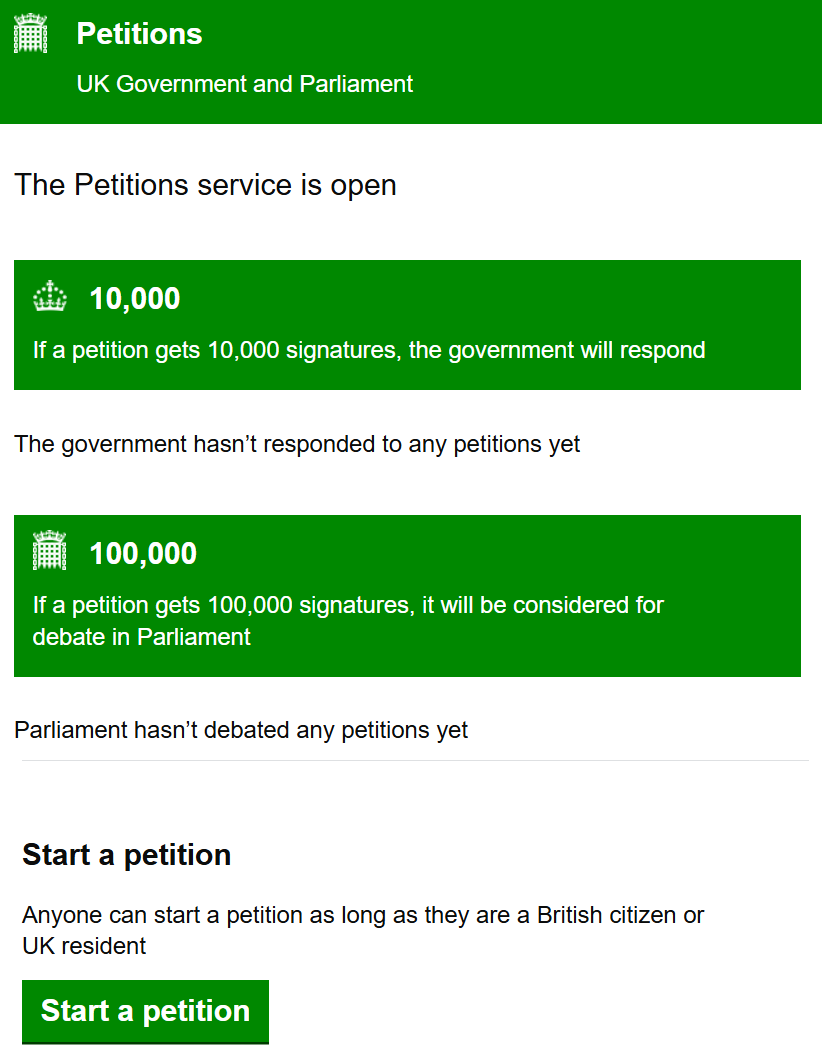
The e-Petition system is available to enable everyone to raise appeals to the Government

If 10,000 people respond the Government prepares a document n response to the question or appeal

If there are 100,000 responses, the MPs debate the e Petitions in Parliament.

Back in May 2024, before the general election, the Conservatives closed down the opportunity for e Petitions.

However, the Labour Government finally arranged for them to open for it at the end of the October week and the first three items were approved on Thursday 30th October. The opportunity of the new e-petitions can be seen https://petition.parliament.uk/ The most significant e-Petition on Thursday is the “Apply for the UK to join the European Union as a full member as soon as possible” which can be seen here. Another three were approved on Friday 1st November and there will be many more in the future.

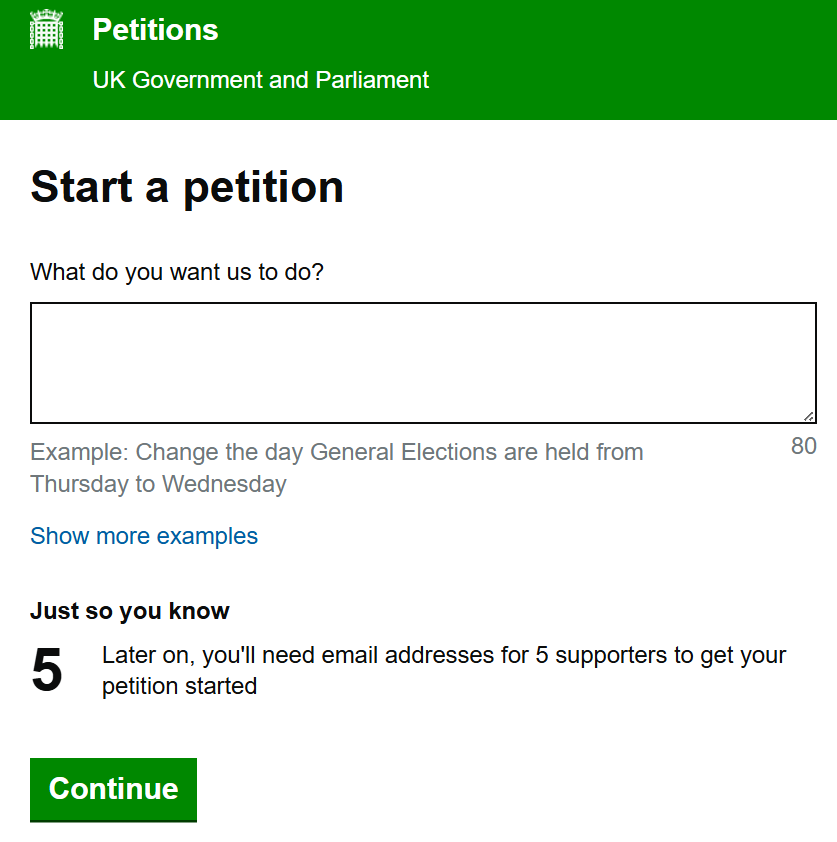
Here is the opportunity for us to start a petition for the future below and also the piece I published on the beginning of August calling for it was here

Towards at the end of November of Thursday 21st I wrote a focus on new e-petitions and at that time “Introduce 16 as the minimum age for children to have social media” was taking with just over 100,000 signatures but since then on the following of Monday 25th November I spotted that two other new e-petitions which are “Don’t change inheritance tax relief for working farms” which has gone to just over 100,000 signatures and also that the “Call a General Election” which is very recent and yet they have achieved with over 2.6 Million e-petitions that has been very significant. These 3 items are currently beyond 100,000 early this week of 25th November.

Posted in Parliament and Democracy | Leave a comment

Two Labour MPs endorse their local YMCA groups


On the 23rd and 24th October two Labour MPs referred to the work of their local YMCA.

The first discussion was called “Rough Sleeping — [Sir Christopher Chope in the Chair]” and Tom Hayes, the Labour MP for Bournemouth East spoke about Bournemouth YMCA.

The second discussion, called “Black History Month”, with Jacob Collier, the Labour MP for Burton and Uttoxeter contributing. He referred to the Burton YMCA during his speech.  

Below are the comments from the MPs and the text of the discussions: Rough Sleeping — [Sir Christopher Chope in the Chair]

Tom Hayes: I want to commend those leading and working in our services, because they are the most amazing, caring, understanding, dedicated people. We have heard from some of those people who are now in Parliament. In my constituency of Bournemouth East, I want to commend Bournemouth Churches Housing Association; St Paul’s Hostel, which is run by BCHA; HealthBus; YMCA Bournemouth; Healthwatch Dorset, which has just produced a fantastic report on homelessness and health; Homewards, represented by the Prince of Wales; WithYou; We Are Humans; the citizens advice bureaux across Bournemouth, Christchurch and Poole; and Shelter.

And that one was: Black History Month

Jacob Collier: As this Government put service back at the heart of public life, there are so many of my constituents who go out of their way to help others, volunteering in food banks and youth clubs and running community activities. I have been humbled to visit some of these groups, from the BAC O’Connor Centre to the Sexual Abuse Rape Advice Centre, Burton YMCA, Burton HOPE, Uttoxeter Heath Community Centre and The Community Church, and I look forward to visiting many more during my time in this House.

Posted in Parliament and Democracy, Youth Issues | Tagged , , , | 1 Comment

Our MPs speak out on allowances for carers


On the 16th October two important subjects “Carer’s allowance” and “Access to primary healthcare” were debated as part of “Opposition Day:”

On the subject of Carer’s Allowance six Sussex MPs made comments. Helena Dollimore, Labour for Hastings and Rye, Mims Davies, Conservative for East Grinstead and Uckfield responded to Alison McGovern, Labour Minister for “The Minister of State, Department for Work and Pensions” Helena said;

“I join the Minister in paying tribute to the millions of carers in the country, including those in my constituency. Does she agree that when someone is juggling the daily stresses of life, it can be difficult to remember to notify the DWP of a change in circumstances, which is required under the current arrangement?”

Jess Brown-Fuller, Liberal Democrat MP for Chichester spoke

“If a carer receives a bonus from their employer for doing a good job and it takes them over the threshold, should they lose their carer’s allowance?”

Later Josh Babarinde, the Liberal Democrat for Eastbourne spoke very significantly but he began with:

“Sophie, Clare, Oliver and Wendy are some of the most resilient people I know. They are all ‘Eastbournians’, they would all do anything for their families, and they are all carers. They are among the 9,415 carers in Eastbourne, and I promised them that I would use opportunities such as this debate to recognise their resilience and give them and their families a voice. Today, I strive to do exactly that. I strive to do it particularly with respect to the need for wider support to carers, which the motion mentions.”

He referred to “Sophie Ticehurst and her family care for Sophie’s 24-year-old brother Jack, who has autism and is non-verbal.”  “I also pay tribute to Oliver Davis, a young Carer in my constituency.” And then “Lastly, I want to mention Wendy Turner, a different type of family carer—a kinship carer, whom you know, Madam Deputy Speaker”

Alison Bennett, Liberal Democrat MP Mid Sussex spoke;

“The population of my Mid Sussex constituency is older than the average. Across the country, the population is ageing. We cannot shy away from the fact that we will as a society increasingly rely on carers. Just because care often happens in homes—in private and behind closed doors—that does not mean that it is not important or that we can ignore it.”

She continued, “As my hon. Friend Jess Brown-Fuller said, unpaid carers save the taxpayer an astonishing £162 billion a year. The Government’s financial worries would stretch far beyond the current £22 billion black hole were it not for those unsung heroes. That is not just a statistic; it represents a profound debt of gratitude that we owe to those who provide care. The social, emotional and financial value that unpaid carers bring to our communities cannot be overstated. This afternoon, Members from all parts of the House have made that point loud and clear.”

Access to primary healthcarewas introduced by Nusrat Ghani

“I inform the House that I have selected amendment (a), tabled in the name of the Prime Minister.” the session.

Beccy Cooper, the Labour for Worthing West contributed

“In my constituency, the Worthing integrated care centre is due to open very soon. It is part of a neighbourhood model, where GPs will work with other healthcare professionals to provide a holistic wraparound service. As has been demonstrated in this Chamber today, there are already partner practices that are working effectively. This is about the interaction between neighbourhood hubs and those partner practices. It is pragmatic politics to get those to work, and work well, for our GP colleagues.”

John Milne, Liberal Democrat MP for Horsham commented;

“In Horsham, it has become routine for surgeries to fill all available appointments within minutes of opening. Relatively junior staff are obliged to spend the rest of their time saying no to frustrated, anxious and—not infrequently—angry patients… We must get working conditions right, and that cannot be achieved in a state of permanent understaffing.”

Jess Brown-Fuller spoke;

“In my constituency of Chichester, people are deeply worried about accessing GPs, a concern echoed throughout the general election campaign and reflected in my surgery appointments with residents.”

She stated “This is not the first time I have mentioned this in the Chamber to the Secretary of State, but the collapse of a not-for-profit GP federation serving Chichester and the south coast last month was a stark reminder of the system’s fragility. Patients’ appointments were cancelled, services were threatened and 130 staff were left unpaid. The collapse was due to the erosion of contract values with primary care networks and NHS Sussex. When GPs are sitting in my surgery telling me they want to work but they cannot, with no reassurance that they will be paid for the work that they have done, something has gone terribly wrong.”

Her final words were “Lastly, we must reverse the Conservatives’ cuts to public health grants, in order to support preventive dental care, including oral health programmes and promoting healthy eating choices, which will reduce the pressure on our NHS dental services. The Government have an opportunity to turn around a decade of Conservative chaos and mismanagement of our precious NHS and to give primary care the attention and focus it deserves, and we will work constructively with them to ensure that patients in Chichester and across the country get the care that they deserve.”

Posted in Parliament and Democracy | Tagged , , , , , , | Leave a comment

The House of Lords “Schools: Absenteeism”


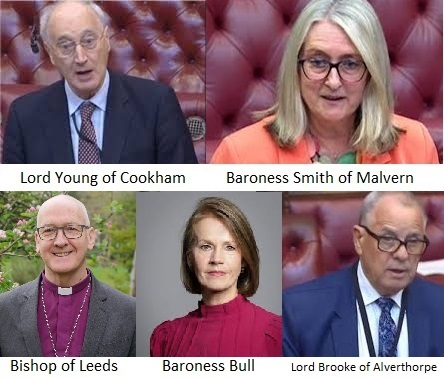
Last Tuesday the 22nd October the subject of “Schools: Absenteeism” was debated. The Bishop of Leeds who is Nick Baines, Baroness Bull who is Deborah Bull and the Labour Lord Brooke of Alverthorpe who is the Clive Brooke from West Yorkshire. All of the text can be seen below.

The person who responded to all of questions and comments was the Labour Baroness Smith of Malvern, the Lords Spokesperson (Equalities) who is Jacqui Smith. The session was opened by the Conservative, Lord Young of Cookham, from Berkshire and he is George Young.

Lord Young of Cookham: To ask His Majesty’s Government what steps they are taking to reduce absenteeism in schools.

Baroness Smith of Malvern: My Lords, tackling absence is at the heart of our mission to break down the barriers to opportunity. If children are not in school, it does not matter how effective or well supported teaching and learning is; they will not benefit. That is why we are committed to working with the sector to provide access to specialist mental health professionals in every school and rolling out breakfast clubs to every primary school.

The Bishop of Leeds: My Lords, is there any causal correlation between poverty, particularly in the wake of the cost of living crisis, and absenteeism from school?

Baroness Smith of Malvern: The right reverend Prelate is right to identify that. The data shows that those on free school meals are far more likely to be absent from schools than those who are not. That is why we need a wide-ranging approach to ensure that we provide both the school action and the home backgrounds that will enable children to attend school and learn. My right honourable friends the Secretary of State for Education and the Secretary of State for Work and Pensions are working hard on the cross-government childhood poverty strategy precisely to address some of those issues.

Baroness Bull: My Lords, numerous studies have demonstrated the positive impact of arts and creative programmes on attendance and engagement, which is especially true for pupils from at-risk populations, where absenteeism of course creates an even longer shadow. Will the curriculum and assessment review take account of this evidence in considering the value of arts subjects, and will the Government encourage more schools to take up Artsmark, given that 96% of Artsmark schools report positive improvements on attendance, punctuality and engagement?

Baroness Smith of Malvern: The noble Baroness is absolutely right that we need a curriculum in schools that will encourage all children to flourish and to be engaged. That is why, in setting up the curriculum and assessment review led by Professor Becky Francis, we have specifically asked it to consider how we can ensure that the curriculum meets the needs of disadvantaged pupils and those with special educational needs, and that it does that through creating space for exactly the sort of creativity for which the noble Baroness is a strong advocate.

Lord Brooke of Alverthorpe: Has any work been done on working from home? I gather that this is a factor which is leading to some absenteeism. As we are likely to see a growth in the number of people working from home, could we see that, at least in the public service, part of the contract is that those working from home will give an undertaking that their children will go to school?

Baroness Smith of Malvern: My noble friend makes an interesting point. In my response earlier to the noble Baroness, Lady Barran, I was very clear that, to be honest, it does not matter whether you are working from home as a parent, or where you are working—your responsibility is to ensure that your children are in school every day. If you do not do that, you are disadvantaging their futures. I do not think my noble friend meant this, but I would not want there to be some idea that there is some sort of excuse because of the way in which there are—quite rightly—more flexibilities about the way in which we work. However we as adults work, we have a responsibility to ensure that our children are in school, because that is where they will learn and have the best chance of a successful future.

Posted in Church Teaching, Education, Parliament and Democracy, Youth Issues | Tagged , , , | Leave a comment

The Eastbourne MP published the Former Church Sites


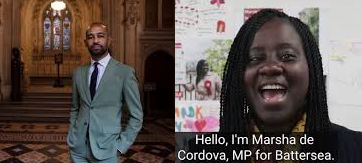
On Thursday, 17th October, last week in the House of Commons Josh Babarinde, the Liberal Democrat MP for Eastbourne, organised a debate on the subject entitled “Former Church Sites – Church Commissioners – in the House of Commons” A government minister Marsha de Cordova “The Second Church Estates Commissioner” She was the Labour MP for Battersea. The calls and responses can be seen below.

Josh: What steps the Church is taking to support the development of housing on derelict former church sites.

Marsha: When a church is closed, a formal legal process under the Mission and Pastoral Measure 2011 is followed. There are currently 127 cases in which a new use is being found for closed church buildings; only two are cleared sites, and they are waiting for disposal.

Josh: I welcome the hon. Lady to her place. Eastbourne declared a housing emergency last year, and the key thing we need to do to address that emergency is build our way out of it. The commissioners preside over a perfect brownfield site for housing: the site of the former St Elisabeth’s church on Victoria Drive, just down the road from where I went to school. It has been derelict for 20 years, and since the church on the site was demolished four years ago, there has been no sign of development whatsoever. I urge the commissioners to develop that site into affordable housing, and I appeal to the hon. Lady for an urgent update on the situation.

Marsha: Since 2022, the Church Commissioners have been working with the diocese of Chichester to market the site and find a developer. I am pleased to say that a developer is in the process of agreeing to a conditional contract for a mixed-use development that will include convenience retail and housing, some of which will be much-needed affordable housing, which the hon. Member mentioned. That development will need planning permission, and that is being explored with the local authority now.

Posted in Church Teaching, Parliament and Democracy | Tagged , | Leave a comment

MPs debate the VAT on independent schools


On Tuesday 8th and Wednesday 9th of October two events took place as “Opposition Day:” debates. “VAT on independent schools” and “Farming and food security”.

Nusrat Ghani, Conservative, Sussex Weald MP, described the time keeping rules; “Back-Bench speeches will be limited to four minutes, and maiden speeches to six minutes. We all love a debate, but every intervention eats into the contribution of another Back Bencher, so I ask Members please to be mindful of that.”

Mims Davis, Conservative East Grinstead and Uckfield MP spoke to the first debate; “My youngsters have had a mix of excellent learning, including in nursery and in state education, as have youngsters in many families so I agree with my right hon. Friend. The economic and employment impact of this new tax will be devastating. It will impact on so many livelihoods and communities.”

Jessica Brown-Fuller, Liberal Democrat Chichester MP, contributed; “In my constituency there are three independent schools, one of which is a choir school. In one of those independent schools there are 29 children with diagnosed SEND, and only one with an EHCP with that as the named school. Does my hon. Friend agree that given the crisis in attaining EHCPs, especially in West Sussex County Council, which is ranked fifth worst in the country and where only 3.6% of EHCPs are given within the statutory framework of 20 weeks, there needs to be more support in dealing with this policy”

Josh Babarinde, Liberal Democrat Eastbourne MP, said “the breakneck implementation is completely wrong and will throw families, children and communities into chaos… if this Government are to insist on this policy going ahead, they should at the very least delay it”

John Milne, Liberal Democrat for Horsham, spoke about his constituency “Most of Horsham is open farmland, with patches of ancient woodland and villages that retain a strong sense of community… We have high-achieving schools, both state and private, and we want to keep it that way. Many of them have approached me with concern over the VAT imposition… As a constituency that is now half town, half rural… We have large areas of productive farmland, making a valuable contribution to food security, but the same land is under pressure to provide housing and renewable energy installations. All of these are positive things, but the same land cannot do them all at once… In Horsham, the average price of a new house is higher than that of the existing stock, so the more we build, the higher our target goes—the exact reverse of what is supposed to happen. Horsham already has 13,500 unbuilt permissions. We will be forced to continue building houses that people cannot afford to satisfy a local need that does not exist, while heaping further stress on to already overloaded local services— and then we are surprised when people say they do not like it”

On Wednesday the vote for the “Renters’ Rights Bill: Reasoned Amendment to Second Reading” The only Sussex Conservative for it was Alison Griffiths from Bognor Regis and Littlehampton. The amendment was prevented by Labour, Liberal Democrats, Green members and also one of the DUP. Sussex MPs did make many comments before the vote

Andrew Griffith, Conservative for Arundel and South Downs, added to the debate “The challenges faced by tenants in the private sector are very real, but is the right hon. Lady familiar with the law of unintended consequences? What have she and her officials learned from the study of the application of similar rules in Scotland, which have made the plight of renters worse, not better?” “My right hon. Friend is making a powerful speech on an important subject. Is she familiar with this week’s report from Scotland’s Housing Network revealing that 16% of landlords are reducing their supply, and fully 12% are considering leaving the sector over precisely this sort of attempt to over-regulate what would otherwise be a free market?”

Sian Berry: “I endorse all my hon. Friend’s comments, particularly on the need for rent controls. In my constituency of Brighton, I have a very high population of renters, including myself. I have only ever been a private renter since leaving home over 30 years ago. My constituency has many young people and students renting, and my local Acorn branch and the National Union of Students have also raised the problems caused by well-off guarantors being required to secure a rented home. I have spoken with the NUS president about this. It fuels discrimination against working-class, estranged and international students, and fuels homelessness among students -“

Nusrat invited Chris Ward for Brighton Kemptown and Peacehaven to make his speech. “I grew up in Brighton, and my parents grew up in Peacehaven, so it is a huge honour and responsibility to represent the great constituency of Brighton Kemptown and Peacehaven. It is also a privilege to speak in this debate, because of all the Bills in the King’s Speech, this one will have the most immediate and far-ranging impact on my constituency… In Brighton, there is also a persistent problem of homelessness and temporary accommodation, especially in the western part of my constituency. There are at least 7,500 on the council house waiting list, while 1,600 households, 50% of which have children, are living in temporary accommodation.”

Such challenging statistics for the area I live in. I am interested to see which MPs will further engage these important issues!

Posted in Parliament and Democracy | Tagged , , , , , | Leave a comment

Bishop of Guildford asks tax question


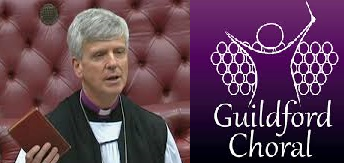
On Tuesday 15th October there was a debate in the House of Lords described as “Tax Reliefs: Theatre, Orchestra and Museums and Galleries Exhibition – Question. Several people responded with the Minister, Lord Livermore, Spencer Livermore, the The Financial Secretary to the Treasury responding to the comments. The Bishop of Guildford, Andrew Watson asked “Can the Minister say whether the Government have formed a view on extending the relief to choirs”. This Bishop appears to be a new contributor to the House of Lords. Here is his on full comment and the response from Lord Livermore which can be found here:

The Bishop of Guildford: My Lords, the current relief offered to instrumental groups of 12 or more players does not extend to choirs, a situation that is logically indefensible, especially given the growing popularity of choirs across the nation. Can the Minister say whether the Government have formed a view on extending the relief to choirs, as requested by musical organisations all around the country, not least given the recent questions over the future of the BBC Singers?

Lord Livermore: Orchestra concerts with a vocal element are not excluded from the orchestra tax relief. Concerts with a vocal element, such as a choir, may be eligible if the instrumentalists are the primary focus of the concert. The current rules ensure that the orchestra tax relief meets its objective of supporting and incentivising orchestra concerts specifically.

Posted in Church Teaching, Parliament and Democracy | Tagged , | Leave a comment

“House of Lords: Behaviour and Courtesy” with Bishops


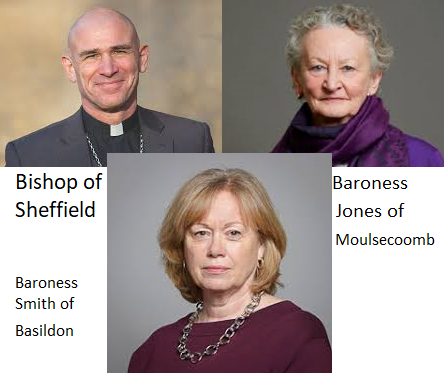
Pete Wilcox, the Bishop of Sheffield, took part in a discussion in the House of Lords on Monday 14th October. Additional comments came from a Green Party member of Parliament, Baroness Jenny Jones of Moulsecoomb. She spoke about a “The most reverend Primate of England—and the world—the Archbishop of Canterbury actually gave way to me once, for which I was very grateful” The Labour minister, Leader of the House of Lords and Lord Privy Seal, Baroness Angela Smith of Basildon, stated “Bishops have given way to her. There is no rule that says that you must give way to a Bishop; it is through courtesy, and we would expect to hear from the Bishops, as we hear from other sections of the House.” Here are the full comments from Pete Wilcox, Baroness Jenny Jones of Moulsecoomb and Baroness Smith of Basildon. The whole of the discussion can be found here.

The Bishop of Sheffield: My Lords, it is surely a very good thing that the dealings of this Chamber are broadcast live, but it does mean that our interactions with one another are witnessed far beyond this place. Can the noble Baroness tell the House whether any attempt is made to monitor or record comments from the public in reaction to the broadcasts and, if so, what use is made of that feedback?

Baroness Smith of Basildon: My Lords, from time to time we see reports in the press or polls are undertaken in response. One that struck me most recently said how little people understood the work we do in this House. That is incumbent on us all, not just in our behaviour but in our explanation about what we do. Perhaps we ought to think a little more, particularly when we have debates on some of our very specialised reports or the detail of legislation, about how we can broadcast that more widely, so that people understand what goes on in this Chamber.

Two other House of Lords members spoked and then Jones spoked

Baroness Jones of Moulsecoomb: My Lords, there is something I find quite puzzling sometimes, and that is that we have to give way to our right reverend friends the Bishops. I do not understand why that happens. Could the Leader explain that? They always make a very good contribution, but they do have loud voices and can speak up just as we can. The most reverend Primate of England—and the world—the Archbishop of Canterbury actually gave way to me once, for which I was very grateful.

Baroness Smith of Basildon: I think the noble Baroness made the point; Bishops have given way to her. There is no rule that says that you must give way to a Bishop; it is through courtesy, and we would expect to hear from the Bishops, as we hear from other sections of the House.

Posted in Church Teaching, Parliament and Democracy | Tagged , , , | Leave a comment

Ministers are grilled in the House of Commons


The opening of Parliament allows eleven weeks for new members of Parliament to emphasise the views of their constituents. Last Monday two important debates took place with considerable contributions from Sussex MP’s. The first involved, two MPs, and was named, “Vulnerable People: Support into Work”.

Meg Hillier, the Labour MP for Hackney South and Shoreditch in London, began with

“What steps is she taking to support vulnerable people into work?”

Stephen Timms the Labour MP for East Ham and the Minister of State Department for Work and Pensions, answered.

“We are committed to supporting vulnerable customers into work. At jobcentres, for example, we can identify the support needed and signpost people to courses or organisations to help them overcome barriers. We will be saying more about our proposals in the forthcoming employment White Paper.”

Josh Babarinde the Liberal Democrat for Eastbourne commented

“Conservative-run East Sussex County council is threatening to close the Steps to Work programme, as well as Linden Court in Eastbourne, which supports people with learning disabilities to work towards employment. Will the Minister urge the county council to halt its plans and to consider alternatives such as selling off council buildings to raise the funds needed to provide these essential services for people with learning disabilities?”

Stephen responded with

“The hon. Gentleman draws my attention to a concerning development. My view is that we need more support for people with learning disabilities to get into work, not less. If he sends me the details of the concerns he has raised, I will be happy to look into them further.”

Mims Davies the Conservative for East Grinstead and Uckfield followed these comments and stated

“The well-received and groundbreaking Buckland review of autism employment focused on the action needed to help to tackle the lack of opportunities and outdated recruitment practices that do not meet the employment needs of autistic people. How is the Minister—I welcome him to his place—going to use this review, which I seem to remember him welcoming, to tackle the lack of understanding and ongoing stereotypes to help to make real change via Access to Work and other DWP interventions?”

Stephen said

“I thank the hon. Lady for her welcome. I am looking forward to a meeting with Sir Robert later on this month, and we will be talking exactly about that matter.”

Mims further responded with

“I thank the right hon. Gentleman for that answer. The disability action plan mid-year update is now somewhat overdue. Can the Minister confirm to the House when there will be a much-needed update? In helping vulnerable people to thrive in all walks of life, whether in employment or in respect of equality of opportunity, will the Minister’s Government commit, like the previous Conservative Government did, to working towards hosting the 2031 Special Olympics?”

Stephen commented to close the discussion.

“We will be saying more and we will provide an update in the forthcoming “Getting Britain Working” White Paper. If the hon. Lady would like to drop me a line about the Special Olympics, I would be happy to look into that as well.”

Later a session “NHS Performance: Darzi Investigation” involving many MPs across the UK. Wes Streeting, the Labour for Secretary of State for Health and Social Care who the MP for Ilford North. He began with

“I beg to move, that this House has considered Lord Darzi’s independent investigation into NHS performance.”

The first Sussex MP who participated was Alison Griffiths, the Conservative for Bognor Regis and Littlehampton. She stated

“Saturday was World Meningitis Day, but in the last year we have seen an almost doubling of meningitis cases in the UK. Does the Secretary of State think that the meningitis vaccination take-up rate is where it should be?”

Wes answered

“I am grateful to the hon. Member for her question. No, I do not think that the take-up rate is where it should be. That is why in the short time we have been in office we have put more effort and energy into vaccine take-up, but there is more to do. I welcome her to the House, and will not have a go at her for the record of the people who sat on the Government Benches just before the general election.”  

Jessica Brown-Fuller, the Liberal Democrat MP for Chichester contributed

“At the end of September, a large GP federation serving patients across Sussex suddenly went bust, causing 130 redundancies; patient care was severely affected. The federation reported that the cause was a failure to obtain long-term contracts from any of its major clients, and the erosion of the real-terms value of contracts with both primary care networks and NHS Sussex. Does the Secretary of State agree that protecting continuity of service is key to public confidence in primary care, and will he meet me to discuss this case?”

Wes responded to Jessica

“I am grateful to the hon. Member for her intervention. I wish that this was a challenge only in her constituency; it is a challenge right across the country. As I said to the Royal College of GPs last week, it will take time to rebuild general practice, so that it is back where we want it to be. We would be delighted to hear more from her; I will ensure that my department makes contact, and that a Minister is in touch about the challenge in her constituency.”

Posted in Parliament and Democracy | Tagged , , , , , , | Leave a comment

A Reading MP endorsed football in Brighton & Hove


On the 10th October there was a discussion in Parliament about “Sport: Team GB and ParalympicsGB” Nusrat Ghani, the Conservative for Sussex Weald is “Deputy Speaker and Chairman of Ways and Means” and she referred to Matt Rodda the Labour MP for Reading Central who spoke for a while, commenting about “I thank Fran Kirby for her work in football, including for the Lionesses. She plays for Brighton & Hove Albion” Fran plays for Brighton & Hove Albion now, but she started as a Reading player. It is inspiring to read about Francesca:

“Francesca Kirby (born 29 June 1993) is an English professional footballer who plays as an attacking midfielder for Women’s Super League club Brighton & Hove Albion and the England national team. She began her career with hometown club Reading before moving to Chelsea in July 2015 where she remained until 2024. Born and raised in Reading with her brother Jamie and parents Denise and Steve, Kirby began playing football as a young girl after watching her brother play.”

Here is the introduction from Nusrat and the text from Matt. The text for the whole of the session is from here and Matt is available from here @MattRodda.

Nusrat: I have a little tip for the shadow Minister for future speeches: my husband David and daughter Farah are Arsenal fans.

Matt: It is a great pleasure to speak in the debate. May I associate myself with the speech made by my hon. Friend the Minister? She spoke eloquently about the importance of sport to men and women, boys and girls, and particularly to disabled people—everyone—as well as about the lifelong benefits that sport can give. I hope that the whole House will support her endeavours on this important subject.

In the time available to me—many other colleagues want to speak—I will cover three areas. First, I want to pay tribute to Paralympians and Olympians after the summer’s success. Secondly, I will highlight some of the wonderful achievements of local sportsmen and women from the Reading area and the importance of grassroots sport in our community. Finally, I will call for the owner of Reading football club to speed up the sale of the club, which is a huge local issue, and I thank my hon. Friend for her unstinting support on this important matter.

I start with the amazing success of our local Paralympians at this summer’s Paralympic games. I mention in particular Gregg Stevenson, a Paralympic rower who trains in Caversham, where the British rowing base is. Gregg has been through enormous challenges in life, yet he won gold for GB in the PR2 mixed double sculls. He suffered disability in 2009 while he was a member of the 59 Commando Squadron in the Royal Engineers through a bomb blast in Afghanistan, which caused him to lose both legs. He has come back from that tragedy to become a Paralympic rower. It is important to remember the contribution of our service personnel, as well as other disabled sportspeople. What an amazing achievement for him.

While I have the opportunity, I would also like to mention Ed Fuller, another Paralympic rower training locally who attended the University of Reading. He was one of the crew who won gold for ParalympicsGB in the mixed coxed four events in Paris. I also praise Will Arnott, a Paralympian from our community who plays boccia—an unusual precision ball sport, similar to bowls but less well known—for his hard work and dedication, and his success this summer.

Our Paralympians are all wonderful ambassadors for sport. I thank them from the bottom of my heart for their work for ParalympicsGB to raise the profile of the Paralympics, and para sport in general, among young and older people, both in the Reading area and across the country. I appreciate that colleagues are lining up to speak, but I would like to mention briefly a few prominent sportswomen from our community and say a little about grassroots sports. I thank Fran Kirby for her work in football, including for the Lionesses. She plays for Brighton & Hove Albion now, but she started as a Reading player and went to school locally at Caversham Park primary school. She is much loved in our community, and it is worth paying tribute to amazing stars like her, who blaze a trail for other women. I also thank Amanda Handisides, who is a Team GB ice hockey player, and of course Morgan Lake, who was born in Reading. She is a well-known high jumper who has represented GB on many occasions.

I also mention our wonderful grassroots sports. I cannot do justice to all of them, but I thank our local teams in football, hockey, cricket and many other sports for their enduring work at the grassroots. In a sense, I have to declare an interest: my family and I have benefited from it.

I turn briefly to Reading football club. Let me tell the story of what has happened, and call for action from the owner, Mr Dai Yongge, who has delayed selling the club, which has caused huge problems for fans, players and the club. Reading is one of the oldest clubs in the football league, yet it is in real difficulty. We have had a successful career and an illustrious history over many years, including two spells in the premiership, the highest-ever point tally achieved in the championship and numerous other successes. Sadly, we have never got to an FA cup final, but we have had some amazing cup runs, yet unfortunately our club has fallen into a difficult period because of irresponsible ownership.

Reading’s case is similar to that of a number of other clubs, as I know from working with colleagues. I am glad to see that the previous Government’s Football Governance Bill has been brought back by our Front-Bench team, and I hope that soon becomes law and deals with the problem of irresponsible ownership, which has been experienced across the country by a number of clubs, many of them in medium-sized towns and cities. I know other colleagues have strong feelings about that.

Before I call for action from Mr Yongge, I point out how difficult this situation has been. The reason why the club has been so badly affected by his ownership is repeated financial mismanagement: he failed to pay His Majesty’s Revenue and Customs on time and, as a result, points were deducted, meaning that Reading were relegated from the championship to league one. That was not because of anything that happened on the pitch. That is grossly unfair on the club, the players and local fans—it is completely and utterly unacceptable. The same thing could happen to other clubs in the football league in exactly the same way, due to the same issues of irresponsible ownership, and of owners failing to live up to the standards that they should be adhering to.

Sadly, the powers available to the English Football League are not as great as they might be, and I hope that the Bill, which will hopefully come to Parliament shortly, will tackle this and set a high bar for ownership. It is interesting that Mr Yongge was not allowed to buy Hull City; the Premier League was able to intervene to avoid that. The EFL did not have the power at the time to stop him buying Reading, and that is an absolute tragedy for our fans, the players and the club. I hope something can be done about it.

We have been hoping for a sale since last October. The former Member for Bracknell and I attended a march in Reading town centre with several thousand fans last October, and we managed accidentally to stop all traffic on a local A road. The fans sent a strong message to Mr Yongge that he needed to get on with selling the club, finding a preferred bidder and working with them to move things on, so that a new owner could invest in the club. In the last year, the situation has not been properly addressed. He has been in discussion with Rob Couhig, the former owner of Wycombe Wanderers, but sadly that fell through a few days ago. It has been announced that a new preferred bidder has come forward. I urge Mr Yongge to take all reasonable steps to engage with the new preferred bidder quickly, and to conclude a sale, so that we can move on, take our wonderful club forward, and get it back up to the premiership, ideally, though the championship will do for the moment. I urge him to get on with selling the club and to take action on behalf of the people of Reading.

I would like once again to show my appreciation for Olympians and Paralympians. They do amazing work representing this country and are ambassadors for sport across the world. I also thank local sportsmen and women, and young people involved in sport. Finally, once again, I call for a quick sale of Reading FC.

Posted in Brighton & Hove, Parliament and Democracy | Tagged , , | Leave a comment