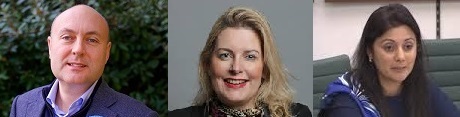
Liz Jarvis a Hampshire MP spoke about YMCA


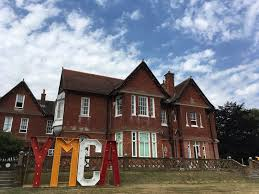
Liz Jarvis, the Liberal Democrat MP for Eastleigh in Hampshire, spoke about the YMCA. Many years ago, I was the Chair of the Sussex YMCA and I visited on Fairthorne Manor on one occasion. On Tuesday 8th October there was a session called “Chalk Streams: Sewage” which was organised by one of her colleagues, Victoria Collins, the Liberal Democrat Spokesperson for “Science, Innovation & Technology” and the MP for Harpenden and Berkhamsted. The whole of the Chalk Streams: Sewage session can be obtained from here and Victoria opens the session:

Victoria Collins: I beg to move, That this House has considered the matter of tackling sewage discharges in chalk streams. One Friday evening, I received a text and photos from a desperate resident, Maz, as the numbers cranked up on the sewage discharge map, asking: “Surely something can be done about our precious chalk stream!” I had been following the situation, but as soon as I saw the photos of sewage-filled water flooding the roads, I called her straight away, saying: “I am coming down—can you meet me there?”

After a number of other comments Liz spoke including YMCA and Victoria responded to her:

Liz Jarvis: I thank my hon. Friend for introducing this important debate. My constituency of Eastleigh has the precious chalk stream, the River Itchen, running through it. Earlier this year, Southern Water was found to be negligent by the Southampton Magistrates Court for dumping sewage into the Shawford lake stream that flowed into the YMCA Fairthorne Manor in Fair Oak in my constituency. Over 1,000 schoolchildren missed out on summer activities as a result. Does my hon. Friend agree that the Government should introduce a sewage tax on water company profits? [Official Report, 9 October 2024; Vol. 754, c. 6WC.] (Correction)

Victoria Collins: I will be calling for a lot in holding water companies to account.

Analysis completed by the Liberal Democrats found that almost 50,000 hours of sewage was discharged into chalk streams in 2023. That is more than double the previous year. The dire situation speaks to the 2022 report, which found that only 14% of England’s rivers had “good” ecological status. Compared with several other countries such as Austria, Greece and Malta, where 95% of bathing sites are classified as excellent, it is clear that we are letting down our rivers and streams. That must change. Despite the situation, the Conservatives stood by and let us down again and again, failing to regulate water companies properly.

Posted in Charities, Parliament and Democracy, Youth Issues | Tagged , , , | 1 Comment

MPs should speak up now about FareShare and Foodbank


The UK has benefited from several charities that have provided food to local communities. These charities are very significant and include FareShare, Foodbank and the Trussell Trust. It would be fantastic if the current Sussex Parliament members would engage with these charities this Autumn.

The most recent comments about FareShare came in April this year when Jo Churchill former Conservative Minister for Bury St Edmunds spoke in Parliament. Two other Conservatives that commented in April were Charles Walker, a Minister from Broxbourne and Jo Gideon, Stoke-on-Trent Central.  Jo Churchill also spoke about FareShare in February. These individual MP’s are no longer in the Parliament following the new Labour Government arrangements. It was interesting that following Jo Churchills contribution in April, there were more responses from MPs referring to FareShare. They were Anne McLaughlin for SNP, Selaine Saxby for Conservative MP for North Devon, Wera Hobhouse for Liberal Democrat in Bath, Paul Girvan for DUP, Steven Bonnar for SNP and Daniel Zeichner for Labour in Cambridge. From this list, only two are still MPs, Wera Hobhouse in Bath and Daniel Zeichner, for Cambridge. The last first comment from a Sussex MP was Nick Gibb, the Bognor Regis and Littlehampton member who was the Minster in July 2023 but he was left in July.

Foodbank: In March 2024, Grahame Morris MP for Easington who remains as an MP and Virendra Sharma from Southall who lost his seat in July this year to Deirdre Costigan who is the new Labour MP both spoke on Parliament. Stephen Timms from East Ham asked two Foodbank questions in Parliament in March and is now the Minister of State, Department for Work and Pensions. There were others that responded earlier this year with the first Sussex contribution back in October 2023 which came from Mims Davies who is now the MP for East Grinstead and Uckfield.

Trussell Trust: In July, Josh Babarinde the Liberal Democrat MP for Eastbourne, spoke to commend the work of Eastbourne Foodbanks set up by a local man Howard Wardle. The references to the Trussell Trust have been much more significant. In September a range of MPs, Zoe Fanklin, the Guildford Liberal Democrat MP together with other Liberal Democrat MP’s and one Labour MP asked questions in Parliament. These questions in Parliament show how geographically widespread the issue of food poverty extends across the UK.

We clearly need all MPs and indeed the Sussex MPs to speak up in Parliament in the next few months for FareShare and Foodbank that needs response for the new Government group. They also would enjoy to hear from the the Trussell Trust in the near future.

Posted in Parliament and Democracy | Tagged , , | 1 Comment

MPs back in Parliament after party conferences


Today is at the opening of the Parliament following the Party Conferences. The Conservative Party Conference closed last Wednesday in Birmingham.

Three Sussex MPs published some comments #CPC24 Andrew Griffith MP

“I’ve now finished off my #CPC24 panels with a packed @ukonward event on The British Entrepreneur. Entrepreneurship is the bedrock of a Conservative economy. We must diagnose where we let down small enterprise, and how we get the state out of their way as they create wealth.”

Mims Davies MP said,

“An outstanding morning in the hall as we concluded a remarkably positive-despite a tough backdrop party conference- #CPC24 -thank you to all our outstanding candidates who have been put through their paces & done us proud. I’m confident we’ll make a strong choice for who is next”.  

Nusrat Ghani MP introduced

“to #Paris2024 & back with a Gold Medal! Great to join our communities at a wonderful local celebration of our very own @TeamGB Olympic Gold Medallist Emily Craig & congratulate her on this incredible achievement! She’s a great inspiration”.

The Conservative Party will announce their new leader later this year on November 2nd.

On the 12th of September Alison Bennett Liberal Democrat MP, from Mid Sussex made a significant contribution to the debate “NHS: Independent Investigation” which included two Conservatives. She received a response from the Labour “Secretary of State for Health and Social Care” Wes Streeting. Alison:

“I welcome the announcement of the Secretary of State about the shift from hospital to community care. My fellow Liberal Democrats and I fully believe that fixing social care is part of the solution in getting the NHS back on its feet, so I also welcome the announcement of a national care service. Part of care in the community is of course the hospice sector. I recently met the chief executive of St Catherine’s hospice, which is in the constituency of Mims Davies. He highlighted to me that, although the hospice has 24 beds, it is currently using only 12 of them. What assurance can the Secretary of State give me, and people right across the country, that fixing the hospice sector will be part of the solution as we take the NHS forward?”

Wes:

“I am so grateful for that question, not least because it gives me the chance as a constituency MP to say a huge thank you to St Francis hospice and Haven House children’s hospice for the care they provide to constituents, like so many other hospices around the country. I know that the sector is under real pressure. We look forward to working with the sector throughout the period of the spending review and the 10-year plan, not only to support our hospices but to improve end-of-life care, which is pertinent to debates that I know this House and the other place will have about how we ensure a good death for everyone, in every part of the country”.

At the moment the public e-Petition system in Parliament is waiting to open. If 10,000 people sign an e-petition a government will respond by making a statement in the House of Commons. If 100,000 people have signed it, MPs will potentially debate the subject although some MPs have debated subjects with smaller numbers of sections. The very first comment on e-Petition in Parliament occurred on November 1999 mentioned by Alan Duncan, the Conservative MP from Rutland and Melton who was Shadow Spokesperson (Trade and Industry) and he was speaking in “Orders of the Day — Electronic Communications Bill” He stated “The Minister was kind enough to refer to the e-petition that I electronically signed this morning.” From then on in 2005 in Parliament it was a clearly established process within the Labour Government at the time. So far there have been more than 662,000 e-Petitions. The last time they were referred was towards the end of May 2024. The General Election meant that the e-petitions website and all e-petitions closed on Thursday 30 May. The e-petitions site will open again once the House of Commons sets up a new E-Petitions Committee. It would be fantastic if Sussex MPs would be willing to persuade the Government to offer them again.

The significance of Early Day Motions is another important theme that could emerge. They are described on the UK parliament website as

“EDMs are used to put on record the views of individual MPs or to draw attention to specific events or campaigns. Topics covered by EDMs vary widely. By attracting the signatures of other MPs, they can be used to demonstrate the level of parliamentary support for a particular cause or point of view.” … “Who will not sign EDMs? Ministers, Whips and Parliamentary Private Secretaries do not normally sign EDMs.”

Peter Kyle is the only Labour Minister and because of his role as “The Secretary of State for Science, Innovation and Technology” will therefore be unable to respond on. Sian Berry, the Green MP for Brighton Pavilion has signed 52 items including for Beccy Cooper, Labour MP from Worthing West and Jess Brown-Fuller, Liberal Democrat MP from Chichester but not Helena Dollimore, Labour MP for Hastings and Rye. Currently 173 EDMs have been achieved with 94 during July and 79 in September. There were only 18 days that MPs were active in Parliament from July and September, it will be interesting to see how many EDM’s are raised in the last three months of this year.

Posted in Parliament and Democracy | Tagged , , , , | Leave a comment

Welsh Senedd refers to Bristol and Brighton speed limits


On 25th September, there was a discussion referred to as the “7. Welsh Conservatives Debate: 20mph speed limits” with MS, (Member of Senedd, the Welsh Parliament) including Labour, Conservative and Plaid Cymru members. John Griffiths the Labour MS for Newport East spoke and referred to the “experience in Bristol and Brighton, for example, where they found that having extensive 20 mph speed limits reduced speed generally, because it changes driver behaviour generally on all roads, with the obvious benefits that follow from that.” Here is the comment from John Griffith:

Llywydd, I’ve believed for a long time, and still believe, that a default 20 mph policy is the right one, and I believe that the Welsh Government was right to introduce it, and the review is also the correct thing to do. And following that review, I am sure some adjustments will be made, reflecting the views of local people as to which roads should revert back to 30 mph, and obviously we will see the outcome of that exercise in short order.

I do think, Llywydd, that it’s fairly extraordinary that we’ve heard from two Welsh Conservative Members with very little—in fact, I’m not sure any—mention of road safety. It’s so obviously important, isn’t it, that a policy introduced primarily to improve road safety should be viewed and examined in the light of what’s happened since in terms of road safety? But obviously there are some inconvenient facts there, in the post-implementation experience, as far as the Welsh Conservatives are concerned.

So, we have two quarters of data now, post implementation of the default 20 mph limit, compared to the similar period before commencement, which shows lower speeds, fewer casualties and reduced vehicle damage claims. That’s some pretty strong evidence, I would suggest, in terms of the success of the policy in lowering speed, preventing accidents and reducing deaths and casualties. So, in Wales then, for that six-month period following roll-out, compared to the previous period before commencement, taking 20 and 30 mph roads together, we see casualties reduce from 1,191 to 840—a fall of 29 per cent. And, at the same time, casualties on other roads also reduced, which I think speaks to the experience in Bristol and Brighton, for example, where they found that having extensive 20 mph speed limits reduced speed generally, because it changes driver behaviour generally on all roads, with the obvious benefits that follow from that. 

It is extraordinary, isn’t it, that we’ve heard virtually nothing around that post-implementation experience in terms of road safety, in terms of deaths, casualties and collisions from the Welsh Conservatives? I’m sure that people following this debate today, and what we’ve heard from the Welsh Conservatives up to this point today, will be struck by the lack of mention of what may be seen by many as inconvenient facts for those Welsh Conservatives.

When it comes to some of the financial aspects, Llywydd, we know from esure, the insurance company—we all know that insurance companies are hard-headed, they operate in that real world of finances and financial advantage for those that are in business, to make a profit—they are reducing policy premiums by some £50 for those of their customers who are in these extensive 20 mph limit areas. It’s estimated that if 20 mph was rolled out right across the UK in the way that it has been in Wales, that would result in some £1.4 billion-worth of savings for motorists who would be affected in that way. In Wales, that would result in savings of tens of millions of pounds. I give way.

Posted in Brighton & Hove, Parliament and Democracy | Tagged | Leave a comment

Some new questions from the Bishop of St Albans


During the August Holiday period there were a significant number of questions raised by Alan Smith, The Bishop of St Albans, to the House of Lords. On the 6th August he asked questions to the “Department for Culture, Media and Sport: Gambling”. The questions and response can be seen here. Fiona Twycross, the Baroness Twycross; Baroness in Waiting; (HM Household) (Whip), responded.  Interestingly, The Bishop requested new questions again last Wednesday and Thursday.

It is interesting that Tonia Antoniazzi, the Labour MP for Gower asked her similar question on 25th July and then that Iain Duncan Smith, the Conservative MP for Chingford and Woodford Green on the 9th September asked these four questions on that day. Also on the same day Graham Leadbitter, the SNP MP for Moray West, Nairn and Strathspey also asked his own question about Gambling.

The questions from Alan Smith, the Bishop of St Albans are here:

Wednesday 25th September with currently 2 Support comments and 1 Rejection comment:

Alan Smith: To ask His Majesty’s Government what assessment they have made of the findings of GambleAware’s Annual GB Treatment and Support Survey 2023, published on 21 August.

Fiona Twycross: The Government is committed to using all the evidence available from a range of sources, including the GambleAware survey, to better understand the true picture of gambling behaviours and treatment in Great Britain.

We recognise the impact harmful gambling can have on individuals and their families and, as stated in the Government’s manifesto, we are committed to strengthening protections for those at risk. We will consider the best available evidence in future decisions regarding the fulfilment of that important commitment.

Thursday 26th September with currently 1 Support comment and 1 Rejection comment:

Alan Smith: To ask His Majesty’s Government what steps they will take to support children growing up in households where an adult is experiencing problem gambling.

Fiona Twycross: We recognise the impact harmful gambling can have on individuals and their families. The National Gambling Clinic (NGC) supports people aged 13 – 18 years old in England who are experiencing harm from gambling, and offers a Family and Friends service which provides support to those impacted by someone else’s difficulty with gambling.

As stated in the Government’s manifesto, we are committed to strengthening protections for those at risk. We will consider the best available evidence in future decisions regarding the fulfilment of that important commitment.

Posted in Church Teaching, Parliament and Democracy | Tagged , , , , | 1 Comment

Raw sewage spills on the agenda once again


Today is the second day of the Conservative conference in Birmingham which finishes on Wednesday. Last week the Labour conference met in Liverpool and included contributions from Beccy Cooper, the Worthing West MP, she stated

“It’s been an amazing day at the Labour Party conference in Liverpool today despite the torrential downpour. I’ve been speaking with campaigns and organisations about what they want to see from the new government to make real change for communities”.

Then Peter Kyle, for Hove and Portslade stated

“Our task is to lay the foundations for the security, prosperity and opportunity of the digital generation. To make Britain the best place to live and work. Where our reputation is no longer shaped by the shame of food banks but by the potential of state-of-the-art databanks.”

Later Chris Ward, Brighton Kemptown and Peacehaven stated

“Immensely proud to see Keir Starmer setting out Labour’s plan for national renewal. Labour has done more in 12 weeks than the Tories did in 14 years. Change has begun!”.

Then Tom Rutland, East Worthing and Shoreham stated

“And it was great to see East Worthing and Shoreham appear on the big screen before the speech, Star Wars style!”

Over the last five weeks in Parliament a number of Sussex MPs responded to a range of subjects. However, there were few discussions when more than one Sussex MP corresponded. On the 12th September three events involved three or four Sussex MPs. Nusrat Ghani was involved with the “Sir David Amess Adjournment Debate” opened by Mr Mark Francois, Conservative MP for Rayleigh and Wickford. He paid tribute to David Amess as

“a fallen comrade whose plaque I am looking at right now ….just above where he used to sit; appropriately enough it is directly opposite that of Jo Cox, another fallen comrade who graced this House while she was here”

Four of the Sussex MPs engaged with the debate on “Environment, Food and Rural Affairs: Topical Questions” Two Sussex Labour MPs, Beccy Cooper and Helena Dollimore and two Sussex Conservative MPs, Alison Griffiths and Kieran Mullan. There were comments from several Labour Ministers involved in the groups.

Beccy spoke first;

“Raw sewage was discharged into our rivers and seas for a shocking 4 million hours last year. Will the Minister reassure our coastal communities, including my own in Worthing West, that water companies will be held accountable for the necessary investment to address the systemic and chronic pollution of our waters?”

Emma Hardy, the Parliamentary Under-Secretary of State

“Congratulations to my hon. Friend on her election. She is absolutely right to be outraged at the level of sewage pumped into our rivers, lakes and seas under the previous Government. I hope that where she saw inaction in the past, she will see this Government taking action right now through our Water (Special Measures) Bill. We will not stand by and allow these levels of pollution to continue.”

Helena spoke next

“My constituents in Hastings and Rye got their water bills this month. Many of them were shocked to see their bills going up despite the failures of Southern Water, which include sewage dumped along our coastline, flooding in our town centre and leaving us without water. It has even charged us for the five days when the taps ran dry. What are the Government doing to clean up the mess left by Southern Water and by the Conservative party?”

Steve Reed, Secretary of State, responded

“What has been going on in my hon. Friend’s constituency is completely unacceptable. I know that she has been a huge champion for cleaning up the water in that part of the country. One of the things we are looking at doing is doubling the rates of compensation from water companies when they let down their customers as she described” 

A few minutes later Alison stated

“The Secretary of State is certainly talking tough, but will he publish the justice impact test for his Water (Special Measures) Bill and list the additional court cases and prison places needed?”

Steve Reed responded with

“We will publish all information relating to the Bill at the appropriate time during its passage through Parliament.”

The final comment was from Kieran Mullen from spoke about his constituency

“In Bexhill and Battle we get to enjoy the amazing High Weald area of outstanding natural beauty, but it is expansive, covering more than 1,400 sq km. What advice did the Minister’s Department give the Housing Department on taking such issues into account when centrally imposed housing targets are putting pressure on the area as a whole?”

The response came from Mary Creagh the Labour of The Parliamentary Under-Secretary of State

“It is important to remember that our national landscapes are protected landscapes and that the planning authorities work appropriately on such issues. I am in discussions with officials and I am happy to write to the hon. Gentleman with a proper answer on the issue.”

Along with that discussion there was also a “NHS: Independent Investigation” with Two Sussex Conservatives, Mims Davies and Kieran Mullen and the Liberal Democrat, Alison Bennett. There was also the “Business of the House” which is the method of organising procedure and practice in the Houses of Parliament and refers to terms such as “Amendments, Debates, Prayers, Private Bills and Questions” Three Sussex Labour MPs Helena, Beccy and Tom Rutland participated. Hopefully in due course we will see their contributions.  

Posted in Parliament and Democracy | Tagged , , , , , , , | Leave a comment

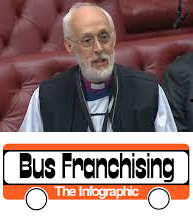
The Bishop of Manchester speaks about Bus Franchising


Following the earlier debate on 9th September in the House of Lords about Bus Franchising, David Walker, the Bishop of Manchester on the 12th September made a contribution together with his colleague, Lord Snape called Peter Snape from Labour.

Lord Hendy of Richmond Hill, the Minister of State (Department for Transport) called Peter Hendy submitted a response.

Here is the link from all of the House of Lords session.

Bishop of Manchester: My Lords, I declare an interest: I got the bus on Monday, Tuesday, Wednesday and today, and shall be getting it tomorrow. As I live in Greater Manchester, I have been a real beneficiary of what the previous Government allowed for franchising in my city and its surrounds. The buses have become more reliable: I can now go to a bus stop and expect a bus to turn up within 10 minutes, not 40 minutes, which I sometimes had to wait for before.

I have two questions. First, I am old enough to remember when local authorities in Greater Manchester often had joint boards. The wonderfully named Stalybridge, Hyde, Mossley and Dukinfield joint board provided buses in parts of what is now Tameside.

Lord Snape: Green buses.

Bishop of Manchester: They were indeed green. I remember them very well. I wonder what the possibilities are for rural areas that are not part of a combined authority like Greater Manchester. Will local authorities have the capacity to combine together to franchise bus services jointly, rather than doing it by themselves?

Secondly, we made great progress in Greater Manchester; we got the buses and the fantastic Metrolink tram system. It would help to integrate the whole thing if we gained control of local rail services at the same time. For many people, local rail, as well as buses and trams, is necessary to make journeys. Could the Minister give any indications of plans to allow the franchisement of local rail services in places such as Greater Manchester?

Lord Hendy of Richmond Hill: I thank the right reverend Prelate for his comments. I particularly note his support for the effects of the initial tranches of franchising in Manchester, which have indeed increased service and produced better reliability. He refers to the very old organisation of public transport in Manchester. Many of those magnificent vehicles are in the Manchester transport museum at Queens Road.

These days, the increasing number of combined authorities are of a good size to take advantage of this Government’s franchising proposition. It is, in effect, bringing together local authorities of sufficient size to be able to take advantage of the benefits of a network. I do not have an answer to whether this will allow individual local authorities to join together, but I am happy to write to the right reverend Prelate about that.

The right reverent Prelate raised the subject of the integration of rail services. We have already made a lot of progress with the Mayor of Greater Manchester, and with the Mayor of the West Midlands, in integrating rail services into the local transport network in information and in ticketing. Although this is not the subject of today’s discussion, I have no doubt that there will be some announcements on that. He is right to aspire to an integrated local network that is modally agnostic and includes rail and, in Manchester’s case, metro and buses.

Posted in Church Teaching, Parliament and Democracy | Tagged , , , | Leave a comment

It was good for Liberal Democrats to visit Brighton


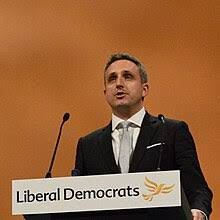
The Autumn Conference for Liberal Democrat took place in Brighton from 14-17 September with a significant number of people taking part. One of them was Alex Cole-Hamilton who has recently become the Liberal Democrat MSP for Edinburgh Western. He was born in Hertfordshire in South England and became a lecturer at the University of Liverpool. Following the Brighton conference, he was working in the Scottish Parliament on a theme called “Creating a Modern, Diverse and Dynamic Scotland”.

Alex commented, “I came back from Brighton yesterday, where a buoyant conference took place with 72 new Lib Dem MPs, who were focused on the people’s priorities. That is what we should be discussing in this place.” He also commented on “It is a bit like saying, “Do you believe in God? Here are the full event comment and below are his full words.

I remember my early days as an MSP in this chamber when speeches, debates and events such as this would, in effect, be big marquee events. The chamber would be full, the Government benches would certainly be full, the public gallery would be full and, yes, the columnists, scribblers and broadcast journalists would be packing out the press gallery. Not even the hard-bitten columnists from The National are here today, such is the level of deep freeze to which this issue has been plunged. That is evidence of the end to our rhetorical wars of independence, and I am glad of it, because there are better things that we can be doing with our time in this chamber.

Winston Churchill once said that the definition of a fanatic is someone who cannot change their mind and is unwilling to change the subject. In the tenor of the debate from members on the Government and Green benches today, we see the measure of the fanaticism in those parties. I wish that they would change the subject, because there are so many topics that are crying out for this Parliament’s attention and for parliamentary time, which is a rare thing.

I wish that the Government would make time available for things such as the crisis in accessing primary care and general practitioner appointments at the first time of asking; the lack of dentists who provide NHS care in our constituencies; the sewage flowing into our rivers from the Government-owned water company; the mental health crisis, which sees young people with suspected attention deficit and hyperactivity disorder on a waiting list for seven years; the missed climate targets; the drug death emergencies; and the 170,000 Scots currently battling long Covid. Presiding Officer, you will remember that the Government made twice as much money available for a referendum on the topic that we are debating today, which did not happen, than for all the sufferers of long Covid in this country—it is a national outrage.

That is how Liberal Democrats would choose to influence Government time. There is every sign and indication that, if we are going to be part of what is next, we will have more influence. I am glad of that.

The SNP has spent the past 10 years picking at the scab of its defeat. It colours everything that we do in this place. Warning lights are blinking across the dashboard of public policy, crying out for ministerial attention, which is going wanting.

It explains why there are now eight times as many Liberals on the green benches of the House of Commons in Westminster as there are nationalists, and why we, in this party, came within touching distance of the number of Scottish Nationalist Party MPs returned to Westminster. I came back from Brighton yesterday, where a buoyant conference took place with 72 new Lib Dem MPs, who were focused on the people’s priorities. That is what we should be discussing in this place.

I go back to the general election, because that was an important line in the sand. For the first time in a while, the SNP was humbled; it could no longer defy the laws of political gravity. The general election was far from being the de facto referendum that the SNP had initially set out to make it. The people rendered their judgment: they were not interested in having that discussion.

The polls—any given poll that you look at, Presiding Officer, from this week, last week or any week in the past 10 years—show that the public that we represent is, largely, evenly divided, or as divided as it was on the topic of independence as it was in 2014. However, the salience has fallen away to almost nothing. If we ask people what motivates their vote, they will tell us that it is about health, the cost of living, heating their home or the standard of their children’s education, which has fallen under this Government. Those matters take far greater priority. It is a bit like saying, “Do you believe in God?” Everyone has a view about that, but it does not motivate how one votes, nor does the constitution.

Thank goodness that this 10-year anniversary will bookend a topic that has stifled our democracy and under which every election up until the most recent general election has been wrapped in a flag based on a reductive calculation of whether it is the best way to have a referendum or the only means of stopping one. I am glad of that.

We will hear a lot about Brexit. We have already heard a lot about it, but the SNP was a late convert to the cause of European unity. In fact, the SNP spent more on losing the Shetland by-election to the Liberal Democrats in 2019 than it did on the entirety of the remain campaign.

Posted in Brighton & Hove, Parliament and Democracy | Tagged , | Leave a comment

Sian Mulholland spoke about YMCA and young people


A public document was produced this week relating to a Private Members’ Business in the Northern Ireland Assembly, called “Voting Age: 16- and 17-year-olds” and one of the members that contributed was Sian Mulholland, the Alliance for North Antrim. She spoke about the issue and she referring to “I came to the Building with groups of young people from Belfast YMCA’s Youth in Government programme and then with young people from the Where is My Public Servant?” Edwin Poots a DUP member, introduced the session. Here is Sian’s contribution:

Sian Mulholland: I beg to move the following amendment: Leave out all after “referendums;” and insert: “endorses the recommendation from the Institute of Public Policy Research 2023 report ‘Out of Kilter’, which calls for votes at 16 to be combined with high-quality and expansive civic education in schools to boost voter turnout and political engagement among young people; calls on the Minister of Education to consider this expanded civic education as part of the pending review of the Northern Ireland curriculum; and further calls on the British Government to introduce legislation to reduce the voting age for all elections and referendums to 16.”

Edwin Poots: You have 10 minutes to propose and five minutes to make a winding-up speech. All other Members will have five minutes.

Sian Mulholland: I feel that speaking on the motion is a bit of a full circle moment for me. As a youth worker in 2009, I came to the Building with groups of young people from Belfast YMCA’s Youth in Government programme and then with young people from the Where is My Public Servant? programme to advocate and lobby for votes at 16. The only Member who is still standing that I interviewed at that time is Patsy McGlone, so fair play to him for his sticking power. Fifteen years later, I am honoured to stand in the Chamber to speak on behalf of the 16- and 17-year-olds who deserve to have a say in who represents them. Quite a few of them are sitting in the Gallery behind me, so thank you very much.

I will start by laying down a challenge to any MLA who is speaking on the motion today: please, please do not refer to young people as “the future”. If you have that phrase in your speech, please delete it. All that does is disenfranchise young people from their place in society here and now. It tells them that they are good enough, just not right now. I want any young person who is listening to the motion and who is up in the Gallery today to hear one thing above all else: your contribution to your community is valued and worthwhile now.

As we consider the possibility of lowering the voting age to 16, it is important to acknowledge that, in the past, particularly in the debate on the issue, first, in November 2012, much of the debate around it was speculative. There simply were not enough examples around the world to guide us, but, over the last decade, that has changed significantly. We now have a wealth of evidence, particularly in Europe and South America and, closer to home, in Wales and Scotland, where 16- and 17-year-olds have been granted the right to vote in various elections. The experiences in those countries offer us really invaluable insights.

Empirical research shows that, by and large, the participation of young people has been really positive in respect of both their political engagement and their civic attitude and change to that. Importantly, there is no indication that lowering the voting age has any negative consequences; in fact, in many cases, it has sparked a new and vibrant discussion around politics, democracy and what it is to be a citizen. The sky did not fall in by allowing young people the chance to have their say. As a young person told me this morning, Scotland did not just create an army of rebellious teenagers overnight. More’s the pity, I say.

The evidence that we have should encourage us to seriously consider extending the franchise. The potential benefits to political engagement and to our democratic system, particularly among younger generations, are hard to ignore. Before I get into the amendment, I want to address some of the main arguments that we hear regularly against extending the vote to those who are 16 or 17, because I believe that they deserve careful scrutiny. I do not believe that they stand up to the evidence or the principles of democracy that we uphold.

First, some argue that 16- and 17-year-olds are not mature or informed enough to vote. Let us not underestimate our young people. It is so patronising to tell a young person that they are not mature enough or educated enough to understand the world of politics. The cohort of young people in this generation is the most politically engaged and connected generation ever. They have immediate access to their representatives through social media or email, unlike past generations, like mine, who had to wait until their school visited this Building or they saw an elected representative out in their community.

Young people today grow up in a world where information is more accessible than ever, and many are deeply aware of the issues that affect them, whether it is climate change, education, housing or the economy. At 16, they can leave school, start full-time work, pay taxes, join the military and even make critical life decisions such as getting married or consenting to medical treatment. If we trust them with those responsibilities, why should we deny them the right to have a say in who governs them?

Research from the countries that have already lowered the voting age shows that 16- and 17-year-olds are just as capable of making informed choices as older voters. In fact, studies show that young people who are engaged politically at an earlier age tend to carry that civic engagement into adulthood, which is what has been shown in Scotland. By giving them the vote, we nurture lifelong democratic participation. That is a habit that we should be encouraging not postponing.

Another argument is that young voters are more likely to be swayed by emotional appeals or lack of experience than older generations. If we are being honest, this place knows more than most about that in respect of our adult generation. The idea that more experience guarantees better decisions is unfounded. As a young person said this morning:

“Wisdom does not equate to age.”

Initial scepticism about lowering the voting age was based on assumptions drawn from low political engagement of the slightly older 18-24 age bracket, leading to fears that younger teens are even less likely to be engaged. However, data from Austria, Germany, Argentina and Scotland shows a different picture. Studies reveal that there is often a higher turnout among 16- and 17-year-olds than 18- and 19-year-olds, partly due to the former’s being in more stable environments, such as living at home and attending school. In the likes of Austria and Brazil, enfranchising young people at 16 has been shown to establish long-term voting habits.

This debate is not just about extending the vote to 16- and 17-year-olds and not just about fairness; it is about strengthening our democracy. By empowering young people, we ensure that our democratic institutions are truly representative, inclusive and forward-looking.

Leave out all after “referendums;” and insert: “endorses the recommendation from the Institute of Public Policy Research 2023 report ‘Out of Kilter’, which calls for votes at 16 to be combined with high-quality and expansive civic education in schools to boost voter turnout and political engagement among young people; calls on the Minister of Education to consider this expanded civic education as part of the pending review of the Northern Ireland curriculum; and further calls on the British Government to introduce legislation to reduce the voting age for all elections and referendums to 16.”

I now want to address the amendment that we have tabled. The amendment builds on the motion, which rightly calls for the voting age to be lowered. However, we have to recognise the need for all young people to be equipped with the knowledge and understanding to fully engage in the process. While there will always be young people who are knowledgeable and engaged, we need to make sure that we deliver an equitable opportunity for understanding. The amendment endorses a key recommendation from the Institute for Public Policy Research’s 2023 report, ‘Out of Kilter’, which highlights the importance of combining votes at 16 with high-quality civic education in all schools. It calls on the Minister of Education to consider:

“this expanded civic education as part of the pending review of the Northern Ireland curriculum”.

By doing so, we would not only lower the voting age but ensure that young people are prepared to participate meaningfully in our democracy. While there will always be naysayers, this is the right thing to do.

The Minister of Education has advocated autonomy at school level, but I believe that there is a duty on his Department to create a consistent approach to nurturing the civic journey of this generation. Enfranchising all young people without equipping them with the tools to fully acknowledge their rights, responsibilities and the political system would be a missed opportunity. Civic education should go beyond the basics of how elections work. It has to foster critical thinking and understanding of the issues that affect society. In essence, our amendment strengthens the original motion by linking the right to vote at 16 with the educational tools needed to foster lifelong political engagement. I hope that Members will support it.

I will leave any Member who wants to vote against the motion with the views of some of the young people whom we met this morning from NUS-USI, the Secondary Students’ Union of Northern Ireland, the Northern Ireland Youth Forum, Politics in Action, the Shared Island Youth Forum and One Young World. This is what voting at 16 means to them:

“We currently do not feel represented by local and national politics”. “We are the people with lived experience of young people”. “Young people in this generation are so clued-in, and it is not because we were taught it; it is because we went looking for it”. “Proper political education is so important. Without voluntary organisations and the youth work sector, we would not know as much as we do now”. “There is a moral argument in that, while we have a National Insurance number and can pay into the system, we do not have any say over systems that are crumbling around us”. “Earlier voting will set us up for life”. “We are the most politically engaged generation ever”. “We need to nip the ‘nobody ever listens to us anyway’ vibes in the bud”. “Let’s focus on how we can make Northern Ireland liveable for us all”.

I hope that the Secretary of State for Northern Ireland, the Rt Hon Hilary Benn, will be tuning into this debate online. I hope that he plans to progress the extension of the franchise, as he indicated recently to me and my colleague Kellie Armstrong. I will write to the First Minister and deputy First Minister to ask that the Executive consider writing to Westminster to ask that those powers be devolved to Northern Ireland, because it is right that we make decisions for ourselves in the House. Hopefully, the one- and two-year-olds in 2012, when the Chamber last discussed the issue, will be able to, in the 2027 Assembly election, select who will sit in these seats.

Posted in Parliament and Democracy, Youth Issues | Tagged , , | Leave a comment

Parliament debates Bus Franchising


On Monday 9th September, Simon Lightwood, the Parliamentary Under-Secretary (Department for Transport) and the MP at Wakefield and Rothwell, Leeds opened a debate about Bus Franchising. Simon responded to a range of MPs including the new Sussex MPs, Conservative, Kieran Mullan for Bexhill and Battle. This is Simon’s final comment and the rest of the discussion can be obtained from here:

I agree with my hon. Friend. We must turn the page on years of Conservative failure in local transport, which is why the forthcoming bus Bill, in conjunction with our announcements today, will help end the country’s transport postcode lottery.

Here is the comment from Kieran and his response from Simon after him.

Kieran: I thank the Minister for his statement.

We on this side of the House are in full agreement that good local transport is something that everyone deserves access to, both for helping people to live their lives and for fulfilling the economic potential of all parts of the country. At the heart of our local transport services are buses. They are some of the most convenient, well-connected and accessible forms of public transport out there—crucially, not just in urban areas, but very often in under-connected rural areas. That is why, in government, we invested billions of pounds in the bus sector, including the vital support provided to maintain services during the pandemic. We rolled out thousands of new zero-emissions buses and introduced the “Get around for £2” scheme, saving millions of people money on their fares and helping to get passengers back on buses.

Those interventions worked. Bus passenger journeys in England increased by nearly a fifth in the year ending March 2023, and we welcome this Government’s desire to build on our progress in order to improve services further, to get more routes running at better frequency, and to make sure that as many people as possible have reliable services that get them where they need to go. I am genuinely interested in understanding how the Government feel that this set of measures will achieve that. We are worried about some of the significant risks, which the Government do not seem to have considered.

This legislation places greater responsibility in the hands of local authorities. We know that a number of local authorities face financial and organisational challenges, and although I do not doubt that there will be enthusiasm for making use of the new powers, running any form of public transport brings real challenges. Of course, as the Minister said in opposition, gaps in experience could be filled by support from the Department for Transport, but depending on the number of local authorities that choose to take up franchising, this could mean that significant central Government resources are required. Unless I have missed something, today’s announcement includes absolutely no funding to pay for increased capacity at the Department. What projections have the Government made of the costs, and how exactly do they expect them to be paid?

It is the same story with local government finances. Make no mistake about it: this is going to cost money. Many bus routes, especially rural services, are loss making, even before we account for the additional resources that local authorities will presumably need to operate them. In his statement, the Minister did not recognise the enormous challenges that have been created by changing travel patterns post covid. If this Government are committed to providing services at 1985 levels, as he seemed to imply, they will need to commit to enormous levels of subsidy.

I welcome the success stories in metropolitan areas that the Minister talked about, but such services operate in a fundamentally different space, because of the density of those areas’ populations. It means that if passenger numbers fall next year, the financial risk will be taken on not by a private company, but by the local council and, by definition, taxpayers. Again, given that there appears to be no funding attached to the policy, surely it can be funded only by increases to council tax or cuts to other local services.

It is the same story when it comes to responsibility for capital expenditure. Will this now be the responsibility of local authorities? How exactly are they expected to fund it? As we recently made clear when debating the Passenger Railway Services (Public Ownership) Bill, it might be the Labour party’s priority to undertake ideological reforms to bring the transport sector further into the control of the state, but passengers’ priorities are the price, performance and reliability of services, not who is running them. We want to hear how the reforms will make a difference to passengers’ journeys and their accessibility, frequency and cost, and how they will help to restore the number of rural services and make journeys cheaper for passengers—and not just through the generic pledges we have heard today, but through concrete commitments on which the public can hold the Government to account. The Minister made absolutely no commitment to increase levels of services or miles travelled as part of the Government’s “revolution”.

There are some simple things that the Government could do for passengers, such as extending our “Get around for £2” scheme, which has been hugely positive for passengers and for the viability of services up and down the country. I am aware that the Chancellor is not Labour Members’ favourite person at the moment, but I encourage them to make the case for the cost-of-living benefits of the £2 scheme, as well as for the benefits of the winter fuel payment, in any hurriedly organised meetings today and tomorrow.

The Government have got the wrong priorities yet again. At the end of the day, passengers care about the preservation of existing services, the extension of routes, improvements in frequency and reliability, and cost. We on this side of the House are all ears when it comes to what difference this policy will make for them and—not to be forgotten—who is going to pay for it.

Simon: Modernising our transport infrastructure and delivering better buses are at the heart of our plan to kick-start economic growth in every part of the country to get our country moving. This statutory instrument is just the start of a package of measures; the buses Bill will deliver further measures on issues such as funding. Despite the challenging financial circumstances we find ourselves in—inherited from the previous Government—we are determined to deliver better bus services, growing passenger numbers and driving opportunity to underserved regions. All funding is rightly being considered as part of the spending review.

There is no one-size-fits-all approach for buses within local transport authorities. Franchising is just one way that this can be explored; there are also enhanced partnerships and municipal ownership. We firmly believe that our priorities to deliver better buses across the country are the right priorities, and we have the mandate from the British people following the general election to do just that.

Posted in Parliament and Democracy | Tagged , , | Leave a comment