Lord of Horsham refers to Brighton College


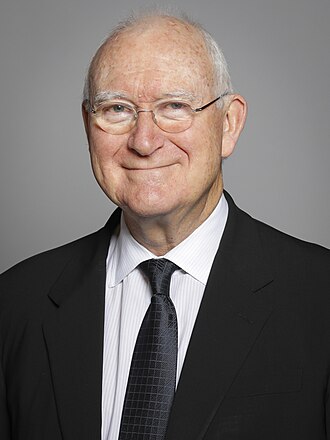
On Thursday 5th September a debate took place in the House of Lords that was referred as “Independent Schools: VAT Exemption – Motion to Take Note“. The session was opened by Lord Lexden, a Conservative member of the House of Lords based in Essex. He is also Alistair Cooke and he began with; “Moved by Lord Lexden That this House takes note of the contribution of independent schools, and any potential effects that changes to the VAT exemption for independent school fees could have.” A number of people took part in the session including Lord Maude of Horsham who is Francis Maude a Conservative from Sussex. His contribution and the rest of the session can be seen here and the text from Francis is listed below:

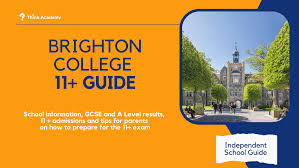
My Lords, the register carries my declarations that I am chair of governors at Brighton College, a large and successful independent school—which is obviously in Brighton. I was previously chair of governors at my old school, Abingdon, which when I and my brother were there was a direct grant school, a status that was abolished by the Labour Government in the 1970s. It occurs to me to wonder why successive Labour Governments have been more associated with destroying categories of schools—first the grammar schools and direct grant schools and now, in all likelihood, some proportion of the independent sector—rather than creating schools, which would be more natural for a party which, as my noble friend Lord Forsyth suggested, claimed to be for “Education, education, education”.

Of course, this was a manifesto commitment, and the Government will rely on that. I remember being told when I was in government that relying on the manifesto commitment is the last refuge of the scoundrel; it is there but it did not have to be done this way. The precipitate haste with which this has been pursued and the lack of any kind of impact assessment when the effects are manifestly clear just from the speeches being made in this Chamber today—I particularly pick out the powerful speech from the noble Lord, Lord Addington, based on deep knowledge and deep passion on the effects of it—mean that it is important that the effects should be understood. It is assumed that there will be a cash dividend from this but that is by no means clear. You would think that a Government who claim to be committed to the writ of the Office of Budget Responsibility might want to hear what it has to say about this before progressing at this kind of speed.

I want to say a word about some of the other things that the independent sector contributes to the benefit of society. Brighton College was responsible for establishing the London Academy of Excellence in Stratford in Newham, providing an excellent sixth-form education for some of the most disadvantaged children in that very disadvantaged borough. It now ranks among the top 10 schools of all kinds for A-level outcomes this year. The percentage of LAE students eligible for free school meals is more than five times higher than any other school in that top 10.

The LAE was founded by the Brighton College headmaster, Richard Cairns, who has led it from being a middle-ranking school to absolutely top of the tree in just 18 years, and a Brighton College governor. It receives a cash donation from the Brighton College community, and five Brighton College governors serve on various committees there. It would not have happened without Brighton College, and large numbers of bright, gifted children from disadvantaged backgrounds have benefited from it.

Brighton College has offered 24 refugees from Ukraine places with 120% scholarships. It also offers Opening Doors scholarships to disadvantaged children from local families—I am delighted to see my noble friend Lord Soames here as we both had children going through Brighton College and he now serves as president of the college—and many of those children have secured places at top universities.

Finally, I want to say a quick word about the value of education as an export. The Government do not quite understand the prestige and the cachet that attach to British education around the world, both in attracting students from overseas to schools here and in the growing number of UK schools that operate around the world, particularly in Asia. There is a hard-currency benefit to that in terms of cash coming into the country, and there are softer benefits of great value from the lifelong networks that these young people develop and the bonds of affection that flow from them.

I can see that this must have felt like a free hit at the time, but it is not turning out that way. I advise the Government to think again.

Posted in Brighton & Hove, Education, Parliament and Democracy, Youth Issues | Tagged , , , | Leave a comment

Bishop asks Palliative and End-of-life Care question


Sarah Mullally, the Bishop of London, submitted a question in the House of Lords on Wednesday 4th of September. She asked for details about funding of Palliative and End of Life Care

The Government member that responded was Baroness Merron, Gillian Merron, the Parliamentary Under-Secretary of State for Patient Safety, Women’s Health and Mental Health responded. A number of other members of the House of Lords also responded as can be seen.

The questions and responses from Sarah Mullally and Gillian Merron are below: 

Sarah Mullally: To ask His Majesty’s Government what assessment they have made of the adequacy of funding arrangements for accessible and equitable palliative and end of life care.

Gillian Merron: My Lords, we want a society where every person receives high-quality, compassionate care, including at the end of their life. Integrated care boards are responsible for the commissioning of palliative and end-of-life care services to meet the needs of their local populations. This is to promote a more consistent national approach and supports commissioners in prioritising palliative and end-of-life care. We will be considering the next steps, including funding, more widely in the coming months.

Sarah Mullally: I thank the Minister for her reply. We know that the hospice sector depends on charitable giving because of the low level of statutory funding at present. This means that the wealth and resilience of a community define the level of hospice services. This entrenches inequalities of place and means that access to hospice services is extremely unequal. Can the Minister outline what the Government are doing to look at the funding settlement, and particularly the wider hospice funding model, to ensure that this is not just another service that has poorer access for those in more deprived areas?

Gillian Merron: I certainly take on board the point that the right reverend Prelate makes. It is the case that the amount of funding that charitable hospices receive varies by ICB area. That, in part, is dependent on the breadth of a range of palliative and end-of-life care provision within the ICB area. I can assure your Lordships’ House that my colleague, Minister Kinnock, the Minister of State for Care, has recently met with NHS England, and discussions have started on how to reduce inequalities and variation in access to services and their quality.

Posted in Church Teaching, Parliament and Democracy | Tagged , | Leave a comment

Scotland MP raises important question about Pensioners


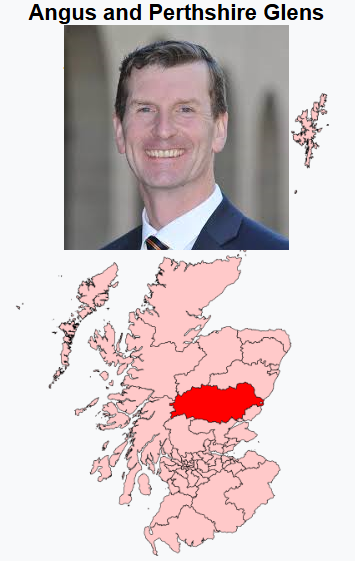
On Tuesday 3rd September during ‘Topical Questions’ at the end of the day in Parliament Dave Doogan, a Scottish National Party member representing Angus and Perthshire Glens, raised a question about pensioners and fuel poverty. Dave has been an MP since 2019.

Rachel Reeves, the Chancellor of the Exchequer responded.

The question and response can be seen from here.

Dave Doogan: The Chancellor would have known, in advance of the cut to the winter fuel payment and the stripping of £160 million from pensioners in Scotland, that Scottish pensioners suffer the lowest temperatures, rural Scottish pensioners live in some of the oldest houses on these islands, and most Scottish pensioners in rural areas are off the gas grid. Knowing that, what discussions did she have with her 37 new Scottish Labour MPs about pushing Scottish pensioners into fuel poverty?

Rachel Reeves: I would just note that the Scottish Government have decided to mirror what the wider UK Government are doing rather than using the tax powers that they have. That is a decision the Scottish Government have made given the fiscal situation they face; we face a similar issue with a £22 billion black hole in the public finances.

Posted in Parliament and Democracy, Scottish Referendum | Tagged , | Leave a comment

Adult Social Care questions asked of Government


A number of people including George Young, the Conservative, Lord Young, asked these questions in the House of Lords on Monday 2nd September. Gillian Merron the Parliamentary Under-Secretary of State for Patient Safety, Women’s Health and Mental Health responded. The Bishop of Southwark, Christopher Chessun, was amongst those who contributed, it was very interesting to see his question and response which is below.

The rest of the items can be found here.

George Young: To ask His Majesty’s Government what plans they have to reform social care.

Gillian Merron: My Lords, adult social care reform is critical to achieving this Government’s aim that everyone lives well for longer. Our vision is to create a national care service underpinned by national standards and delivered locally, supporting people to live independently for as long as possible. We will also establish the first-ever fair pay agreement for care professionals. We will engage widely with the sector and people with lived experience to inform these plans.

Christopher Chessun: My Lords, I welcome the Minister to her post. Does she recognise that one principal reason why fundamental issues around adult social care have not been addressed in the past 25 years is not only the complexity and cost—it is because adult social care is largely invisible and lacks political priority? Do the Government intend to address this?

Gillian Merron: I thank the right reverend Prelate for his kind words of welcome. I take the point about invisibility in this area, but it would be fair to say that this Government will want to make this extremely visible. It is an issue that will not go away, and also one that is absolutely crucial, not just for those who rely on social care but for the good functioning and provision of the National Health Service. The two are inextricably linked, and we cannot sort out one without the other.

Posted in Church Teaching, Parliament and Democracy | Tagged , , , | Leave a comment

John Birt asked a question for Crossbench Peer last week


This question is Economic Situation: Brexit asked by John Birt, the Crossbench Peer member of the House of Lords. He was born in Liverpool and educated at the direct-grant grammar school at St. Mary’s College, Crosby, near Liverpool. He is a British television executive and businessman and he was a former Director-General (1992–2000) of the BBC. He published the question on Tuesday 27th August. Fiona Twycross, the Baroness Twycross responded.

 Here is the question and response:

Lord Birt: To ask His Majesty’s Government what plans they have to commission a study on the benefits and disbenefits of the UK’s departure from the EU, and in particular its impact on the UK economy.

Baroness Twycross: The Government is currently focused on looking forwards and resetting the relationship with our European friends. As such the Prime Minister hosted 45 leaders from across Europe to the European Political Community on Thursday 18 July, to enhance cooperation on European security and other shared challenges the continent faces. Publicly available research on the interactions between the UK-EU relationship and the UK economy is widely accessible.

Posted in Parliament and Democracy | Tagged , , | Leave a comment

Party conference season gets into full swing here


This week is particularly significant as Parliament opens today and at the end of next week there will be Annual Party Conferences. Parliament will then effectively re start on the 7th of October. The Liberal Democrats host their conference here in Brighton on the 14-17 September. A week later the Labour party conference opens in Liverpool and then a week later Conservatives in Birmingham. The Green Party Conference is taking place at the end of this week over in Manchester. The Green party describe their conference as;

“The three days will be a busy mix of policy discussion and voting, speeches, panel debates, topical fringe sessions and socials on 6-8 September in Manchester Central. There will be: Panelson Nature Friendly Farming, Fascism, and Hope and Change; Fringeson a wide range of topics from Justice for Palestine to the Marketisation of Tertiary Education; Training/ strategy / feedback sessions looking at what we can learn from our General Election 2024 successes; Plus opportunities to meet our new MPs and pay tribute to Caroline Lucas; Socials and receptions and much more. And this year for the first time we are running an off-site day of radical thinking sessions open to the public, Hopeful Humanity.”

The Labour Party state that their conference will have

“inspiring speeches, invaluable training and an events timetable that makes the most of every minute, it’s a real opportunity to be a part of democracy in action.”

The Liberal Democrat Party claim that their conference is where their party “makes decisions” and “every member has an equal right to attend, an equal say and an equal voice” The state that their conference is

“a chance to catch up with friends, participate in discussions hear from experts, vote on motions ask questions visit the exhibition and get world class training – there’s something for everyone”

The Conservative Party has not yet released a statement or its agenda for their conference. The group for TheyWorkForYou has published information for this week but no Sussex MP’s have any items to contribute. There were a number of Sussex MPs that made contributions to Parliament business in the first 10 days of July. However, there are no statement records from Chris Ward MP for Brighton Kemptown and Peacehaven, Peter Lamb the Labour MP for Crawley or John Milne the Liberal Democrat for Horsham. The information this week lists the subjects for debate starting today with;

“Technology in public services; Access to banking services in rural Northumberland and Housing, Communities and Local Government (including Topical Questions) Tomorrow: Passenger Railway Services (Public Ownership) Bill: Committee of the whole House and Remaining Stages; Potential merits of a cross-Government strategy on unpaid carers; HM Treasury (including topical Questions); Healthcare provision in the East of England; Legacy of Team GB performance at the Paris 2024 Olympics; Potential merits of an international special tribunal on crimes of aggression in Ukraine; SEND services in Somerset and Fly-tipping. Wednesday:  Budget Responsibility Bill: Committee of the whole House and Remaining Stages; Closure of the police station in Royal Sutton Coldfield; Scotland; Prime Minister’s Question Time; Preventable baby deaths; Government support for the space sector; Future of sheep farming; SEND provision in Hertfordshire and Central Bedfordshire; Security in the Democratic Republic of Congo. Thursday: Business Questions to the Leader of the House; Great British Energy Bill: Second Reading; Great British Energy Bill: Programme; Rail and road connectivity in northern Lincolnshire; Business and Trade (including Topical Questions); Waste crime in Staffordshire and SEND provision”.

A week ago, I focused on two of the ninety-four Early Day Motions that were created during July. Some of the remaining items have been endorsed by our local MPs. The Sussex Conservatives have ignored all of the EDMs and indeed only two UK Conservatives have published any and with small numbers of support. The three largest EDMs have all benefitted from all of the five Sussex Liberal Democrat MPs and also Sian Berry the Green MP. These are “State pension age and 1950s-born women” which has 84 supporters and “Child poverty and the two-child benefit cap” which has 77 supporters, they were both published by Wendy Chamberlain from Scotland. The third one was “Peace in Israel and Gaza” which was published by Layla Moran, from Oxford and received 67 signatures. The fifth largest EDM’s is “Cumbria coal mine court appeal” from Tim Farron in Cumbria which two Sussex Liberal Democrat’s MPs supported and Sian Berry along with forty-three other supporters. “Consumer water bills” which Sarah Olney from Richmond created and three Sussex Liberal Democrat MPs, Sian Berry and two other MPs supported. Finally, the “UK arms exports to Israel” created by Layla Moran from Oxford signed by two Sussex Liberal Democrat MPs along with Sian Berry and with 41 other MP’s. It was interesting that Sian signed 21 EDMs, many more than any other Sussex MPs. Her colleagues had several EDMs but there was one significant Green Party created EDM in July which was “Public ownership of water”, created by Ellie Chowns from Herefordshire. It was signed by all four Green MPs one Liberal Democrat, two Labours, four Plaid Cymru MPs and five Independent MP’s including Jeremy Corbyn.

Helena Dollimore from Hastings and Rye created the EDM “200th anniversary of the Royal National Lifeboat Institution”, published on 17th July. It was one of 26 EDM’s raised by the Labour Party and the fourth largest item with fifty one signatures.

Posted in Brighton & Hove, Parliament and Democracy | Tagged , | Leave a comment

Two wonderful Cathedral’s in Liverpool


I was very pleased to visit Liverpool on Friday and to visit the two Cathedral’s which I have visited in the past a number of times but it was lovely to see them again.

The Anglican and Catholic Cathedrals are relatively close together in the centre of Liverpool City

The Anglican Cathedral is the largest in Britain and the volunteer guides made me very welcome. Their website

Liverpool Cathedral, St James’ Mount, Liverpool L1 7AZ – events such as Morning Prayer every 8.30am, and Eucharist at 12.05pm and then at 5.30pm for Evensong on Wednesdays and 3pm Choral Evensong on Saturdays and they have very significant aspects on each Sunday.

Chapter House – The Chapter House was funded by the West Lancashire Freemasons, in memory of the 1st Earl of Lathom.

War Memorial Chapel – The Chapel is dedicated to the memory of the Men of Liverpool and District, who gave their lives in conflict.

Gilbert Scott Memorial – In the centre of the great space, directly under the central tower is a dedicated memorial to the architect Sir Giles Gilbert Scott.

Great West Window – The stunning Great West Window, known as the Benedicite window, was designed by Carl Edwards. Reflect on the pink neon art installation ‘For You’ by Tracey Emin below the window.

Lady Chapel – Look for a well known Bible verse above the arches of this beautiful chapel. The Nobel Women windows celebrate inspirational women.

High Altar – The reredos behind the high altar is carved in sandstone and embellished in gold leaf. The lower panel illustrates the Last Supper. The Te Deum window rises above it.

Whispering Arch – In the Derby Transept the arch demonstrates an acoustic quirk: a person whispering into the stone on one side of the arch can be heard clearly by someone on the other side.

Baptistery – Trace the line from Jesus of Nazareth to a Christian Cathedral in six steps. The marble floor is inlaid with fishes, an ancient symbol of Christianity.

Enjoy our Tower Experience – A breathtaking 360 view of Liverpool’s iconic skyline from the rooftop of the highest cathedral in the UK. Open Daily. Check our website for opening times

Cathedral Shop – Visit our shop full of high-quality gifts, books and cards that reflect our great city of Liverpool and our spectacular building.

The Welsford Bistro – Dining at Liverpool Cathedral – Call in to the Welsford Bistro for great food, drinks and an amazing atmosphere. See our website to view our Menu

The Metropolitan Cathedral of Christ the King Liverpool is the Catholic Cathedral at Mount Pleasant. An awe inspiring place. their website

I do hope a visit to our website will give you a taste of the luminous beauty and spiritual atmosphere of this remarkable cathedral church and afford a flavour of our Cathedral’s sacred life.

The largest Catholic cathedral in England, the Metropolitan Cathedral together with its sister Cathedral at the other end of Hope Street plays an important part in the life of the City of Liverpool and Merseyside.

Whether you come here for a service, event or a visit I can assure you of a warm welcome in the name of Christ which will give strength and encouragement in your daily life.

Canon Anthony O’Brien
Cathedral Dean

Posted in Church Teaching | Tagged , | Leave a comment

The Bishop of Southwark asks about Carer’s Allowance


On the 9th August, Christopher Chessun, the Bishop of Southwark, asked questions regarding Carers Allowance to the Government and Maeve Sherlock the “Parliamentary Under-Secretary of State for Work and Pensions” responded. Baroness Sherlock in the House of Lords was listed as an ordained priest of the Church of England. She has been in the House of Lords since 2010. Here are the two questions and responses

The Carer’s Allowance

Christopher: To ask His Majesty’s Government what plans they have to revise (1) the limits on earnings and the number of hours that can be worked, and (2) the rate at which earnings above those limits can be reclaimed, for those in receipt of Carer’s Allowance.

Maeve: The Government recognises the challenges unpaid carers are facing and is determined to provide them with the help and support they need and deserve. It is looking closely at how the benefit system currently does this.

Universal Credit provides support to carers on low incomes, whether they are in paid employment or not. Carer’s Allowance, by contrast, is available to all unpaid carers, provided they are not in ‘gainful employment’. This is currently defined as having earnings not exceeding £151 a week net of allowable expenses. This level is reviewed annually alongside the Secretary of State’s statutory review of State pension and benefit rates. Many Carer’s Allowance recipients are in households also receiving Universal Credit, where the structure of tapers and work allowances (where applicable) effectively takes precedence over ‘gainful employment’ test in Carer’s Allowance.

With respect to overpayments of Carer’s Allowance due to the interaction with earnings, the Government is moving quickly to understand exactly what has gone wrong so that it can set out its plan to put things right.

The Carer’s Allowance: Overpayments

Christopher: To ask His Majesty’s Government what assessment they have made of the report, Carer’s Allowance Overpayments, published by Carer’s UK on 26 July.

Maeve: The Government recognises the invaluable service provided by the millions of unpaid carers across the country who provide care and continuity of support for vulnerable people every day. It recognises the challenges they face and is determined to provide them with the support they deserve.

The Government welcomes the report published by Carers UK, and is considering its findings. Ministers were pleased to meet with the organisation, and with carers, to discuss the issues raised shortly after publication of the report.

More broadly, in respect of overpayments of Carer’s Allowance, the Government is moving quickly to understand exactly what has gone wrong so that it can set out its plan to put things right.

Posted in Church Teaching, Parliament and Democracy | Tagged , | Leave a comment

Our MPs get ready for return to the Commons


The opening up of Parliament takes place next Monday. I had hoped the new Government would have created some opportunities for e-Petitions to be presented soon after the 17th July. It will be interesting to see if they will open this area of Politics in September? The previous Government published a statement about e-Petitions;

“We’re waiting for a new Petitions Committee. Petitions had to stop because of the recent general election. Once a new Petitions Committee is set up by the House of Commons, petitions will start again.”

During this holiday period there have been opportunities for any MPs, not part of the Government to take the time to ask questions that can be published for their responses. These opportunities exist each holiday period but so far there has only been one Sussex MP who has contributed. Andrew Griffith, the Conservative MP for Arundel and South Downs, has requested questions, three of which were on the 1st of August and six of which on the 2nd of August.  In his first statement there were two questions for the Department for Science, Innovation and Technology and one for Public Expenditure. The other was the Life Sciences Council and the Department of Health and Social Care that referred to Clinical Trials. On the 2nd of August, he asked six questions, all for the Department for Science, Innovation and Technology of which one was “Mathematics: Education” and all of the others were Public Appointments. I will be interested to see who takes up answering and if there will be any more questions from other MPs.

One of the other themes was connected to Early Day Motions which took place during the period before the holiday although they can be reflected at a later time. There were ninety-four EDM’s produced across the UK for the Government to consider. A large number on the first day of 17th July and also large groups on the next two Mondays before the Parliament closed. A total of 37 Liberal Democrat; 26 Labour; 10 DUP in Ireland, 7 Independent; 6 Plaid Cymru Wales; 3 SNP Scotland; 2 Conservative; 2 TUV group in Ireland; and 1 Green MP.  Some of these EDMs include; Public ownership of water, Pharmacy provision and Health services, Carers support, Child poverty and the two-child benefit cap pension age, State Pension 1950s-born women and Peace in Israel and Gaza State. So far there are no Sussex Conservative MPs that have responded or requested any EDMs but a Conservative MP in London and one in Yorkshire have created an EDM each.

There were two Sussex MPs that have contributed to the EDM processes. The first was Helena Dollimore the Labour MP for Hastings and Rye who published a document, but she has not signed any other EDMS so far. Then the second was Jess Brown-Fuller, the Liberal Democrat for Chichester who provided a document and she has also signed thirteen other items including Helena’s item.

Two Sussex Labour MPs endorsed Helena’s item are Peter Lamb, Crawley who also signed another and Dr Beccy Cooper, Worthing West who endorsed three others. Along with Jess the other Liberal Democrat, Josh Babarinde, Eastbourne endorsed Helena and four other LD EDMs. Three Sussex Liberal Democrat MPs endorsed Jess Brown-Fuller’s item who also endorsed extra Liberal Democrat EDMs. John Milne, Horsham endorsed five, James MacCleary, Lewes signed six and Alison Bennett, Mid Sussex five items.

Helena Dollimore discussed the “200th anniversary of the Royal National Lifeboat Institution” published on 17 July. So far there have been 51 people who have endorsed the publication comprised of 39 Labour MPs, 4 Plaid Cymru, 6 Liberal Democrats, 1 DUP and 1 SNP. The detail of it is

“That this House congratulates the Royal National Lifeboat Institution (RNLI) on its 200th anniversary of saving lives at sea; thanks all crew members who have risked their lives to save over 140,000 lives at sea; and pays tribute to all volunteers past and present who support this vital work.”

The first six Members who have signed to support the motion as the primary sponsors did not include any other Sussex MPs but there was one other Labour, three Plaid Cymru’s and a Liberal Democrat. Subsequently, an extra forty-five MPs including Sussex MP Peter Lamb, Dr Beccy Cooper, Jess Brown-Fuller and Josh Babarinde endorsed it.

Liberal Democrat for Chichester Jess Brown-Fuller produced an EDM about “Southern Water, Havant Thicket Reservoir” endorsed so far by fifteen other MPs. The detail is

“That this House notes with concern that Southern Water proposes to introduce recycled waste water into the spring-fed drinking water supply at the Havant Thicket Reservoir; further notes that this method of reverse osmosis will be the first of its kind in the United Kingdom and is a system used primarily in countries with an insecure water supply; expresses concerned that this project does not fit within the articles of association for water companies to put the environment and customers at the heart of their objectives; asks why a capital investment of £1.2bn can be financed but no such investment is forthcoming in wastewater management; and requests that all proposed customers of this drinking water supply are consulted before this national infrastructure project creates a blueprint for all water companies to do the same.”

The first six Members included John Milne and James MacCleary who are Sussex colleagues and Alison Bennet was one of the other ten supporters.

Posted in Parliament and Democracy | Tagged , , | Leave a comment

Department for Culture, Media and Sport: Gambling


The Bishop of St Albans, also referred to as the Convenor of the Lords Spiritual, Alan Smith, asked three questions on the 6th August connected to gambling but he has asked a further series of twenty questions in the House of Lords. Fiona Twycross, the Baroness Twycross; Baroness in Waiting; (HM Household) (Whip) responded to the questions about gambling. Here are the questions and responses:

One item for Gambling

Alan: To ask His Majesty’s Government what is their assessment of the latest statistics released by the Gambling Commission, suggesting that gambling harms may be eight times higher than previously thought.

Fiona: The Gambling Commission’s formal guidance is clear about the inaccuracies of comparing the findings of the recent statistics released in the Gambling Survey for Great Britain with previous surveys. However, we recognise the impact harmful gambling can have on individuals and their families and, as stated in the Government’s manifesto, we are committed to strengthening the protections for those at risk. The Gambling Commission’s new survey helps to show the wider picture of gambling experiences across Great Britain. The Government will consider these findings alongside the evidence from a wide range of sources to inform decisions on how best to fulfil its manifesto commitment.

Then two items for Gambling: Licensing

Alan: To ask His Majesty’s Government how much revenue the Treasury received from:

gambling operator application fees, operator annual licence fees, and personal licence fees in (1) 2019, (2) 2020, (3) 2021, (4) 2022, and (5) 2023.

fines and other compliance and enforcement costs from gambling operators in (1) 2019, (2) 2020, (3) 2021, (4) 2022, and (5) 2023.

Fiona: HM Treasury receives no revenue from gambling operator application fees, operator annual licence fees, and personal licence fees. Licence fees are set by the Secretary of State for Culture, Media and Sport, and are collected and utilised by the Gambling Commission to cover the costs of regulation.

The Gambling Commission may impose financial penalties on gambling operators if a licence condition has been breached. The Treasury receives income from financial penalties imposed by the Gambling Commission on operators. The total amount received in each of the last five financial years is detailed below:

2019-202020-212021-222022-232023-24
£2.0m£13.2m£21.7m£20.9m£7.1m

(Note: Due to reporting cycles, financial year is preferred to calendar year, with each period covering 1st April – 31st March).

In some circumstances, the Gambling Commission may agree a regulatory settlement in lieu of a financial penalty, which may include a financial element. Regulatory settlements are paid by an operator for socially responsible purposes and are not paid to the Exchequer. The Gambling Commission approves the destination of the financial element against set criteria. The destinations for regulatory settlements are published on the Gambling Commission’s website.

Posted in Church Teaching, Parliament and Democracy | Tagged , | 1 Comment