
 Nigel Farage spoke on the Andrew Marr show on 31st August 2008 to Emily Maitlis “I mean we in Britain have seventy five per cent of our laws now made in Brussels and the same is happening to those new countries in the East.” This like many other statistics which attempt to reduce a complex arrangement into one simple number or phrase is cannot be proven unless we all agree on the criteria being used
 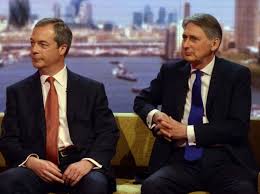 to do the maths. However all commentators do agree that the EU has a significant impact on all of our lives. This surely means that the work of our MEPs is vital as they attempt to hold the executive of the EU to account and vote through many of the laws that Nigel feels should in the future be decided within the British Parliament.
The 11 current UKIP MEPs include Nigel, Paul Nuttall his deputy and of course Godfrey Bloom although if the whip has now been withdrawn from Godfrey Bloom there are presumably now only 10 of them. When the elections were held in 2009 13 UKIP members were elected, so the loss of their third 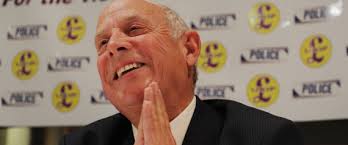 member as an MEP is beginning to look a bit like something worse than carelessness. However until yesterday, Godfrey had been an MEP for 9 years and in that time his behaviour and attitude has been both tolerated and defended by the party hierarchy on numerous occasions. His easy use of terms such as “slut” and “bongo bongo land” do not have the ring of a man who is unused to such language, indeed his response to criticism suggests that he is very comfortable with these terms and cannot understand why so many people are offended. He was chosen by UKIP to be their representative on the EU ‘Committee on Womens Rights and Gender Equality’ as well as two other committees. Whilst the party may not have anyone else is in his class, the party’s deputy leader visited Malta during the Summer to offer moral support in their dispute with Spain. He was asked what he could do for the residents of the Island and so offered to ask questions in the European Parliament on their behalf. This may have come as something of a shock for his many constituents in NW England such as my parents. Since June 2011 he has only asked 2 questions in the EU and despite his regular appearances on our TV screens, he has so far spoken only once in plenary debates during 2013. It may be that he is having a quiet year as he did speak 10 times during 2012 with a very busy February and March with 8 speeches and then managing to squeeze in another couple during November.
In May 2014 all of us will get a chance to vote in the EU elections, to select MEPs to represent us. According to UKIP, this election will give them the largest share of the popular vote and they also believe that by then they will have more party members than the Lib Dems. Whilst it is too early for us to know who their candidates will be, it is not unreasonable to wonder if they will be as acceptable to the party and to the British Public as Godfrey Bloom has been and how will that impact our public discourse? Indeed will Godfrey once again be one of their candidates? Will the UKIP cohort 2014 be as hard working as Paul Nuttall on behalf of his constituents. How much of an impact will the UKIP MEPs have on those 75% of our laws that the EU makes. These questions may not seem important to UKIP as they are hoping that by 2017 we will have had a referendum on EU membership and their many MEPs will be getting ready to pack up their offices and come home to dear old blighty for good. Perhaps one of the impacts of us leaving the EU, if that is what we decide, is that UKIP as a party will lose the platform they currently have to appear on many of our political programmes and in our newspapers on such a regular basis. A party with 127 Councillors and at best one or two MPs assuming that they do well in the General Election in 2015, will not be treated quite so well as one with at least 10 MEPs and aspirations to take over the European Parliament.


 ianchisnall