
 The phrase ‘graph of doom’ in local government circles was first coined by officers in East Sussex County Council in their internal discussions. It describes a graph of the increasing demand on what is known as Adult Social Care due to an ageing population, and the corresponding reduction in funding from central government for all of the services that local government is intended to provide. Some Services have historically had ring fenced funding (such as funds for education) but the rest are left to be squeezed with a key cost being that of providing care for our vulnerably elderly. Over time the phrase has become widely accepted by many Councils and Central Government itself. These agencies are continuing to mark off time as they try incredibly hard to address the demand and diminishing resources. All involved need our best wishes in their hard work.
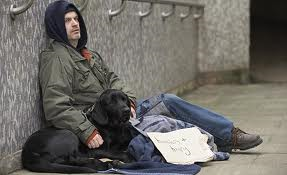
There is however another graph of doom that is constructed retrospectively by an organisation known as CHAIN who record the numbers of people sleeping rough in our nation. The figures are based on a convoluted criteria set by successive Governments that insists that during the assessment if the person being counted is not actually asleep, they cannot be considered to be sleeping rough. This ignores the awareness that all of us have of people in our own safe space, which for most of us is our bedrooms. A large proportion of people would stir and wake up if a stranger appeared at the foot of their bed. By the same token people who do sleep on the streets are also subconsciously very aware of people who may be about to attack them. Whilst those who carry out these counts may have clip boards rather than weapons, the prospect of waking up a street sleeper by our presence is significantly high.
Over the last decade or more the numbers of rough sleepers has changed significantly as CRISIS report on their website here. In 1998 1,850 people passed the test of being asleep when counters were present. This figure had dropped to 585 by 2002 following substantial partnership working and the number remained stubbornly at this level for over 5 years. I recall that period as at one time the street count in Brighton had reduced into single figures which all involved knew was only a proportion of those who lived on the Streets. Some were awake during the night or sleeping in places that were not known to the teams involved, however the partnership working was nevertheless very effective. In 2010 the number rose by over 300% to 1,768 and last years figure rose again to 2,309. That rise was over 500 people, the total level of the counted Street Sleepers for a large part of the previous decade.
We are about to carry out a count again. The number cannot be predicted, but if the numbers presenting themselves on the Streets when I go out as a Street Pastor on Friday nights are anything to go by they will not have gone down. These numbers are more than the data from which a graph can be constructed. They are a small part of a larger community of people whose health needs are significant, and whose need of support services is a great deal higher than many other members of society. The Churches in Brighton and Hove are beginning to get organised for the emergency night shelter that they will be providing for a dozen or so very vulnerable individuals as they did last year. It is always easy to challenge the logic of partnership working as being wasteful of time and energy, and proving that preventative work is effective is very difficult. What cannot be denied however is that in this one area something has gone badly wrong. Unless we are prepared to admit that is the case, we will struggle to address this particular graph of doom and its impact on many vulnerable people and the rest of society.


 ianchisnall
Ian, thanks for this post. I am always challenged by the needs of those that have nowhere to call home and the dangers that they face in such a vulnerable position. Great to hear that you are involved in Street Pastor work which has developed so much in recent years in delivering practical support and assistance to those out on the streets of our towns and cities.
I am also volunteering for my local borough night shelter organised by the Forest Churches Night Shelter network again this coming winter. Its a small thing to be able to do in response to real and deep needs and serves as a reminder to me of the need to share of the enormity of God’s grace by being willing to share life together.
Thanks for the comments Matt and retweets. I think there are some people who are so committed to the pavement lifestyle, that they may never return to a more conventional experience. However many of those who are currently on our streets do seem to be there as a result of recent decisions or crises.